|
Smooth Sow Thistle |
| This plant is brought to you by one of the project's sponsors: |
 |
| More sponsors are needed for this project [ click here ] | |
|
|
| Nomenclature |
Species name: |
Sonchus oleraceus L. |
Author(s): |
Carl von Linné; Sweden, 1707-1778
|
General names: |
Smmoth Sow Thistle, Annual Sow Thistle, Common Sow Thistle |
Maltese name: |
Tfiefa komuni |
Plant Family: |
|
Name Derivation: |
Sonchus = Greek name for sow-thistle plants. (Greek)
oleraceus = related to kitchen vegetables or herbs used in cooking. (Latin) |
Synonyms: |
Edniuia agrestis, Sonchus ciliatus, Sonchus laevis, Sonchus levis, Sonchus roseus. |
Remarks: |
-
|
|
| Botanical Data |
PLANT STRUCTURE: |
Characteristic | Growth Form | Branching | Surface |
Description | Erect : Upright, vertically straight up well clear off the ground. | Moderately Branched : Considerable number of secondary branches along the main stem. | Glandular Hairs : Possess hair that bear glands or swellings at their tip. |
General Picture | | | |
|
LEAVES: |
Characteristic | Arrangement | Attachment | Venation |
Description | Alternate : Growing at different positions along the stem axis. | Stalked / Petiolate : Hanging out by a slender leaf-stalk. Young (upper) leaves are however sessile. | Reticulate : Net like; continuous, repeatedly sub-branching veins. |
General Picture | | | |
| |
Characteristic | Leaf Shape | Leaf Margin | Remarks |
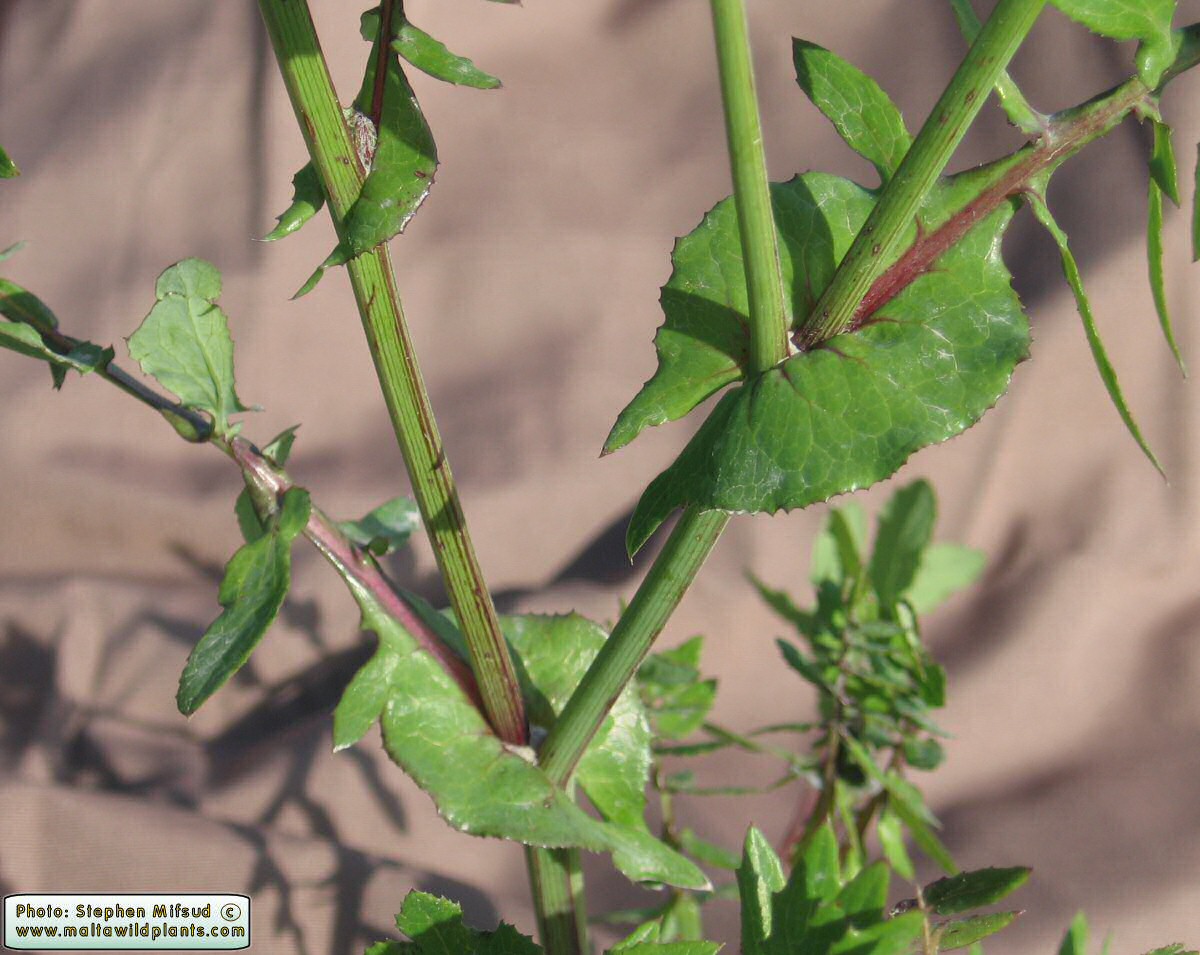
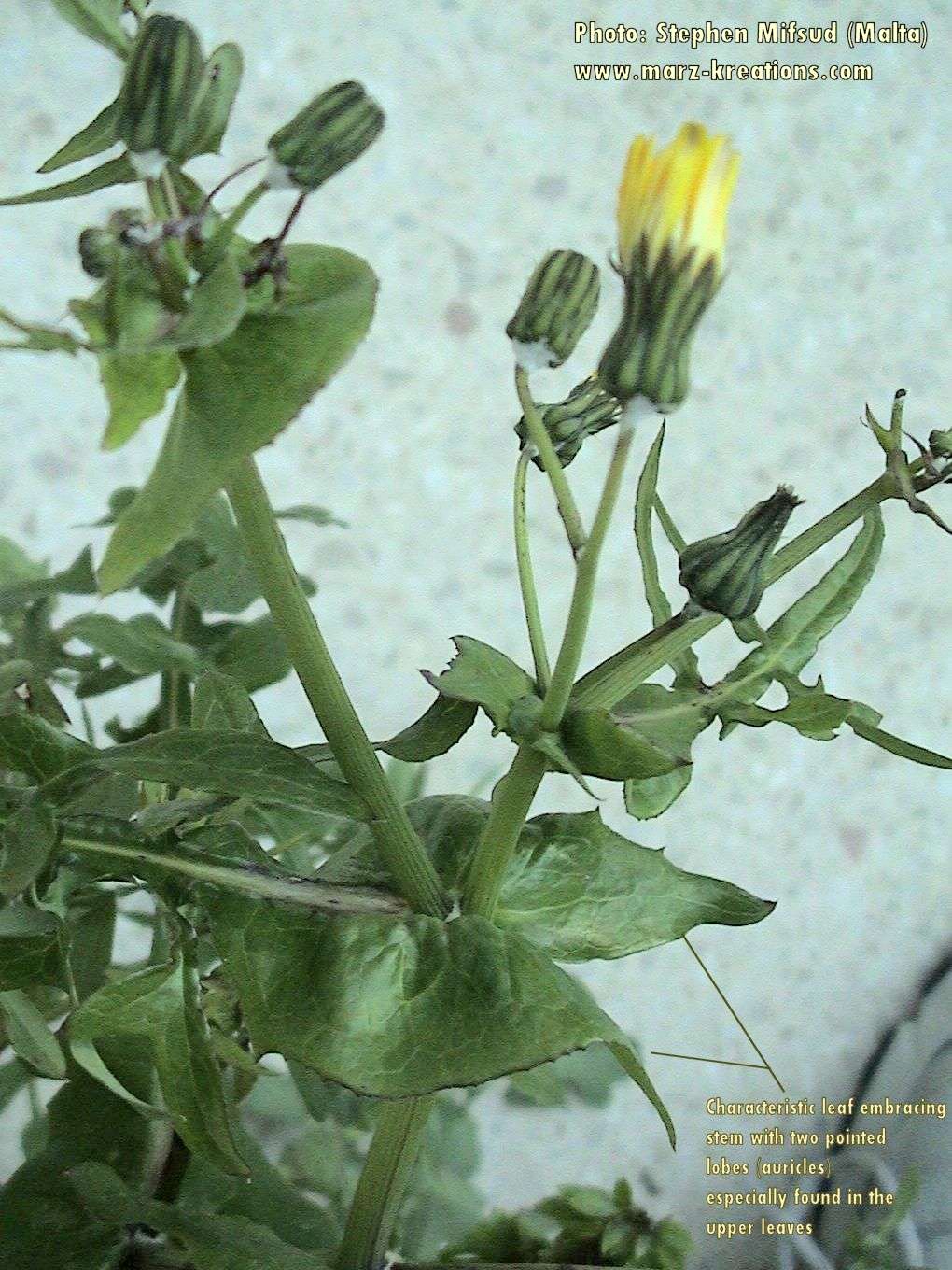
Description | Irregular Pinnate Lobes (Terminal lobe being largest) : Compound arrangement of several lobes of various sizes and depths with the lowest being the smallest and most independent (deeply lobed), and the upper terminal lobe being the largest. | Dentate : With sharp teeth perpendicular to the margin. | Auriculate : A pair of rounded lobes which can be found clasping the stem. |
General Picture | | | |
|
FLOWERS: |
Characteristic | Colour | Basic Flower Type | No. of Petals | No. of Sepals |
Description | Yellow | Ligulate / Dandelion-like : Numerous tiny flowers (disc florets) grouped together and radiating from a common receptacle. Each floret has a thin, strap-like petal collectively forming a globular or cushion-like structure. | More than 40 | 20-30 Referring to the phyllaries of the involucre. |
General Picture | | | | |
| |
Characteristic | Inflorescence | Description | Ovary | Stamens |
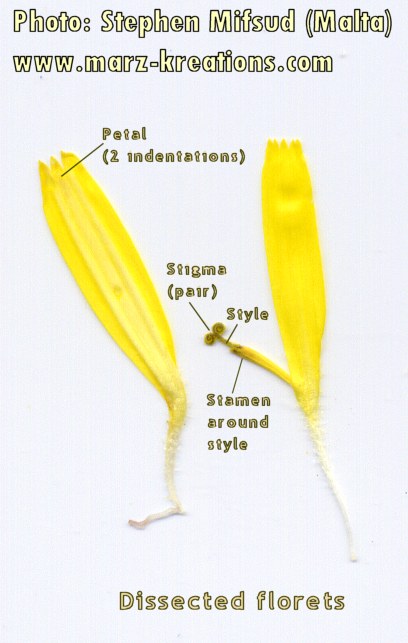
Description | Compound Cyme (Cymose panicles) : Forked, oppositely branching panicles, with one terminal flower located where the branch splits in two. This flower is the one to develop first with the others in the branching panicles following. | The flower consists of about a hundred of tiny florets (called ray florets) radiating outwards from acommon receptacle. Each floret have a strap-like petal with 3 indentations at the tip, a central pistil with 2 well visible curly stigma and a collar of united stamens around the style which are not visible. | Inferior : Ovary situated below the flower parts (the calyx, corolla, and androecium). In other words, these are attached above the ovary. | 5, Syngenesious : Anthers fused together, forming a ring or collar around the central style of every disc floret. Filaments are usually free. Stamens are usually not visible by the naked eye. |
General Picture | | | | |
| |
Characteristic | Scent | Average Flower Size | Pollen Colour | Other Notes |
Description | YES Faint unpleasant smell can sometimes be detected. | 34mm | Yellow | - |
|
SEEDS: |
Characteristic | No. Per Fruit | Shape | Size | Colour |
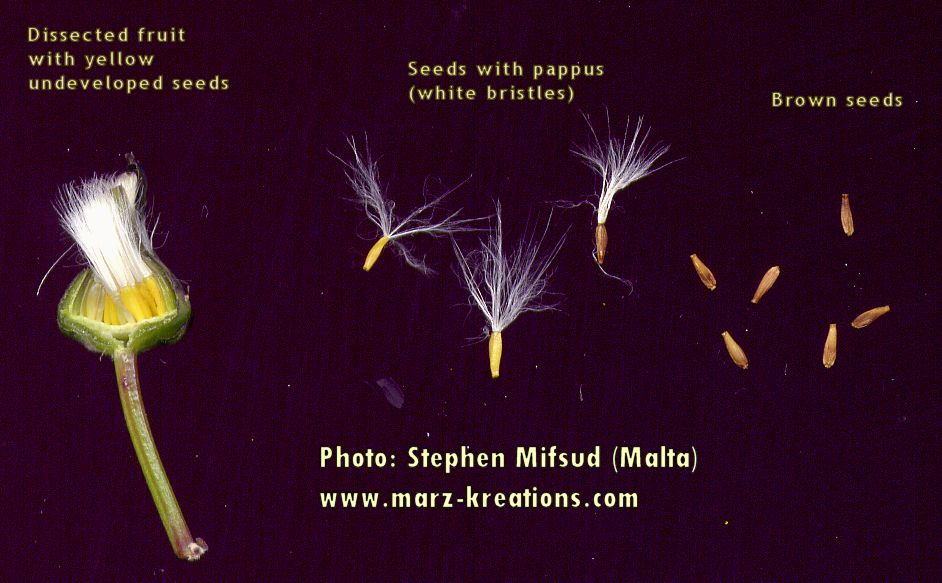
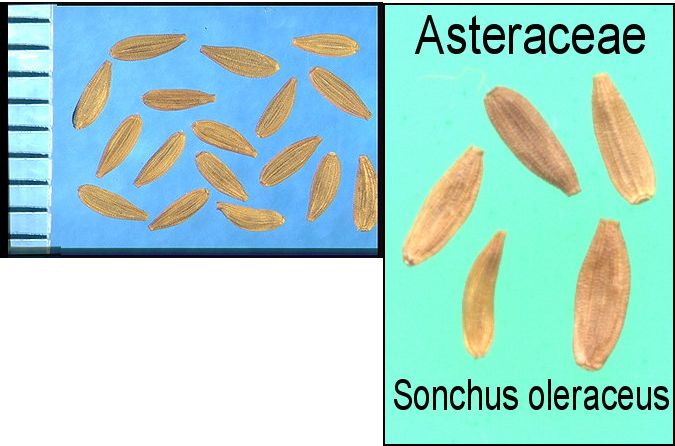
Description | 50-100 | Achene with Pappus : A simple one-seeded fruit which has an apical structure of radiating fine light bristles (called pappus) which aid the seed to disperse away by wind. Fruit are found in collective numbers attached to a common receptacle. | 4-5mm (Including pappus). | Brown |
General Picture | | | | |
|
FRUIT AND OTHER BOTANICAL DATA: |
Characteristic | Fruit Type | Colour of Fruit | Subterranean Parts | Other Notes |
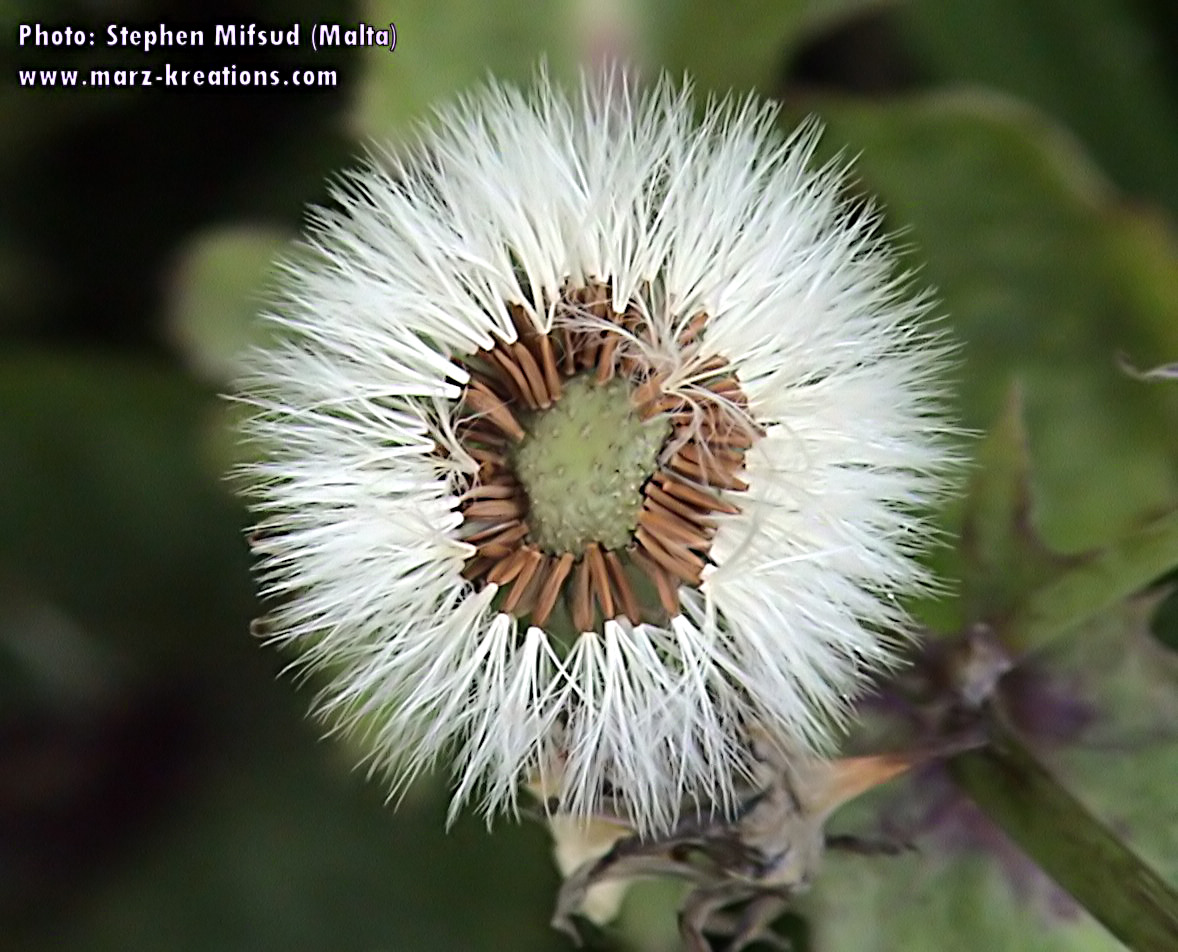
Description | Numerous achenes with pappus : A collection of achenes with a bristly pappus forming a soft spherical structure. The radiating achenes are attached to a common receptacle and when mature they detach and get dispersed by wind. | White (Referring to the pappi of the collective fruit head). | Taproot : A rooting system where there is the main descending root of a plant having a single dominant large structure from which a network of smaller and long roots emerge. | - |
General Picture | | | | |
|
|
| Plant Description |
Life Cycle: | Annual |
Habitat: | Waysides, Wasteland, Cultivated ground, and even at road sides aned on the pavement. |
Frequency: | Very Common |
Sources in Malta: | Quite common in most places around the Maltese Islands. |
Plant Height: | 30-90cm. |
| Dec - May |
Poison: | Not Poisonous |
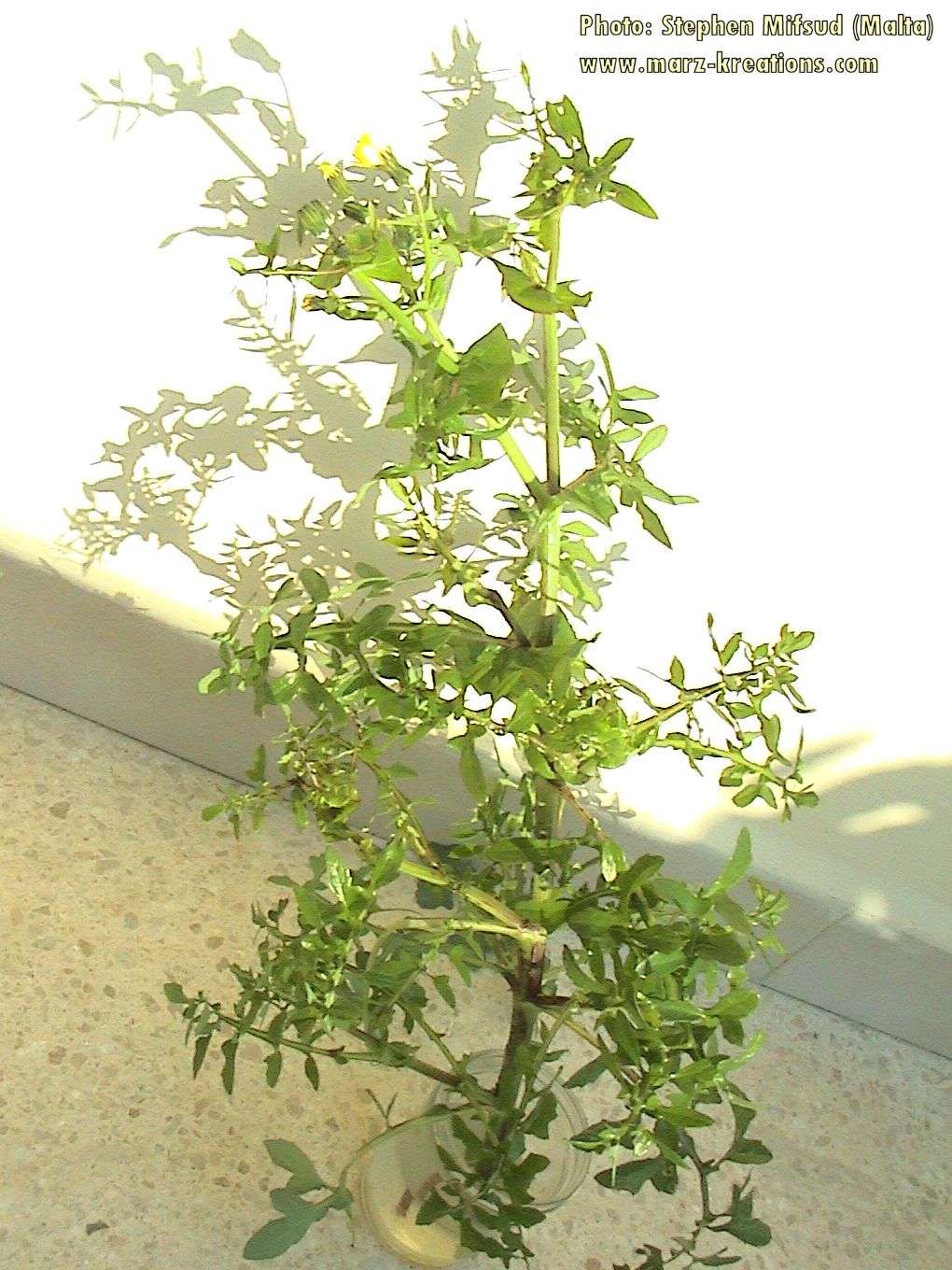
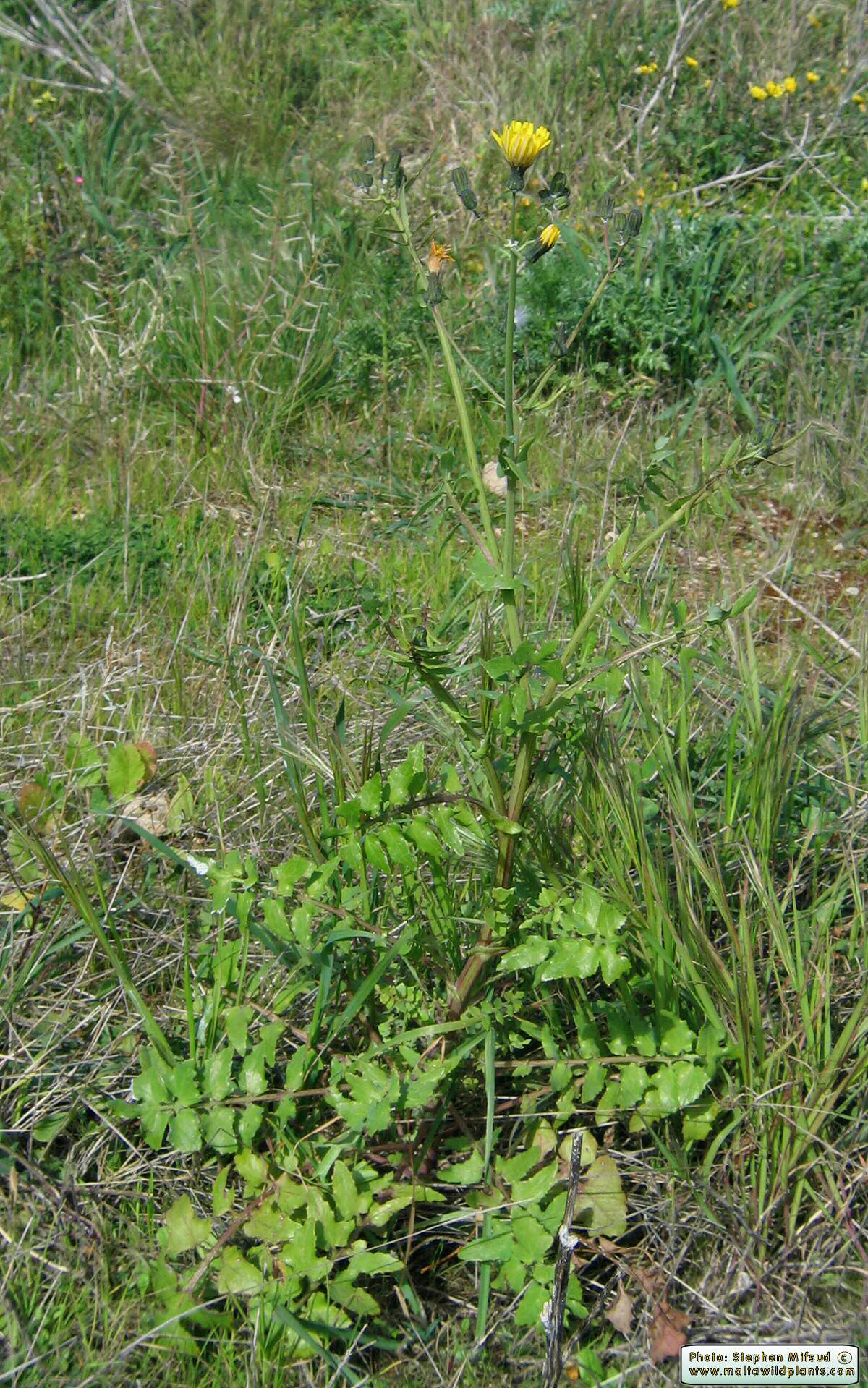
The plant is an erect annual with simple branches. One particular feature about this sow thistle is that most of the plant is smooth and glabrous - without any hair or bristles. The stem is hollowed, and have a milky sap and its lower part usually gets a purple-brown colour later in spring.
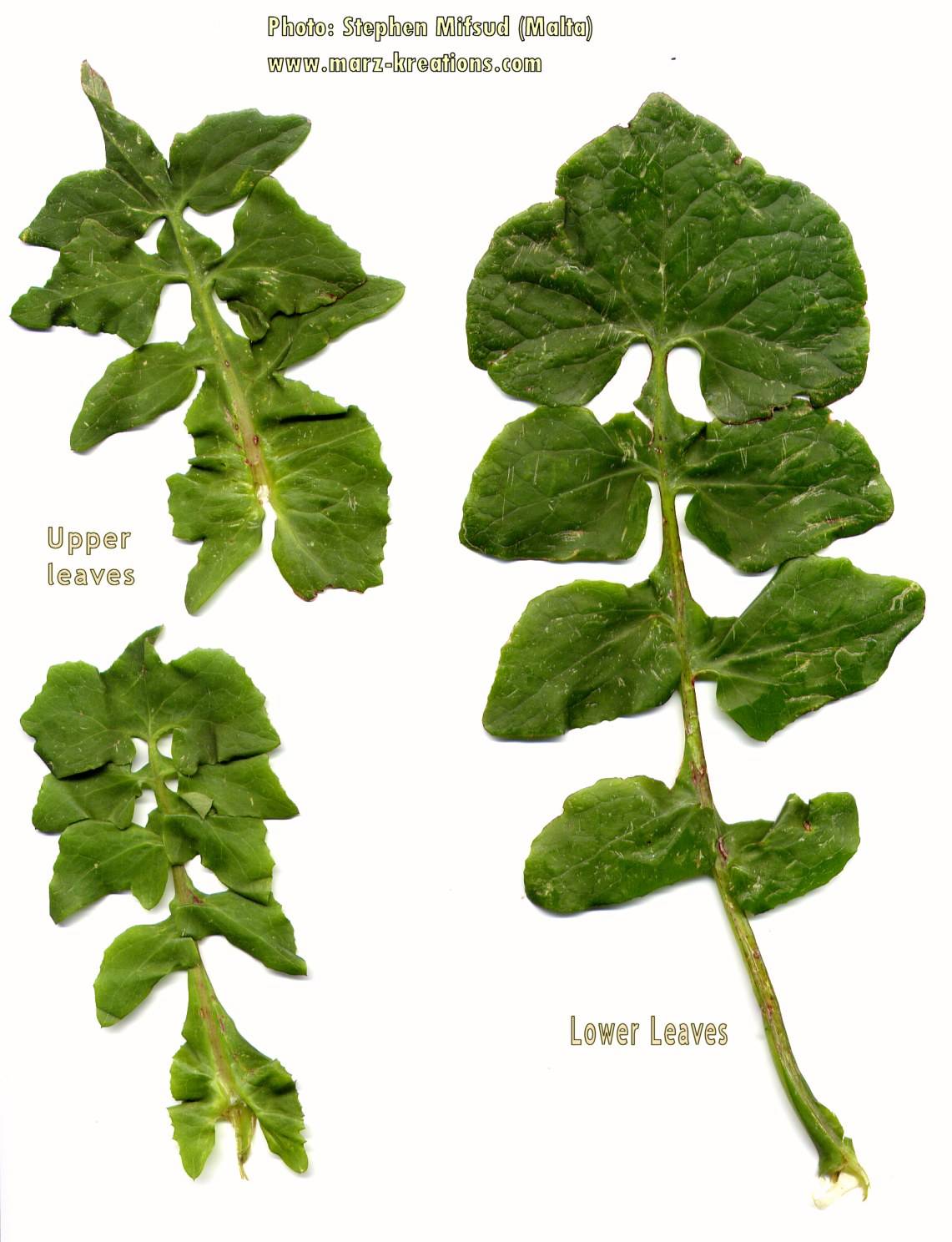
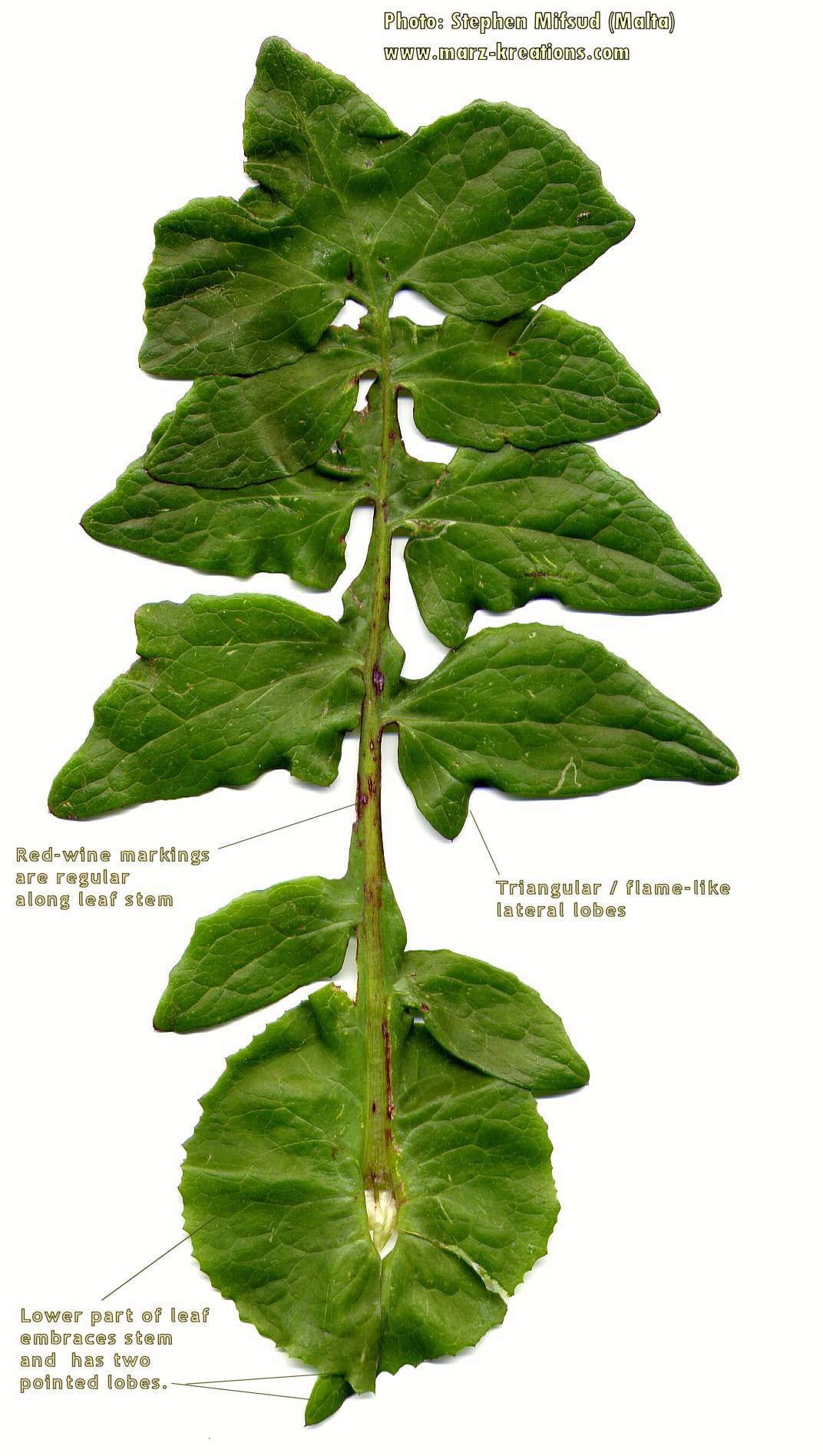
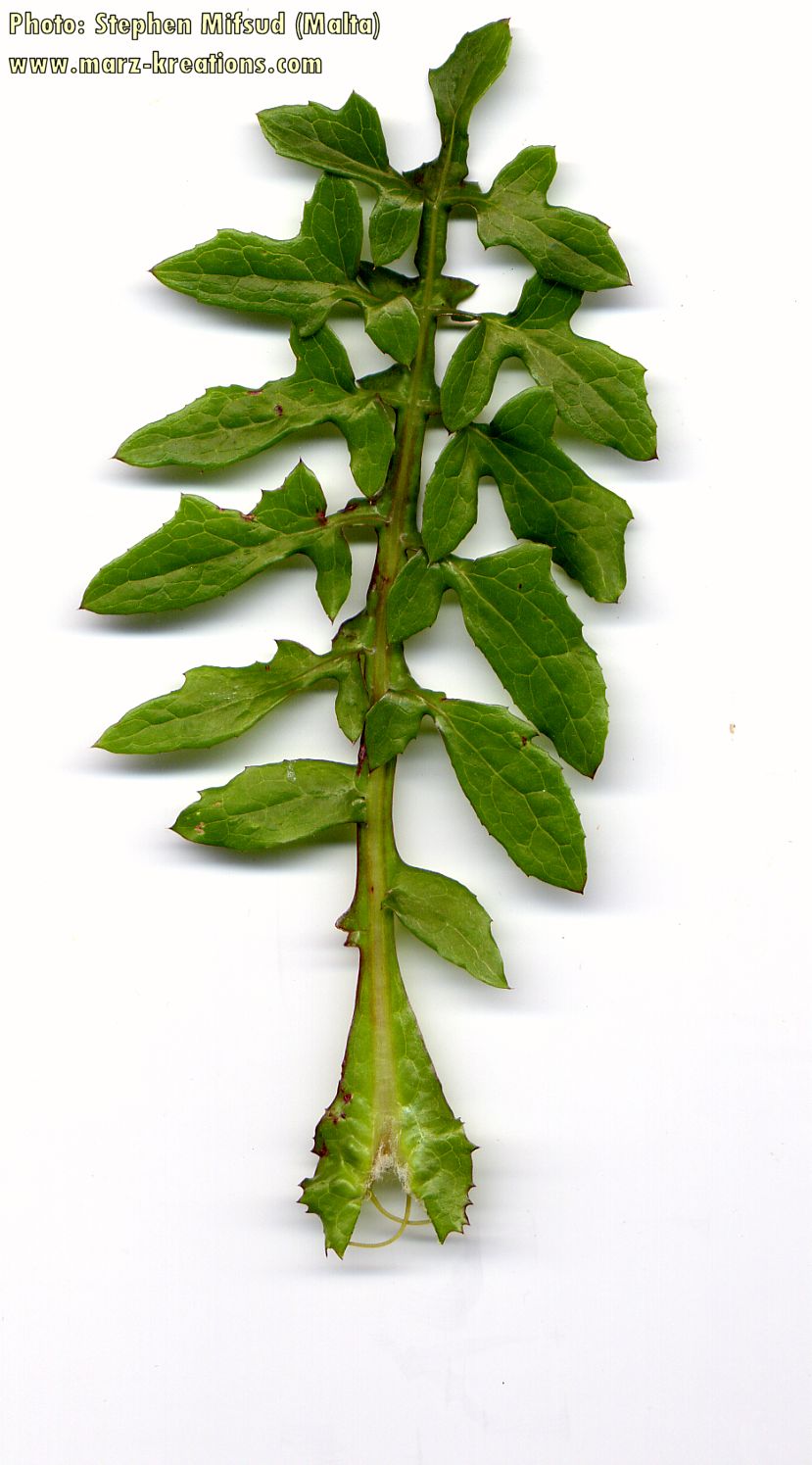
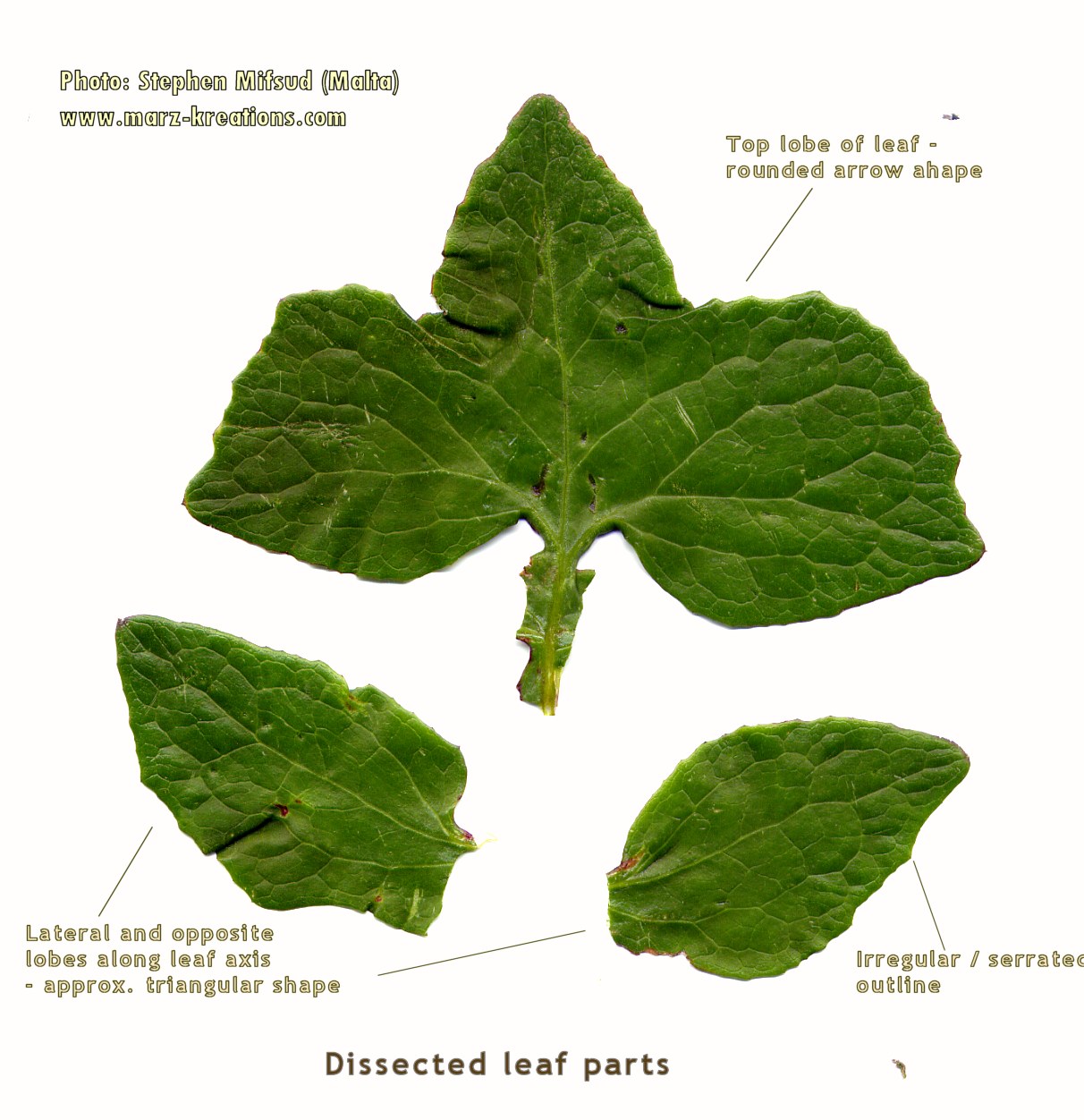
The leaves differ according age. The old (and hence lower) leaves are stalked, elongated and deeply lobed. In fact each lobe, nearly oppositely arranged along the leaf rachis, may appear to be a distinct leaf on its own. There are usually 2, 3 or 4 pairs of lobes per leaf and the terminal apical lobe is the largest and have a shape of a rounded arrow. The younger leaves also possess similar but smaller lobes. However these leaves are sessile, and have characteristic two pointed lobes (auricles) embracing the stem. Colour of the leaves vary from pale green to green-blue and may have a serrated outline but no prickles or hair.
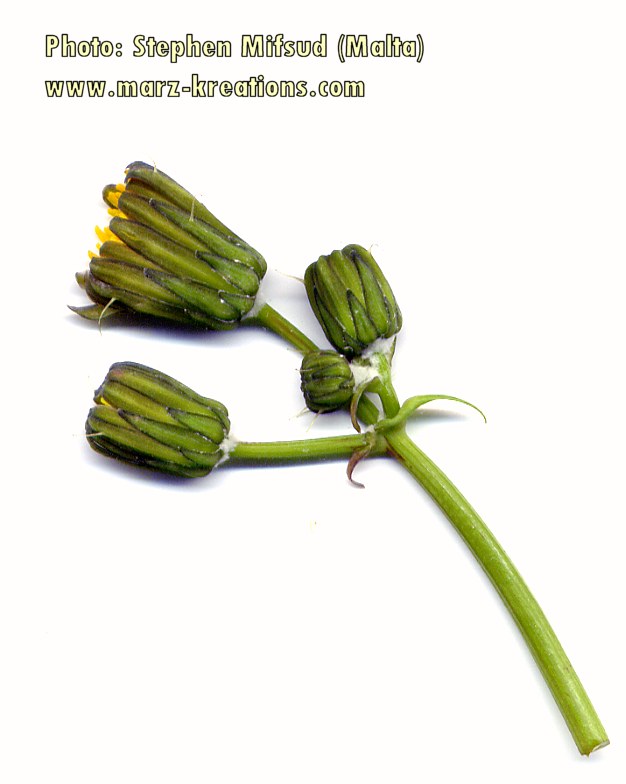
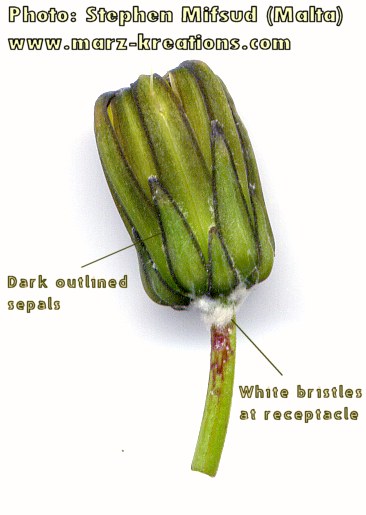
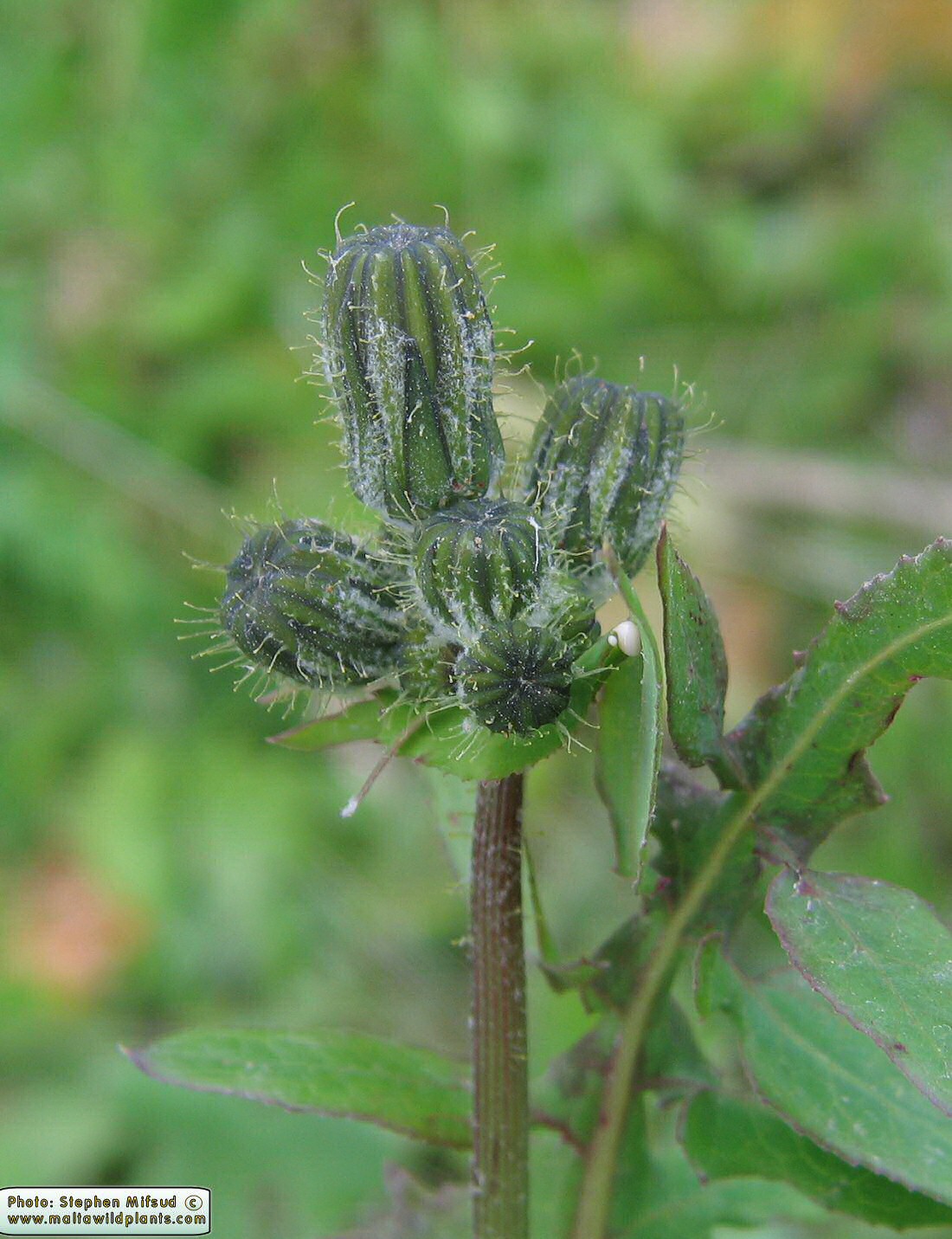
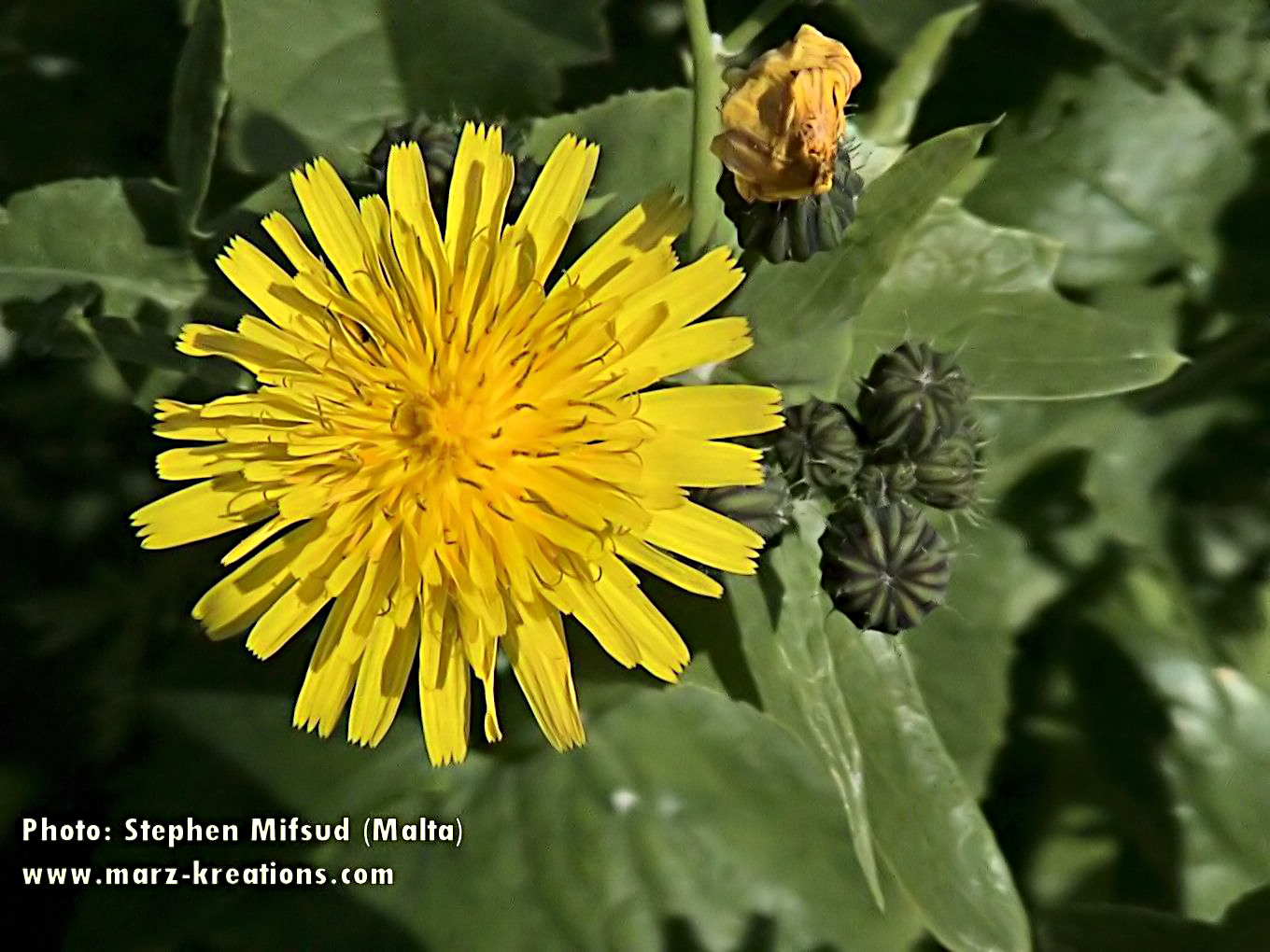
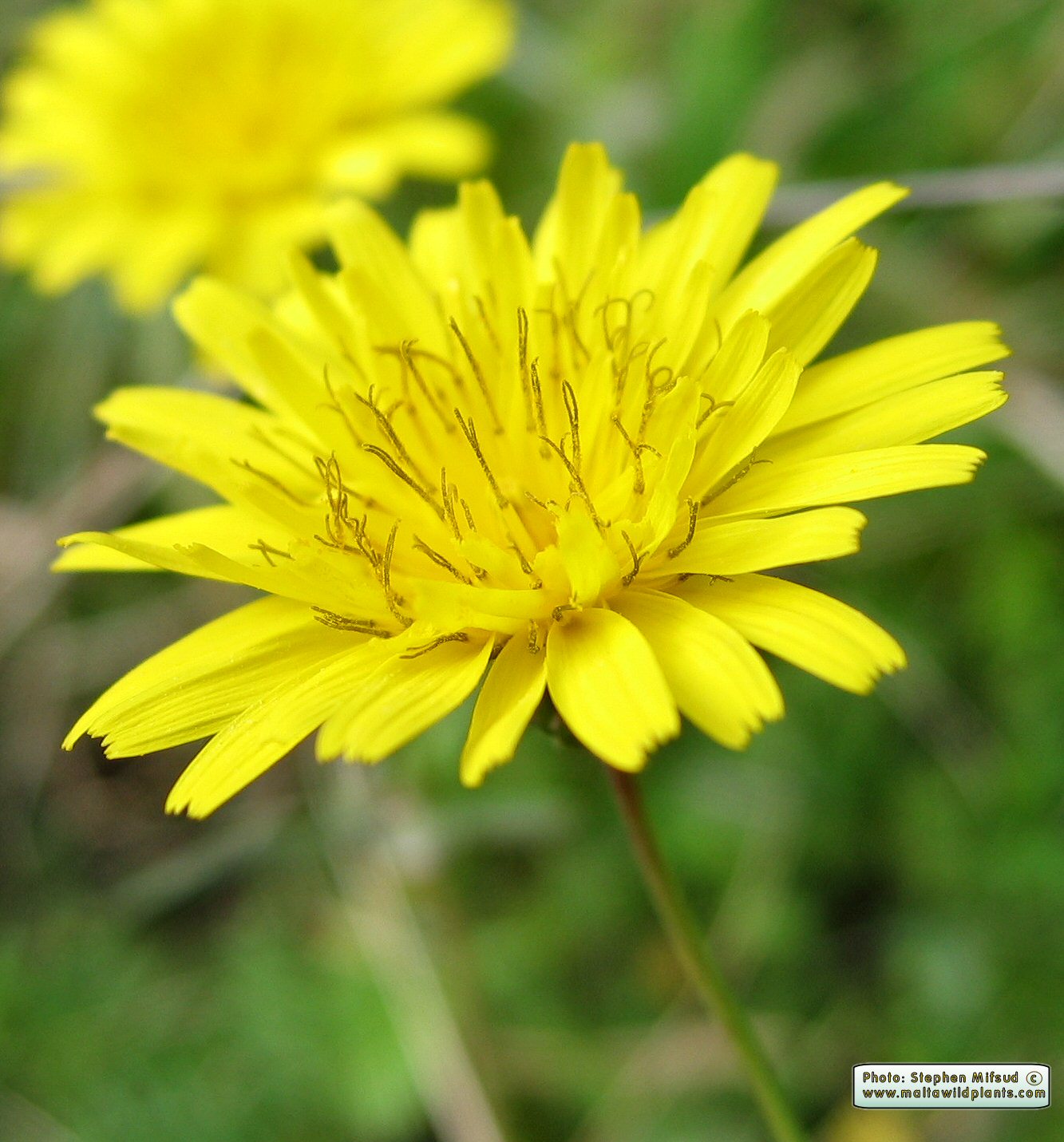
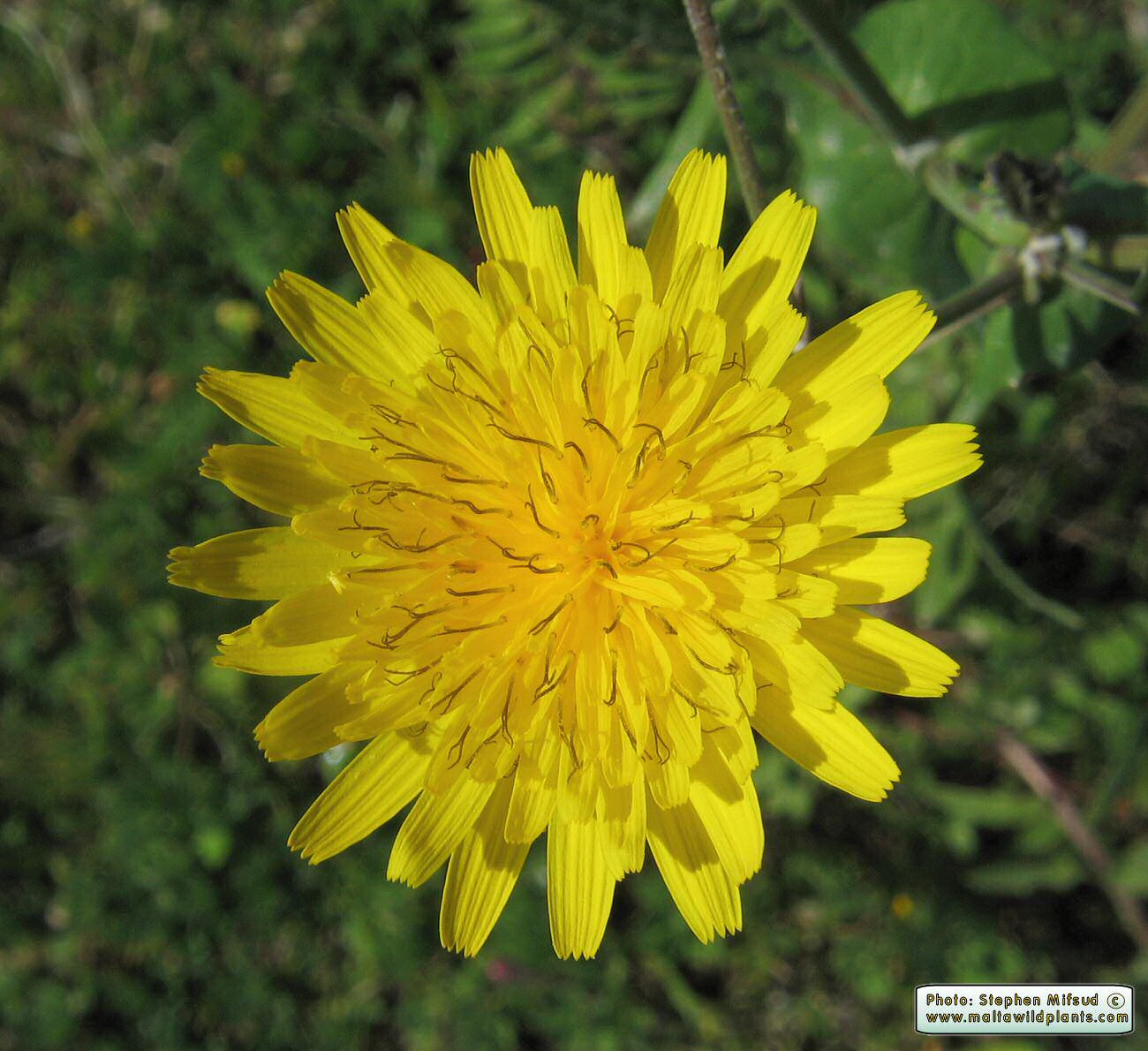
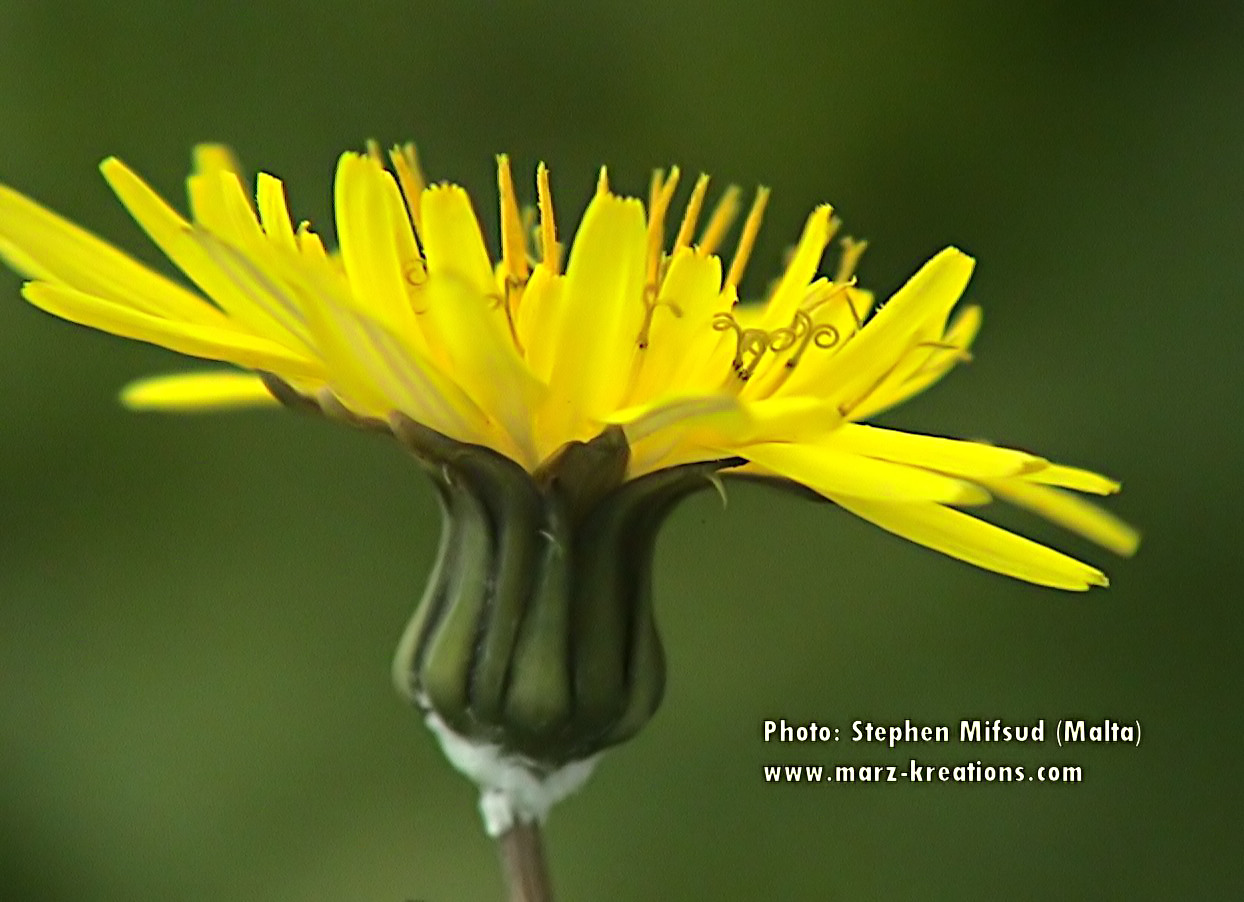
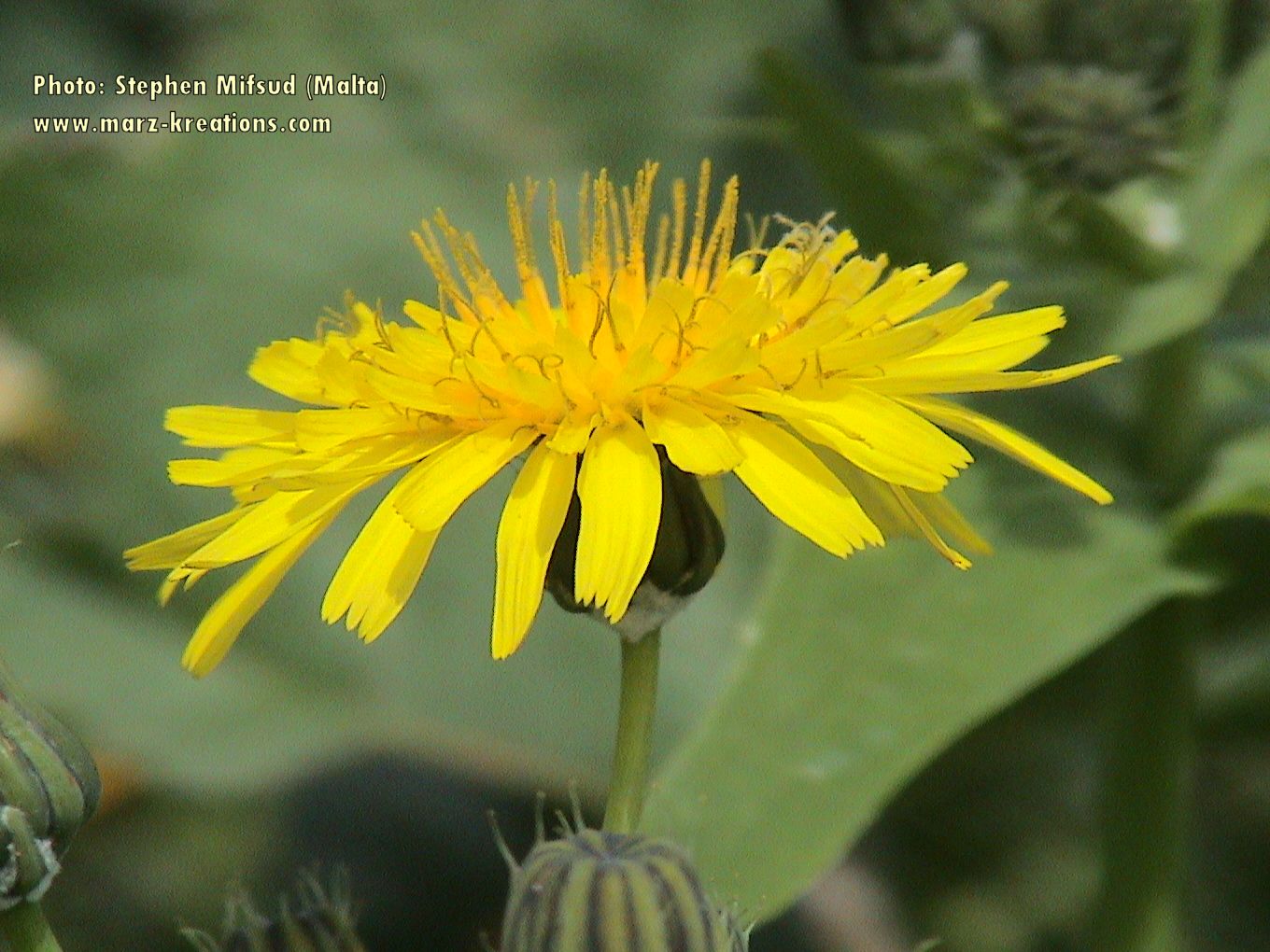
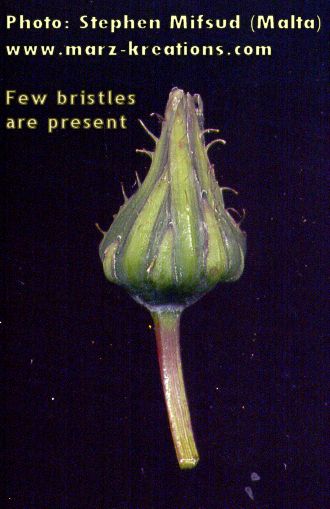
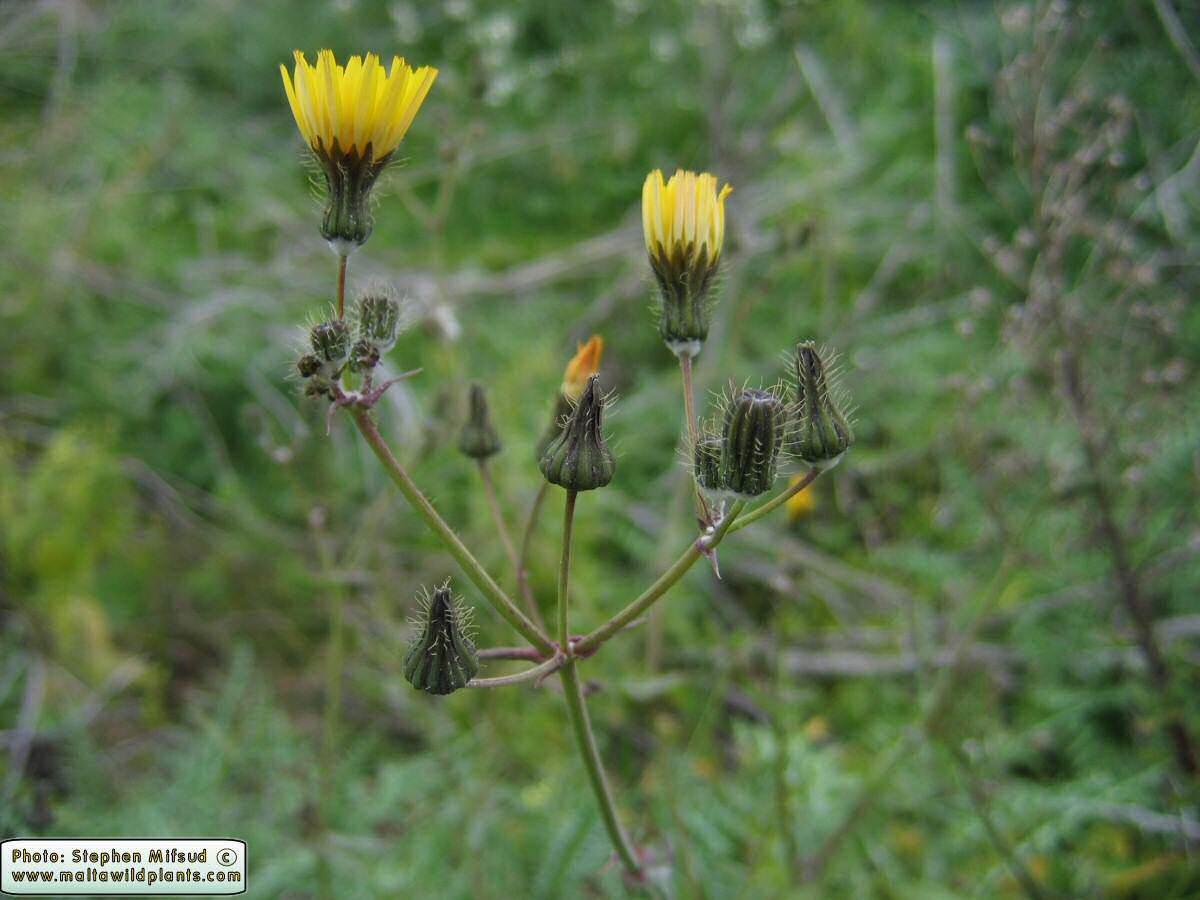
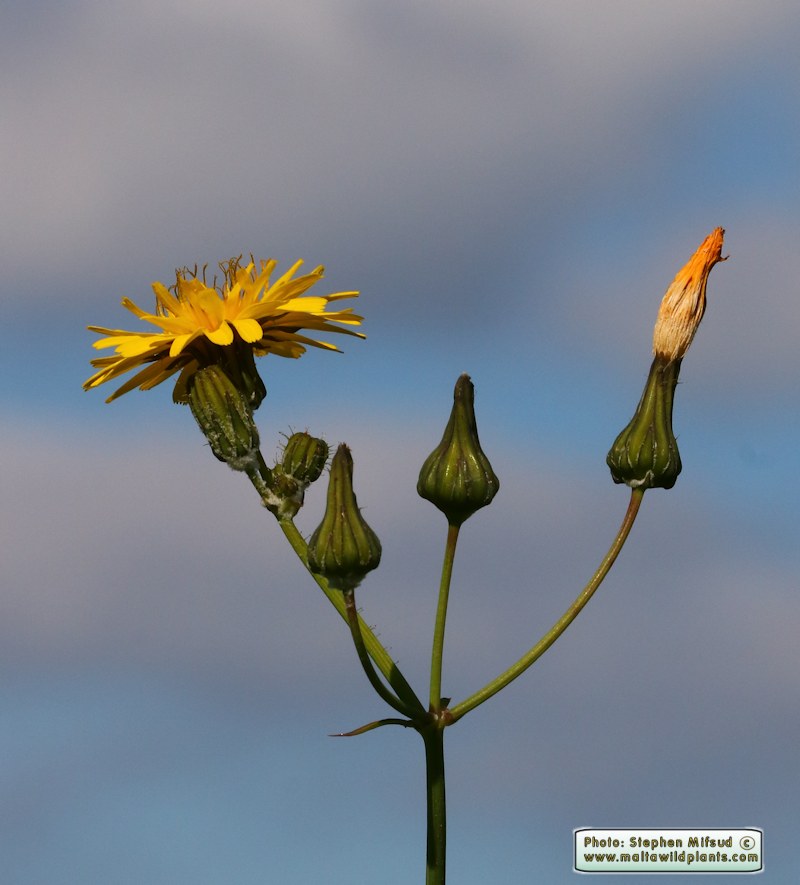
The buds have a shape of blue-green barrels, being cylindrical and stout. No hair or bristles present. The flower head is similar to the dandelion, with many small, oblong-shaped radiating petals forming cushion-shape yellow flower. The real flowers are tiny disc-florets placed on the receptacle. Their female and male reproductive organs are combined in one structure. The stamens of each disc-floret are united, forming a collar around the central part of the style (pistil). The style terminates with a pair of conspicuous feathery stigma. Each flower head possess about a hundred of these reproductive structures.
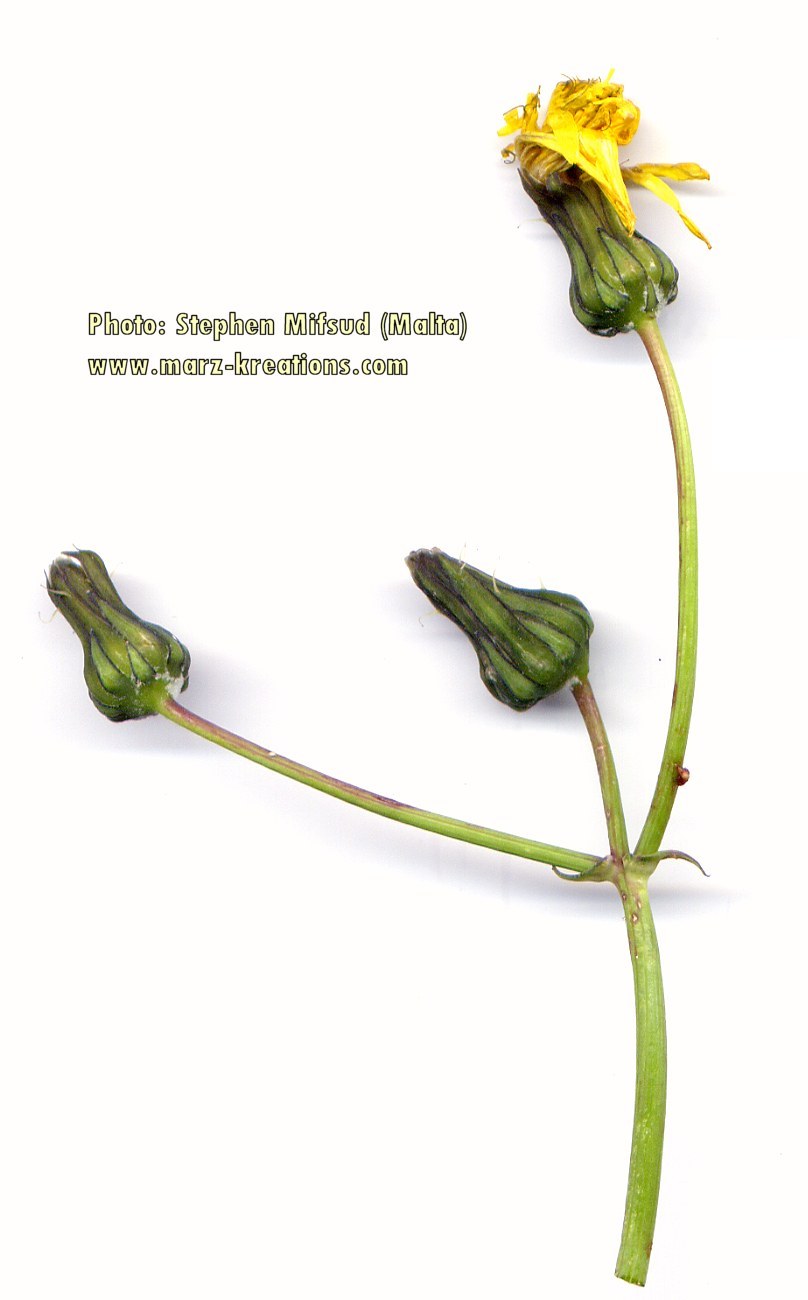
The fruits are simple achenes, brownish in colour, and oval/oblong in shape. They are wrinkled and possess obscure longitudinal ribs. At the apex they have a beakless pappus which helps seed dispersal by wind. The shape of involucral fruit is vase like - round bottomed with tapering apex and so differs from the cylindrical shape of the bud.
|
|
| Additional Information |
Cultivation details
Succeeds in most soils in a sunny position.
This plant has been cultivated for its edible leaves by the Maoris of New Zealand [153].
The plant is a good companion for onions, tomatoes, corn as well as the cucumber and squash family [14].
Composition of Leaves (Dry weight)
In grammes per 100g weight of food:
- Water: 0
- Calories: 265
- Protein: 28
- Fat: 4.5
- Carbohydrate: 45
- Fibre: 5.9
- Ash: 22 [218]
In milligrammes per 100g weight of food:
- Calcium: 1500
- Phosphorus: 500
- Iron: 45.6
- Vitamin A: 35
- Thiamine: 1.5
- Riboflavin: 5
- Niacin: 5
- Vitamin C: 60 [218]
The raw leaves (not dried) contain about:
- 1.2% protein,
- 0.3% fat,
- 2.4% carbohydrate,
- 1.2% ash [179]
- 30 - 40mg of vitamin C per 100g [173],
Edible Uses
Young leaves - raw or cooked [2, 4, 9, 13, 54]. This species has the nicest tasting leaves of the genus [153], they usually have a mild agreeable flavour [217] especially in the spring [KF]. They can be added to salads, cooked like spinach or used in soups etc [183].
Stems - cooked like asparagus or rhubarb [12]. They are best if the outer skin is removed first [183].
Young root - cooked [12]. They are woody and not very acceptable [144].
The milky sap has been used as a chewing gum by the Maoris of New Zealand [183].
Medicinal Uses
It is cooling and good against obstructions. The young tops can be eaten in salad with oil and vinegar to case the pain from scalding urine. The leaves act like Dandelion and are good for sediment in the bladder and retention of urine. Dandelion, which has similar properties, is more commonly used in modern practice. [WWW-13].
The plant is emmenagogue ( induces or hastens menstrual flow [WWW-06]) and hepatic (aids the liver functionality [271] ) [61, 257]. An infusion has been used to bring on a tardy menstruation and to treat diarrhoea [257].
The latex in the sap is used in the treatment of warts [218]. It is also said to have anticancer activity [218].
The stem juice is a powerful hydrogogue and cathartic (an agent used for emptying the bowels, [271]), it should be used with great caution since it can cause colic and tenesmus [218]. The gum has been used as a cure for the opium habit [257].
The leaves are applied as a poultice to inflammatory swellings [4].
An infusion of the leaves and roots is febrifuge (a medication that reduces fever; an antipyretic [WWW-06] ) and tonic (producing or stimulating physical, mental, or emotional vigor [WWW-06] ) [240].
Other Uses
Latex : The latex in the stem contains 0.14% rubber, but this is much too low for commercial exploitation [218].
The Latin name of the species, oleraceus, refers to the use to which this weed has been put as an esculent vegetable. Its use as an article of food is of very early date, for it is recorded by Pliny that before the encounter of Theseus with the bull of Marathon, he was regaled by Hecale upon a dish of SowThistles. The ancients considered them very wholesome and strengthening, and administered the juice medicinally for many disorders, considering them to have nearly the same properties as Dandelion and Succory. [WWW-03]
The young leaves are still in some parts of the Continent employed as an ingredient in salads It used in former times to be mingled with other pot herbs, and was occasionally employed in soups; the smoothest variety is said to be excellent boiled like spinach. [WWW-03]
This plant was eaten as a vegetable in the Middle Ages [272].
Seldom used today, except as a food for rabbits. [WWW-13]. Its chief use nowadays is as food for rabbits. There is no green food they devour more eagerly, and all keepers of rabbits in hutches should provide them with a plentiful supply. One of the popular names of the SowThistle: 'Hare's Thistle' or 'Hare's Lettuce,' refers to the fondness of hares and rabbits for this plant. Pigs are also particularly fond of the succulent leaves and stems of the Sow-Thistle. Sheep and goats also eat it greedily, but horses will not touch it. [WWW-03]
Other Notes:
This plant is subject to great variations, which are merely owing to soil and situation, some being more prickly than others. [WWW-03]
The Sow Thistles are sometimes erroneously called Milk Thistles from the milky juice they contain; the true Milk Thistle is, however, a very different plant. [WWW-03]
Personal Observations
Smooth Sow Thistle and other related species
The use of this plant as food for rabbits is well known in Malta. Hopefully, people will not over gather this plant and makes it become rare. Many Maltese however mistake this plant with the common dandelion, due its yellow flower, elongated lobed leaves and white bristled seeds which float in air are similar characteristics to the Dandelion. The common dandelion is not found (or very rare) in Malta. [SM]
In Malta there are 2 other species of the sow thistle, but the smooth sow thistle is the most common one, flowering from end Jan to Jun. The common sow thistle (Sonchus arvensis) and the prickly sow thistle (Sonchus asper) are less common and are distinguished mainly from their leaves, since their flower heads are quite similar. [SM]
Diversity in the leaves between plants of the same species
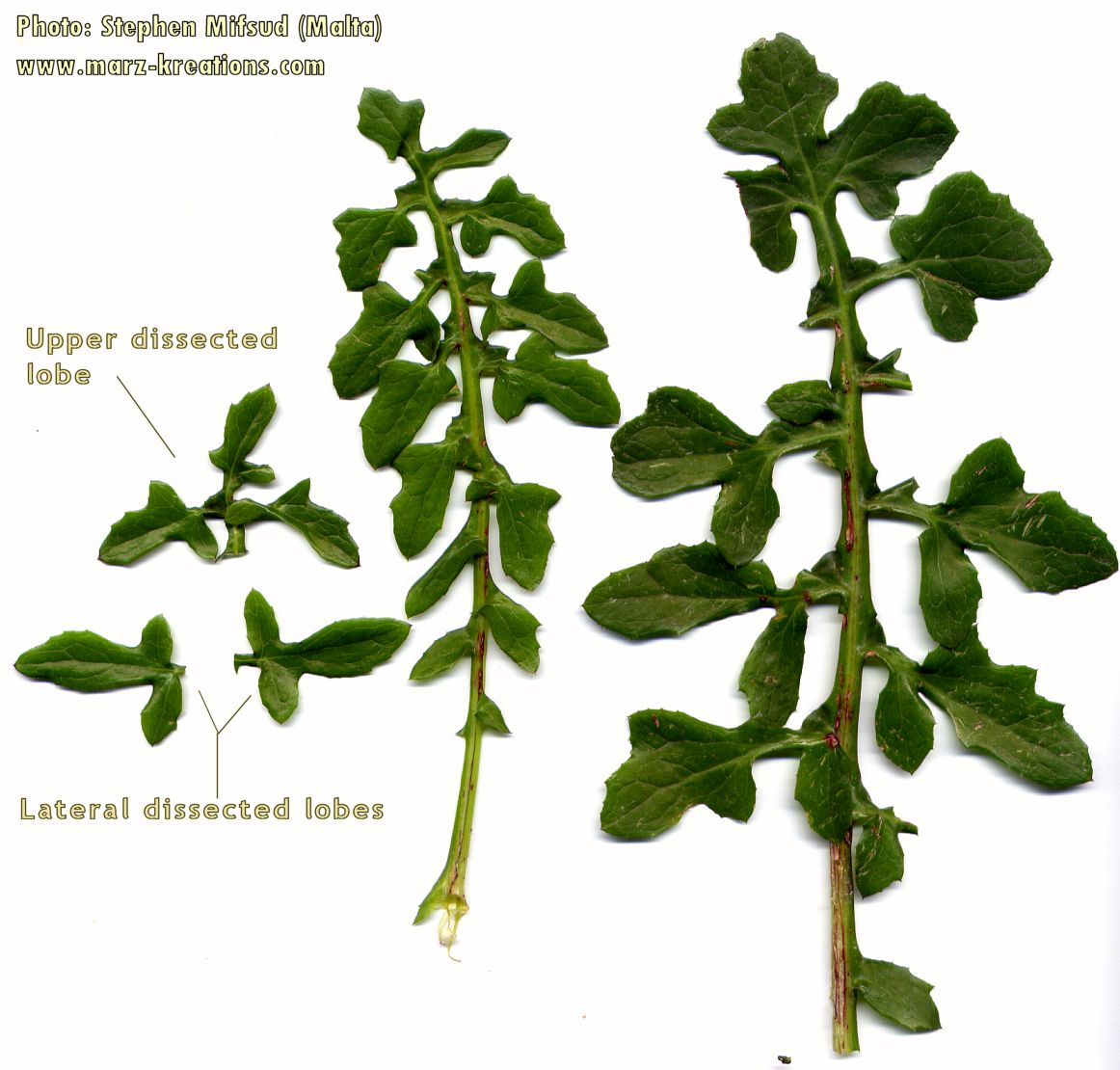
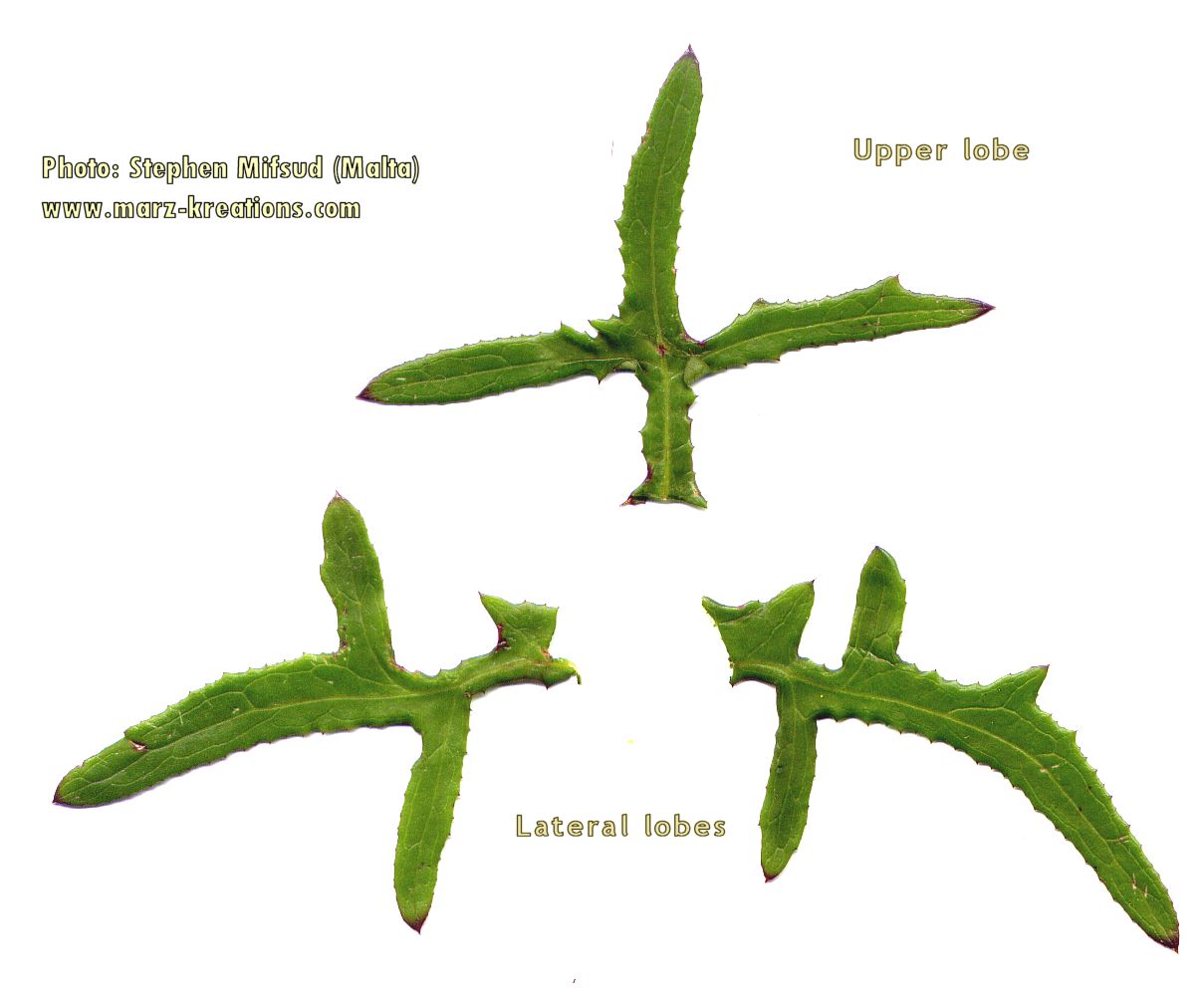
There is marked diversity in the leaves of different plants of the same species. Some have leaves with wider lobes, and other with slender lobes. some have coarser leaves, or more serrated outline. The shape of the lobes also differ considerably, and there are few plants which possessed double-lobed leaves. [SM]
Flowering Time
In Malta flowering of the smooth sow thistle is at best in late February and March. [SM]
|
|
| Photo Gallery |
 |
 |
 |
 |
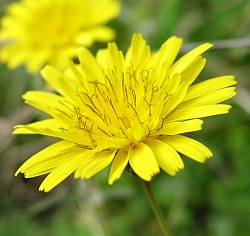
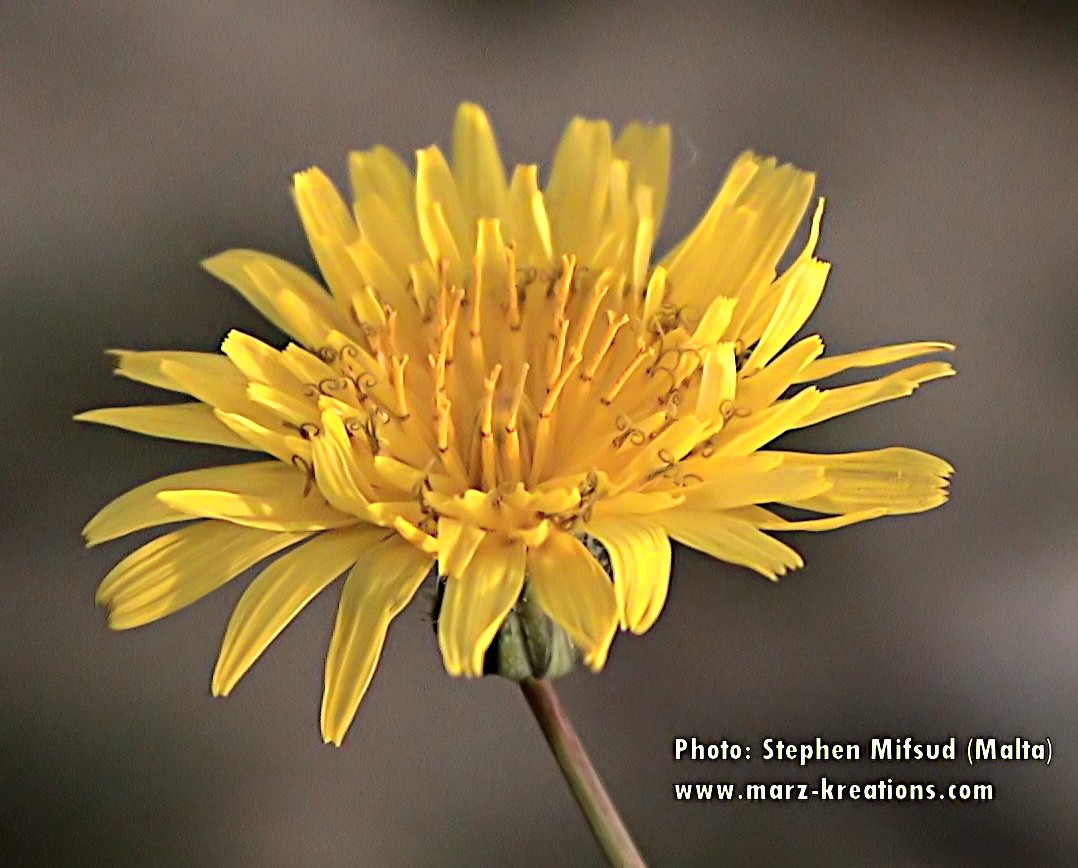
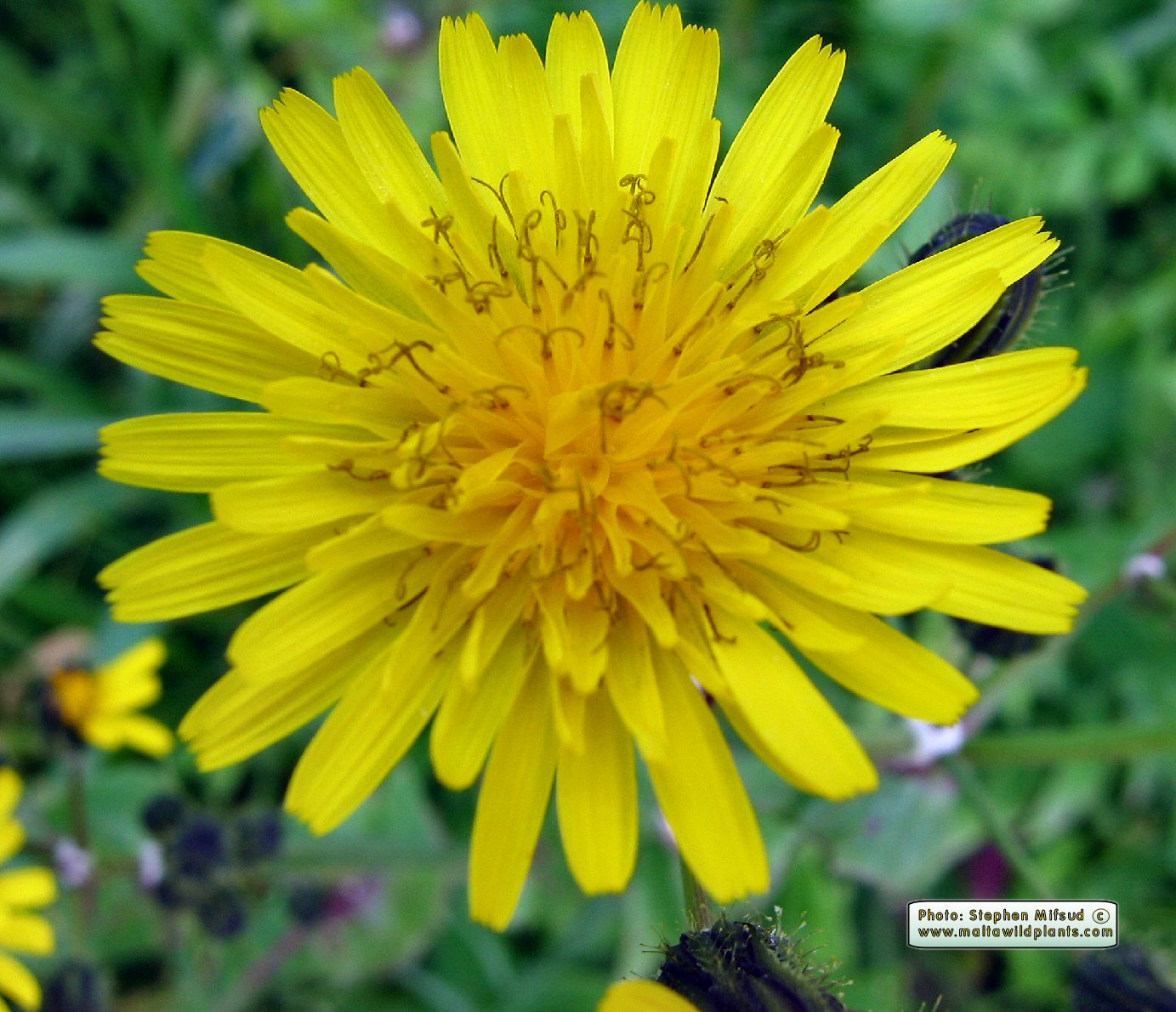
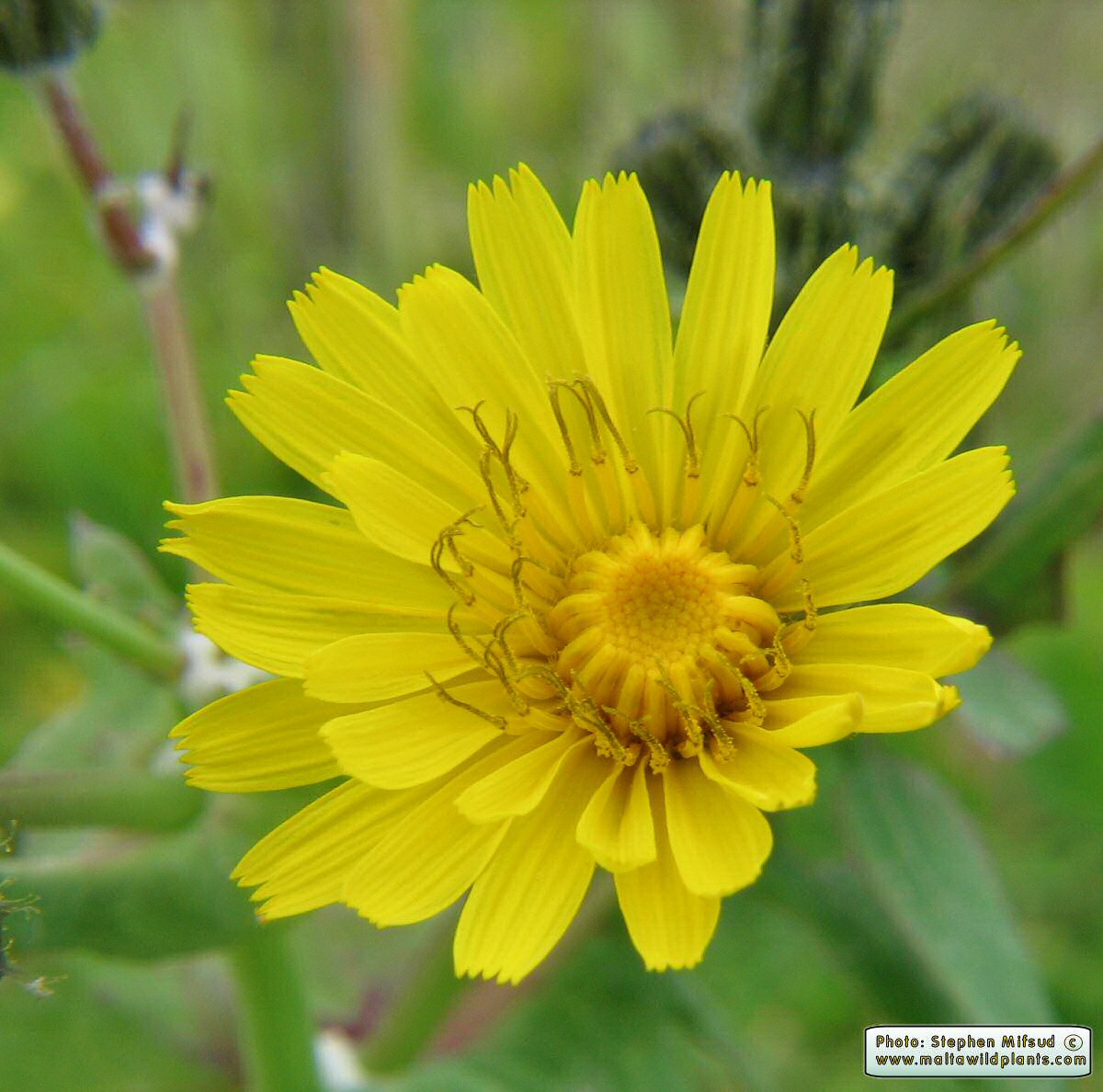
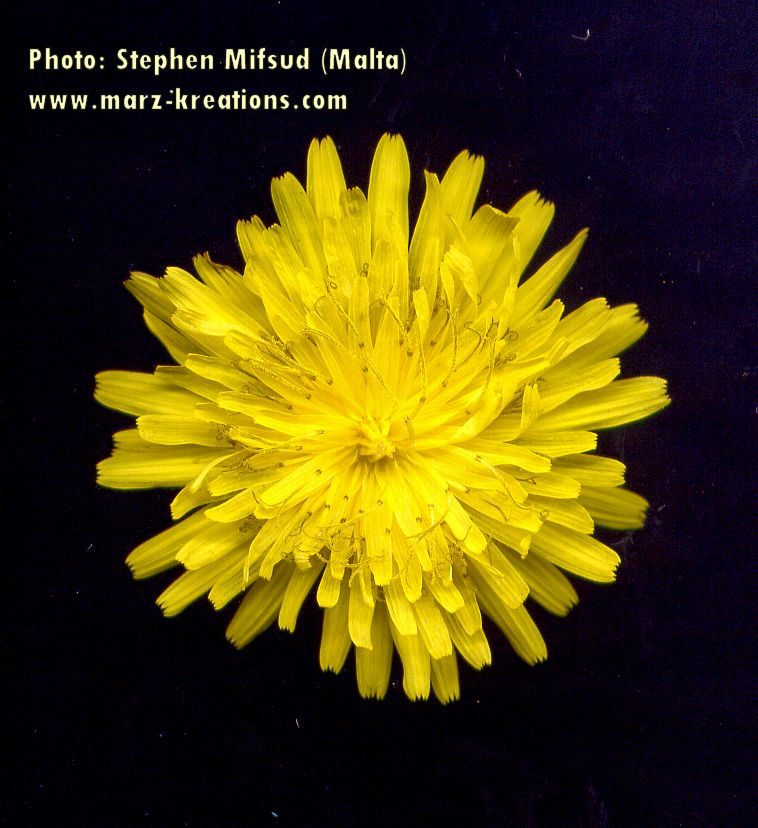
Close up photo of flower which consists of many ray florets on a common receptacle each having a strap shaped yellow petal radiating outwards. Note the tip of the petals (ray florets) have 5 'teeth-like' tips. |
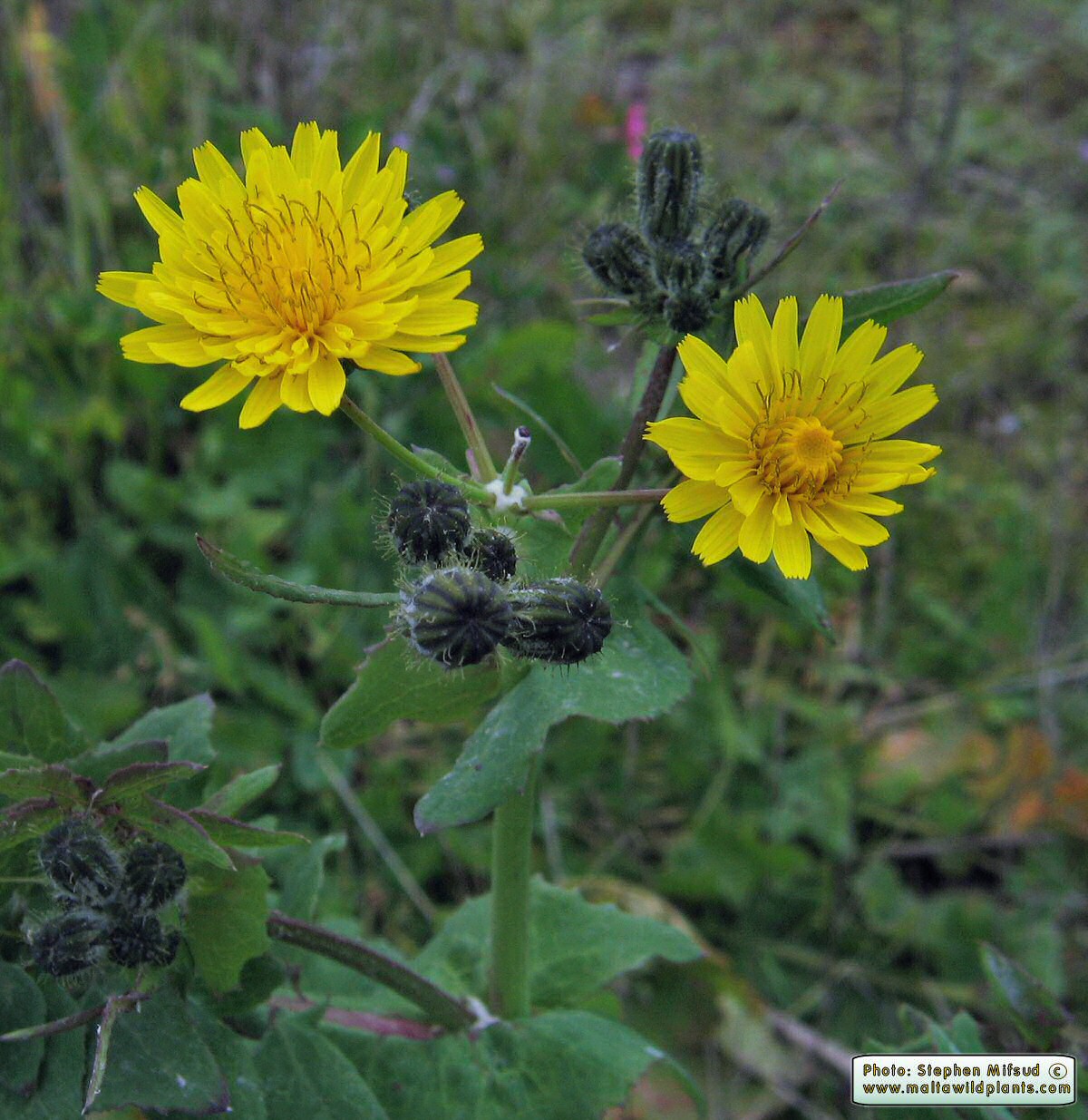
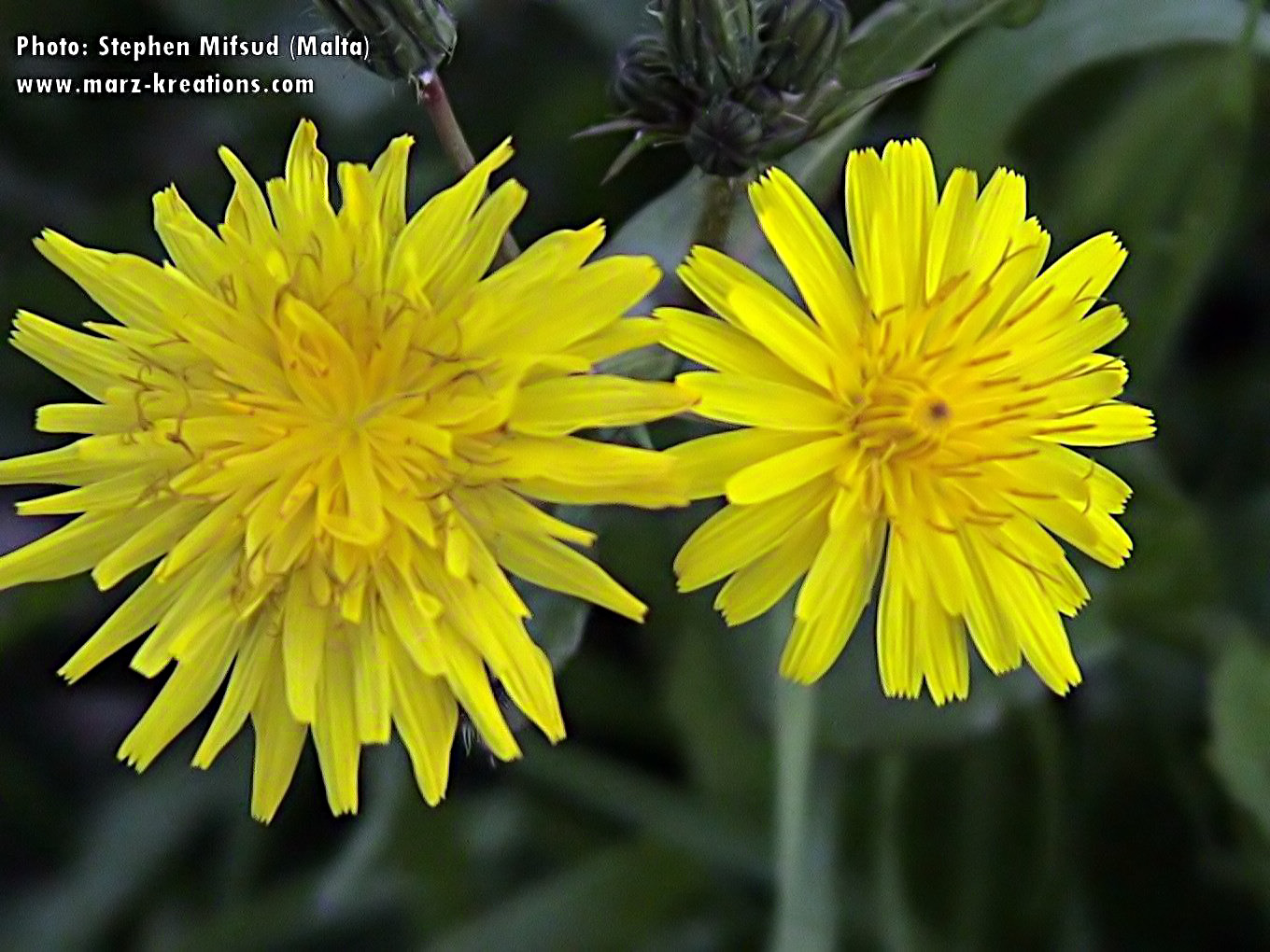
Photo of 2 flowers, the younger one being at the right, having a central button-like structure made of numerous unmature disc-florets. |
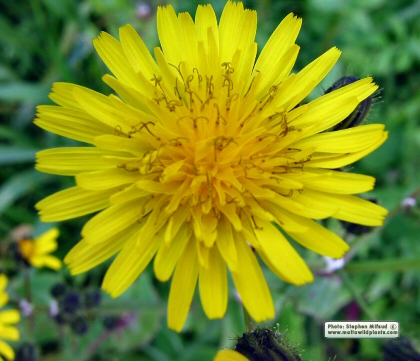
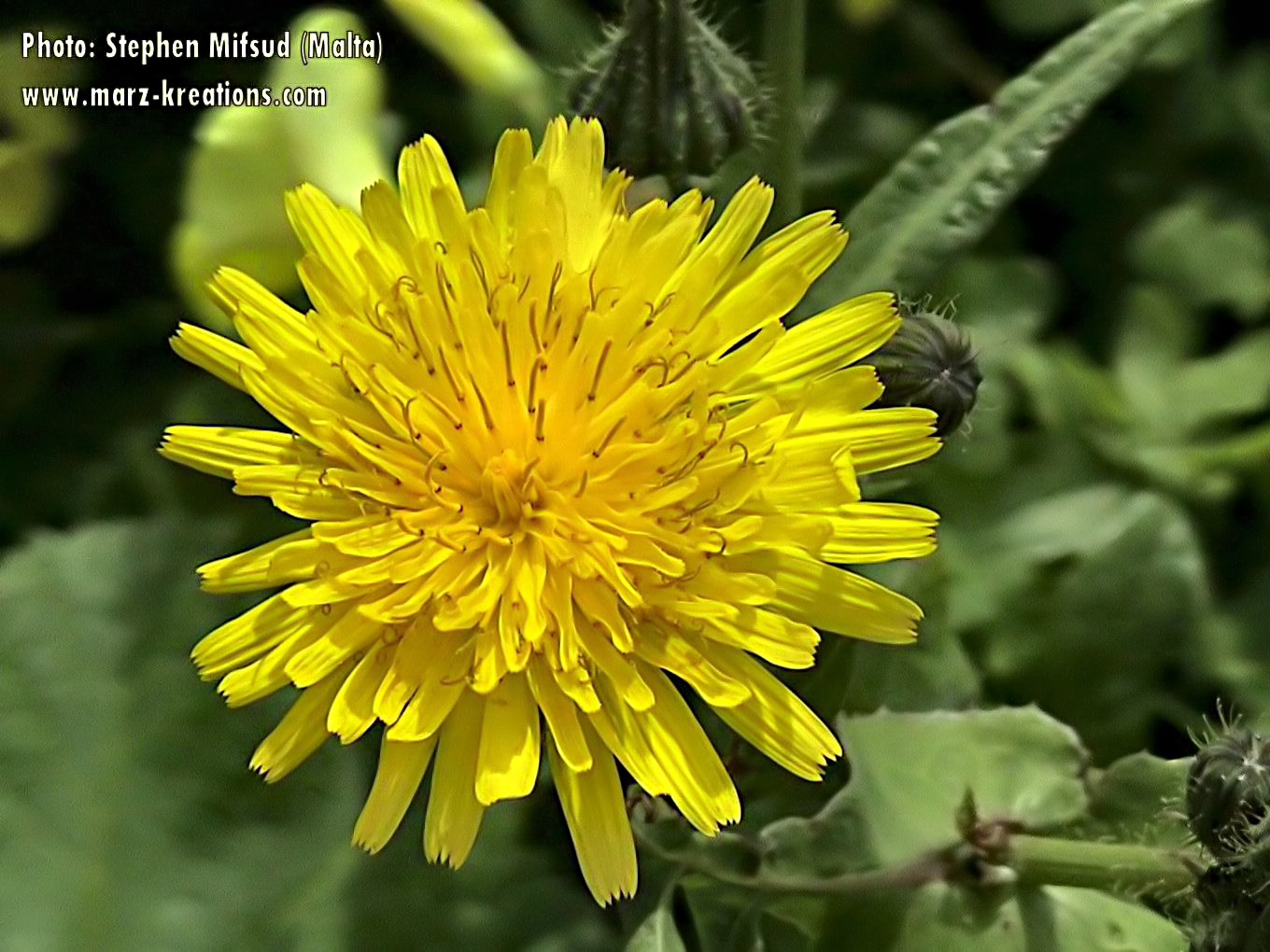
Close up photo of flower showing in detail the disc florets. |
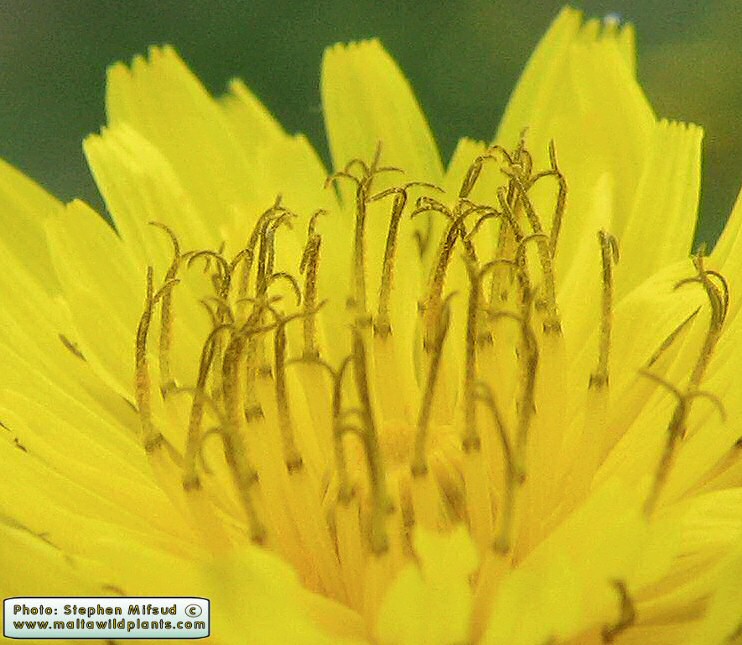
Close up photo of flower showing detail of the fused stamens around the lower part of the styles and the apical, 2-parted curled stigma. |
 |
 |
 |
 |
Photo of inflorescence which is the cymose pannicle type (oppositely branching panicles, with one terminal flower located where the branch splits in two.). |
Close up photo of central part of flowerhaving numerous erect, long disc florets. |
Close up photo of a young flower, with only one concentric row of disc florets being mature. Each disc floret have 2 curled stigma, and a column of stamens at the centre or lower part of style. There a dark yellow band at the apical part of the stamens. |
Close up photo of flower showing detail of the fused stamens around the lower part of the styles and the apical, 2-parted curled stigma. |
 |
 |
 |
 |
Scanned image of a flower. The darker ring on the central part of the style indicates the tips of the 5 fused stamens around the style. |
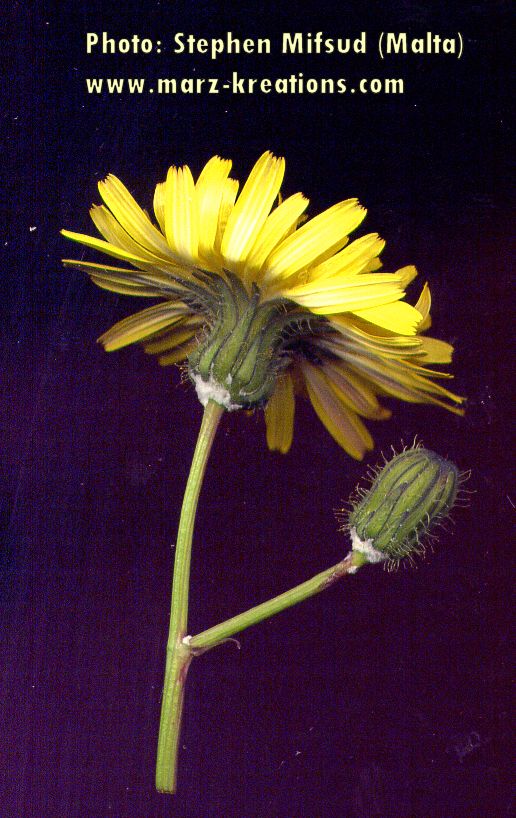
Scanned image of flower (lateral / bottom view) and bud. |
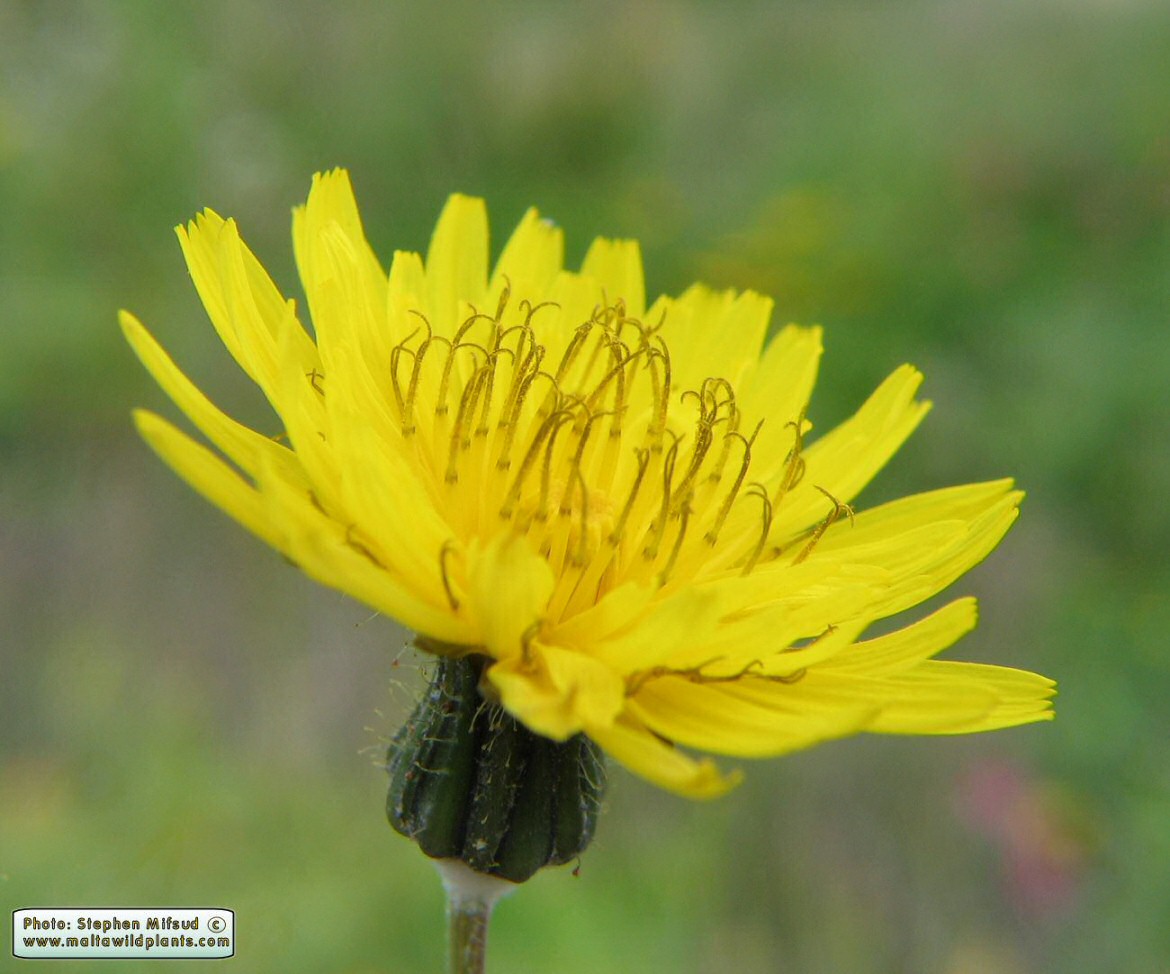
Photo of flower (lateral view) in situ. Note the coiled stigma branched into 2 parts. |
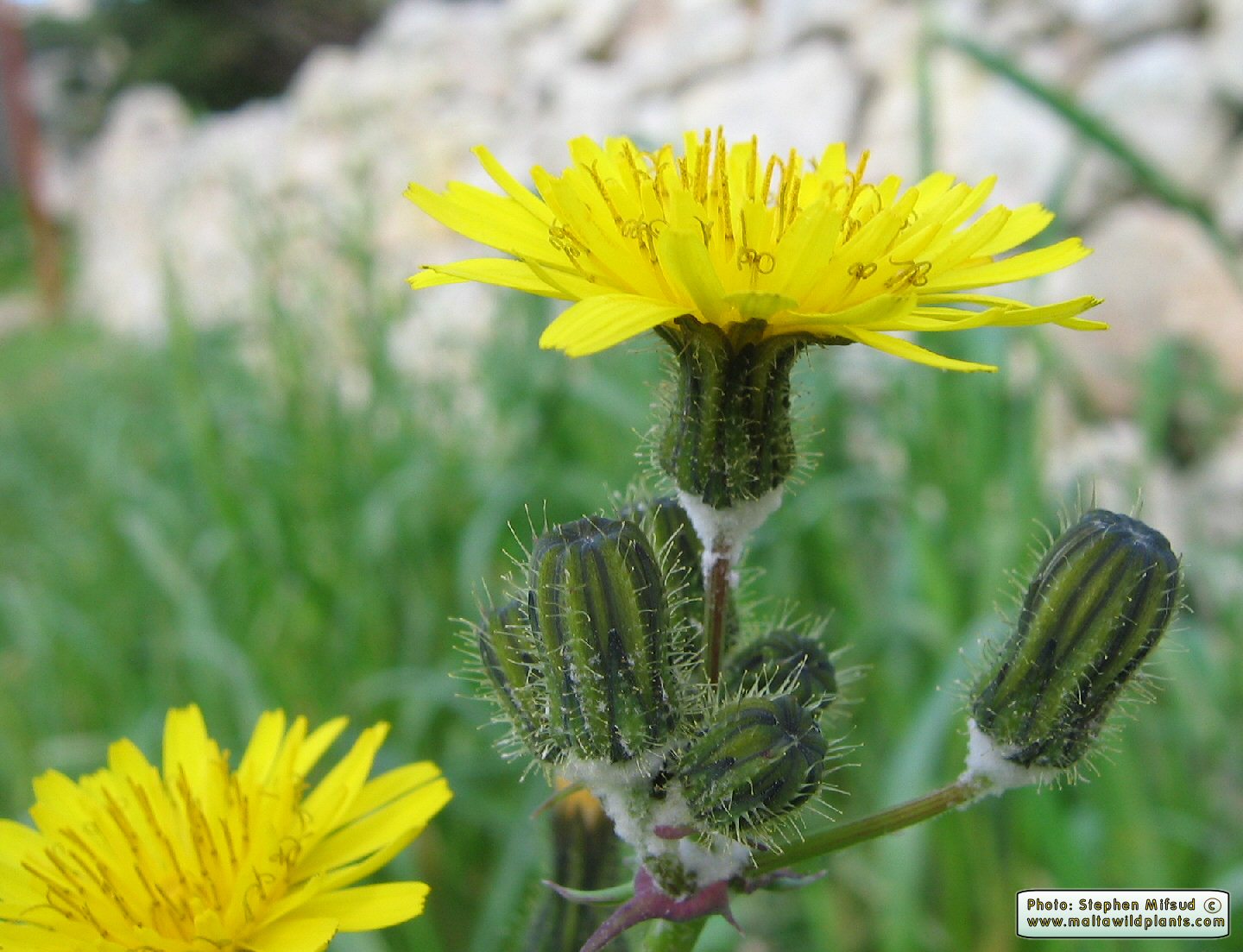
Photo of flower (lateral view) showing coiled stigma, style and further below joined stamens around the style. There is an interesting yellow-brown mark at the upper tip of the stamens. Also seen in the photo are the barrel shaped buds with few but conspicuous white bristles. |
 |
 |
 |
 |
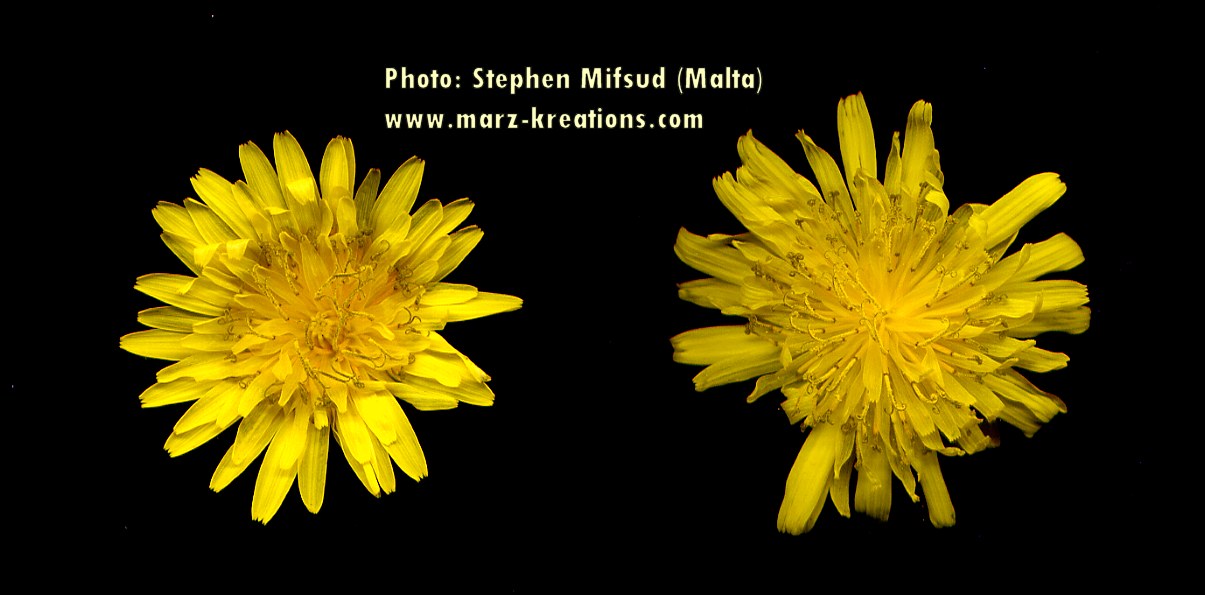
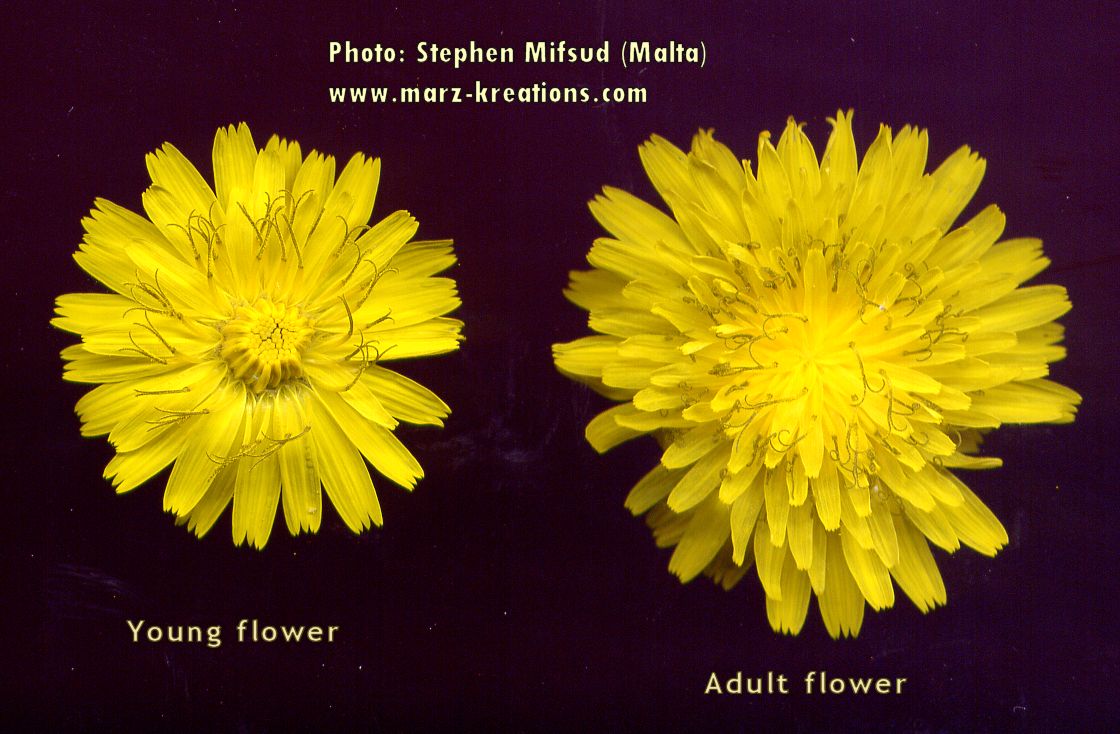
Scanned image against a dark background of 2 flowers. A young (left) and an adult one. |
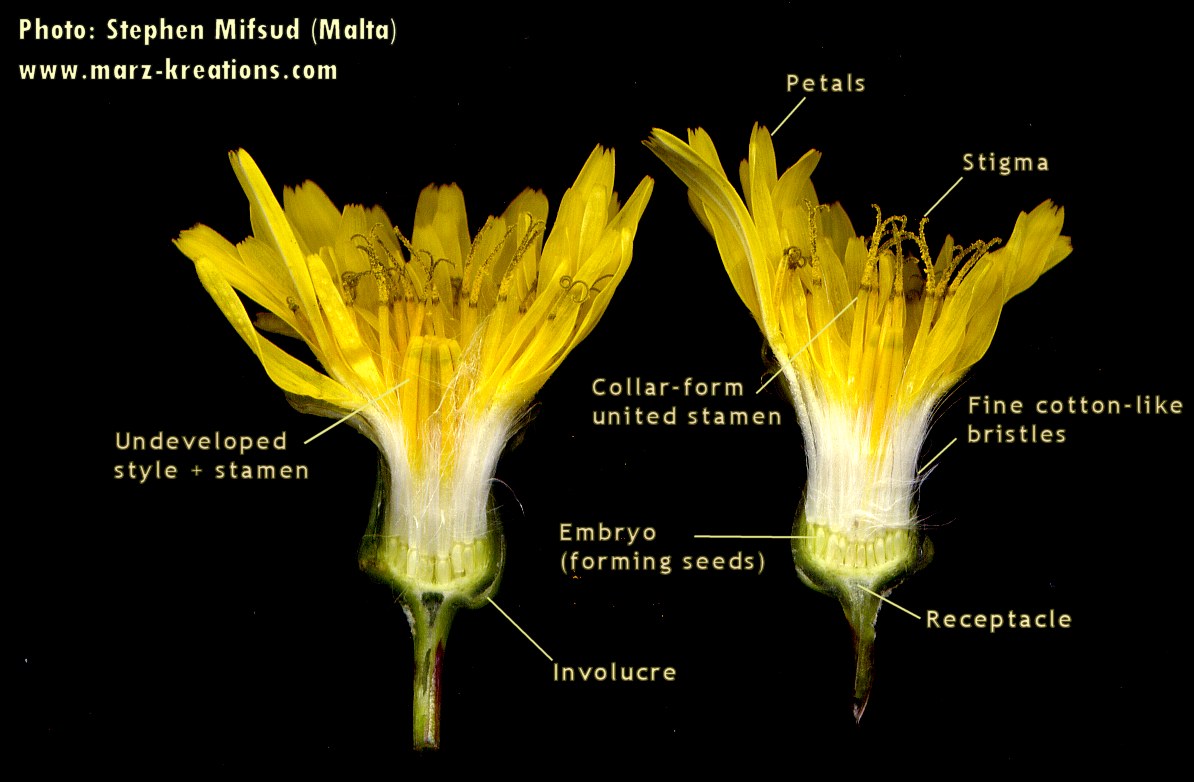
Scanned and annotated imaged of 2 flowers dissected longitudinally to show its anatomy. |
Magnified scanned image of a ray floret (scanned against a white background). Note the stamens fused around the style. |
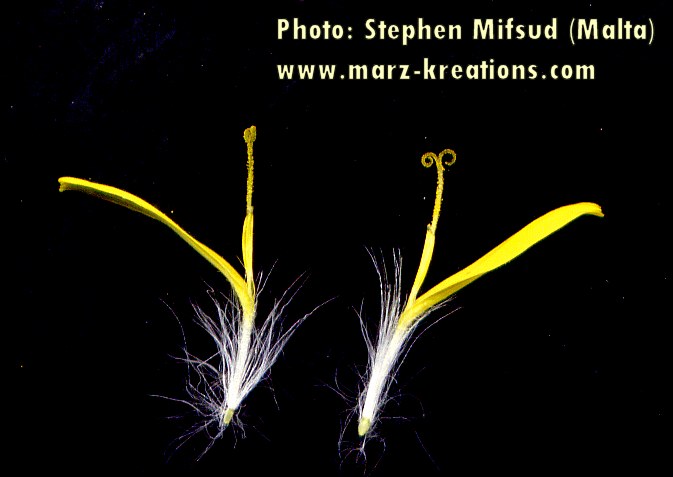
Anatomy and detail of ray floret (scanned against a black background). The white bristles, becoming the pappus of the seed are are considered as the 'true sepals' if the floret is considered as a whole single flower unit. |
 |
 |
 |
 |
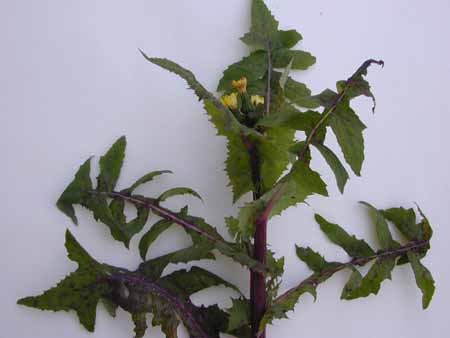
Photo of plant. |
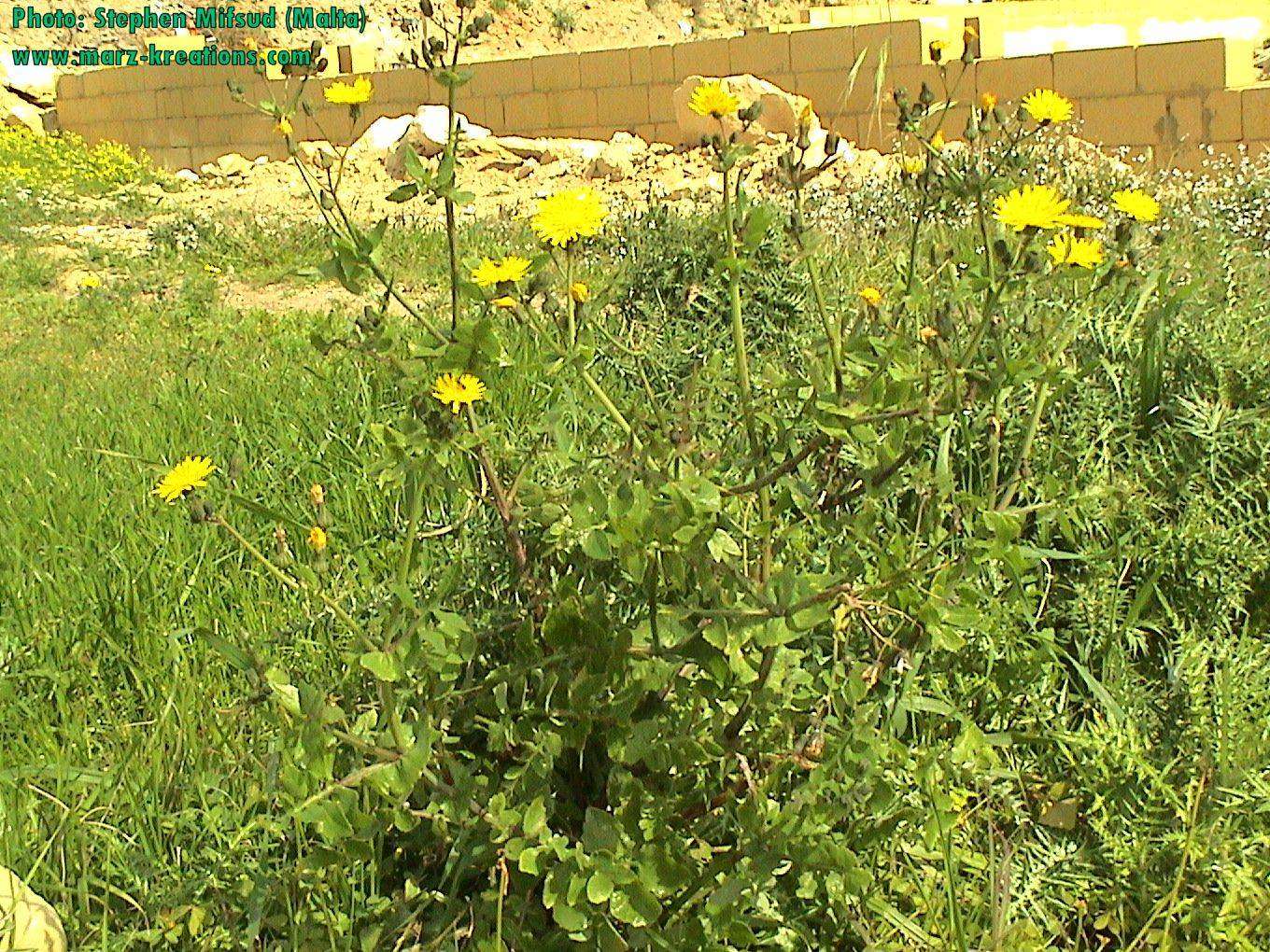
Photo of plant which is made up of plenty of leaves and inflorescences of cymose panicles. |
Photo of plant in situ (Feb 05). |
Photo showing well the plant's large auricle (leaf base lobes) embracing the stem. |
 |
 |
 |
 |
Scanned image of various typical young leaves of the plant. |
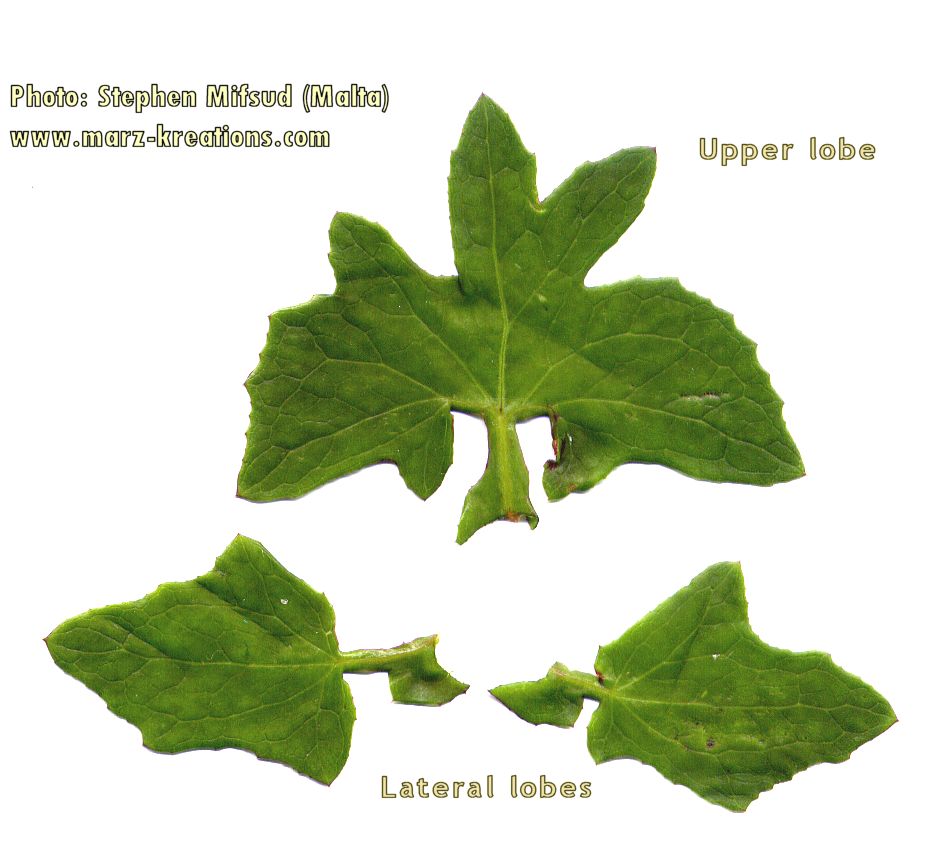
Magnified scanned image of upper young leaf. It consists of pairs of leaf-lobes arranged nearly opposite to each other along rachis, with a terminal apical lobe being the largest and 'rounded-arrow' shape. |
Scanned image of a compound-lobed leaf were the leaf lobes have further lateral lobes. |
Scanned image of leaves which varies considerably between different plants. In this image the leaf lobes are further lobed again instead of simple singular lobes. |
 |
 |
 |
 |
Scanned image of leaf lobes dissected from a leaf. Shown are 2 lateral lobes and the largest apical lobe. |
Scanned image of leaves which varies considerably between different plants. In this image the leaf lobes are slender. |
Scanned image of leaves which varies considerably between different plants. In this image the leaf lobes are broad. |
Photo of buds in situ. They are dark-green, ribbed, barrel shaped structures sparsely covered with white-cream bristles. |
 |
 |
 |
 |
Scanned image of the barrel-shaped buds. Note the dark edges of every phyllary. |
Magnified scanned image of the barrel shaped buds, made up of 2 rows of leaflet-like structures called phyllaries. |
Scanned image of the fruit (early stage). They are vase shaped each having a swollen base and a tapering apex. |
Magnified scanned image of the fruit. Like the buds and the involucre of the flower, the walls of the fruit are made up of 2 rows of slender phyllaries. |
 |
 |
 |
 |
Scanned image of a dissected fruit, containing many developing seeds with pappus. There is also scanned some seeds with pappus and some seeds with the pappus removed. |
Photo of the seeds, each bearing a white pappus. |
Photo of fruit with ripe seeds. Some seeds are already blown away by wind, hence uncovering the bare green receptacle. As it can be seen, seeds are brown and the pappus is directly joined with the seed without any beak. |
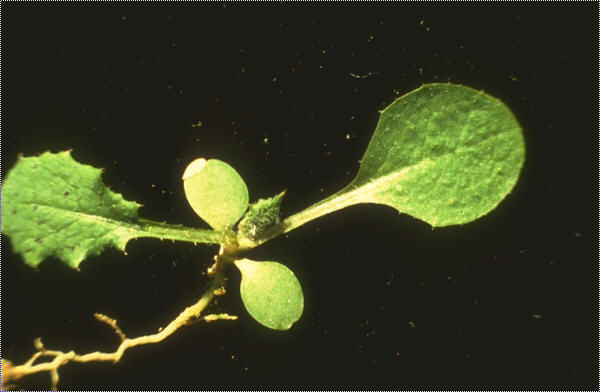
Photo of seedling. |
 |
 |
 |
|
Colour illustration of the plant taken from Flora Danica Online. |
|
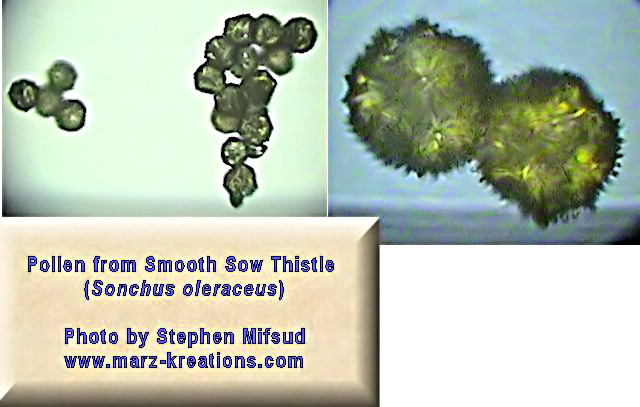
Magnified images of the pollen under light microscope. They have a polyhedral shape with many radiating spike like projections. |
- |
|
|
|
| Submit More Information |
Use the form below to submit more information about this plant or a related species. If the data is taken from a book, journal, website, etc, please provide the corresponding reference / website address as indicated in the form. If it is your own observation, then your name will be cited.
Your Email address will never be displayed online, it is just for internal communication.
For plant species that are marked as rare, you can also report other locations in Malta where you have seen this species.
Finally you can report any mistakes or errors found on the plant profile for necessary corrections. This will help to improve the website's acuracy.
To have more details about each particular field, just move your mouse on it and wait for the help message to pop up
* = required fields.
|
|
|