Wild Plants of Malta & Gozo - Plant: Xanthium strumarium (Rough Cocklebur)

Rough Cocklebur

Xanthium strumarium / Rough Cocklebur / Ħobbejża Falza
This plant is brought to you by one of the project's sponsors:
HSBC Cares for the Environment Fund
More sponsors are needed for this project [ click here ]

Contents Links


Nomenclature

Botanical Data

Description

General Information

Photo Gallery

Further Info & Links

Buy Seeds and Docs

Submit own info
about this plant

Give a small Donation Online

FORUM

Copyright Info


Main Index

 
Visitor hits (Sep-2005)

Nomenclature

Species name:

Xanthium strumarium   L.

Author(s):

Carl von Linné;
   Sweden, 1707-1778

General names:

Rough Cocklebur, Common Cocklebur, Burweed.

Maltese name:

Ħobbejża Falza

Plant Family:

Asteraceae/ Compositae   (Daisy (Sunflower) Family)

Name Derivation:

Xanthium = Yellow or amber (Greek)
strumarium = Swelling, tumor-like; in reference to the swollen fruit (Latin)

Synonyms:

None

Remarks:

-


Botanical Data

PLANT STRUCTURE:

Characteristic

Growth Form

Branching

Surface

Description

Erect :

Upright, vertically straight up well clear off the ground.

Highly Branched :

Numerous branches and sub-branches are present but the common main stem is usually tall and well visible.

Pubescent :

Covered with soft short hairs often pointing downwards.

General
Picture

Wild Plants of the Mediterranean Islands of Malta  - Copyright Stephen Mifsud / Maltawildplants.com / Malta (2002-2007) Wild Plants of the Mediterranean Islands of Malta  - Copyright Stephen Mifsud / Maltawildplants.com / Malta (2002-2007) Wild Plants of the Mediterranean Islands of Malta  - Copyright Stephen Mifsud / Maltawildplants.com / Malta (2002-2007)

LEAVES:

Characteristic

Arrangement

Attachment

Venation

Description

Alternate :

Growing at different positions along the stem axis.

Stalked / Petiolate :

Hanging out by a slender leaf-stalk.

Pinnate venation :

Lateral veins which diverge from the midrib towards the leaf marhins.

General
Picture

Wild Plants of the Mediterranean Islands of Malta  - Copyright Stephen Mifsud / Maltawildplants.com / Malta (2002-2007) Wild Plants of the Mediterranean Islands of Malta  - Copyright Stephen Mifsud / Maltawildplants.com / Malta (2002-2007) Wild Plants of the Mediterranean Islands of Malta  - Copyright Stephen Mifsud / Maltawildplants.com / Malta (2002-2007)
 

Characteristic

Leaf Shape

Leaf Margin

Remarks

Description

Triangular :

Triangle shape, broad at base. It has a V-shaped or rounded notch at the base.

Coarsely Serrate :

Margin deeply dented outside.

Long Petiole

Leaf stalk is more than the length of the supporting leaf.

General
Picture

Wild Plants of the Mediterranean Islands of Malta  - Copyright Stephen Mifsud / Maltawildplants.com / Malta (2002-2007) Wild Plants of the Mediterranean Islands of Malta  - Copyright Stephen Mifsud / Maltawildplants.com / Malta (2002-2007) Wild Plants of the Mediterranean Islands of Malta  - Copyright Stephen Mifsud / Maltawildplants.com / Malta (2002-2007)

FLOWERS:

Characteristic

Colour

Basic Flower Type

No. of Petals

No. of Sepals

Description

Green

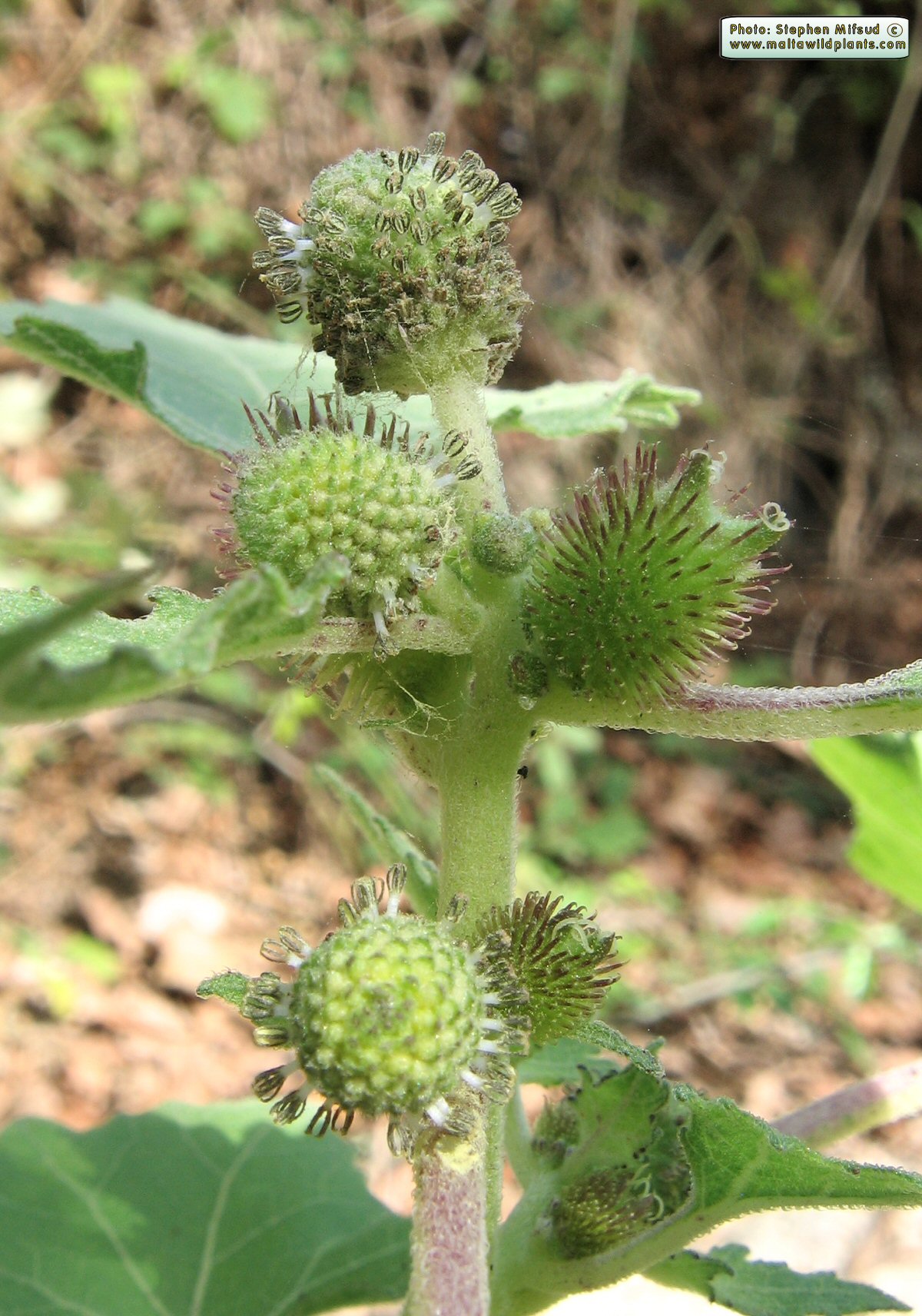
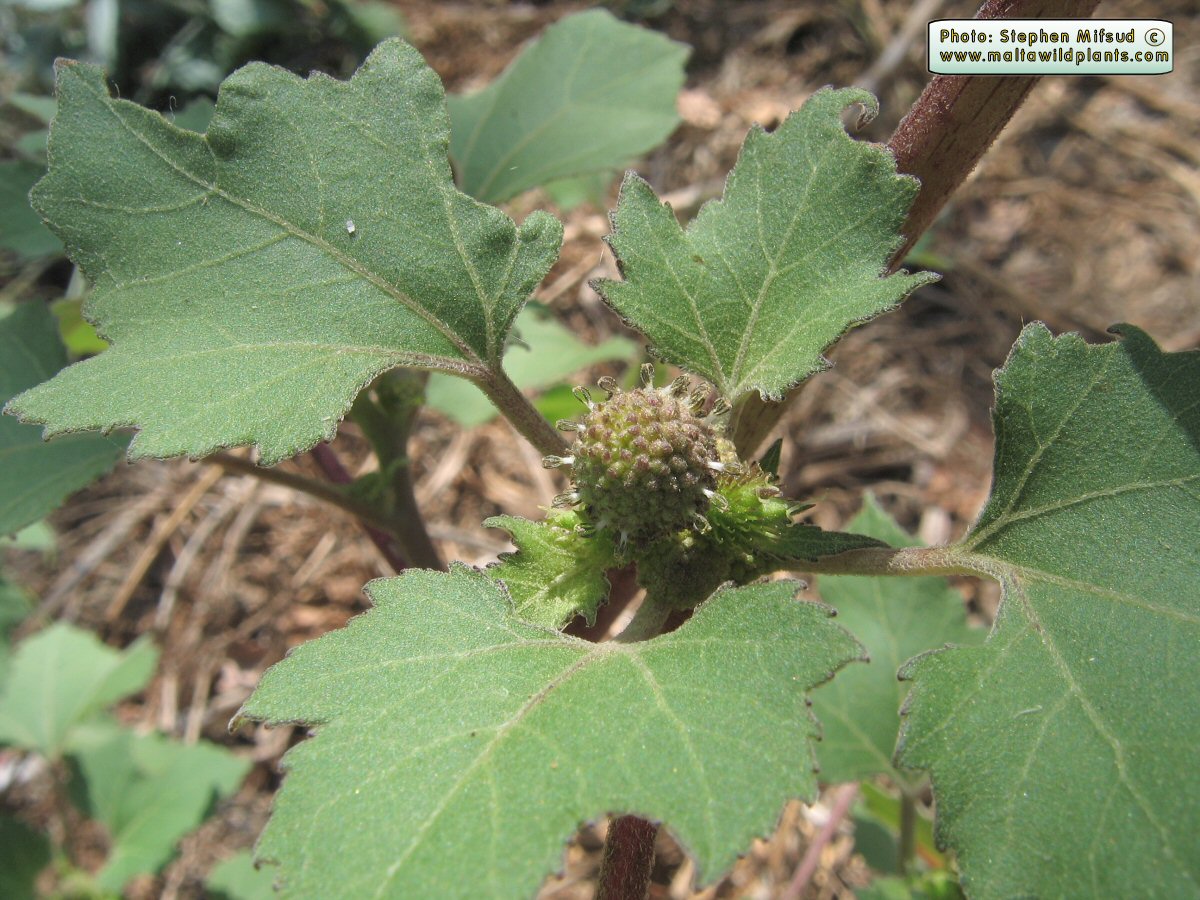
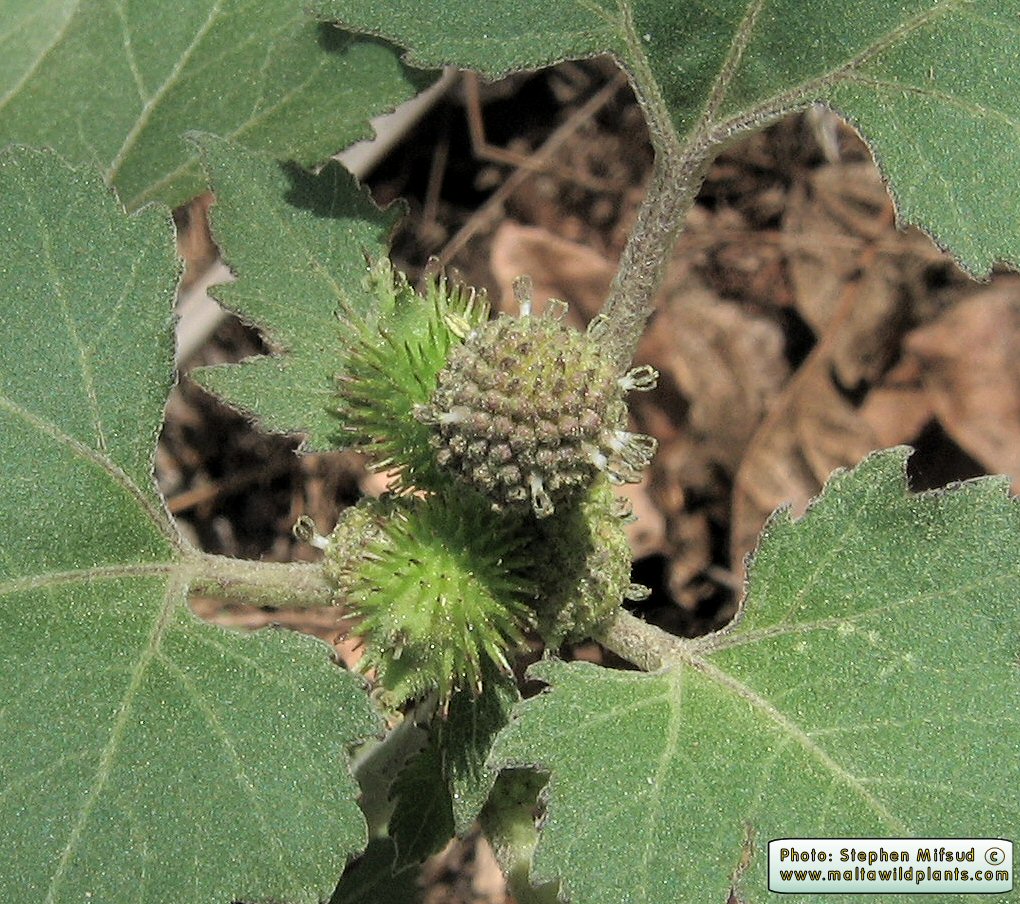
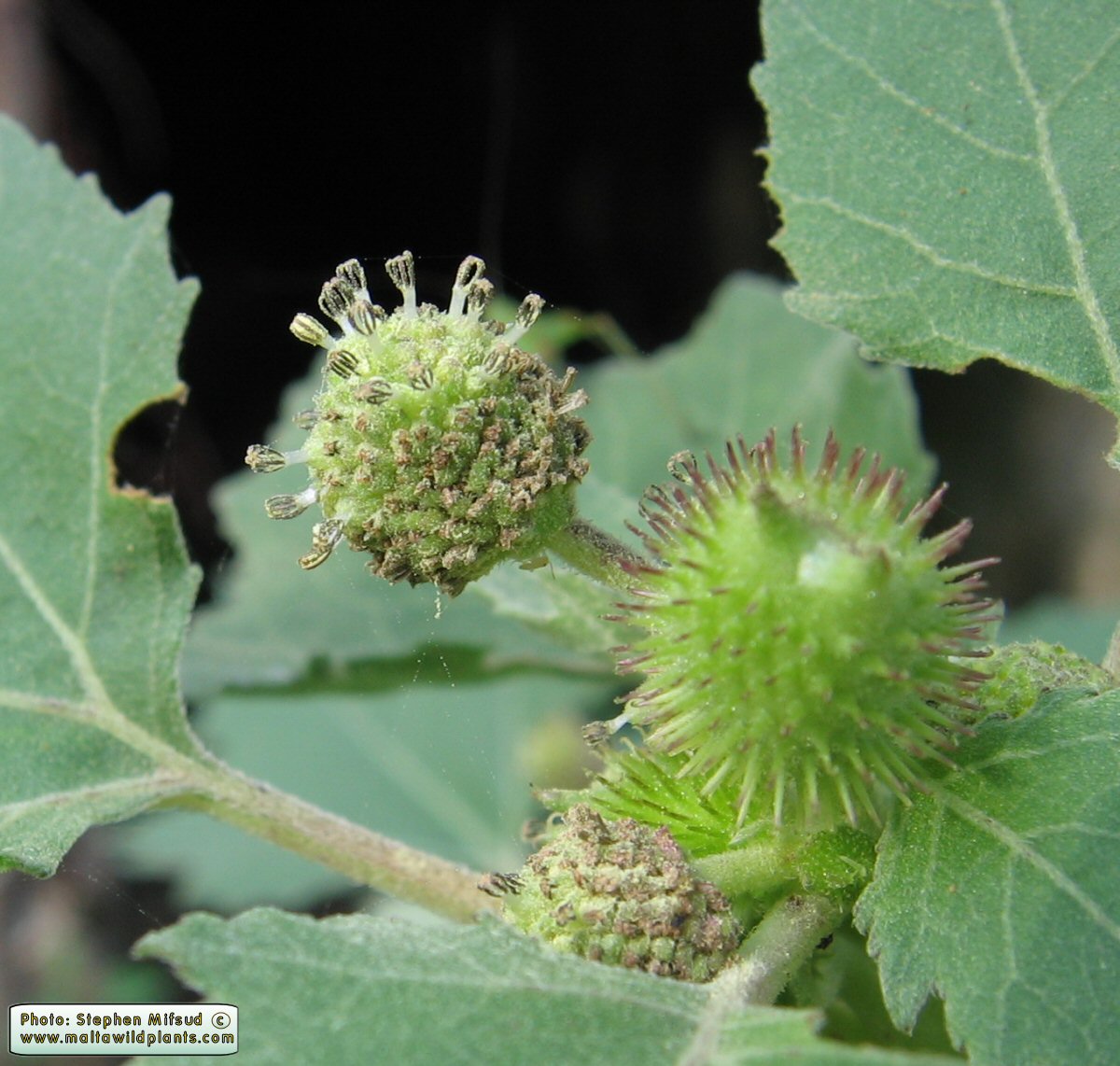
Male: Rather inconspicuous flower heads lacking radiating petals (=ray florets) and only bear tiny, disc-florets packed on a common receptacle. Such flower-heads normally have a cylindrical, cushion-like or discoid shape.

Female: Disc florets very rudimentary, consisting only of hair like styles that are barely visible to the naked eye.

0

Male and female flowers have no petals.

Female: 5 + 1

Female flowers have 5 free sepals at the very base of the flower and a single compound involucral structure.

General
Picture

  Wild Plants of the Mediterranean Islands of Malta  - Copyright Stephen Mifsud / Maltawildplants.com / Malta (2002-2007) Wild Plants of the Mediterranean Islands of Malta  - Copyright Stephen Mifsud / Maltawildplants.com / Malta (2002-2007) Wild Plants of the Mediterranean Islands of Malta  - Copyright Stephen Mifsud / Maltawildplants.com / Malta (2002-2007)
 

Characteristic

Inflorescence

Description

Ovary

Stamens

Description

Loose axillary racemes

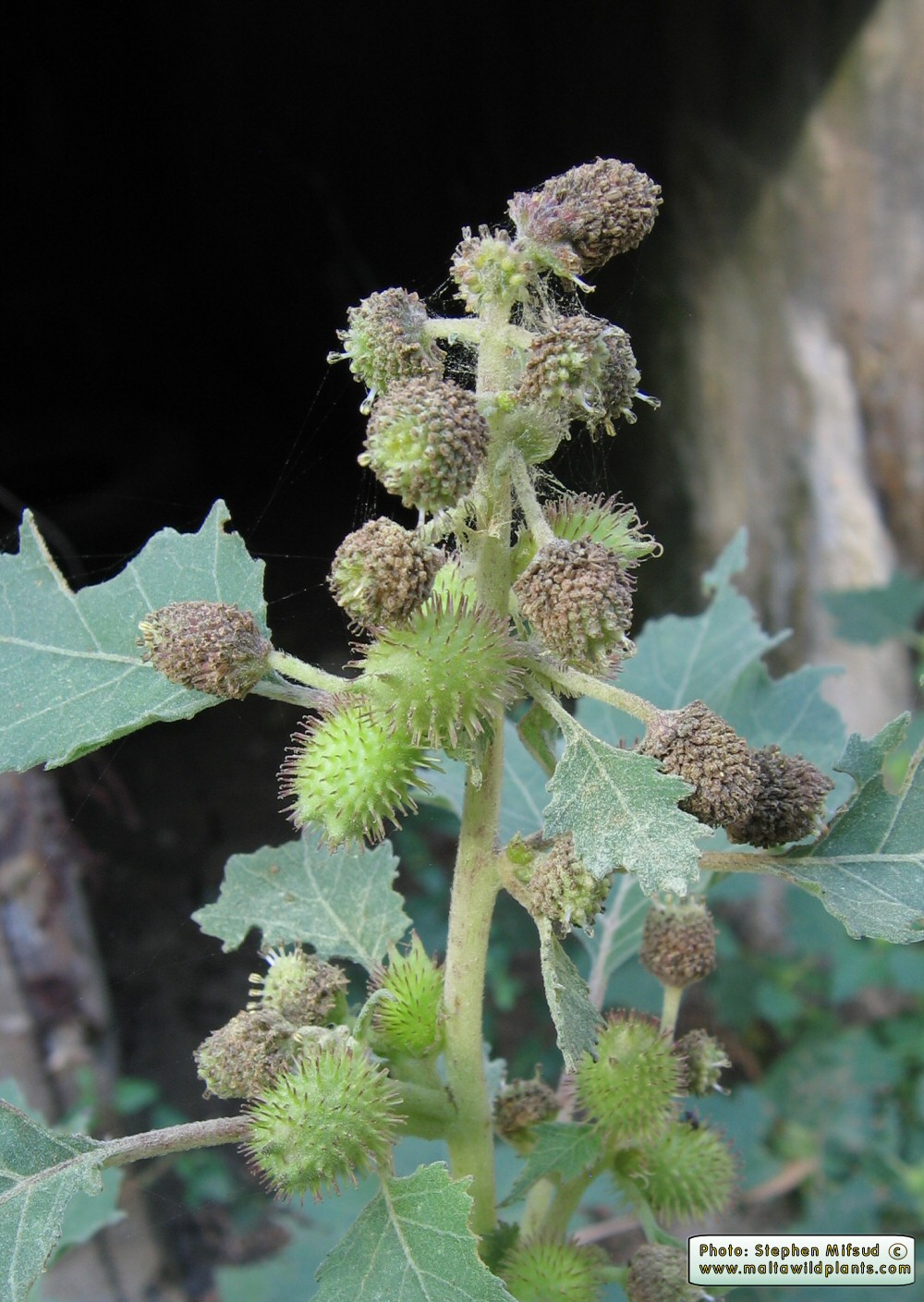
Several flowers in a loose raceme growing from leaf axils. Male capitula above female flowers.

Male capitulum is sub-spherical holding many florets which basically consists of staminal columns only. The female part have a specialized oval closed involucral structure with many hooks and 2 pointed hollowed beaks from which the hair like stigma of 2 flowers projects out.

Inferior :

Ovary situated below the flower parts (the calyx, corolla, and androecium). In other words, these are attached above the ovary.

5 free stamens

The white filaments are united as a single column.

General
Picture

Wild Plants of the Mediterranean Islands of Malta  - Copyright Stephen Mifsud / Maltawildplants.com / Malta (2002-2007) Wild Plants of the Mediterranean Islands of Malta  - Copyright Stephen Mifsud / Maltawildplants.com / Malta (2002-2007) Wild Plants of the Mediterranean Islands of Malta  - Copyright Stephen Mifsud / Maltawildplants.com / Malta (2002-2007) Wild Plants of the Mediterranean Islands of Malta  - Copyright Stephen Mifsud / Maltawildplants.com / Malta (2002-2007)
 

Characteristic

Scent

Average Flower Size

Pollen Colour

Other Notes

Description

None

Male: 10mm
Female: 20mm.

Pale Yellow

-


SEEDS:

Characteristic

No. Per Fruit

Shape

Size

Colour

Description

2

Oval and flattened

Flattened, oval seeds resembling shape and size of sunflower seeds.

12 - 15 mm

Black

General
Picture

Wild Plants of the Mediterranean Islands of Malta  - Copyright Stephen Mifsud / Maltawildplants.com / Malta (2002-2007) Wild Plants of the Mediterranean Islands of Malta  - Copyright Stephen Mifsud / Maltawildplants.com / Malta (2002-2007) Wild Plants of the Mediterranean Islands of Malta  - Copyright Stephen Mifsud / Maltawildplants.com / Malta (2002-2007) Wild Plants of the Mediterranean Islands of Malta  - Copyright Stephen Mifsud / Maltawildplants.com / Malta (2002-2007)

FRUIT AND OTHER BOTANICAL DATA:

Characteristic

Fruit Type

Colour of Fruit

Subterranean Parts

Other Notes

Description

Achenes without Pappus enclosed by a involucral wall.

2 achenes without Pappus held inside an oblong-ovate enclosed involucral wall with many radiating hooks.

Brown

(sometimes yellow-brown).

Taproot :

A rooting system where there is the main descending root of a plant having a single dominant large structure from which a network of smaller and long roots emerge.

Scent

Plant has a particular semi-aromatic smell.

General
Picture

Wild Plants of the Mediterranean Islands of Malta  - Copyright Stephen Mifsud / Maltawildplants.com / Malta (2002-2007) Wild Plants of the Mediterranean Islands of Malta  - Copyright Stephen Mifsud / Maltawildplants.com / Malta (2002-2007) Wild Plants of the Mediterranean Islands of Malta  - Copyright Stephen Mifsud / Maltawildplants.com / Malta (2002-2007) Wild Plants of the Mediterranean Islands of Malta  - Copyright Stephen Mifsud / Maltawildplants.com / Malta (2002-2007)

Plant Description

Life Cycle:

Annual

Habitat:

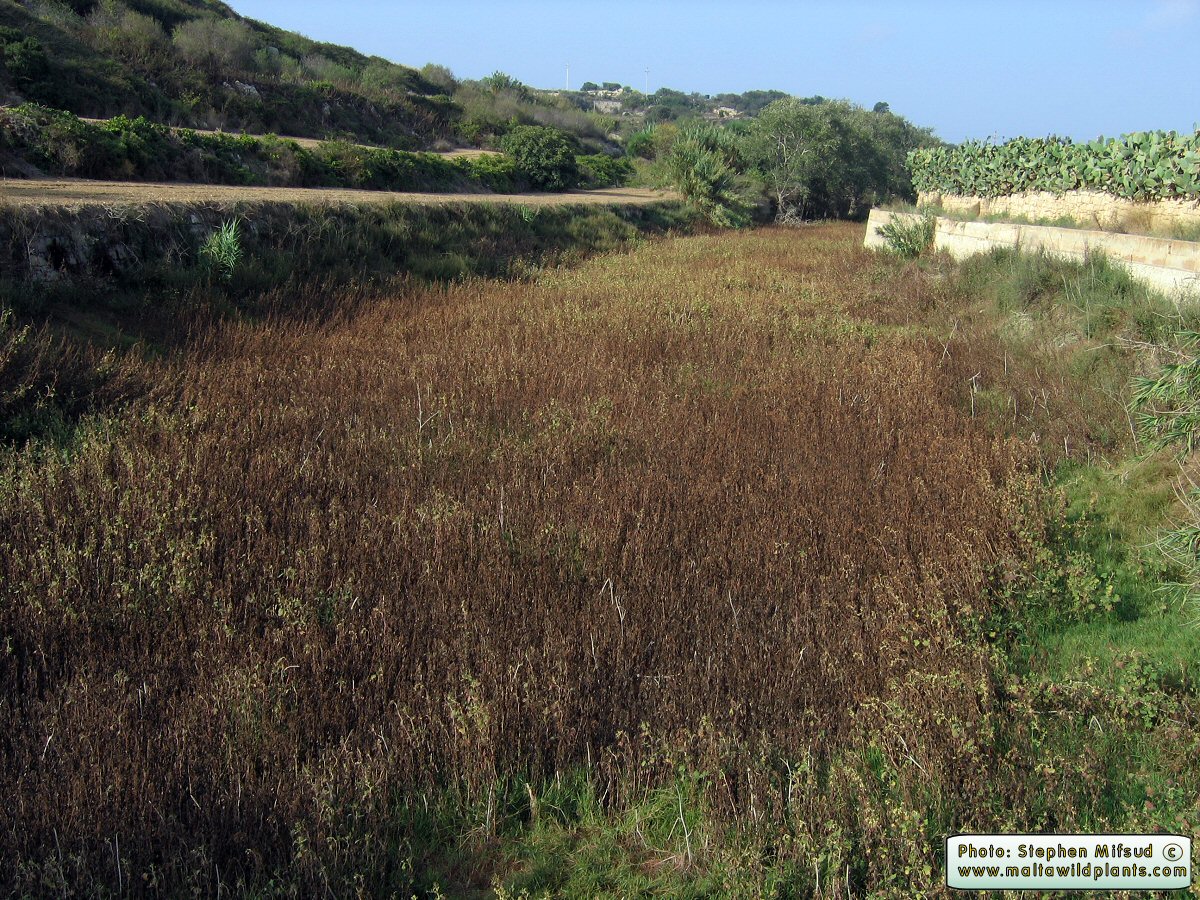
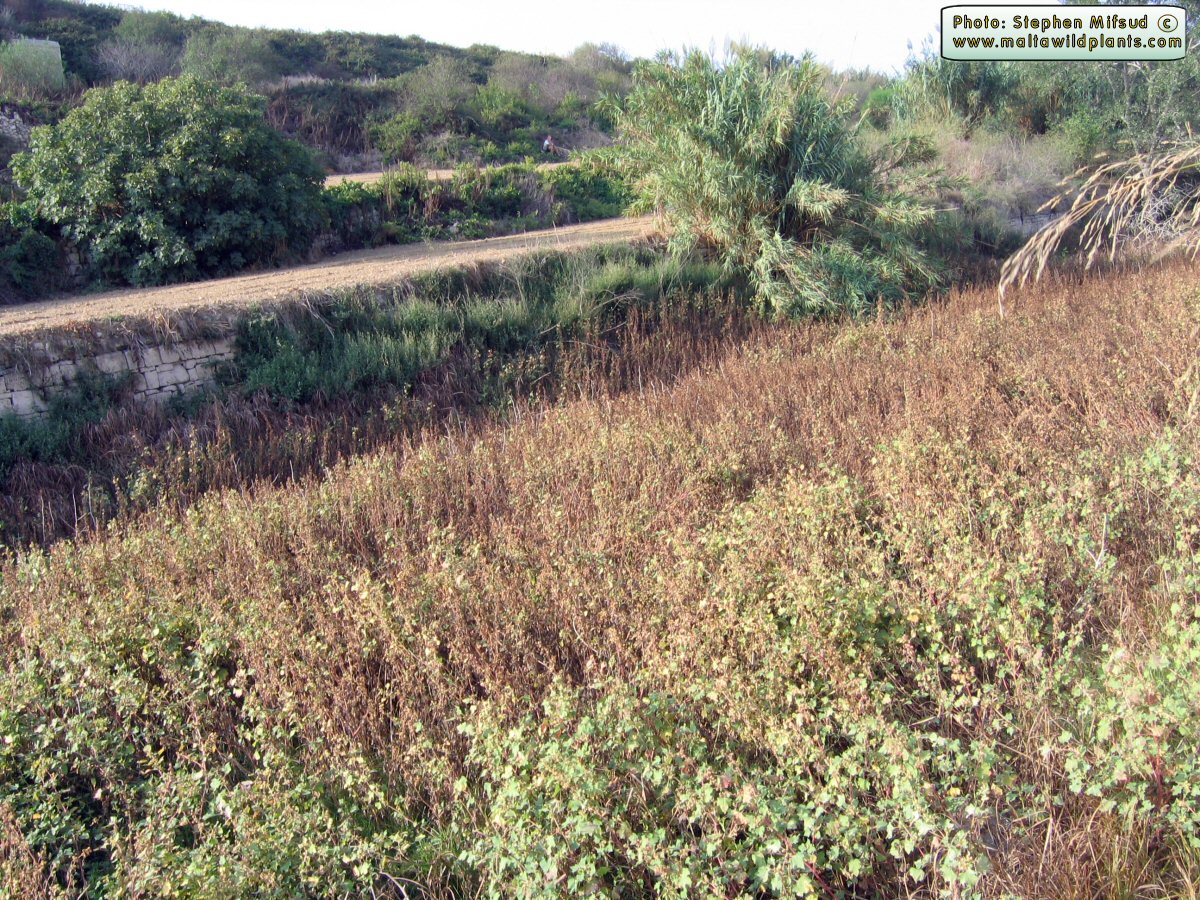
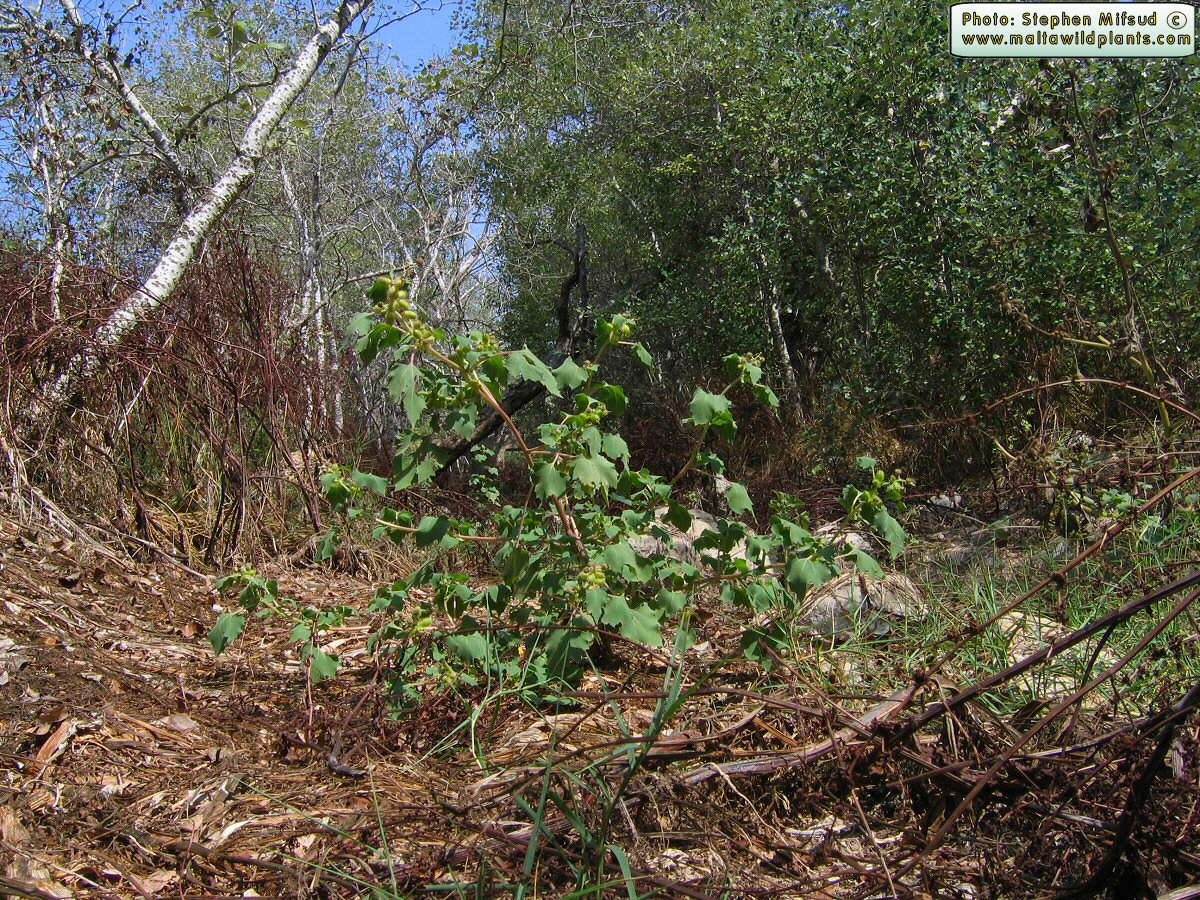
Dried valley bottoms.

Frequency:

Infrequent

Sources in Malta:

Densely populated at the bed of the Chadwick Lakes watercourse.

Plant Height:

30-120cm

Flowering Time:

Jul - Oct

Poison:

Poisonous

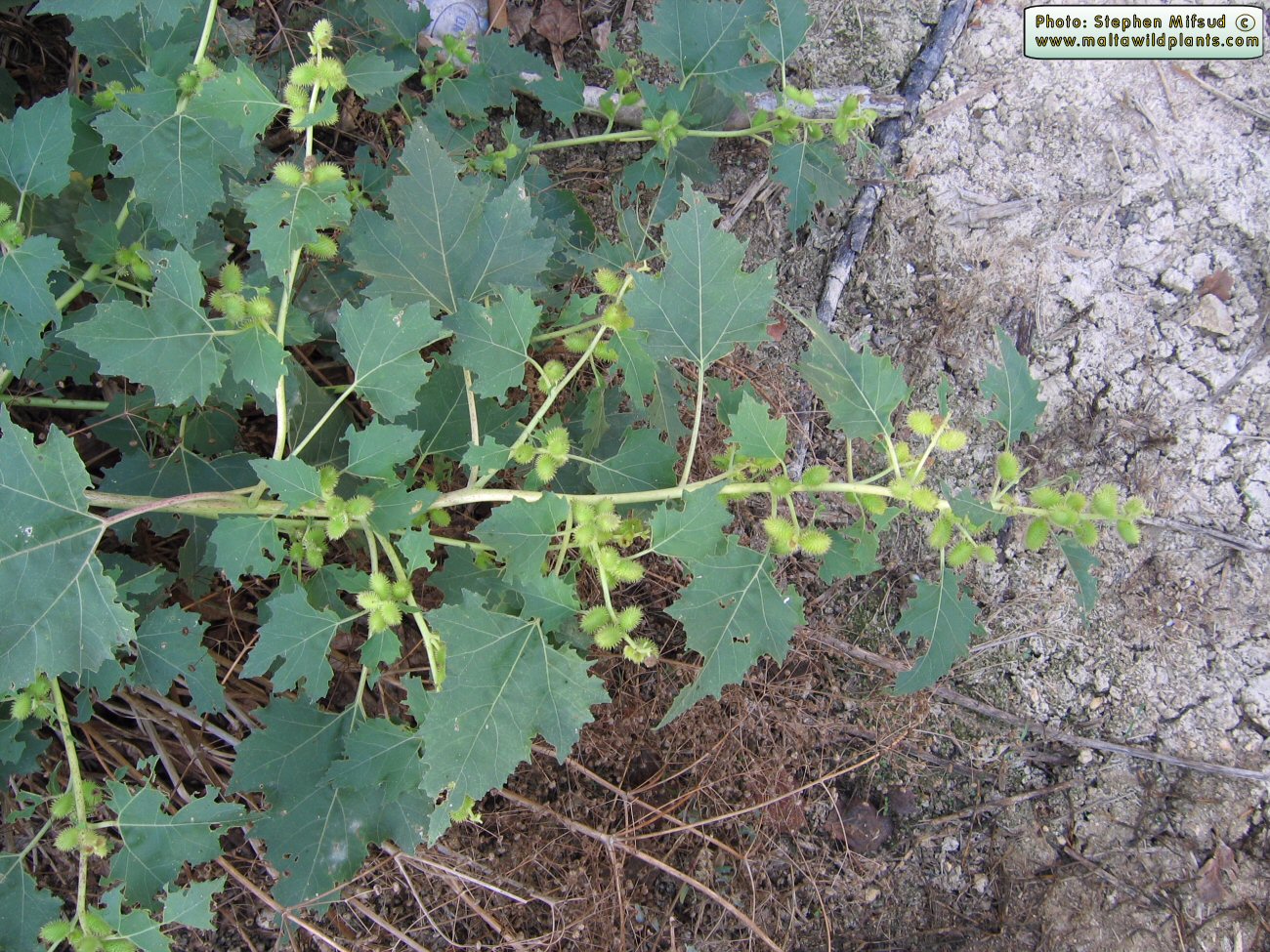
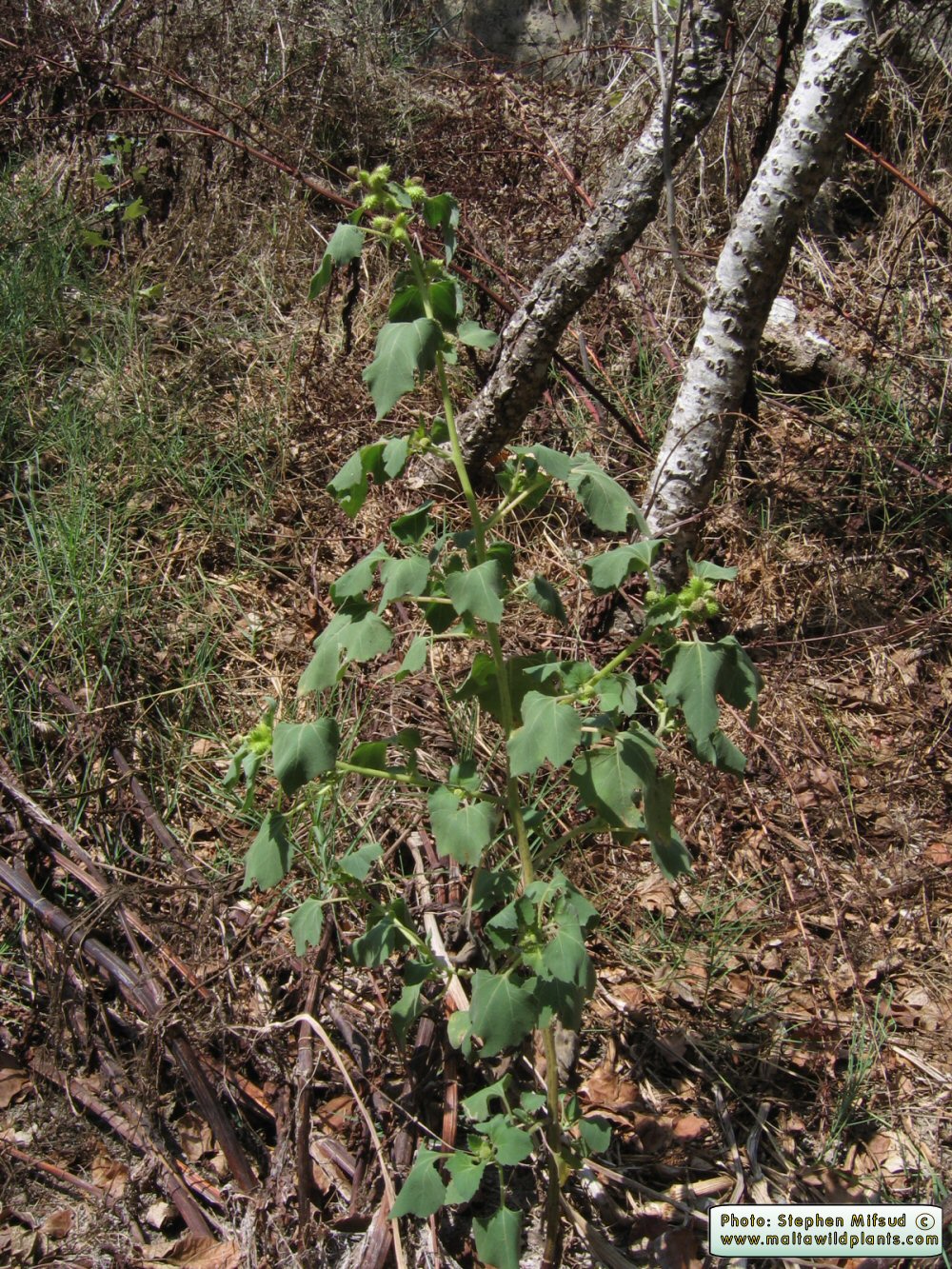
The herbaceous plant is erect, much branched, grows about 1 metre in height and produces many large leaves that it cannot be missed in its habitat. The stem can be found green, pitted with purple-maroon short streaks or completely maroon colour. It also have very short hair.

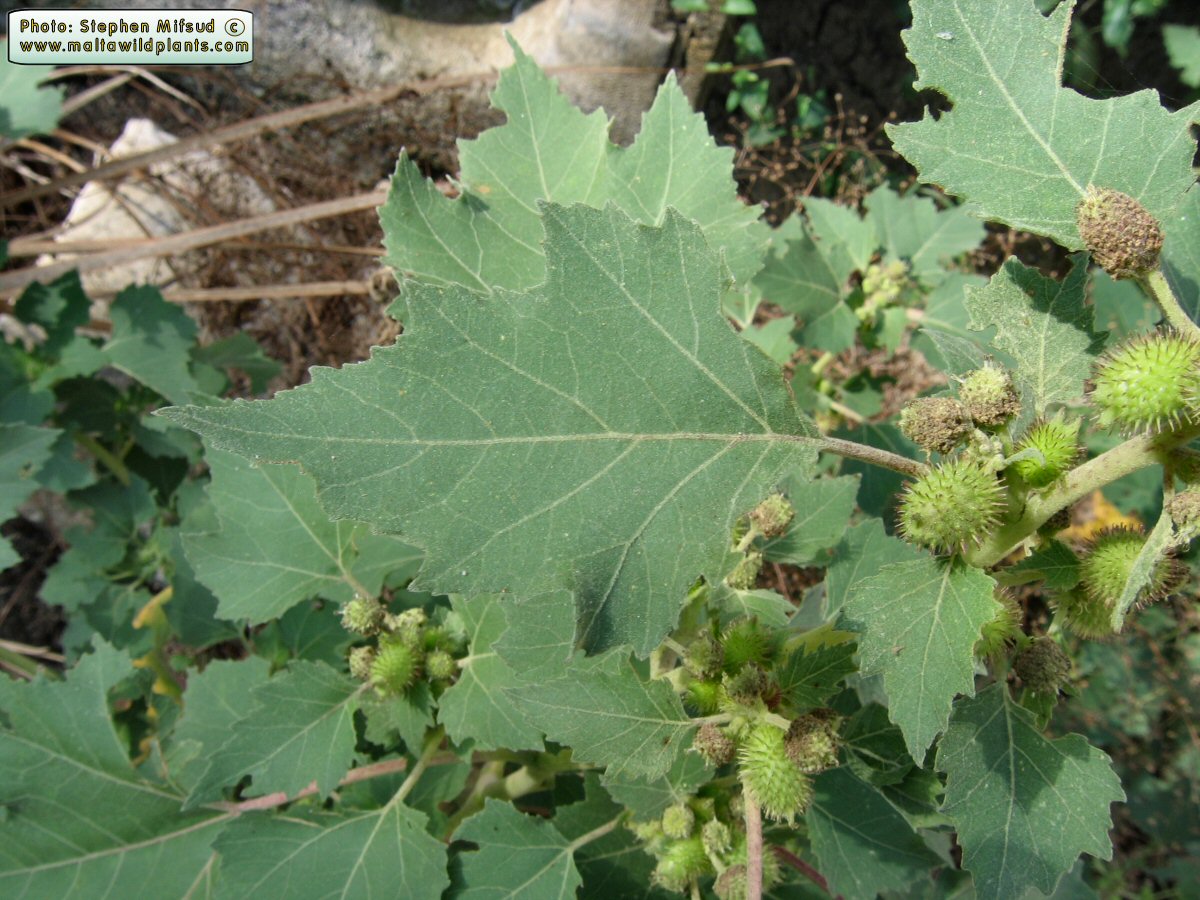
Leaves have a long petiole that is longer than the lamina length. The length of leaves vary with maturity but basal leaves can reach up to 16cm in length and 16cm in width. The shape of the leaf is roughly broad triangular with its base being V-notched or heart shaped (rounded notch). Mature leaves further produce 3 or 4 lobes. The outline is coarsely serrated and leaves show prominent pinnate venation.

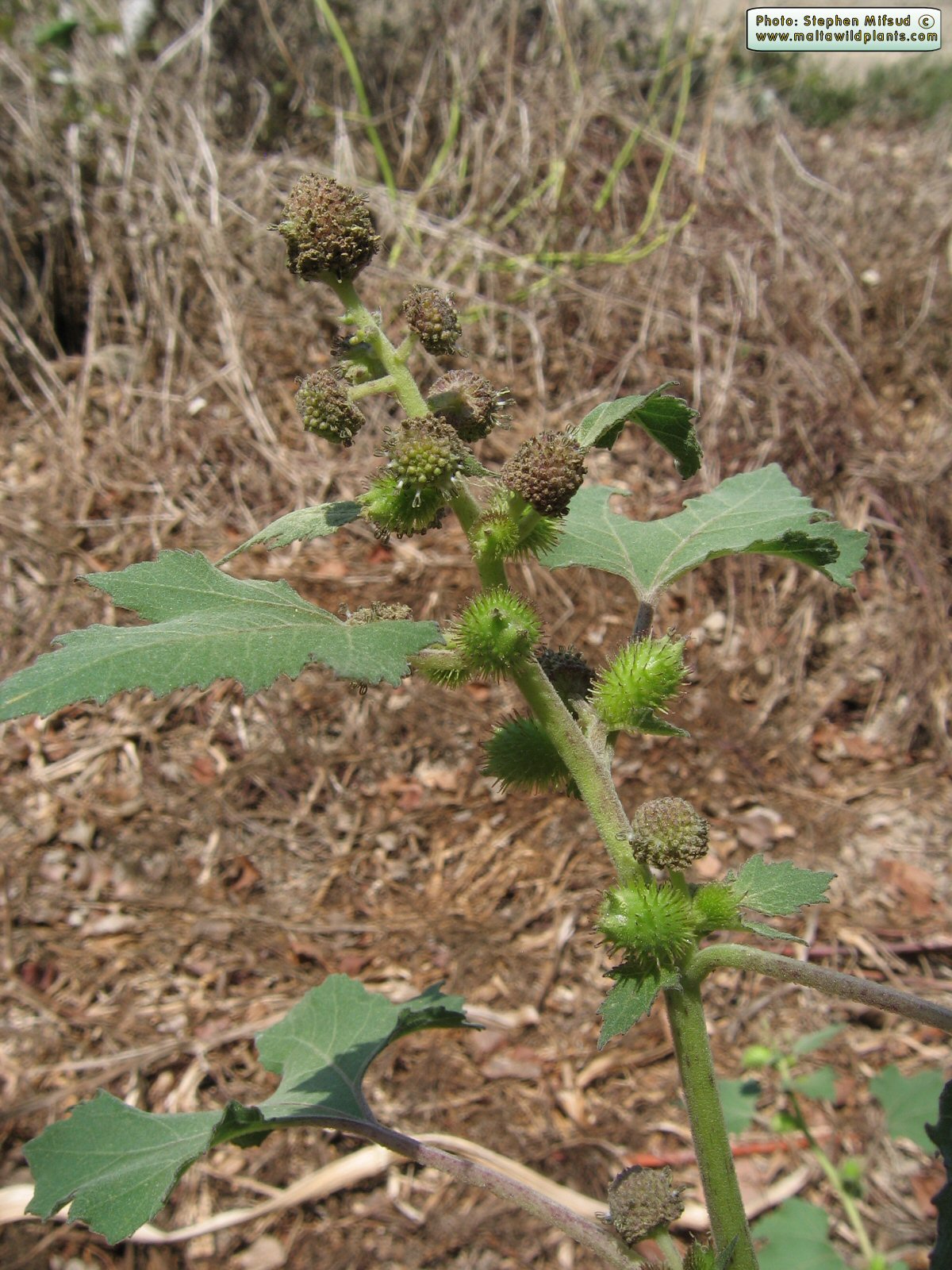
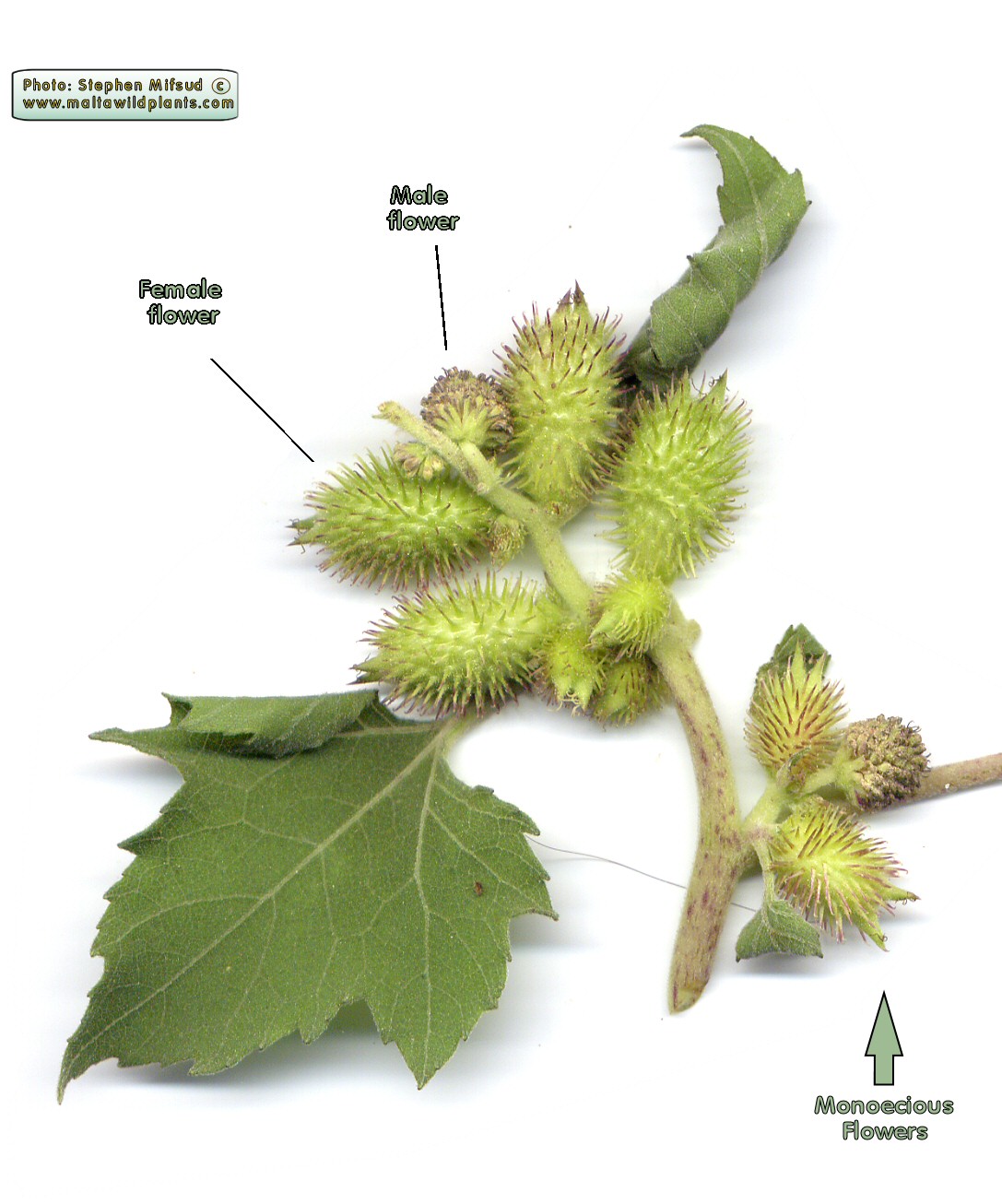
This plant produces monoecious flowers, that is male and female flowers separately on the same plant. Both flowers are in one cluster growing at leaf axils. The male flowers are above the female in any cluster. Both flowers are inconspicuous

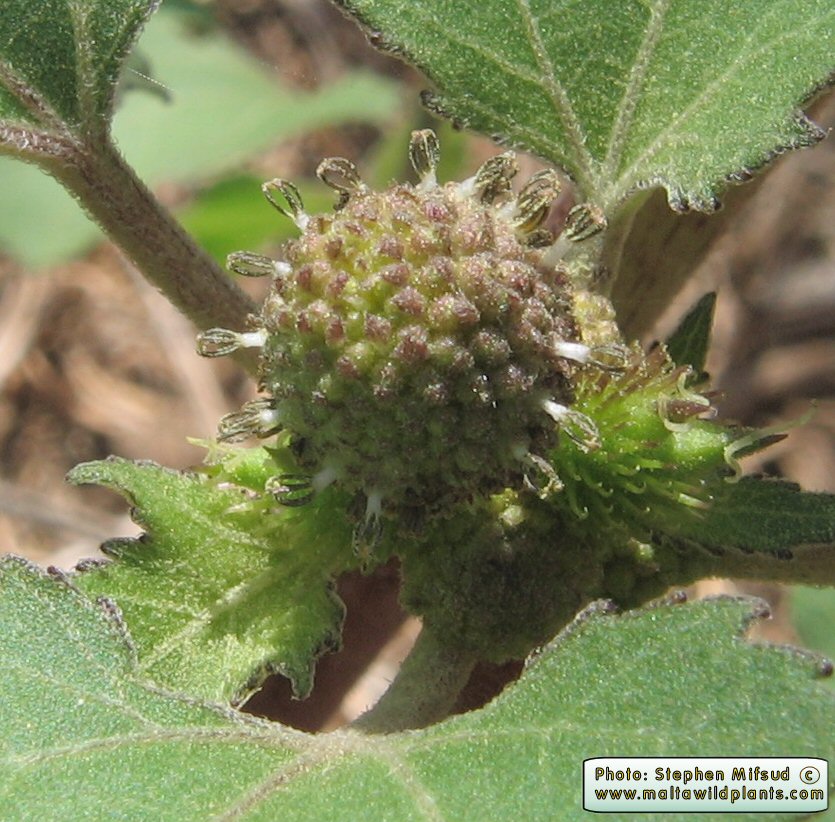
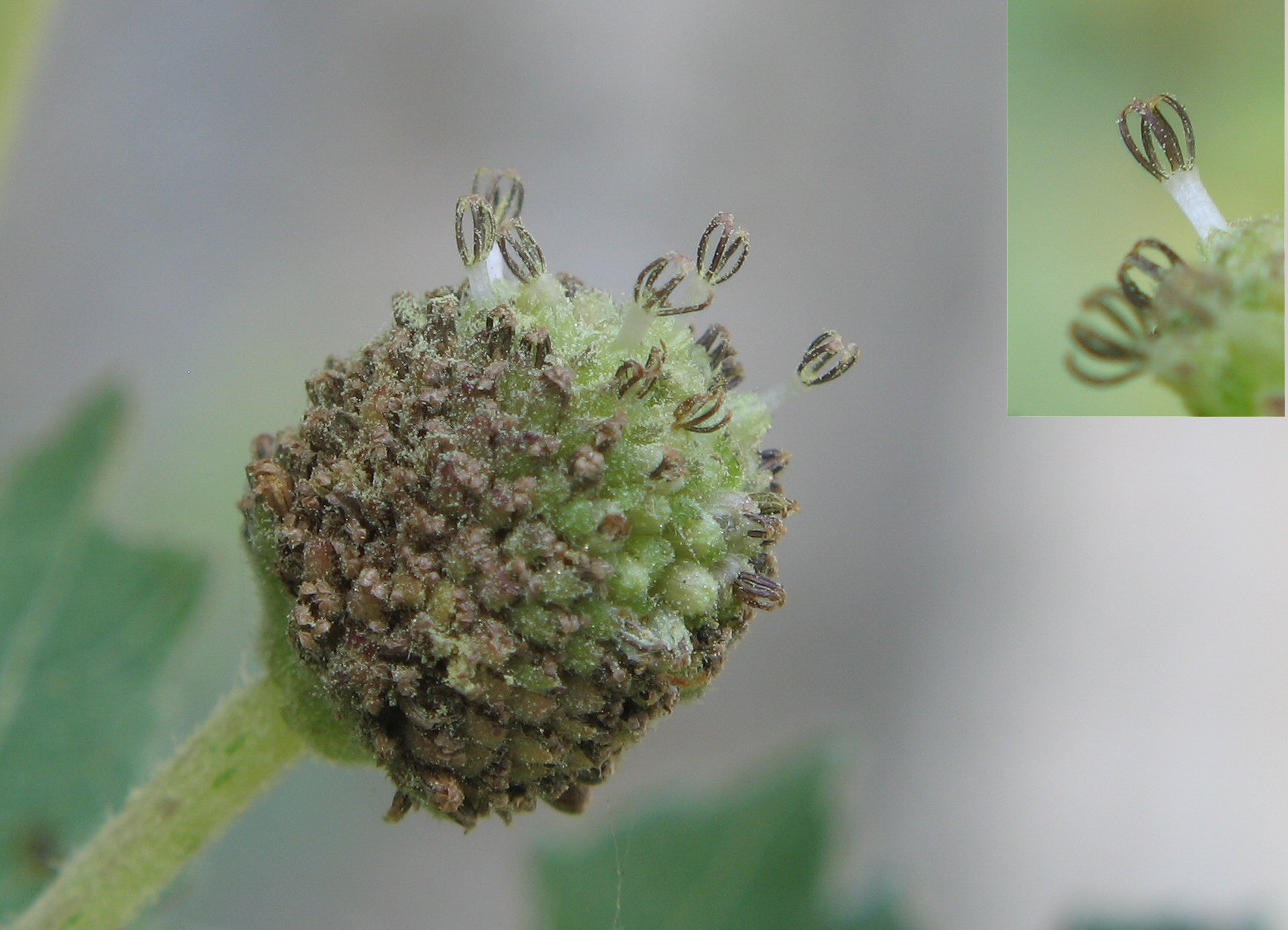
The male capitulum is semi-spherical with numerous male florets where the ones at the base develop first and those at the centre or top being the last. Male florets lack petals or a pistil. They consist of 5 stamens where their white filaments are fused as a single column but the brown anthers are free and erect. They produce pale yellow pollen.

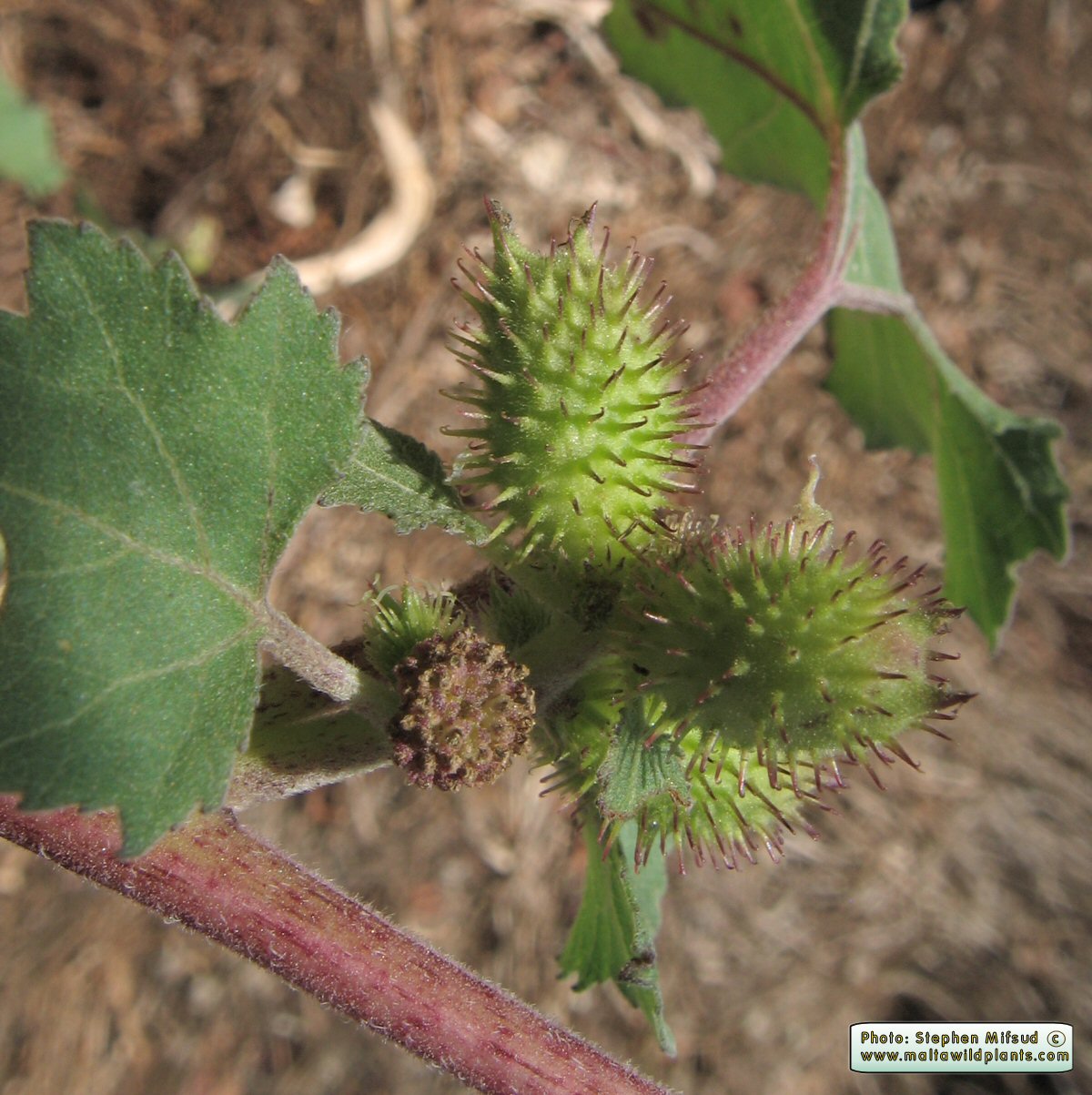
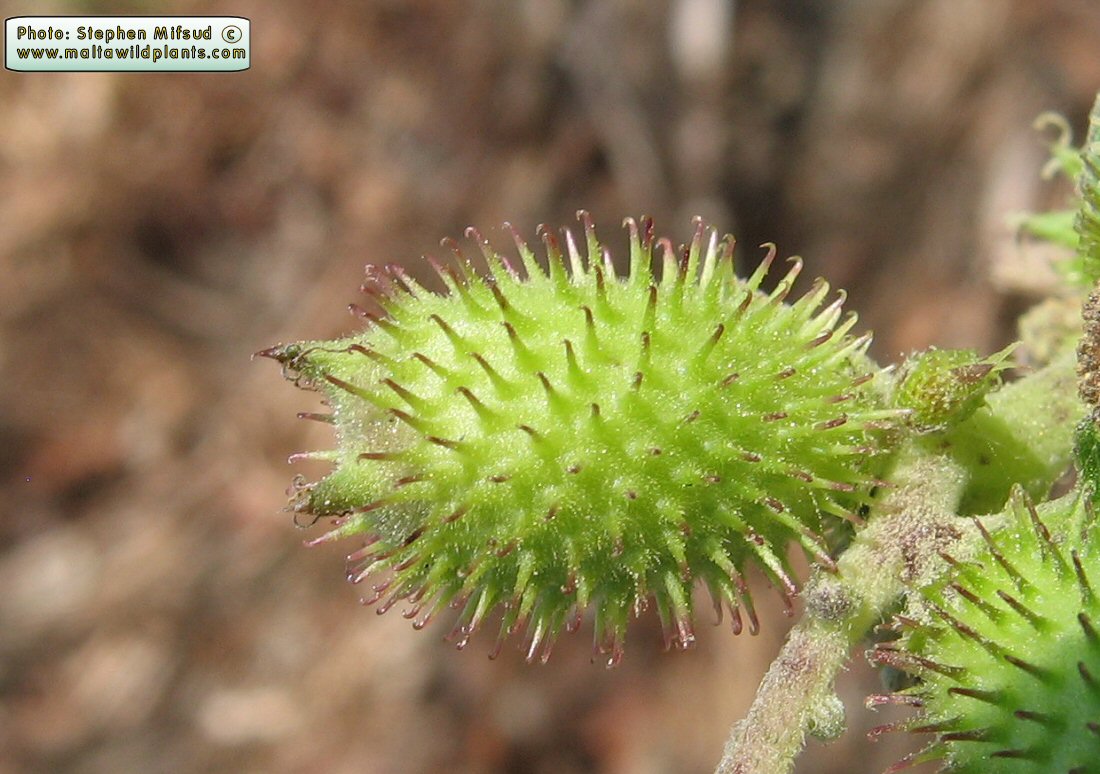
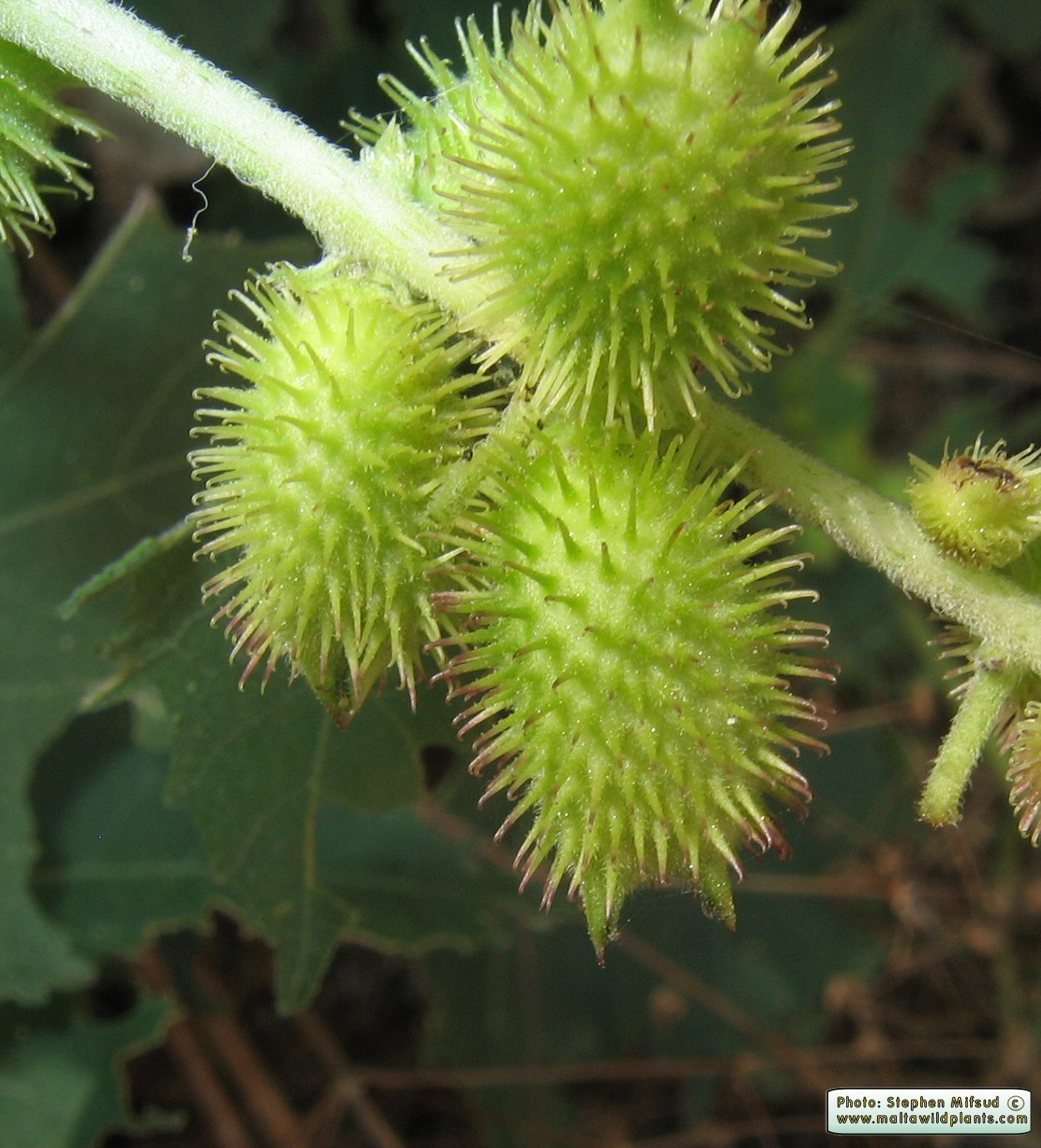
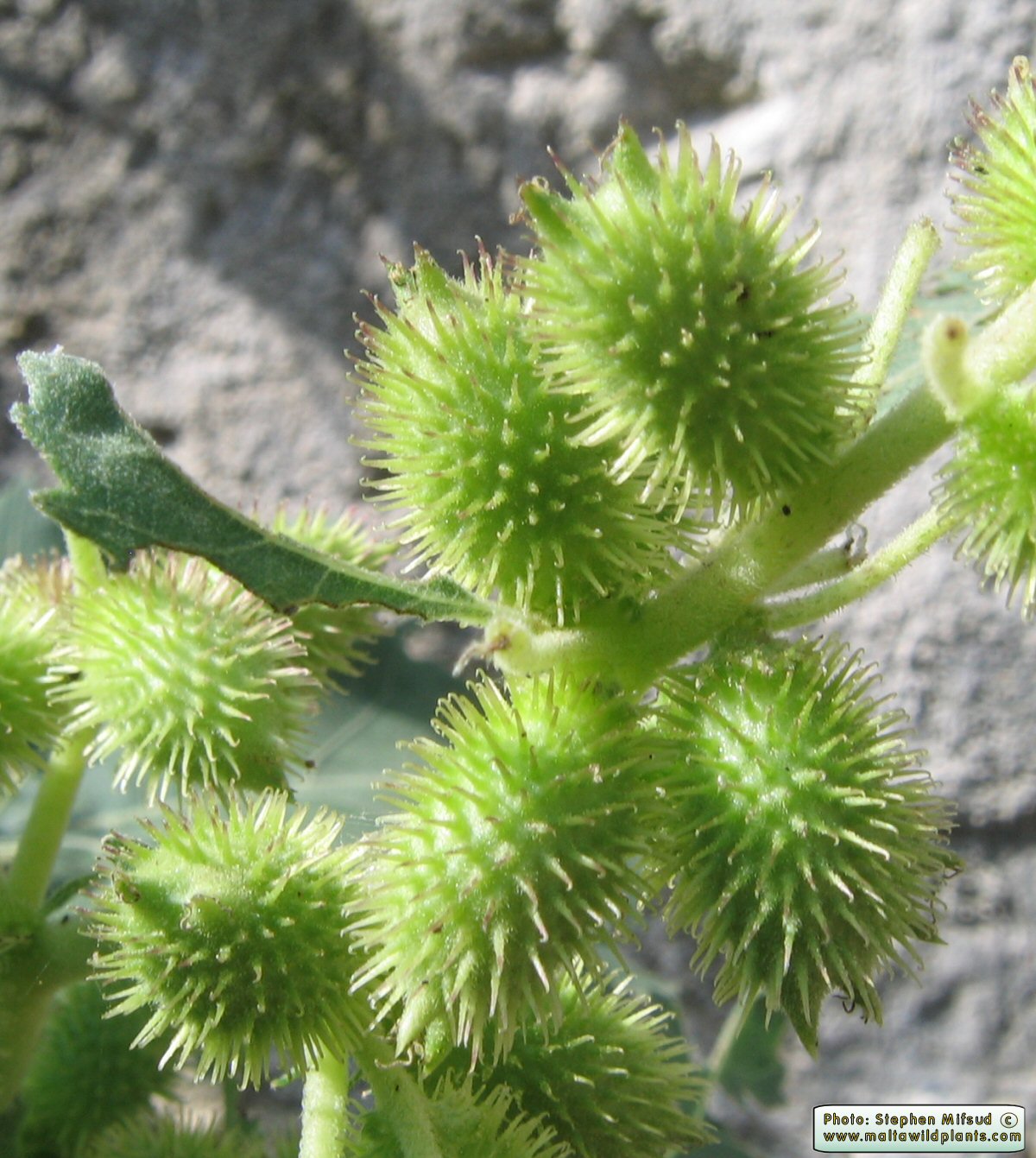
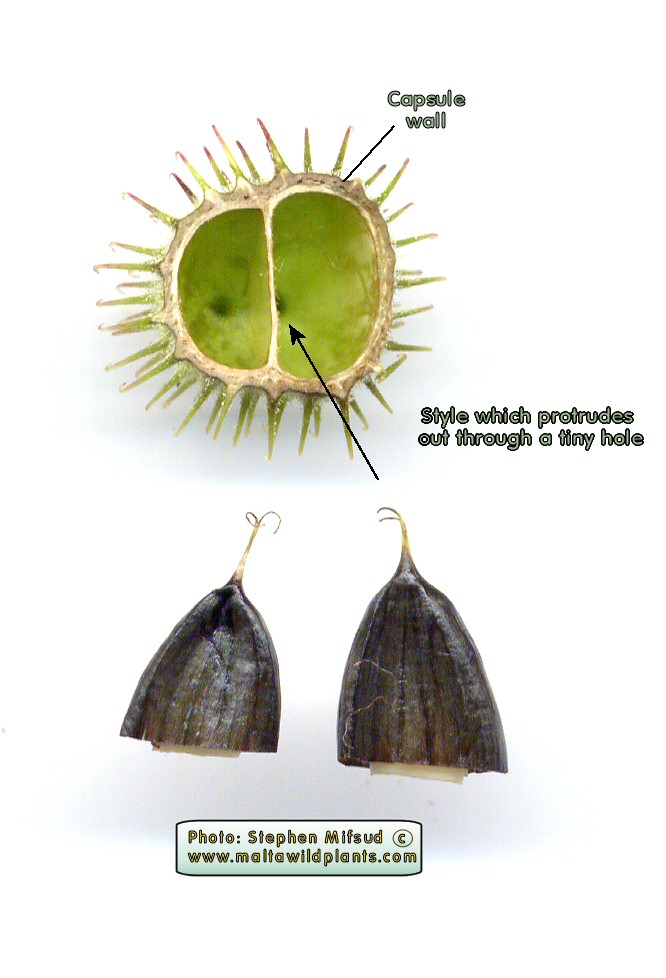
The female flower is quite different. There are 2 florets enclosed in a specialized compound involucral structure that is oval, bright green and covered with many hooks about 2mm long. The style of the floret protrudes out from this enclosed structure through a tiny pore. Each pore is found at the tip of two conical pointed beaks at the upper part of the involucre. These 2 beaks (resembling a horn) are 2-3mm long. The styles are hair thin and inconspicuous but the involucral structure is distinctive and eye catching due its peculiar shape. The female florets have no corolla.

The involucral structure becomes as the fruit structure when the embryos inside are fertilized via the external styles. Each fruit holds only 2 seeds (achenes). These seeds have a flattened oval shape (like sunflower seeds) and a completely black seed coat.

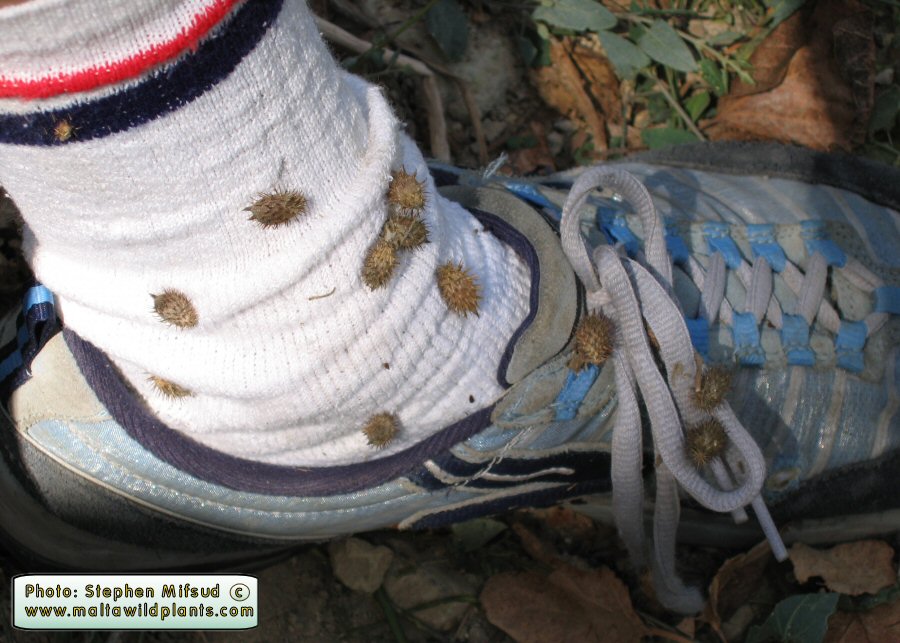
The hard fruit do not split open to expose the seeds outside. The whole structure attaches itself securely via its hooks with passing animals (job done particularly well with clothes too) and carried away until the carrier notices it and drops it away. They can be carried by water currents too since the woody fruit will float. Water causes the fruit wall to soften and deteriorate, and so, the seeds inside are free to germinate when environmental conditions are favourable.


Additional Information


Distribution and Nativity

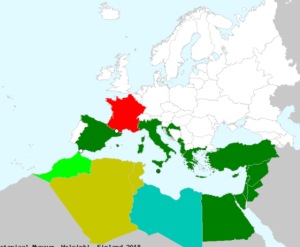
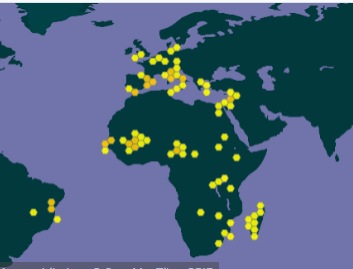
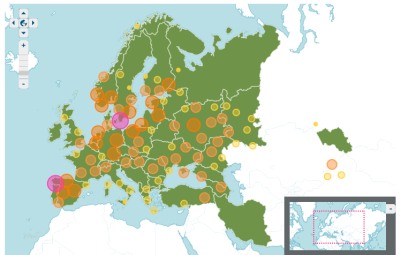
The plant is distributed throughout many places around the world as it can be seen in the list below:  [WWW-26]

ASIA-TEMPERATE
Western Asia: Afghanistan, Iran, Iraq, Turkey
Caucasus: Armenia, Azerbaijan, Georgia
Siberia: Russian Federation - Eastern Siberia, Western Siberia
Soviet Middle Asia: Kazakhstan, Kyrgyzstan, Tajikistan, Turkmenistan, Uzbekistan
Soviet Far East: Russian Federation - Primorye, Sakhalin
Central Asia: China, Mongolia
Eastern Asia: Japan, Korea


EUROPE
Middle Europe: Austria, Czechoslovakia, Germany, Hungary, Poland, Switzerland
East Europe: Belarus, Moldova, Russian Federation - European part, Ukraine (incl. Krym)
Southeastern Europe: Albania, Bulgaria, Greece (incl. Crete), Italy (incl. Sardinia, Sicily), Romania, Yugoslavia
Southwestern Europe: France (incl. Corsica), Spain (incl. Baleares)


NORTHERN AMERICA
Eastern Canada: Canada - Ontario, Quebec
Western Canada: Canada - Alberta, British Columbia, Manitoba, Saskatchewan
Northeastern U.S.A.: United States - Connecticut, Indiana, Maine (s.), Massachusetts, Michigan, New Hampshire, New Jersey, New York, Ohio, Pennsylvania, Rhode Island, Vermont, West Virginia
North-Central U.S.A.: United States - Illinois, Iowa, Kansas, Minnesota, Missouri, Nebraska, North Dakota, Oklahoma, South Dakota, Wisconsin
Northwestern U.S.A.: United States - Colorado, Idaho, Montana, Oregon, Washington, Wyoming
Southeastern U.S.A.: United States - Alabama, Arkansas, Delaware, Florida, Georgia, Kentucky, Louisiana, Maryland, Mississippi, North Carolina, South Carolina, Tennessee, Virginia
South-Central U.S.A.: United States - New Mexico, Texas
Southwestern U.S.A.: United States - Arizona, California, Nevada, Utah Mexico


SOUTHERN AMERICA
Caribbean: Antigua, Bahamas, Cuba, Dominica, Hispaniola, Jamaica, Martinique, Puerto Rico, St. Kitts and Nevis - Nevis

Worldwide weed, naturalized in Africa, Asia, Australia, New Zealand, Central America, South America, Canary Is., Madeira, Azores, Melanesia, Polynesia, & Hawaii  [WWW-26] . The genus Xanthium includes 25 species, all of American origin. The origin of X. strumarium is North America  [WWW-114]

Declared as a weed and its herbicide resistance

X. strumarium is listed as noxious weed for: Iowa, Minnesota, New South Wales, Western Australia, Tasmaina, Northen Territory (Aust)  [WWW-26] . It was introduced in India and spread like a weed. It commonly grows in waste places and along river banks in warmer parts  [WWW-114] Studies in US have shown that it has developed herbicide resistance as indicated in this table {Click here}   [WWW-29]

Xanthium strumarium Subspecies

X. strumarium ssp italicum is aromatic, whilst X. strumarium ssp strumarium is not. Introgressive hybrid populations between these two sub-species are found and are very variable in appearance.  [WWW-27]

Toxicity

Reports state that Xanthium strumarium is poisonous to mammals. Most members of Xanthium genus are toxic to grazing animals and are usually avoided by them [222] . The seed also contains toxins  [222] .

The plant is rough to the touch and causes itching from the hairs or dust with which it is covered. The burs, if ingested, cause mechanical irritation of the mouth. A weeping eczema from handling the plant has been reported, as has dermatitis in men working among the plants. Patch tests carried out using the leaves of this species crushed in a small quantity of normal saline elicited positive reactions in 7 of 24 contact dermatitis patients tested in New Delhi, India. Cross-reactions to Parthenium hysterophorus were not observed.  [WWW-27]

Positive patch test reactions to the oleoresin from this species were observed in 21 from 55 patients with the photosensitivity dermatitis and actinic reticuloid syndrome. Several potentially allergenic xanthanolides have been reported from this species.  [WWW-27]

The toxic glycoside carboxyatractyloside is found in the seeds and the cotyledons of seedlings. Livestock are most commonly poisoned after ingesting the cotyledons (seed leaves) of young seedlings  [WWW-24, WWW-86] . The toxin quickly dissipates as the seedlings grow. Cattle, horses, and swine are often poisoned and die after ingesting this plant. This plant can produce allergic contact dermatitis in susceptible humans.  [WWW-86] The plant has been reported as fatal to cattle and pigs.  [WWW-114] and rodents  [WWW-24]

FDA database has 113 documents that indicates the toxicity of 'cocklebur' and 102 documents that 'Xanthium strumarium' has some toxic effect to mammals.

Symptoms of cocklebur poisoning includes Loss of appetite, vomiting, weakness, ataxia, spasms, in severe cases, death.  [WWW-86] A more detailed study concludes that Carboxyatractyloside poisoning causes multiple organ dysfunction and can be fatal. Coagulation abnormalities, hyponatraemia, marked hypoglycaemia, icterus and hepatic and renal failure are signs of a poor prognosis. No antidote is available and supportive therapy is the mainstay of treatment.  [341]

Cocklebur toxicosis in cattle associated with the consumption of mature Xanthium strumarium

Cockleburs (Xanthium spp.) are herbaceous annuals with worldwide distribution. Toxicoses are usually associated with the consumption of the seedlings in the cotyledon stage, which contain a high concentration of the toxic principle, carboxyatractyloside. The seeds are also known to contain the toxin, but it has long been assumed that the spiny capsule would deter their consumption. Six of 70 yearling calves died while being fed round bale hay composed predominantly of foxtail and mature cocklebur plants with burs. Clinical signs ranged from acute death to hyperexcitability, blindness, tense musculature, and spastic gaits with heads held high and ears erect. Some symptomatic calves would stumble, fall to lateral recumbency, convulse, and later recover. Overall, the herd was very uneasy. Prominent gross lesions were ascites and a firm, pale liver with a mottled hemorrhagic pattern on cut surface. The rumen contained numerous intact burs and well-ruminated grass. Histological examination of the liver revealed marked centrolobular degeneration and necrosis with associated hemorrhage and congestion. Brain lesions were present. Plant and tissue samples were analyzed for carboxyatractyloside with various results. Samples of rumen contents, urine, and burs contained 100-200 ppm, 0.1-0.05 ppm, and 0.1 ppm, respectively. Based on the history, clinical signs, pathological lesions, and chemical analyses, cocklebur toxicosis associated with consumption of mature Xanthium strumarium in hay was confirmed.  [342]

Cocklebur (Xanthium strumarium, L. var. strumarium) intoxication in swine: review and redefinition of the toxic principle.

Cocklebur (Xanthium strumarium) fed to feeder pigs was associated with acute to subacute hepatotoxicosis. Cotyledonary seedings fed at 0.75% to 3% of body weight or ground bur fed at 20% to 30% of the ration caused acute depression, convulsions, and death. Principle gross lesions were marked serofibrinous ascites, edema of the gallbladder wall, and lobular accentuation of the liver. Acute to subacute centrilobular hepatic necrosis was present microscopically. The previously reported toxic principle, hydroquinone, was not recovered from the plant or bur of X. strumarium. Authentic hydroquinone administered orally failed to produce lesions typical of cocklebur intoxication but did produce marked hyperglycemia. Carboxyatractyloside recovered from the aqueous extract of X. strumarium and authentic carboxyatractyloside, when fed to pigs, caused signs and lesions typical of cocklebur intoxication. Marked hypoglycemia and elevated serum glutamic oxaloacetic transaminase and serum isocitric dehydrogenase concentrations occurred in pigs with acute hepatic necrosis that had received either cocklebur seedlings, ground bur or carboxyatractyloside  [344]

List of Medicinal Properties

Xanthium strumarium is reported to have several medicinal properties and was used to treat the following condition or medicinal properties:  [WWW-66]

Abrasion an abraded area where the skin is torn or worn off    [WWW-32]
Abscess symptom consisting of a localized collection of pus     [WWW-32]
Ache(Head) Sensation of pain in the head     [WWW-32]
Adenopathy a glandular disease or enlargement of glandular tissue    [WWW-32]
Alterative tending to cure or restore to health     [WWW-32]
Anodyne capable of relieving pain     [WWW-32]
Arthritis inflammation of a joint or joints    [WWW-32]
Asthma respiratory disorder characterized by wheezing; usually of allergic origin     [WWW-32]
Astringent a drug that causes contraction of body tissues and canals     [WWW-32]
Bactericide any drug that destroys bacteria or inhibits their growth    [WWW-32]
Bladder problems   
Boil a painful sore with a hard pus-filled core     [WWW-32]
CNS depressant a drug that reduces excitability and calms a person    [WWW-32]
Cancer used in the treatment of cancer     [WWW-32]
Cold used to treat colds     [WWW-32]
Depurative Purifying the blood or the humors; depuratory    [WWW-32]
Diuretic any substance that tends to increase the flow of urine     [WWW-32]
Eczema generic term for inflammatory conditions of the skin; particularly with vesiculation in the acute stages     [WWW-32]
Emollient having a softening or soothing effect especially to the skin    [WWW-32]
Erysipelas an acute streptococcal infection characterized by deep-red inflammation of the skin and mucous membranes     [WWW-32]
Febrifuge any medicine that lowers body temperature to prevent or alleviate fever     [WWW-32]
Goiter abnormally enlarged thyroid gland; can result from under-production or over-production of hormone or from a deficiency of iodine in the diet    [WWW-32]
Hemicrania a severe recurring vascular headache; occur more frequently in women than men     [WWW-32]
Hemostat a surgical instrument that stops bleeding by clamping the blood vessel     [WWW-32]
Herpes viral diseases causing eruptions of the skin or mucous membrane    [WWW-32]
Hyperglycemia abnormally high blood sugar usually associated with diabetes     [WWW-32]
Infection Helps to prevent the transmission of infectious disease    [WWW-32]
Inflammation Treats inflammation - A morbid condition of any part of the body, consisting in congestion of the blood vessels, with obstruction of the blood current, and growth of morbid tissue. It is manifested outwardly by redness and swelling, attended with heat and pain.    [WWW-32]
Kidney problems  
Laxative stimulating evacuation of feaces     [WWW-32]
Leprosy Df_    [WWW-32]
Leucorrhea chronic granulomatous communicable disease occurring in tropical and subtropical regions; characterized by inflamed nodules beneath the skin and wasting of body parts; caused by the bacillus Mycobacterium leprae     [WWW-32]
Lip problems  
Malaria an infective disease caused by sporozoan parasites that are transmitted through the bite of an infected Anopheles mosquito; marked by paroxysms of chills and fever    [WWW-32]
Parturition aids the process of giving birth     [WWW-32]
Preventitive Prevents disease to be transmitted   
Pruritis Itching. Pruritis can result from drug reaction, food allergy, kidney or liver disease, cancers, parasites, aging or dry skin, contact skin reaction, such as poison ivy, and for unknown reasons.    [WWW-32]
Rabies an acute viral disease of the nervous system of warm-blooded animals (usually transmitted by the bite of a rabid animal); rabies is fatal if the virus reaches the brain     [WWW-32]
Refrigerant That which makes to be cool or cold; specifically, a medicine or an application for allaying fever, or the symptoms of fever     [WWW-32]
Rheumatism any painful disorder of the joints or muscles or connective tissues    [WWW-32]
Rhinitis an inflammation of the mucous membrane lining the nose (usually associated with nasal discharge)     [WWW-32]
Scrofula a form of tuberculosis characterized by swellings of the lymphatic glands     [WWW-32]
Sedative A remedy which allays irritability and irritation, and irritative activity or pain    [WWW-32]
Shingles A kind of herpes ({Herpes zoster}) which spreads half way around the body like a girdle, and is usually attended with violent neuralgic pain.     [WWW-32]
Sialogogue An agent which promotes the flow of saliva.     [WWW-32]
Sinusitis inflammation of one of the paranasal sinuses     [WWW-32]
Smallpox a highly contagious viral disease characterized by fever and weakness and skin eruption with pustules that form scabs that slough off leaving scars     [WWW-32]
Struma a form of tuberculosis characterized by swellings of the lymphatic glands     [WWW-32]
Styptic tending to check bleeding by contracting the tissues or blood vessels     [WWW-32]
Sudorific inducing perspiration     [WWW-32]
Swelling  
Syphilis a common venereal disease caused by the Treponema pallidum spirochete; symptoms change through progressive stages; can be congenital (transmitted through the placenta)     [WWW-32]
Tea Used as a herbal tea   
Tonic a medicine that strengthens and invigorates     [WWW-32]
Tubercle a protuberance on a bone especially for attachment of a muscle or ligament     [WWW-32]
Tumor an abnormal new mass of tissue that serves no purpose     [WWW-32]
Tumor (Nose) Used to treat tumors specifically in the nose     [WWW-32]
Urogenital problems of or relating to the urinary and reproductive systems     [WWW-32]
Wound Used to improve wound healing   

Medicinal Actions and Uses

The leaves and root are anodyne, antirheumatic, appetizer, diaphoretic, diuretic, emollient, laxative and sedative  [61, 147, 178, 222] . The plant is considered to be useful in treating long-standing cases of malaria  [240] and is used as an adulterant for Datura stramonium [61] . An infusion of the plant has been used in the treatment of rheumatism, diseased kidneys and tuberculosis  [257] . It has also been used as a liniment on the armpits to reduce perspiration  [257] .

The fruits are anodyne, antibacterial, antifungal, antirheumatic and antispasmodic [238] . They are used internally in the treatment of allergic rhinitis, sinusitis, catarrh, rheumatism, rheumatoid arthritis, constipation, diarrhoea, lumbago, leprosy and pruritis  [238, 257] . They are also used externally to treat pruritis  [238] . The fruits are harvested when ripe and dried for later use  [238] .

The root is a bitter tonic and febrifuge  [240] . It has historically been used in the treatment of scrofulous tumours  [222] . A decoction of the root has been used in the treatment of high fevers and to help a woman expel the afterbirth  [257] .

A decoction of the seeds has been used in the treatment of bladder complaints  [257] . A poultice of the powdered seed has been applied as a salve on open sores  [257] .

A valuable and sure specific in the treatment of hydrophobia. An active styptic, local and general. Fluid extract, 1 to 2 drachms. 10 grains of the powdered plant, four times daily.

In many parts of India, it is known as adhasisi (in English adhasisi means hemicrania) as this weed is used for the treatment of this common disease.  [WWW-114]

The whole plant, specially root and fruit, is used as medicine. According to Ayurveda, X. strumarium is cooling, laxative, fattening, anthelmintic, alexiteric, tonic, digestive, antipyretic, and improves appetite, voice, complexion, and memory. It cures leucoderma, biliousness, poisonous bites of insects, epilepsy, salivation and fever. The plant of Xanthium yields xanthinin which acts as a plant growth regulator. Antibacterial activity of xanthinin has also been reported. Seed yields a semi-drying edible oil (30-35%) which resembles sunflower oil and used in bladder infection, herpes, and erysipelas.  [WWW-114]

During winter season, when the Kuthua herb (Xanthium strumarium) is in flowering and fruiting stage, the healers collect the green spiny fruits and convert it in this paste to make it more potential against migraine. The juice of leaves is also applied and used as eye tonic. It is considered good to prevent the problem of Motiabind (Cataract). In case of conjuctivitis, the juice is applied externally on eyelids in order to provide cooling effect of eyes.  [WWW-03]

In Sarguja region of India, X. strumarium is locally known as Kuthua. The Traditional medicinal uses of leaves of Xanthium against herpes is well documented in reference literatures. Every year in winter season, this herb is severly affected by the fungal disease powdery mildew where one report states that the plant diseased with this fungus is more effective to treat herpes.  [WWW-03]

The extract of X. strumarium showed an abnormality with V. cholerae, where the inhibition exceeded the control with established antibiotics  [343]

Medicinal uses according to the Physiomedical Dispensatory (by William Cook (1869)

The leaves of this ungainly-looking weed are stimulant relaxants, bitterish, and moderately diffusive in action. The profession has scarcely paid any attention to them; but they are among the truly valuable diffusive nervines, ami deserve careful consideration. An infusion of an ounce to a quart of hot water makes a mild diaphoretic that will be found of decided value in colic, restlessness, painful menstruation, and even extreme forms of nervousness and actual hysteria. Such an infusion may also be used in measles, and combined with asclepias in typhoid and erysipelas; in which maladies it aids a full outward circulation, and greatly relieves the nervous irritability. Cold preparations are equally valuable in nervous affections, and exert a mild tonic impression. From my own use of these leaves, confirmed by the experience of Drs. Tyrrell, Overholt, and others, I feel justified in urging this plant upon the notice of the profession, as one that promises to be a peculiarly valuable nervine.  [WWW-18]

Medicinal uses according to the Eclectic Materia Medica, Pharmacology and Therapeutics (by Harvey Wickes Felter, M.D., 1922.)

Preparation: Fluidextract of Xanthium Strumarium. Dose, 5 to 60 drops.

Action and Therapy: This agent acts much like clotbur, and has been used with advantage in painful urination, with scalding, and marked sensitiveness of the urethra and bladder, with frequent micturition. It is also said to be of service in hemorrhages, as passive hemorrhage from the bowels and the epistaxis of purpura hemorrhagica. For the last-named disorders it is probably of little value, though it should be tried where other means are unavailing.

Medicinal uses according to the American Journal of Pharmacy. (by editor John M. Maisch, M.D. - Vol. 56, 1884.)

The writer extracted the bruised dried fruit, 195.21 grams, with benzin and obtained 29 grams of a yellowish, non-drying fixed oil having the specific gravity .900 and a peculiar odor somewhat resembling that of freshly extracted flaxseed oil; from the soap prepared with it, oleic acid was obtained, and glycerin was found in the mother liquor of the soap.
With strong alcohol a resinous extract was obtained. The portion soluble in diluted acetic acid gave precipitates with potassio-mercurio iodide, with iodine and with tannin, but not with picric acid; ferric chloride produced a green color, and sugar followed by a drop of sulphuric acid caused a yellowish color slowly changing to carmine and to bright violet red. Ether extracted from the acid solution the principle giving these reactions; but the small quantity subsequently taken up by ether from the same solution rendered alkaline by potassa, did not give these reactions.
Of the resinous substance left after treatment with acidulated water, 4 grams were given to a small dog, producing no visible effects. This substance was freely soluble in ether and alcohol and slightly soluble in potassa and ammonia; ferric chloride added to the alcoholic solution gave a deep green color probably due to a little tannin.

The principle obtained above, though probably not pure, the author thinks may be different from the xanthostrumarin of Zander ("Amer. Jour. Phar.," 1881, p. 271), the latter being precipitated with picric-acid and not precipitated with tannin.

Cultivation details

Requires a sunny position, succeeding in most soils. Prefers a poor dry soil  [238] . Hardy to about -15°c  [238] . Plants often self sow and in some parts of the world have become noxious weeds  [238] .

Propagation by seed: sow spring or autumn in situ  [238] . The seed requires plenty of moisture in order to germinate

Edible Uses

Leaves and young plants - cooked [2, 105, 177] . They must be thoroughly boiled and then washed [179] . Caution is advised, the plant is probably poisonous [218] .

Seed - raw or cooked  [212] . It can be used as a piñole [257] . The seed can be ground into a powder and mixed with flour for making bread, cakes etc [105, 257] . The seed contains about 36.7% protein, 38.6% fat, 5.2% ash [179] . It also contains a glycoside [179] and is probably poisonous.

Other Uses

The dried leaves are a source of tannin [145] .

A yellow dye is obtained from the leaves [178] .

The seed powder has been used as a blue body paint [257] .

The dried plant repels weevils from stored wheat grain [178] .

Cake can be used as manure whereas shell can be used as activated carbon  [WWW-114]

Caffeic acid as active principle from the fruit of Xanthium strumarium to lower plasma glucose in diabetic rats.

The antihyperglycemic effect of caffeic acid, one of the phenolic compounds contained in the fruit of Xanthium strumarium, was investigated. After an intravenous injection of caffeic acid into diabetic rats of both streptozotocin-induced and insulin-resistant models, a dose-dependent decrease of plasma glucose was observed. However, a similar effect was not produced in normal rats. An insulin-independent action of caffeic acid can thus be considered. Otherwise, this compound reduced the elevation of plasma glucose level in insulin-resistant rats receiving a glucose challenge test. Also, glucose uptake into the isolated adipocytes was raised by caffeic acid in a concentration-dependent manner. Increase of glucose utilization by caffeic acid seems to be responsible for the lowering of plasma glucose.  [340]

Personal Observations


Seed dispersal
According to my observation, the 2 plausible dispersion methods of the woody, light-weight and multi-hooked fruit is by carrying with animals and(/or) by water flow. The hooks are very efficient to cling securely with fur of mammals or perhaps feathers of large birds. It is unlikely that this rough fruit is engulfed as whole by animals or birds and dispersed through faeces.  [SM]

The woody structure allows the fruit to float and be transported with the end of summer rains (when the fruit is ripe) or nearby streams. This explains how a plant with such a rough. fairly large (2cm) fruit is so widespread around the whole globe.  [SM]

Water or high humidity cause the strong involucral wall to soften and deteriorate and the 2 achenes inside becomes free to germinate in the muddy soil when the water level is drying in late Spring/EarlySummer. Note that the fruit does not split open.  [SM]
Edibility of seeds
Each fruit contains 2 seeds inside the hard-walled fruit. It can be opened only by breaking with a tool. The seeds have the shape and size of sunflower seeds except that their colour is entirely black instead of striped with white. The taste is very similar to sunflower seeds with a slightly good sweet/aromatic taste. However care should be taken not to consume much, because several reports states that it possesses a poisonous glycoside particularly to farm mammals  [SM]
Scent of plant
The plant has a particular scent which is difficult to describe, but it is somehow aromatic. It is not very strong but when there are many plants close to each other, they fill the air with this scent.  [SM]

Photo Gallery

Xanthium strumarium (Rough Cocklebur) - CLICK TO ENLARGE PHOTO Xanthium strumarium (Rough Cocklebur) - CLICK TO ENLARGE PHOTO Xanthium strumarium (Rough Cocklebur) - CLICK TO ENLARGE PHOTO Xanthium strumarium (Rough Cocklebur) - CLICK TO ENLARGE PHOTO
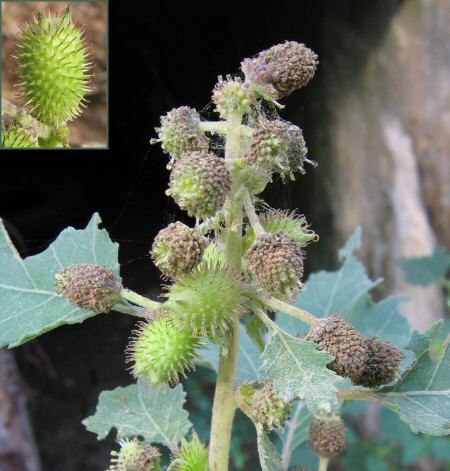
Photo of a cluster of male and female flowers. Plant is monoecious and have separated female and male flowers on the same plant. The male flower(s) is at the top of the cluster. Female flowers are those with projecting hooks.
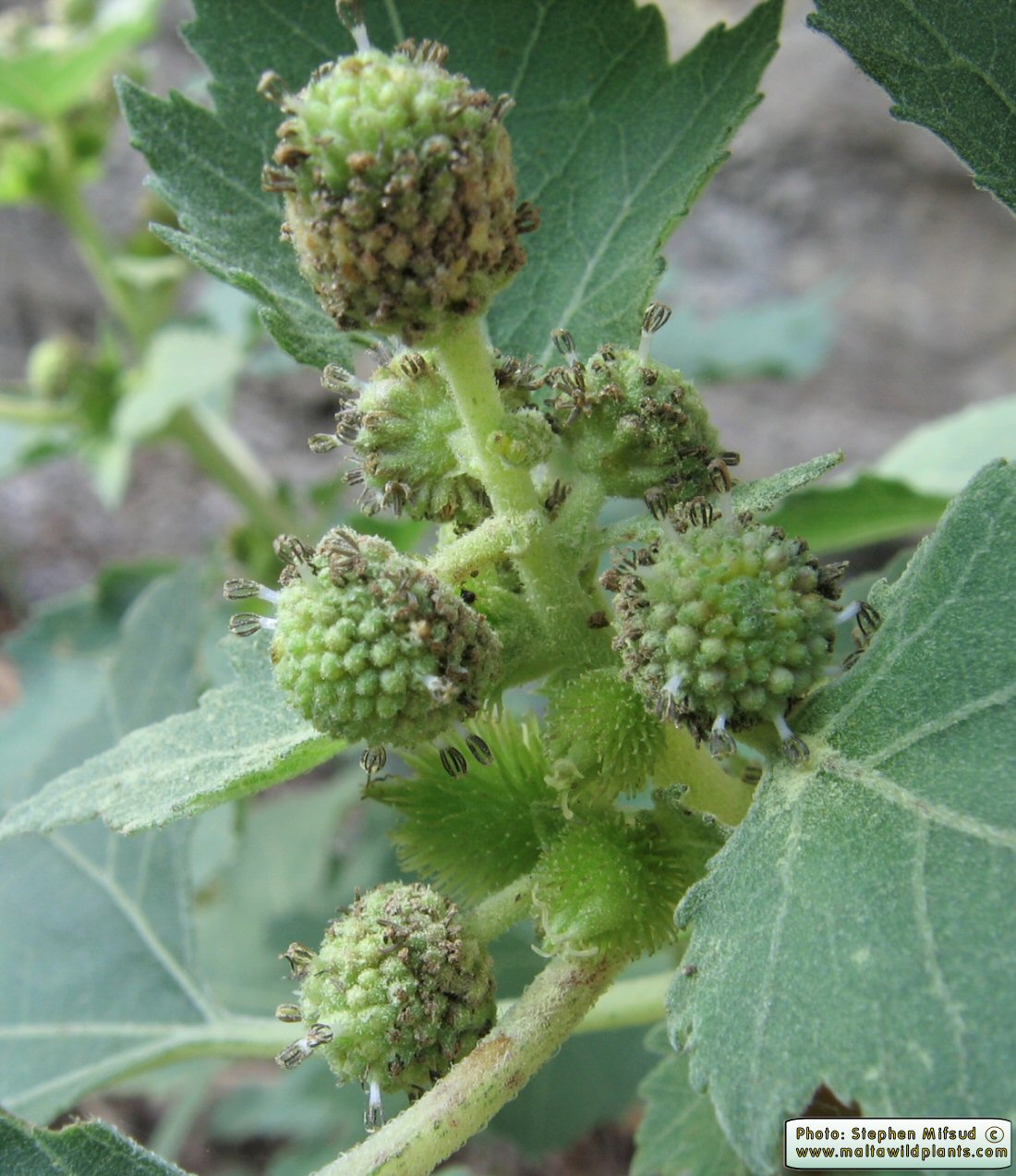
Photo of both male and female flowers.
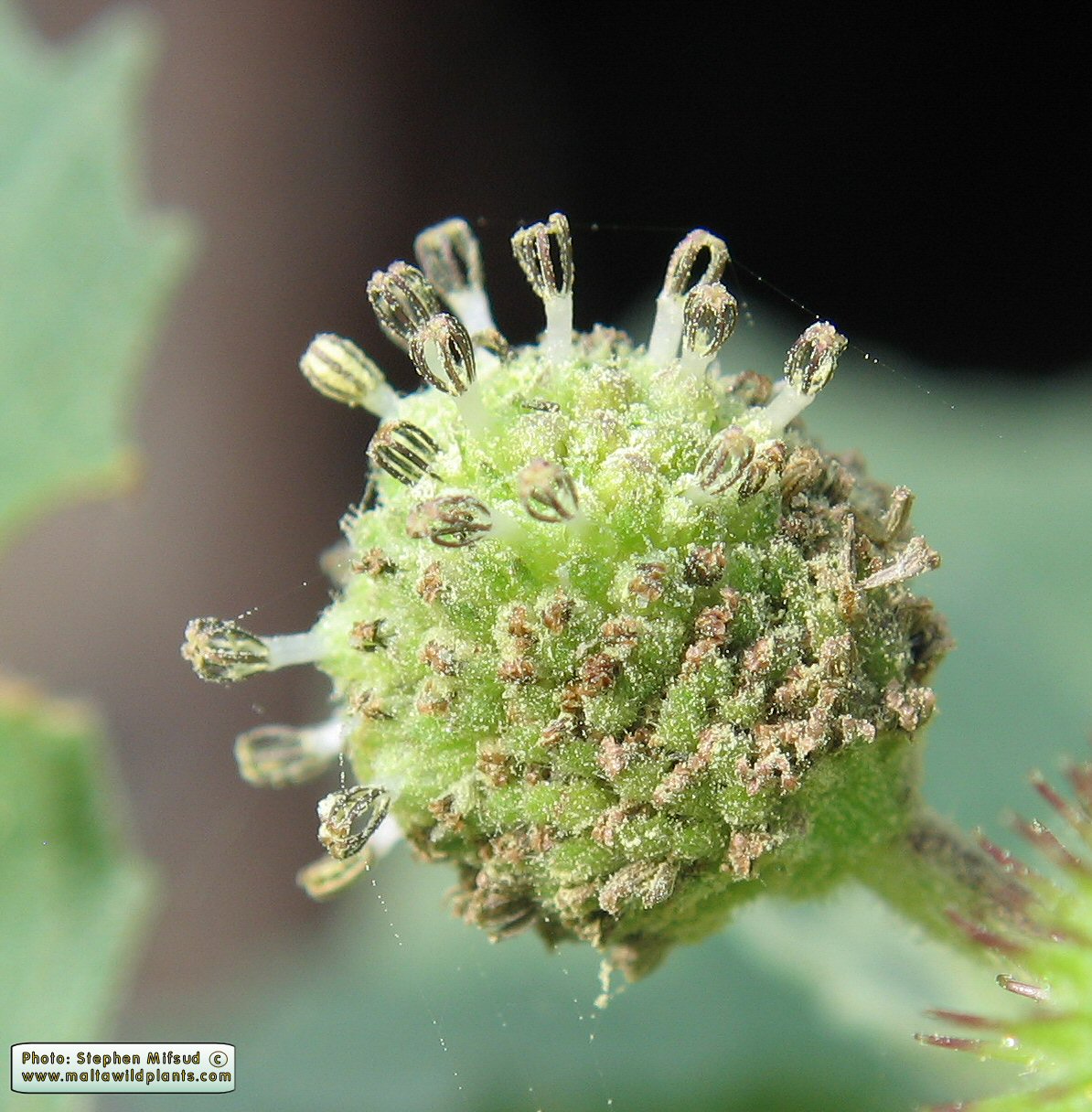
Photo of a male flower which is a rayless (without petals) capitulum.
Male capitulum located over some young female flowers. The male flowers in the photo have few mature radiating stamens.
Xanthium strumarium (Rough Cocklebur) - CLICK TO ENLARGE PHOTO Xanthium strumarium (Rough Cocklebur) - CLICK TO ENLARGE PHOTO Xanthium strumarium (Rough Cocklebur) - CLICK TO ENLARGE PHOTO Xanthium strumarium (Rough Cocklebur) - CLICK TO ENLARGE PHOTO
Photo of a cluster of male flowers. They are more or less semi-spherical in shape and about 1 cm in size. Florets at the bottom develop first and development progresses gradually to the top (or centre) of the flower.
Close up photo of a male flower head showing in detail the stamens projecting out as white rods with apical brown tiny fingers.
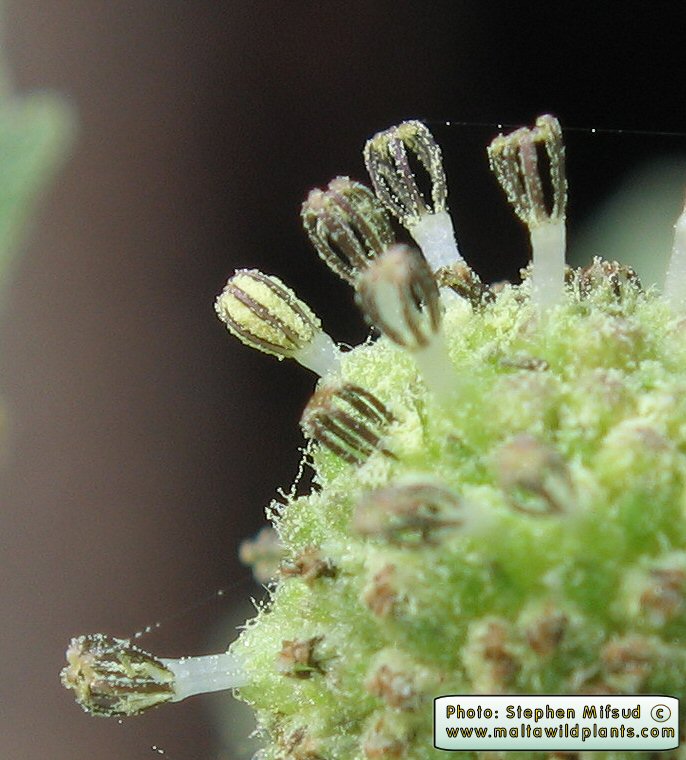
Close up photo of male flower showing the details of its staminate florets. Each floret lacks a corolla and simply consists of 5 stamens with united white filaments and 5 separated brown anthers.
Photo of male flower and its staminate florets.
Xanthium strumarium (Rough Cocklebur) - CLICK TO ENLARGE PHOTO Xanthium strumarium (Rough Cocklebur) - CLICK TO ENLARGE PHOTO Xanthium strumarium (Rough Cocklebur) - CLICK TO ENLARGE PHOTO Xanthium strumarium (Rough Cocklebur) - CLICK TO ENLARGE PHOTO
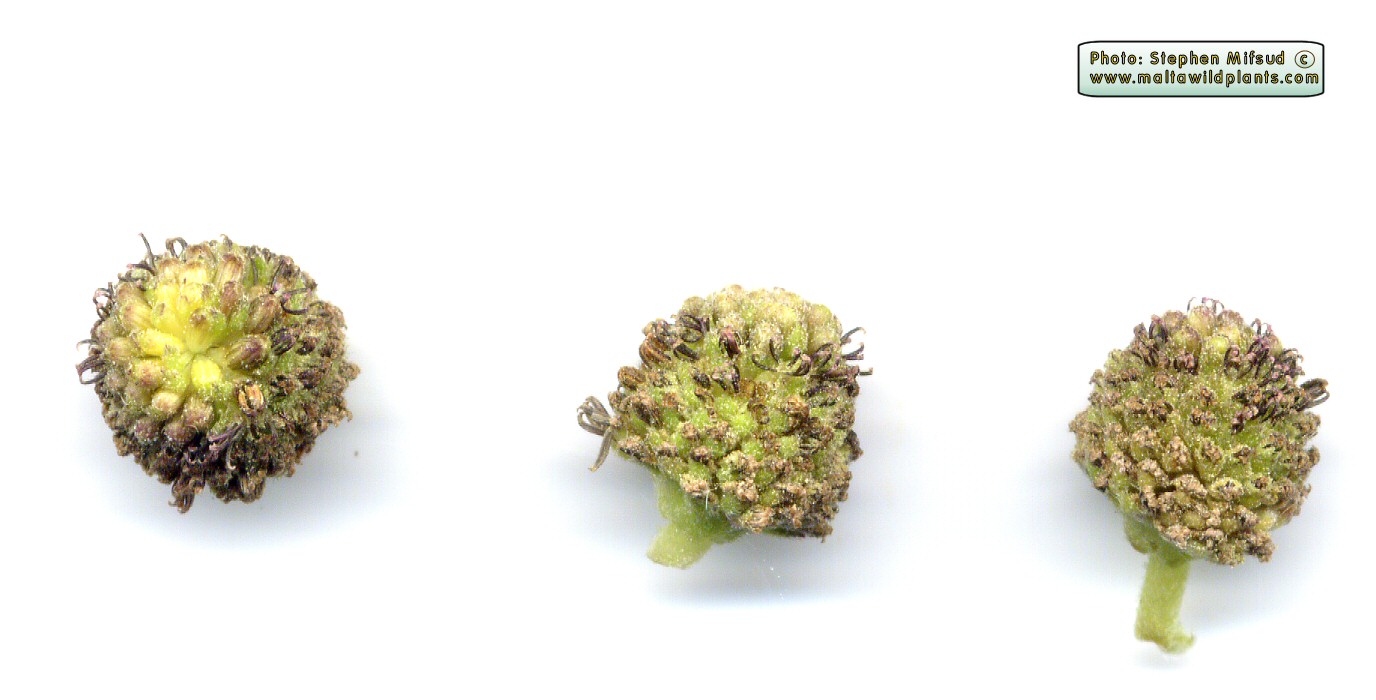
Close up image of male capitula showing in great detail the staminate florets. One of the florets has just blossomed and holds the yellow pollen. This will disperse with insects or also by wind.
Close up image of some male florets which consists of 5 stamens having white filaments (united) and brown anthers producing pale yellow pollen.
Scanned image of male flower heads.
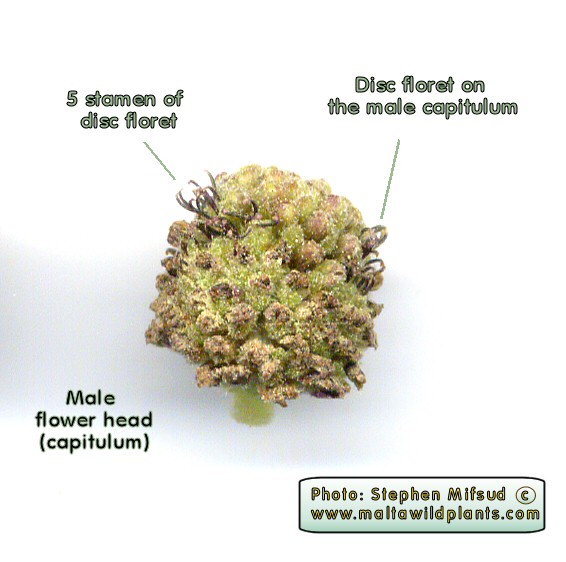
Magnified scanned image of a mature capitulum with tiny staminate florets.
Xanthium strumarium (Rough Cocklebur) - CLICK TO ENLARGE PHOTO Xanthium strumarium (Rough Cocklebur) - CLICK TO ENLARGE PHOTO Xanthium strumarium (Rough Cocklebur) - CLICK TO ENLARGE PHOTO Xanthium strumarium (Rough Cocklebur) - CLICK TO ENLARGE PHOTO
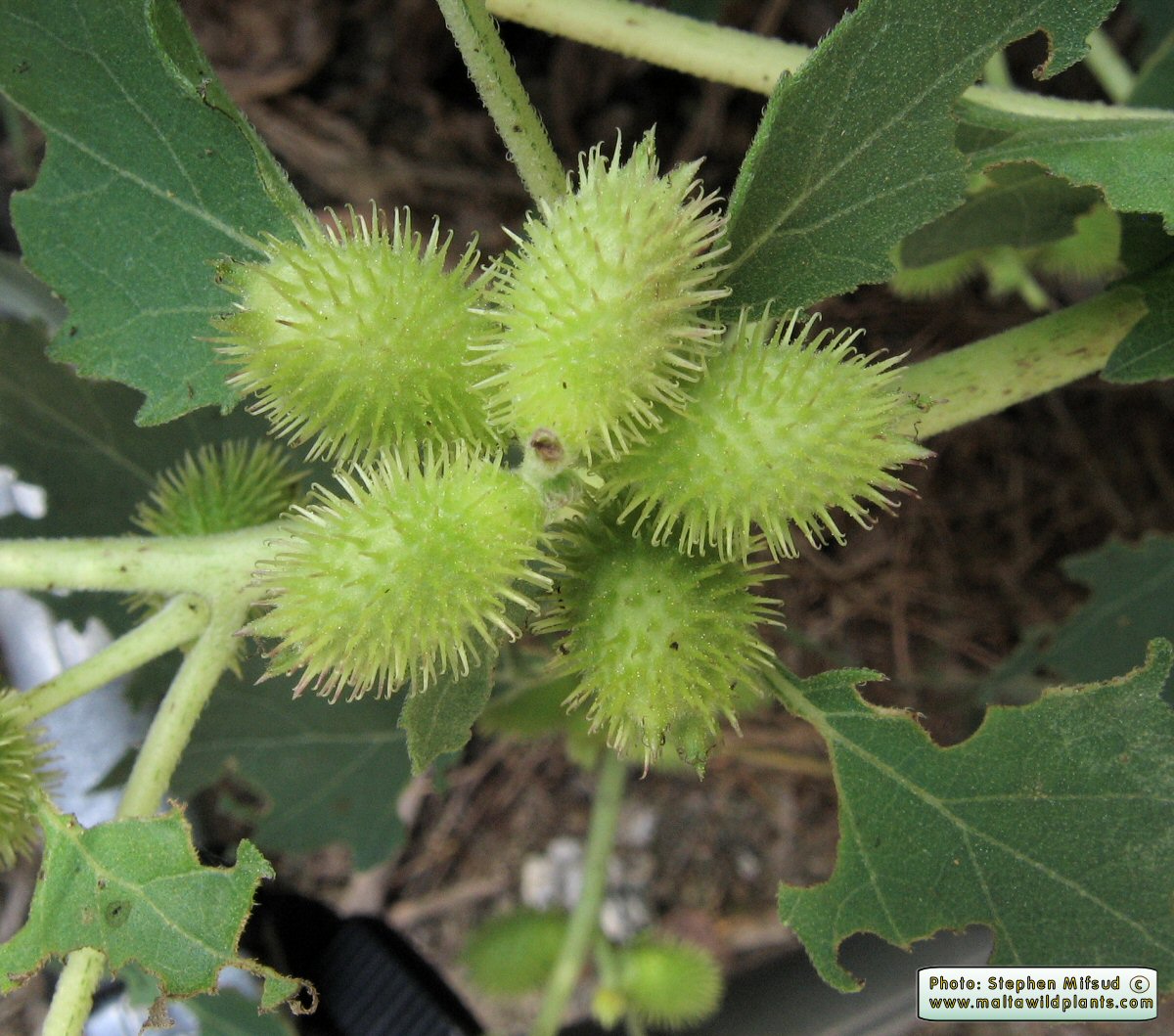
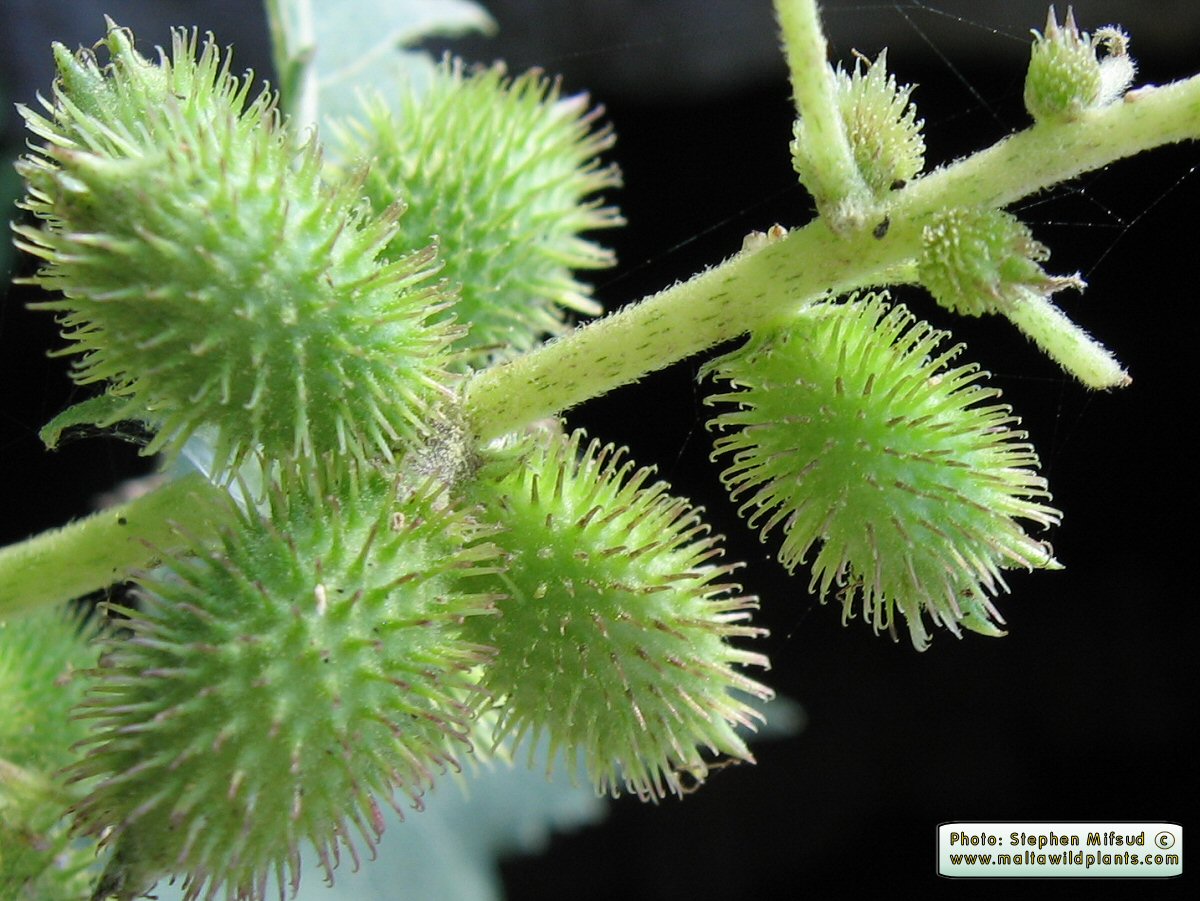
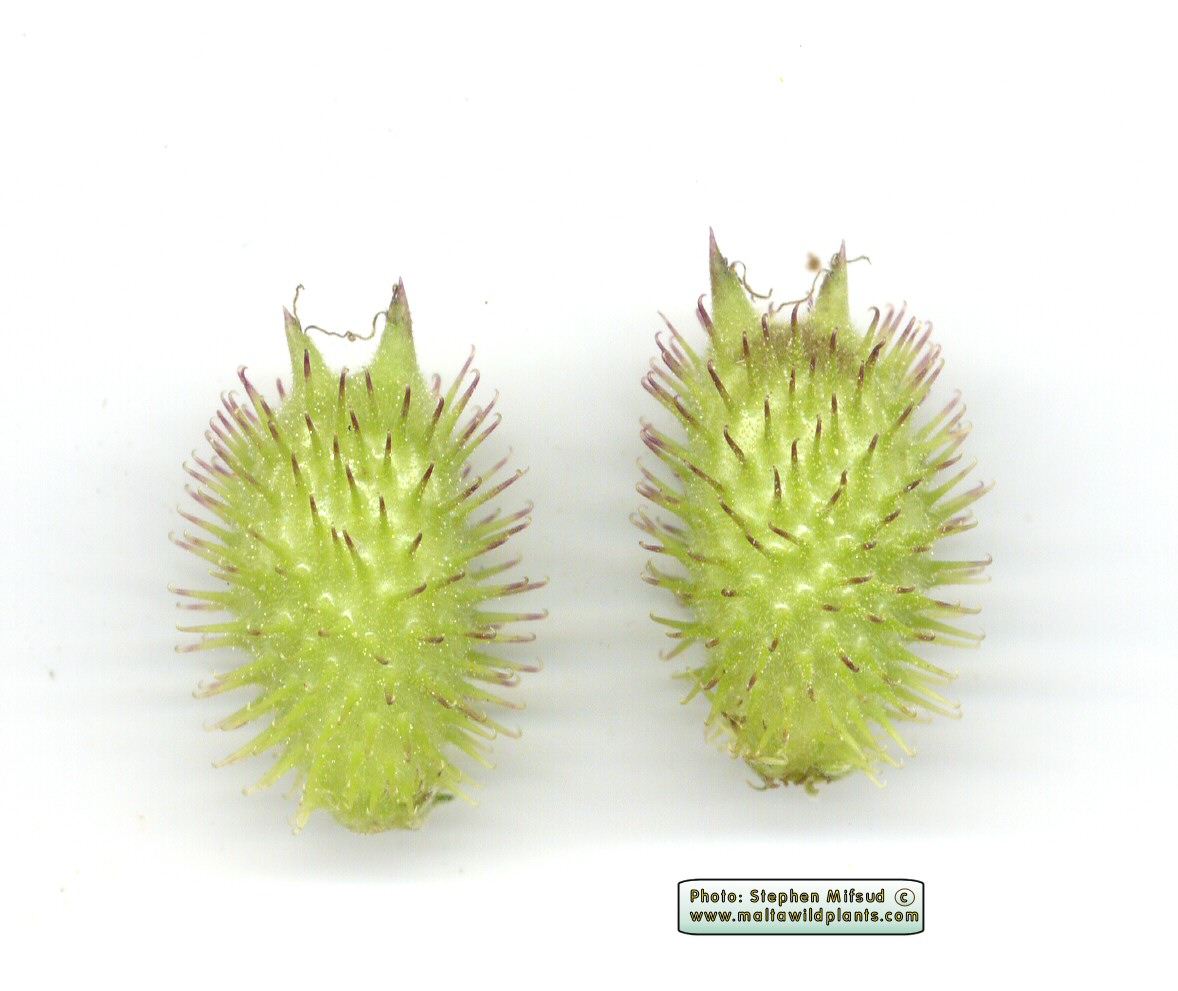
Photo of female flowers or which can also be considered as fruit. They have an ovate structure with plenty of small stiff non spiny hooks radiating out. At the apex there are 2 horn-like structure referred to as beaks.
Photo of female flowers and an old male flower (brown).
Photo of a cluster of female flowers.
Another photo of a cluster of female flowers. Their green colour is lighter from that of their foliage.
Xanthium strumarium (Rough Cocklebur) - CLICK TO ENLARGE PHOTO Xanthium strumarium (Rough Cocklebur) - CLICK TO ENLARGE PHOTO Xanthium strumarium (Rough Cocklebur) - CLICK TO ENLARGE PHOTO Xanthium strumarium (Rough Cocklebur) - CLICK TO ENLARGE PHOTO
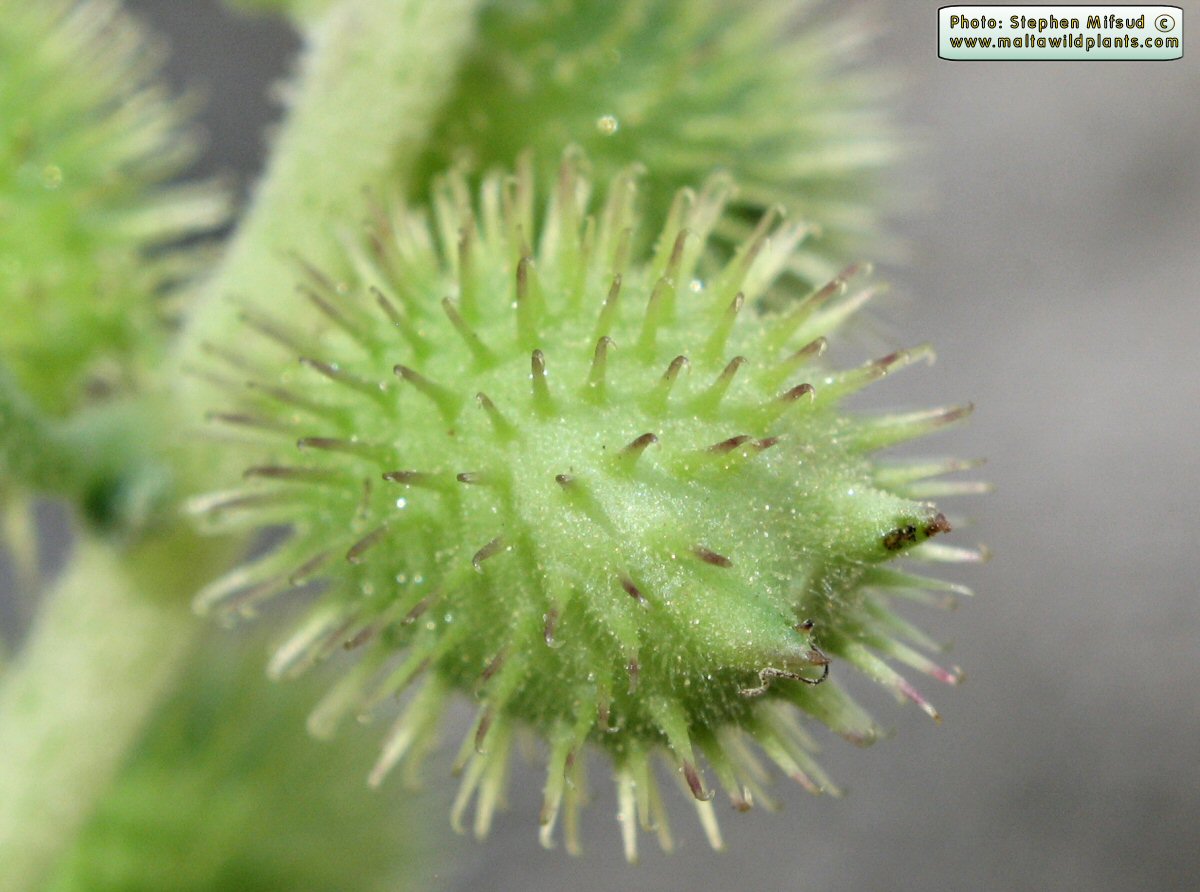
Photo of female flowers with plenty of hooks that have a length of about 2mm. This structure is considered as a compound shaped (modified) involucre.
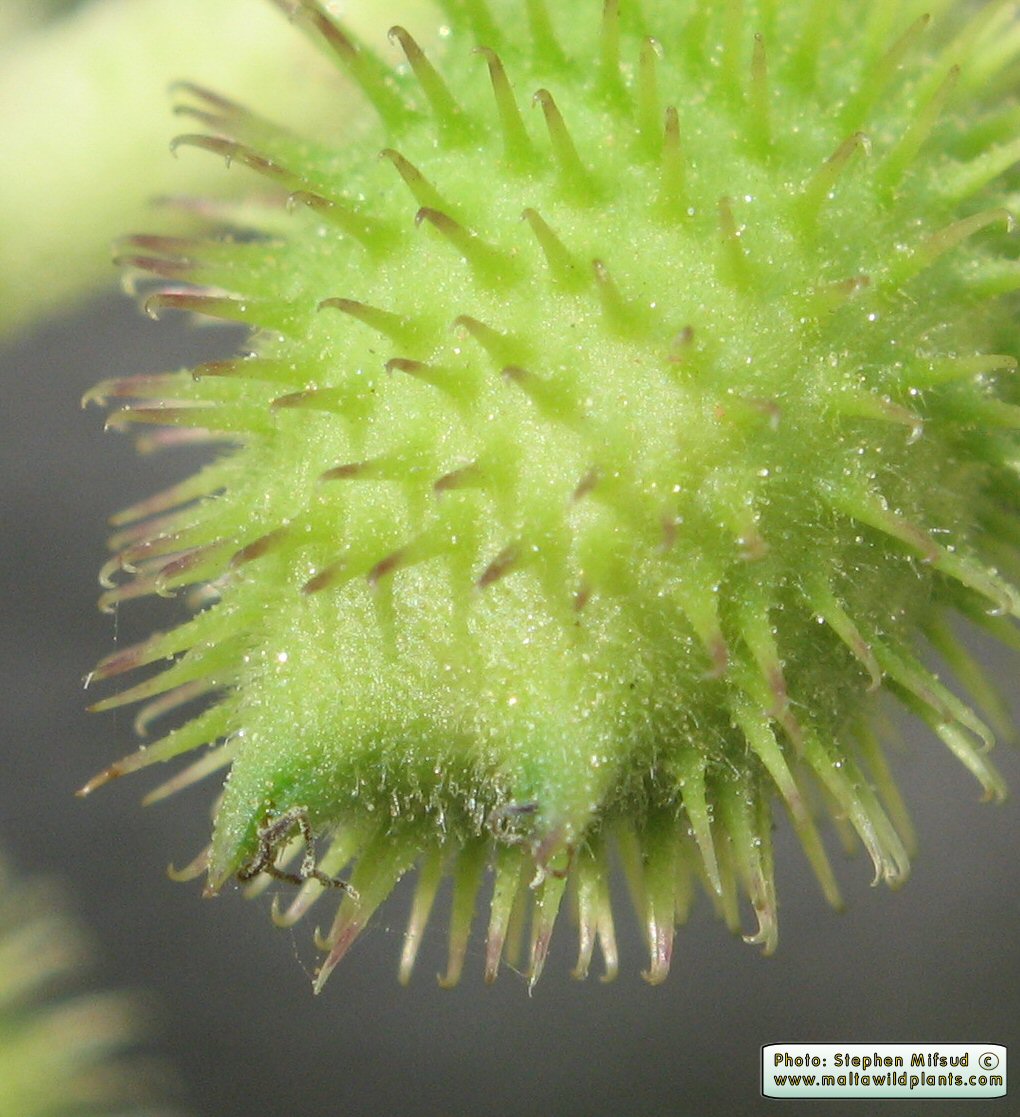
Close up photo of female flower showing detail of the hooks which have a reddish tip and of the 2 beaks which have a dark green tip.
Close up photo of the 2 beaks. One may note the tiny coiled styles coming out from the very tip of the beaks.
Close up photo of apical part of flower showing in details the 2 beaks. At the tip of the beaks comes out hair-thin styles of the florets inside. Each female flower holds only 2 florets.
Xanthium strumarium (Rough Cocklebur) - CLICK TO ENLARGE PHOTO Xanthium strumarium (Rough Cocklebur) - CLICK TO ENLARGE PHOTO Xanthium strumarium (Rough Cocklebur) - CLICK TO ENLARGE PHOTO Xanthium strumarium (Rough Cocklebur) - CLICK TO ENLARGE PHOTO
Photo of a branch of the tree showings its dark green leaves and light green/yellowish female flowers / fruit.
Photo of a branch holding male flowers at the apex followed by the light-green female flowers. Both male and female flowers lack petals.
Scanned image of flowering part of plant showing arrangement of flowers.
Photo of the herbaceous plant.
Xanthium strumarium (Rough Cocklebur) - CLICK TO ENLARGE PHOTO Xanthium strumarium (Rough Cocklebur) - CLICK TO ENLARGE PHOTO Xanthium strumarium (Rough Cocklebur) - CLICK TO ENLARGE PHOTO Xanthium strumarium (Rough Cocklebur) - CLICK TO ENLARGE PHOTO
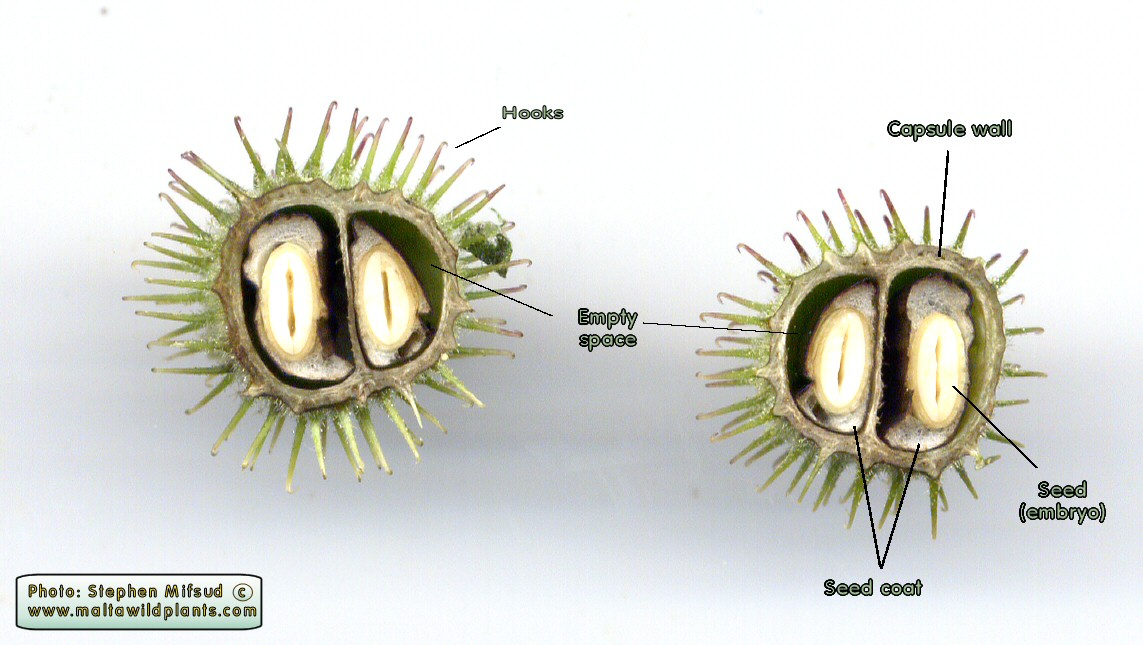
Scanned image of female flower or fruit. It is difficult to say if it is a flower or fruit because the florets are enclosed inside and the involucral structure remains practically the same from the flowering to the fruiting stage. However when ripening, the colour changes to yellow and then lignifies to woody brown.
Scanned and annotated image of a cross section dissection of fruit showing its 2 ovaries inside.
Ovary removed from the 'involucral' capsule. The 2 horn like beaks are perforated by a tiny pore from which the style of each ovary passes. The style is seen at the apex of the ovary as a curly hair-like appendage.
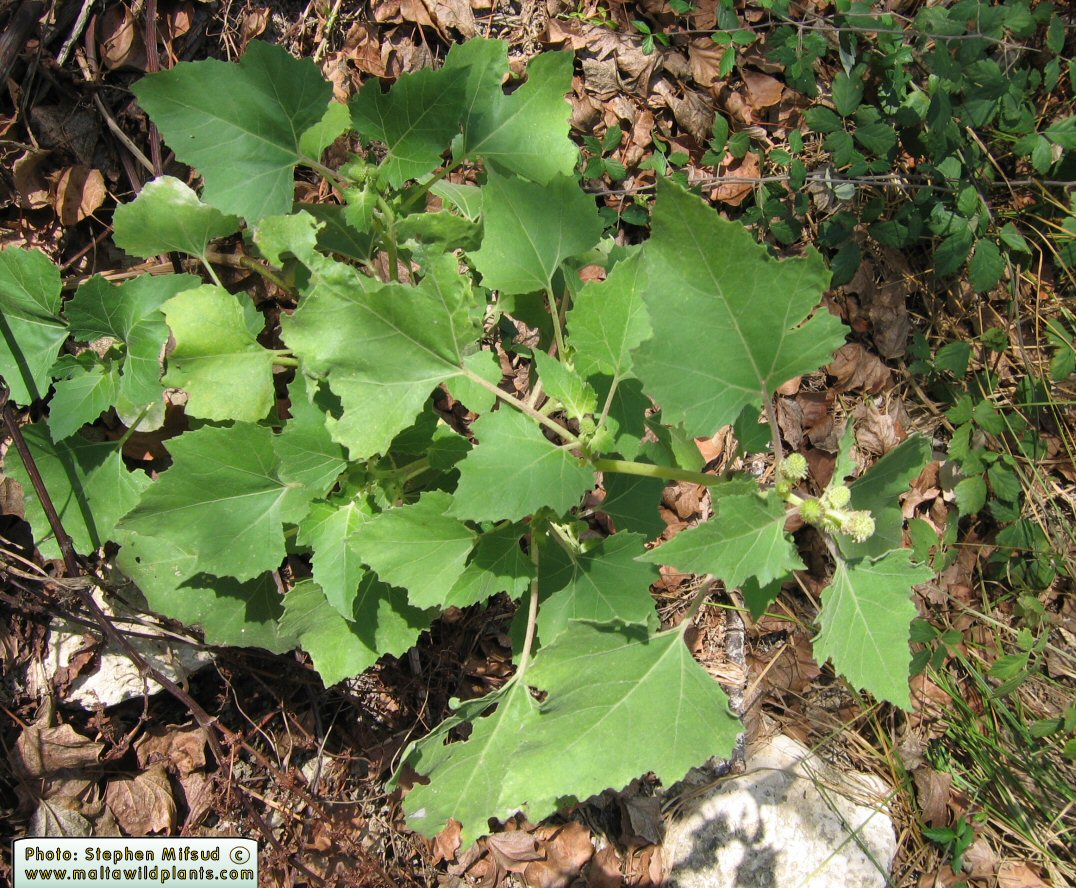
Photo of numerous leaves of the plant.
Xanthium strumarium (Rough Cocklebur) - CLICK TO ENLARGE PHOTO Xanthium strumarium (Rough Cocklebur) - CLICK TO ENLARGE PHOTO Xanthium strumarium (Rough Cocklebur) - CLICK TO ENLARGE PHOTO Xanthium strumarium (Rough Cocklebur) - CLICK TO ENLARGE PHOTO
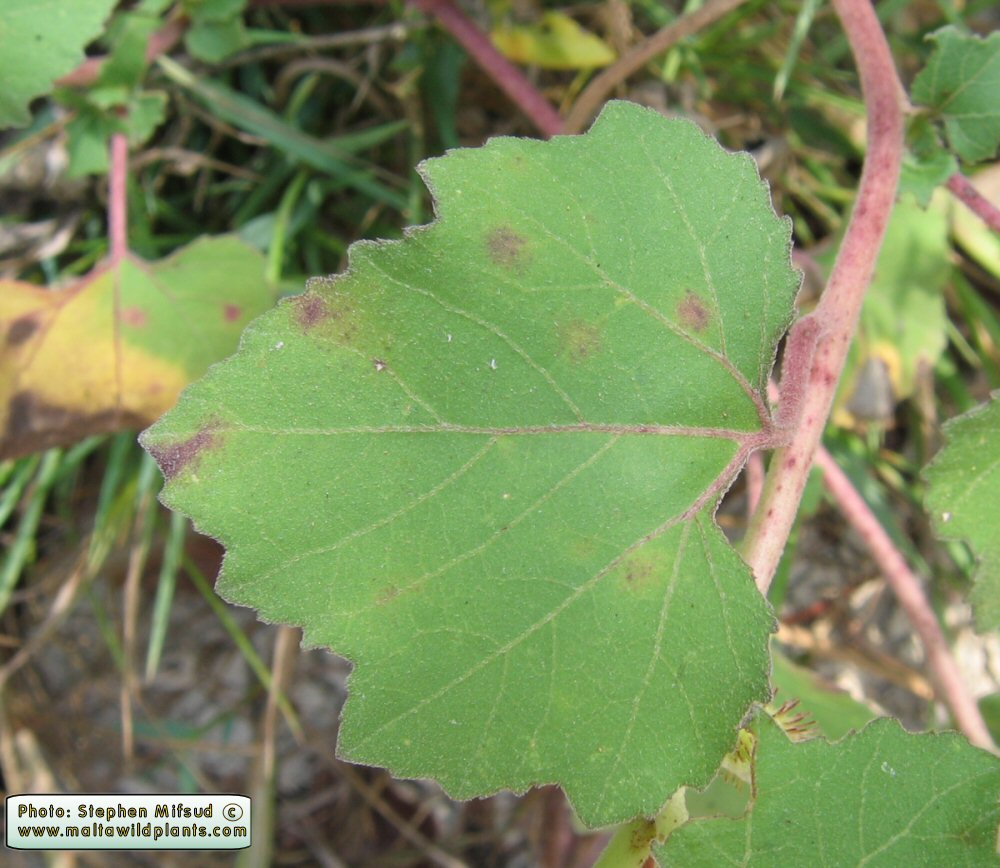
Close up image of leaf which has a rather triangular shape and coarsely serrated outline.
Photo of adult leaf in situ. Mature leaves start forming lobes at the lower (wider) part of the leaf.
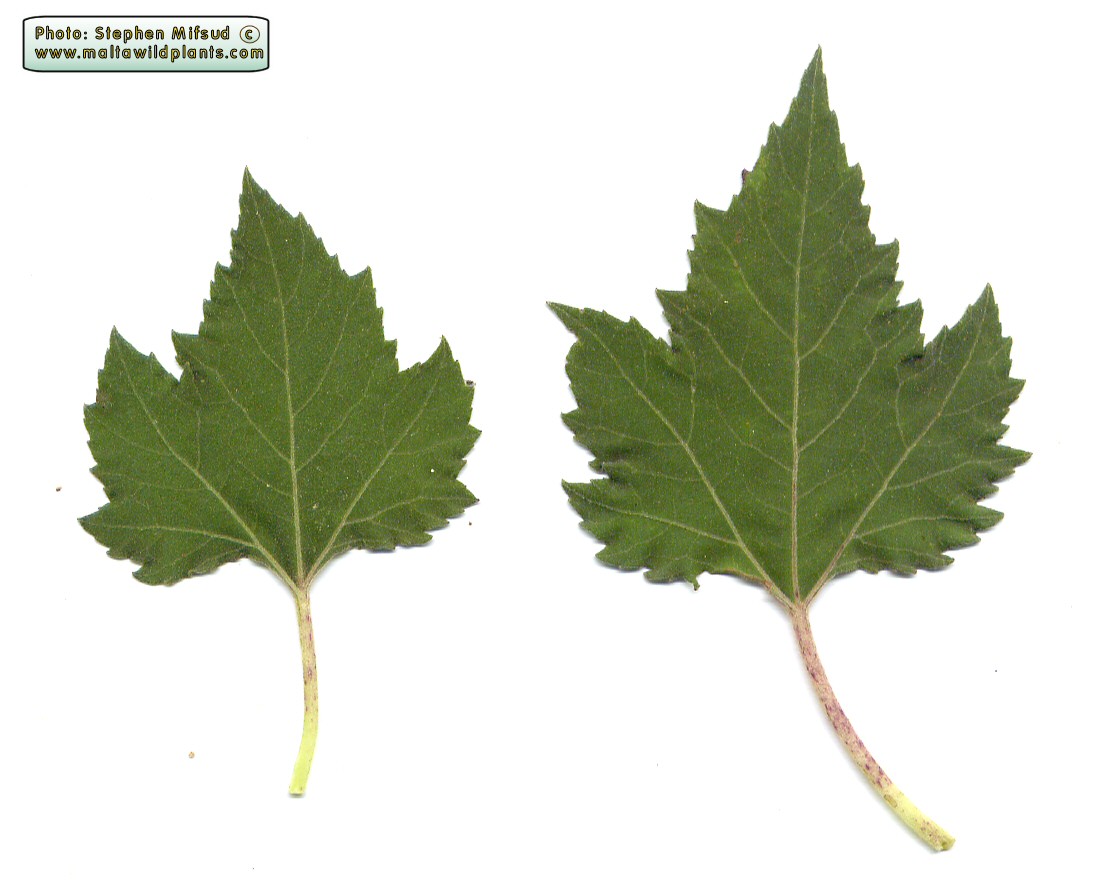
Scanned image of leaf showing in details its shape and outline. Note the long petiole that leaves of this plant have.
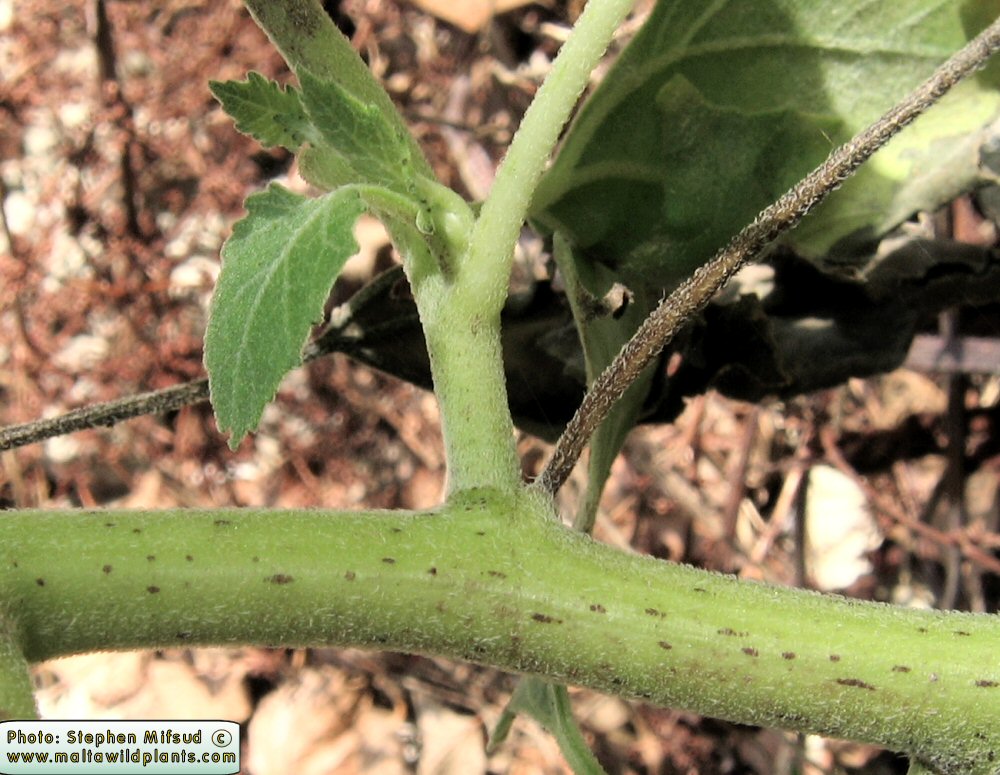
Close up image of stem which is usually pitted with reddish brown streaks or sometimes it is mostly reddish brown. It also possesses very short hair.
Xanthium strumarium (Rough Cocklebur) - CLICK TO ENLARGE PHOTO Xanthium strumarium (Rough Cocklebur) - CLICK TO ENLARGE PHOTO Xanthium strumarium (Rough Cocklebur) - CLICK TO ENLARGE PHOTO Xanthium strumarium (Rough Cocklebur) - CLICK TO ENLARGE PHOTO
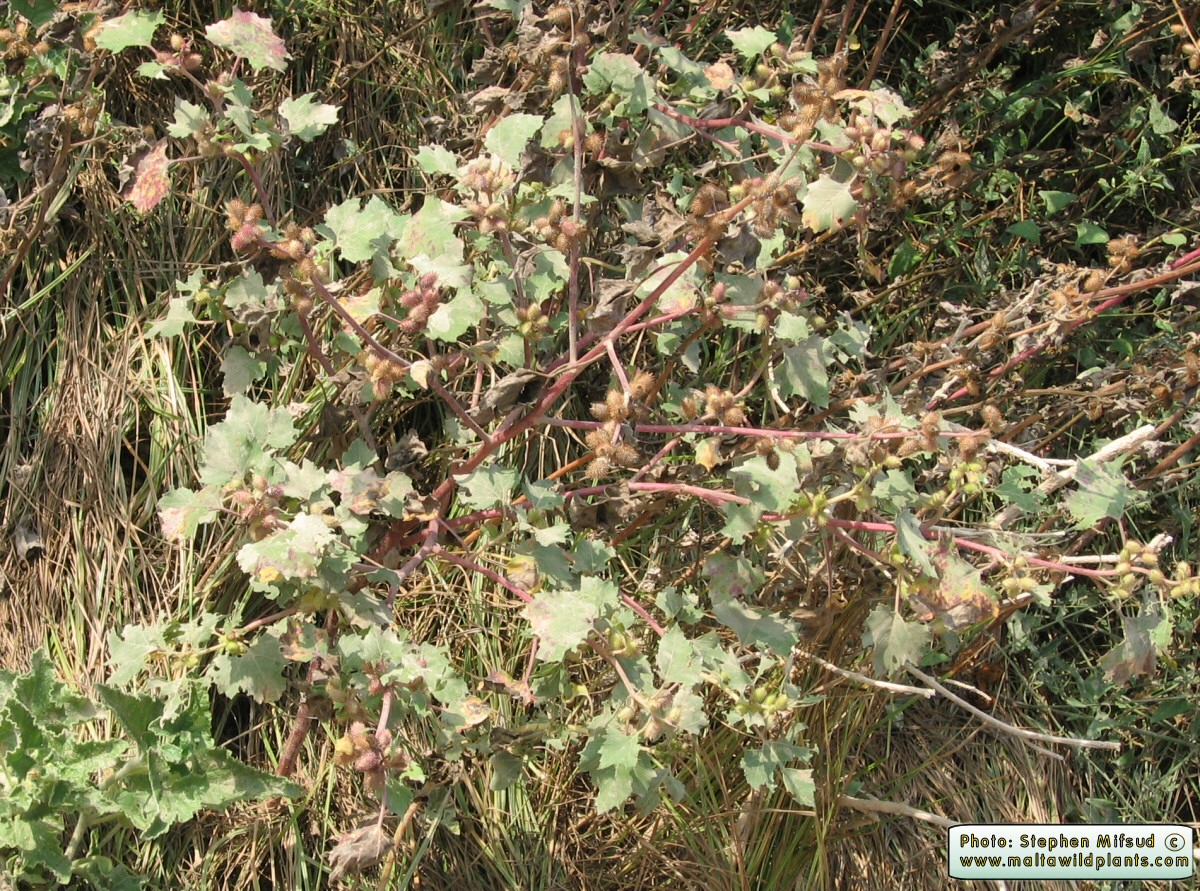
Photo of plant which can grow up to 120 cm high.
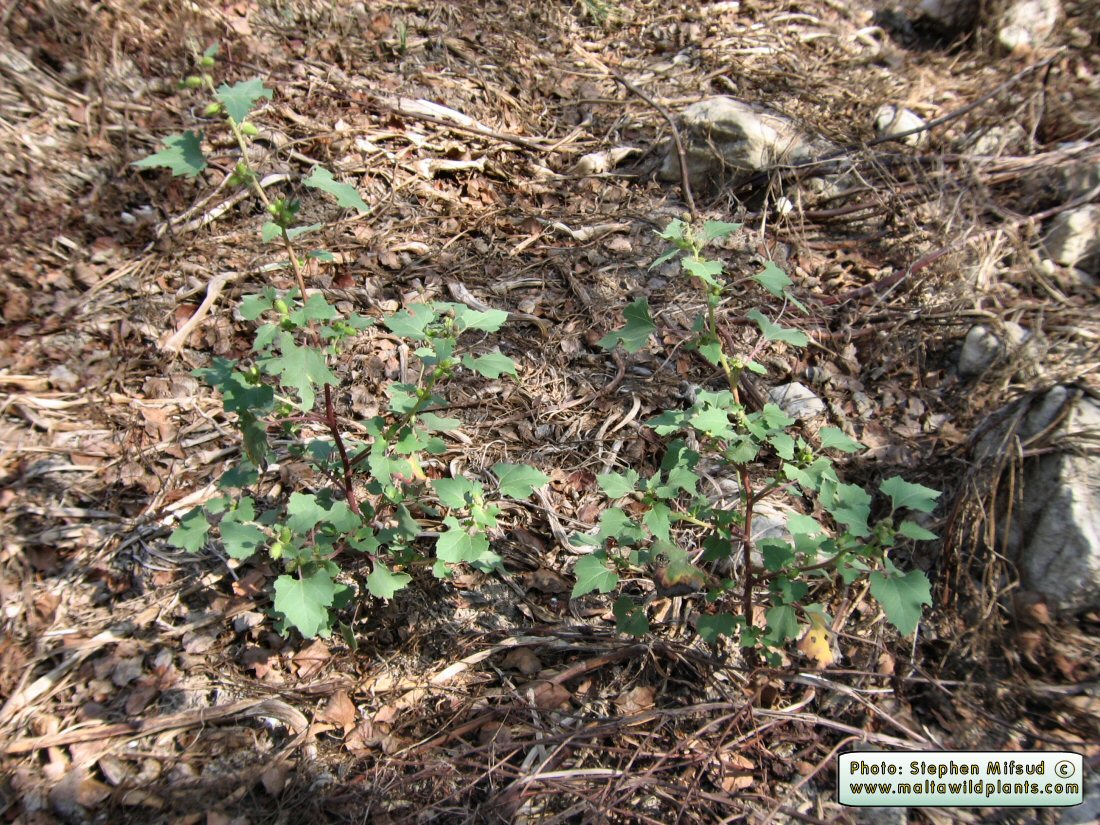
Photo of 2 young plants. There is not much competition from other plants since they are growing in the driest months of August and September.
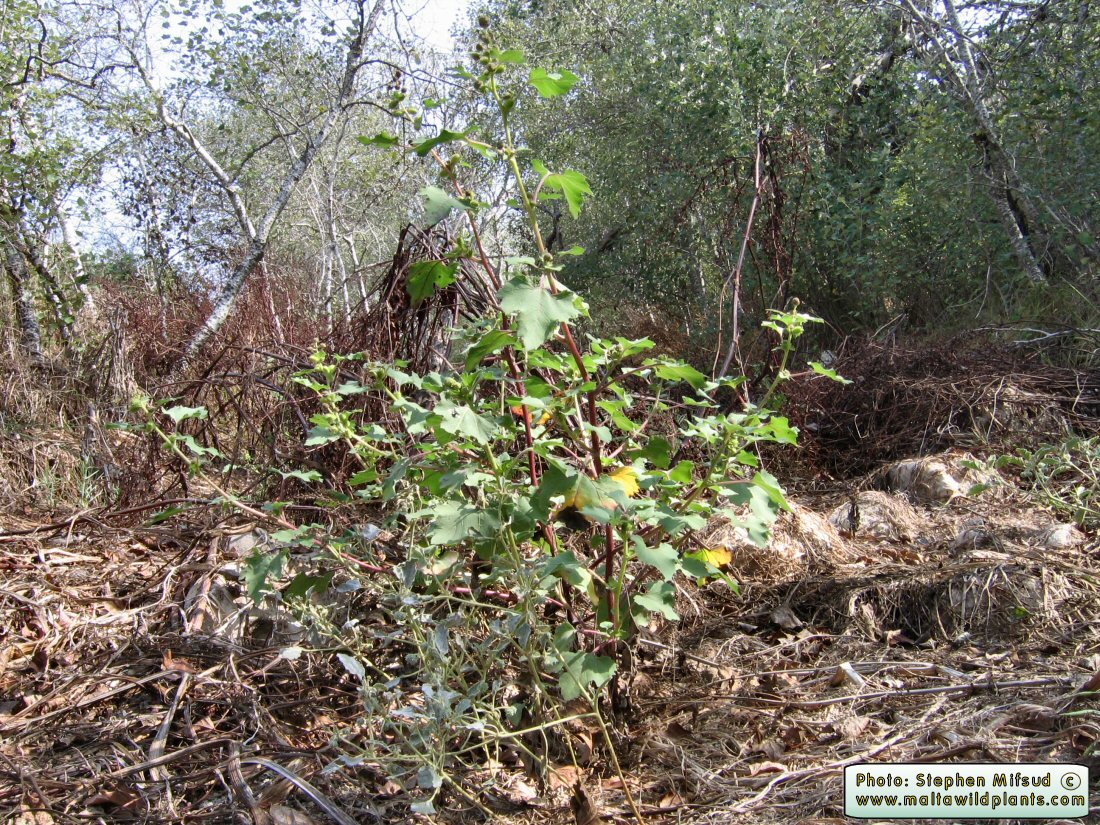
Photo plant and its habitat, a valley bottom.
Another photo of the plant in its habitat taken on 1st week of September 2005.
Xanthium strumarium (Rough Cocklebur) - CLICK TO ENLARGE PHOTO Xanthium strumarium (Rough Cocklebur) - CLICK TO ENLARGE PHOTO Xanthium strumarium (Rough Cocklebur) - CLICK TO ENLARGE PHOTO Xanthium strumarium (Rough Cocklebur) - CLICK TO ENLARGE PHOTO
Thousands of plants growing at Chadwik lakes which in Summer is completely dry. Here there was a characteristic (slightly aromatic) smell coming from the vast number of X. strumarium plants.
Photo of many plants at Chadwik lakes.
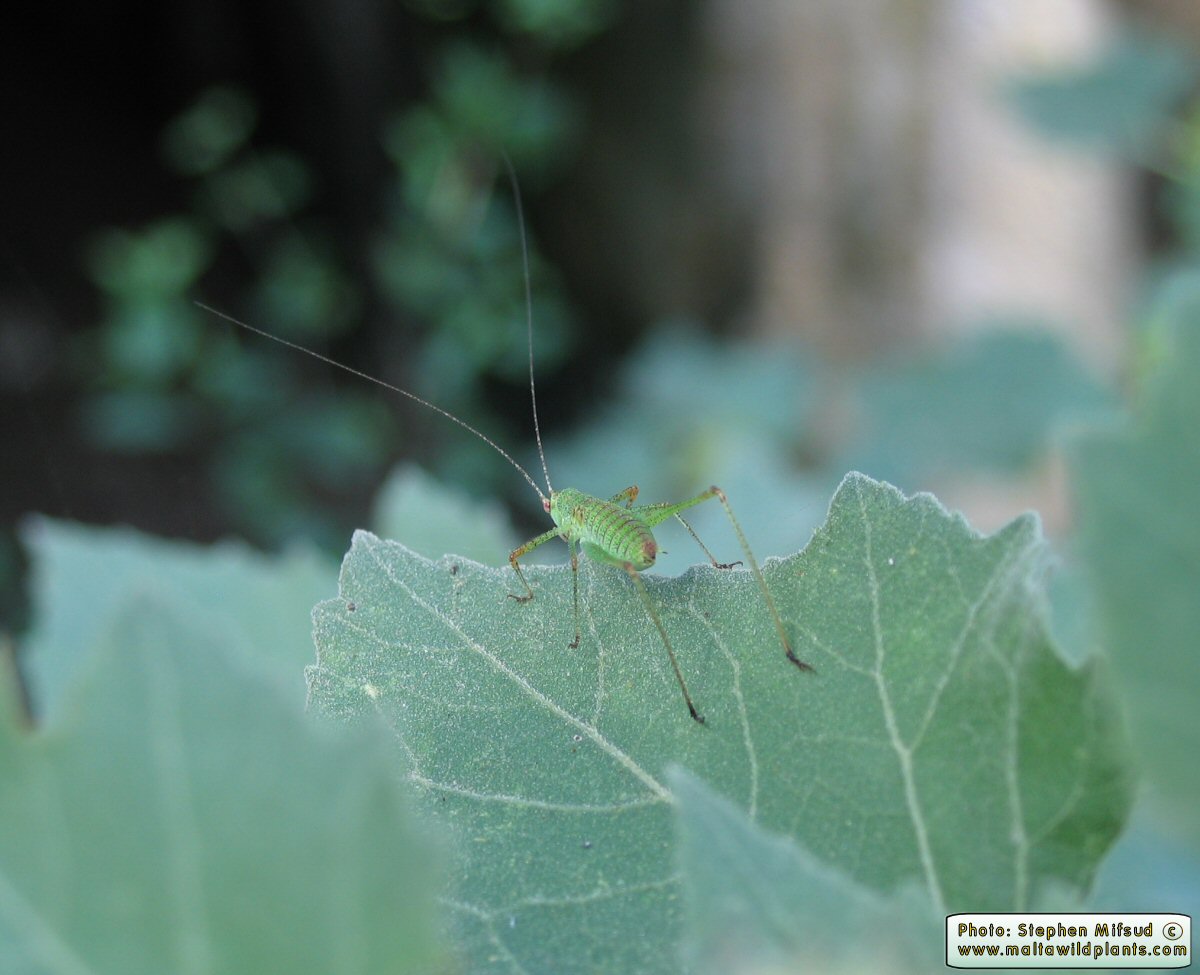
Photo of a nymph of a Common Green Bush-cricket, (Phaneroptera nana) standing on one of the leaves. Note its very long anthers.
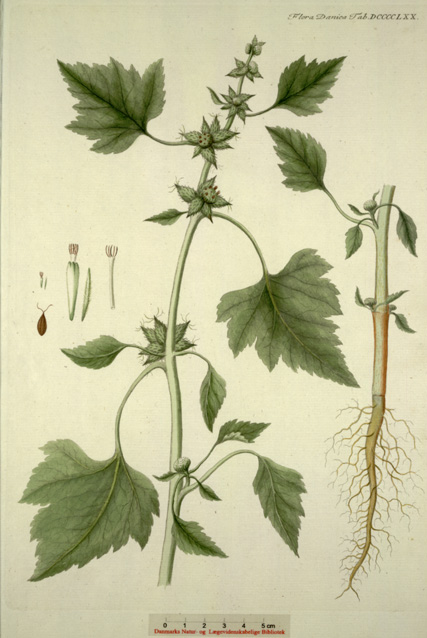
Illustration of the plant taken from Flora Danica Online.
Xanthium strumarium (Rough Cocklebur) - CLICK TO ENLARGE PHOTO Xanthium strumarium (Rough Cocklebur) - CLICK TO ENLARGE PHOTO    
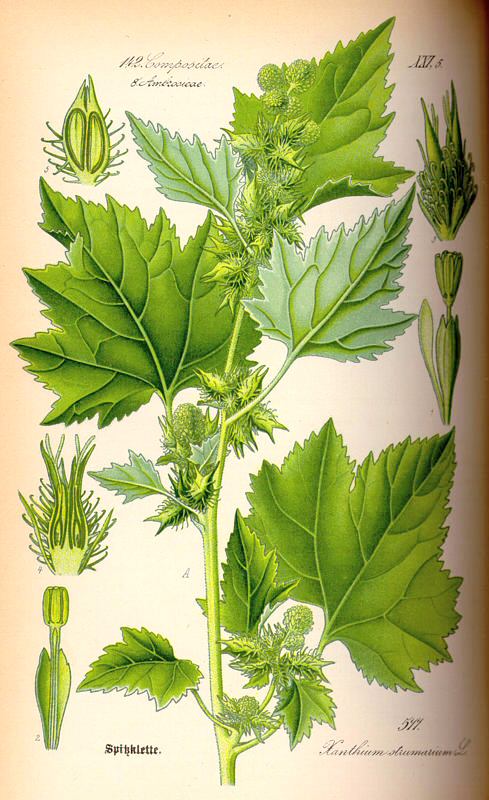
Illustration of the plant taken from Flora von Deutschland Österreich und der Schweiz by Prof. Dr. Otto Wilhelm Thomé.
Photo of dried fruit showing its excellent ability to adhere with clothes of trespassers. The fruit capsule do not split open and so, it means of dispersal should be by passing animals or water currents.
-
-

Further Information and Links

Carboxyatractyloside poisoning in humans. Toxicologic study of carboxyatractyloside (active principle in cocklebur--Xanthium strumarium) in rats.
Compositae dermatitis in childhood. Purification and characterization of allergens from Xanthium strumarium pollen.
Methanol extract of Xanthium strumarium L. possesses anti-inflammatory and anti-nociceptive activities. Two cytotoxic sesquiterpene lactones from the leaves of Xanthium strumarium and their in vitro inhibitory activity on farnesyltransferase.
Search for Xanthium strumarium on the FORUM of MaltaWildPlants.com


Buy from and support MaltaWildPlants.com

Buy Seeds from Maltawildplants.com Buy samples of seeds of certain wild plants for your studies, trials, research, etc. Not all species' seeds can be exported (depending on Maltese regulations), and availability depends on season of species. So, before any payment, you are kindly asked to fill in the online quotation/order form by which I can contact you back for availability and charges. Buy Seeds from Maltawildplants.com   Online Quotation

Buy Seeds from Maltawildplants.com   Online Payment
Buy Documents from Maltawildplants.com Buy documents related to Maltese Wild Plants such as the list of references, full profile, or other docs you request. Buy Documents from Maltawildplants.com   Online Payment
Buy Images  from Maltawildplants.com Buy any of my own copyright images found in this large collection of Maltese flora. You should first select the image you want to buy and input its corresponding code (found beneath each individual photo) in the online ordering form. Buy Seeds from Maltawildplants.com   Online Payment
Buy Seeds from Maltawildplants.com Kindly donate any sum of money (from 2USD / 2Euro) to help us covering some expenses needed to maintain Maltawildplants.com. Please bear in mind how much hard work such a large and up-to-date website needs to arrive directly to you home, office or library. Your kind donations are both greatly appreciated and recorded for future reference. Donors asking help will have first que preference for assistance and special attention. Buy Seeds from Maltawildplants.com   Online Donation


Submit More Information

Use the form below to submit more information about this plant or a related species. If the data is taken from a book, journal, website, etc, please provide the corresponding reference / website address as indicated in the form. If it is your own observation, then your name will be cited. Your Email address will never be displayed online, it is just for internal communication.


For plant species that are marked as rare, you can also report other locations in Malta where you have seen this species.

Finally you can report any mistakes or errors found on the plant profile for necessary corrections. This will help to improve the website's acuracy.


To have more details about each particular field, just move your mouse on it and wait for the help message to pop up

* = required fields.
Plant Species:  *
Your name:   *
Your Email:   *
Fill any of the following 3 sections below (A, B or/and C) and send the form. - Thank you.
 
A:  Additional Information about this plant species
Own observations:
Info from published material (books, jounals, website):

Reference of published material:

 
B:   Where have you seen this plant on the Maltese Islands?
Locations in Malta or Gozo where you have encountered this plant.
Mostly applies for rare plants.


1:        2:   
3:       4:   
5:       6:   

Try to be as concise as possible. Examples: Dingli Cliffs (near chapel), Wied Incita (Zebbug side), Triq il-Kbira (Qormi), Barriera ta\' Abdul (Xlendi), Fields near Salib tal-gholja (Siggiewi). GPS bearings are also welcomed!
 
C:  Corrections for mistakes and errors in this plant profile.
Section of this plant Profile page where you found an error (select one)

What is the error/mistake
What should be its correction


All material and data on this webpage is under the copyright of the author of this site - Stephen Mifsud / www.MaltaWildPlants.com / Malta. (2002-2008)
This research project about the flora of Malta is sponsored by:
Middlesea Insurance p.l.c. A Fund established to help in the amelioration and enhancement of the environment in Malta and to take initiatives that enhance awareness on environmental issues amongst the public Empty space for sponsor Empty space for sponsor Benefit companies get by sponsoring this project