| |
|
 | |
| MaltaWildPlants.com by Stephen Mifsud |
|
| |
|
|
 |  |  |  |
| External Links: |
|
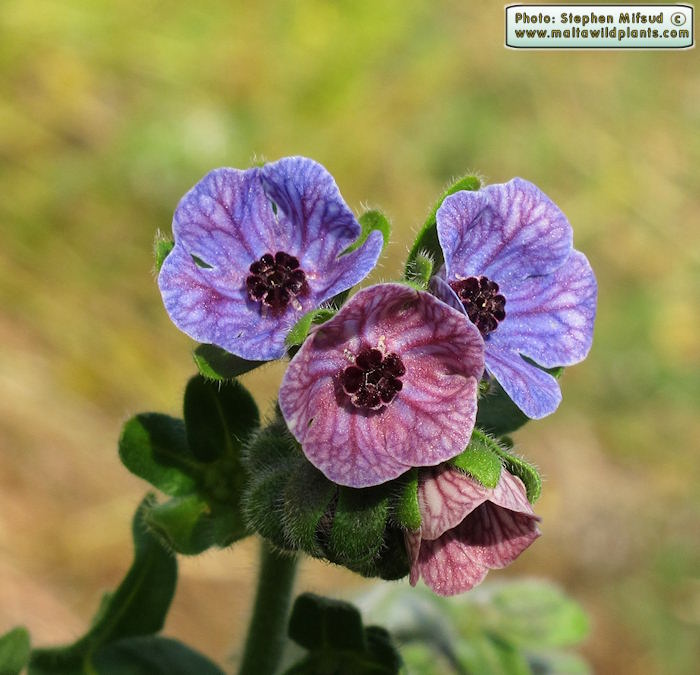
Cynoglossum creticum (Blue Hound's Tongue) |
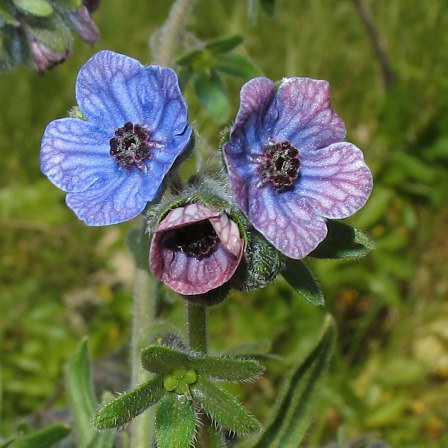
Cynoglossum creticum (BORAGINACEAE.)
Images for this profile are taken from the Maltese Islands after year 2000. |
|
| Nomenclature and Basic Information |
Species name : |
Cynoglossum creticumMill.
Published in Gard. Dict. ed. 8, no. 3 (1768) |
Synonyms :
(basionym or principal syn.) |
|
Plant Family : |
Boraginaceae
Juss. (The Borage Family)
16 species from the Boraginaceae family are recorded from the Maltese Islands. | English name(s) : | Blue Hound's Tongue |
Maltese name(s) : |
Ilsien il-kelb |
Status for Malta : |
Indigenous. Present on the Maltese islands before man |
Frequency : |
Very Common Common Frequent Scarce Rare Very rare Extinct |
Growth form : |
Raunkiaer lifeform [info]: HEMICRYPTOPHYTE ( prostate plants with flowers close to the ground )
Germination [info]: Dicotyledon |
Legal Protection : |
Not legally protected till the last update of this website (2/Mar/2022) |
Red List (1989) : |
Not listed in the Red Data Book of the Maltese Islands |
Flowering Time : |
February – April |
Colour of Flowers: |
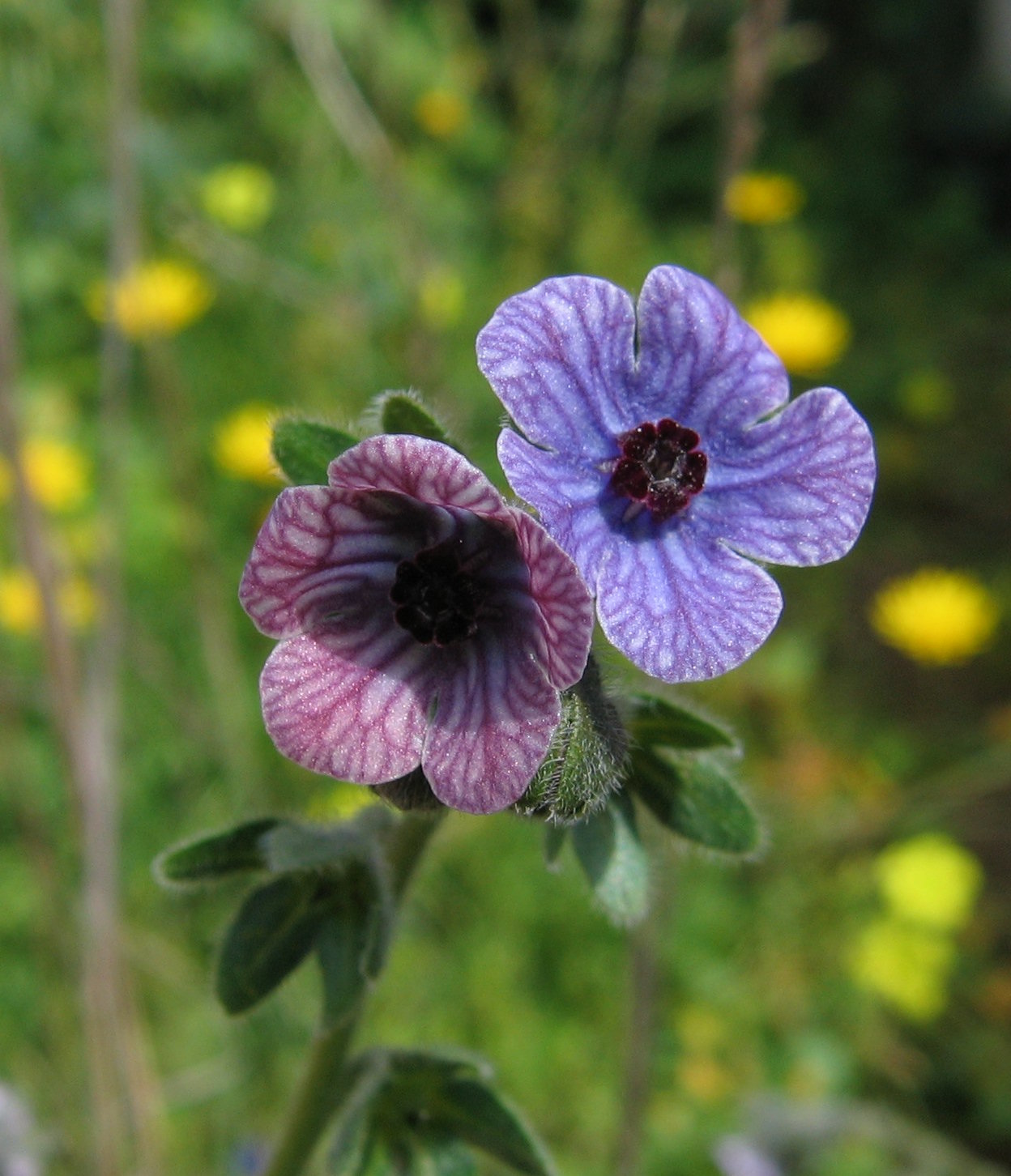
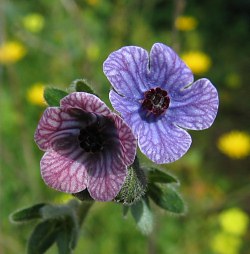
Blue or Violet |
Toxicity: |
Not particularly toxic |
Name Derivation : |
Cynoglossum: Greek translation for dog's tongue - 'kynos' = dog and 'glossa' = tongue. (Greek origin )
creticum: Related to or from the Mediterranean island of Crete. (Latin origin )
|
Planting in rural areas : |
Can be planted in rural areas according to ERA Guidelines |
|
|
Description, Habitat and Distribution | |
Habitat in Europe: |
Open, usually dry habitats. | |
Preferred habitat in Malta: |
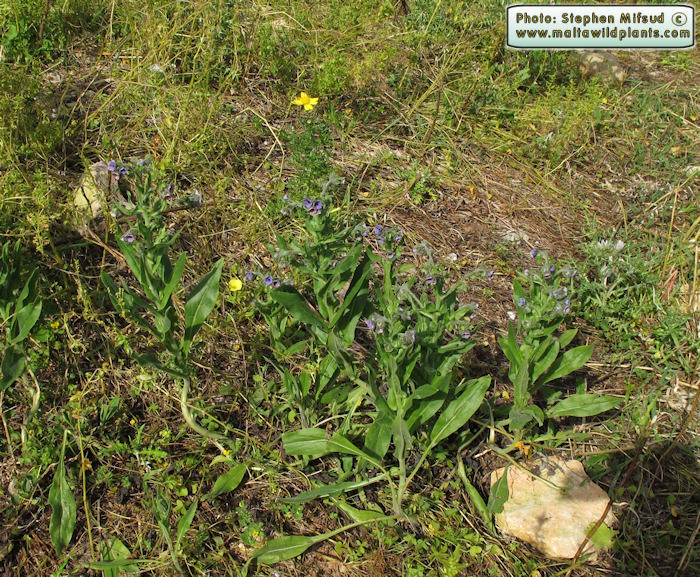
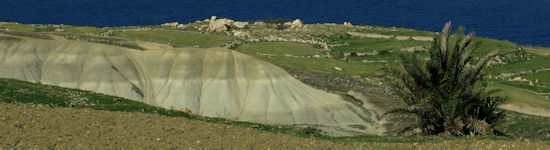
Disturbed areas and wasteland especially near arable areas. Also commonly found in dry areas besides valleys. | |
Botanical Description: |
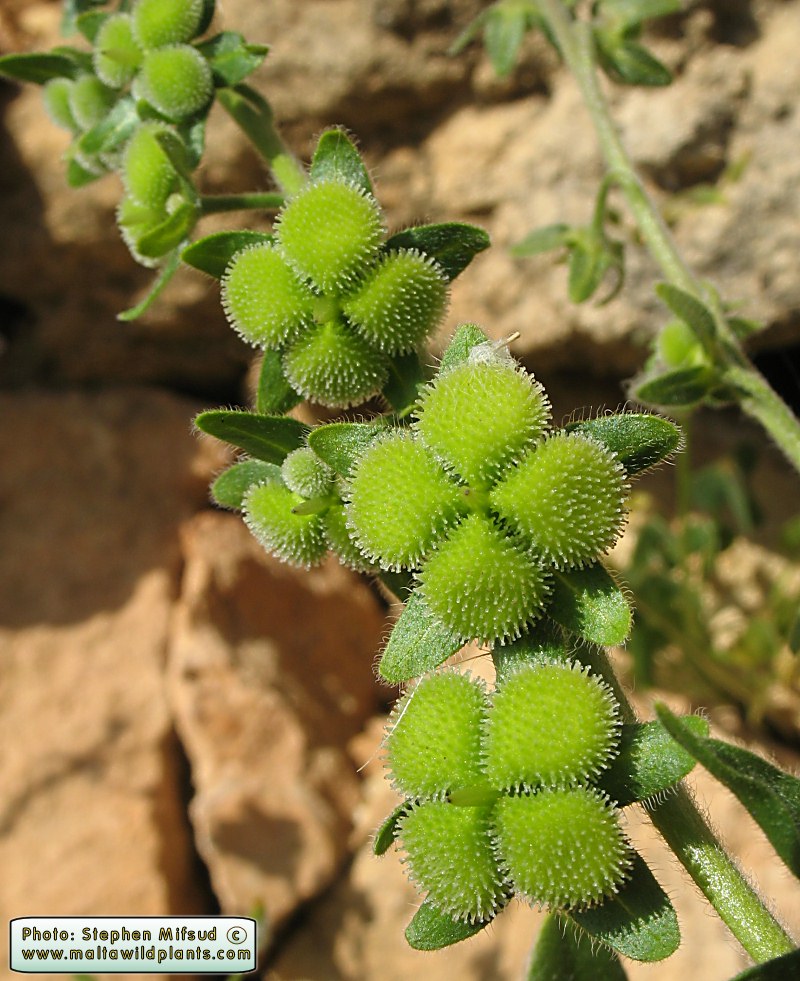
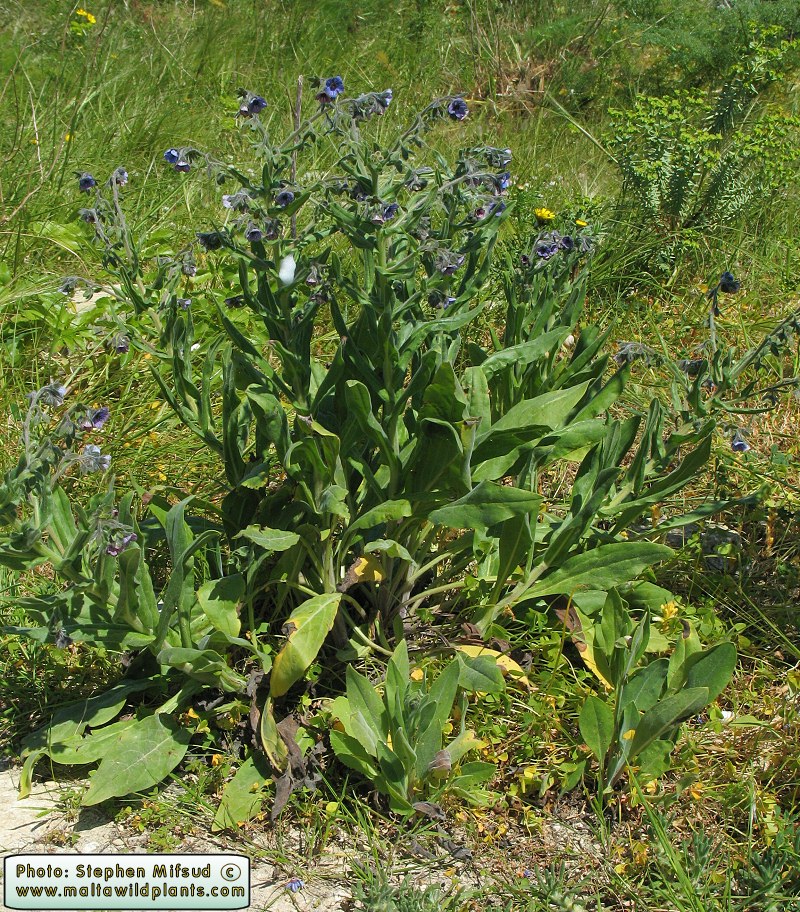
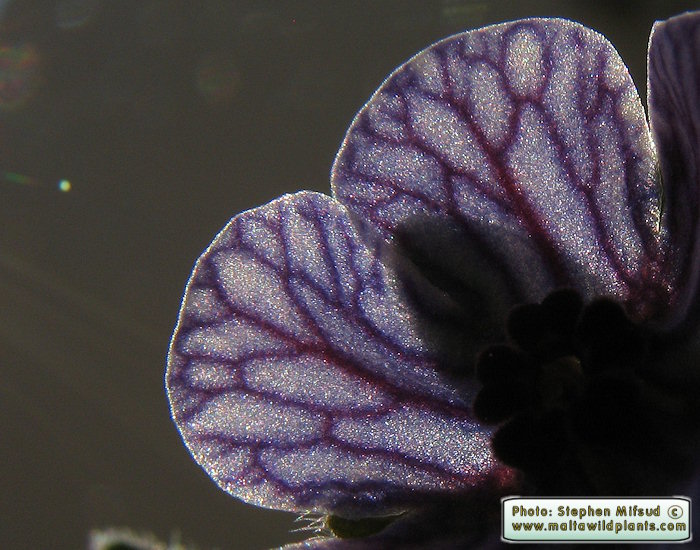
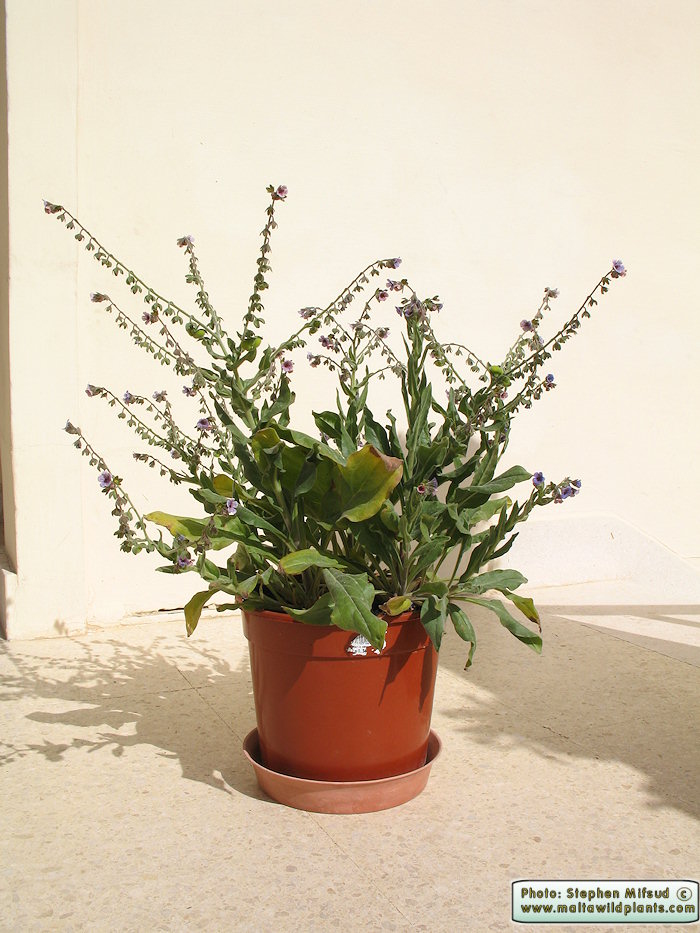
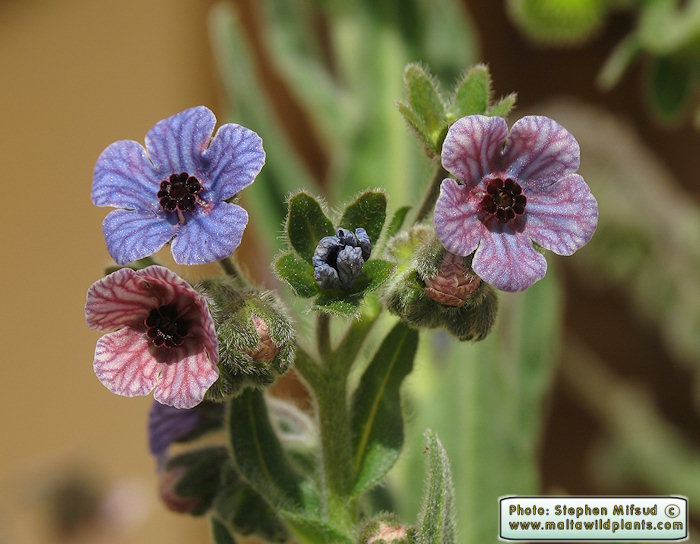
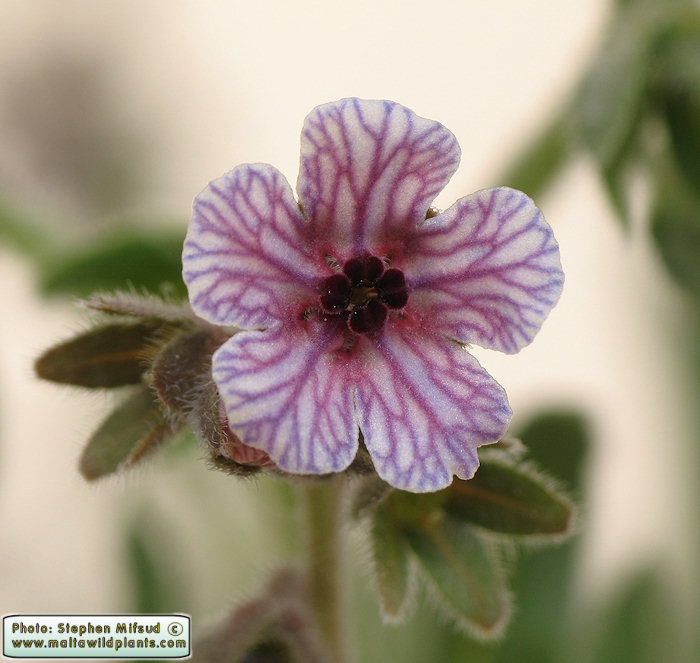
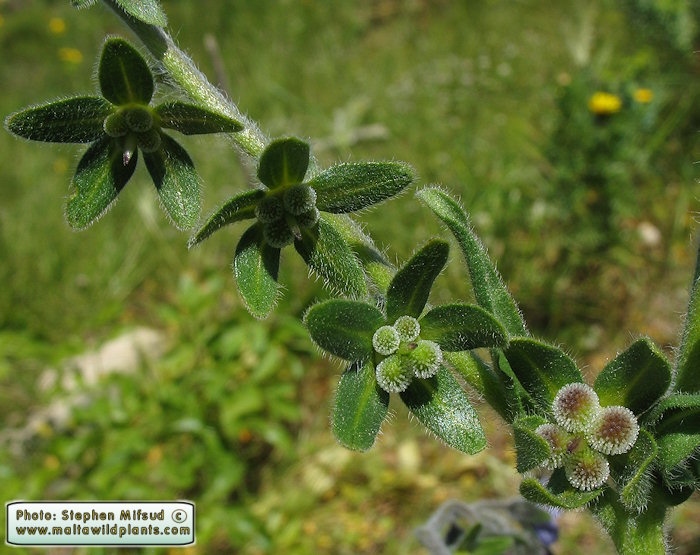
Biennial. Stems (20-)30-60 cm, hirsute to tomentose. Cauline leaves oblong to lanceolate, shortly petiolate to amplexicaul, densely hairy on both surfaces. Cymes ebracteate. Calyx-lobes 6-8 mm, oblong, hirsute. Corolla 7-9 mm, deep blue, with distinct reticulate venation; tube broadly infundibuliform; limb about as long as tube, divided to c. ½ , the lobes glabrous. Stamens inserted in lower part of tube. Nutlets 5-7 mm in diameter, ovoid, without a distinct border; external face convex, densely and unequally glochidiate. | |
Chromosome number: |
2n=24 | |
Distributional range: |
S. Europe, extending northwards to N.C. France. |
Distributional map in Europe
and the Mediterranean region (2018): |
|
Occurrences in Europe.
(from Flora Europaea pre year 1993): |
Albania, the Azores, the Balaeric Islands, Bulgaria, Corse, Crete, France (incl. Monaco and Channel Islands but excluding Corse), Greece, Spain (incl. Andorra but excl. the Balaerics), Italy (excl. Sicily and Sardignia), ex-Jugoslavia, Portugal, Doubtful in Romania, Russia and former USSR, Sardinia, Sicily and/or Malta, Turkey (European part) |
Occurrences in Europe and the Mediterranean region.
(from Euro+Med Checklist, 2019)
Country codes
|
AE Ag Al Ar Az(G L M P S T) Bl(I M N) Bu Ca(C G P T) Co Cr Ct Cy Ga Gr He Hs(S) Ir It LS Lu Ma Md(M P) Mo Rm Sa Si(M S) Sl Sr Tn Tu(A E) Uk(K) |
|
| | |







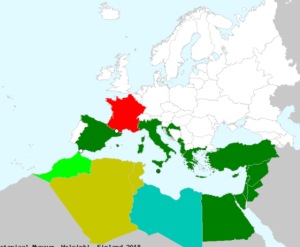 Atlas Flora Europaea
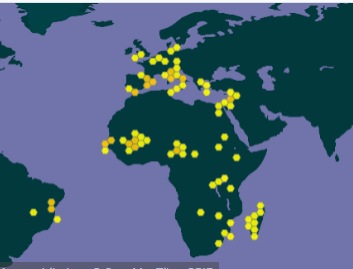 GBIF Distribution map