Wild Plants of Malta & Gozo - Plant: Diplotaxis erucoides (White Wall Rocket)

White Wall Rocket

Diplotaxis erucoides / White Wall Rocket / Ġarġir abjad
This plant is brought to you by one of the project's sponsors:
HSBC Cares for the Environment Fund
More sponsors are needed for this project [ click here ]

Contents Links


Nomenclature

Botanical Data

Description

General Information

Photo Gallery

Further Info & Links

Medicinal Properties

Buy Seeds and Docs

Submit own info
about this plant

Give a small Donation Online

FORUM

Copyright Info


Main Index

 
Visitor hits (Mar-2003)

Nomenclature

Species name:

Diplotaxis erucoides   (L.) DC.

Author(s):

Carl von Linné;
   Sweden, 1707-1778

Augustin Pyramus de Candolle;
   Switzerland, 1778-1841

General names:

White Wall Rocket, White Rocket

Maltese name:

Ġarġir abjad

Plant Family:

Brassicaceae/ Cruciferae   (Mustard (Cress) Family)

Name Derivation:

Diplotaxis = ? unknown;
erucoides = looks like plants of the Genus Eruca (Latina)

Synonyms:

Crucifera erucoides, Euzomum erucoides, Sinapis erucoides

Remarks:

-


Botanical Data

PLANT STRUCTURE:

Characteristic

Growth Form

Branching

Surface

Description

Erect :

Upright, vertically straight up well clear off the ground.

Moderately Branched :

Considerable number of secondary branches along the main stem.

Pubescent :

Covered with soft short hairs often pointing downwards.

General
Picture

Wild Plants of the Mediterranean Islands of Malta  - Copyright Stephen Mifsud / Maltawildplants.com / Malta (2002-2007) Wild Plants of the Mediterranean Islands of Malta  - Copyright Stephen Mifsud / Maltawildplants.com / Malta (2002-2007) Wild Plants of the Mediterranean Islands of Malta  - Copyright Stephen Mifsud / Maltawildplants.com / Malta (2002-2007)

LEAVES:

Characteristic

Arrangement

Attachment

Venation

Description

Alternate :

Growing at different positions along the stem axis.

Stalked / Petiolate :

Hanging out by a slender leaf-stalk.

Pinnate venation :

Lateral veins which diverge from the midrib towards the leaf marhins.

General
Picture

Wild Plants of the Mediterranean Islands of Malta  - Copyright Stephen Mifsud / Maltawildplants.com / Malta (2002-2007) Wild Plants of the Mediterranean Islands of Malta  - Copyright Stephen Mifsud / Maltawildplants.com / Malta (2002-2007) Wild Plants of the Mediterranean Islands of Malta  - Copyright Stephen Mifsud / Maltawildplants.com / Malta (2002-2007)
 

Characteristic

Leaf Shape

Leaf Margin

Remarks

Description

Irregular Pinnate Lobes (Terminal lobe being largest) :

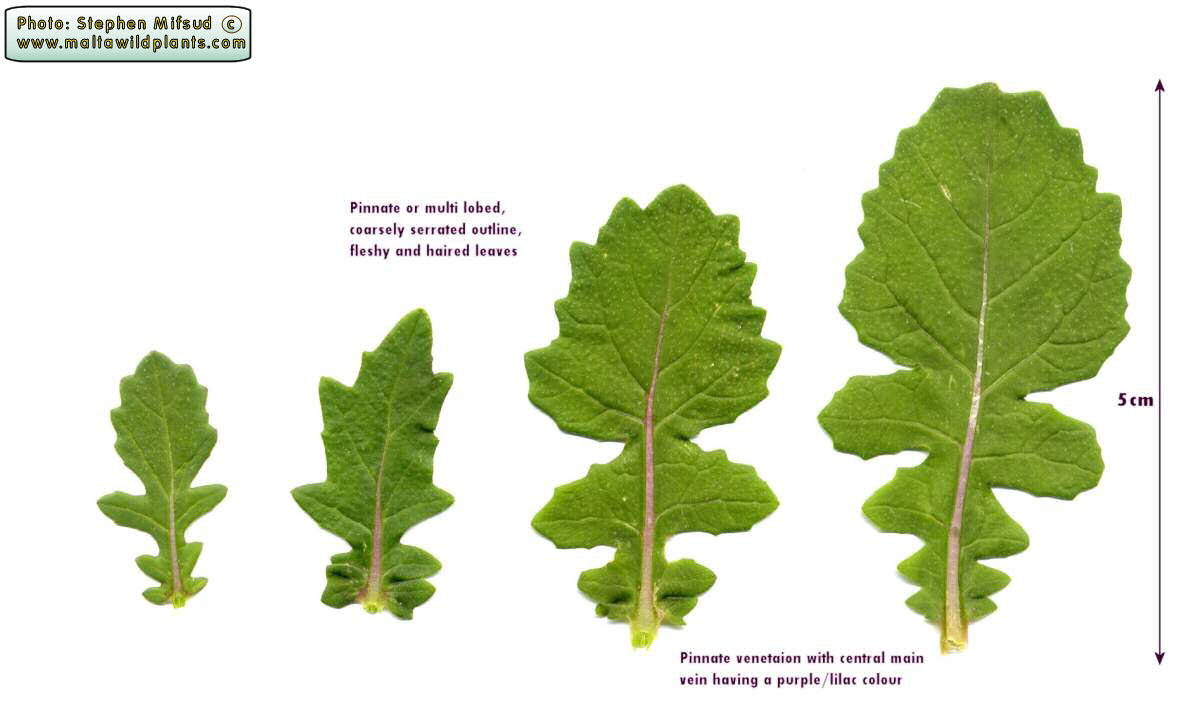
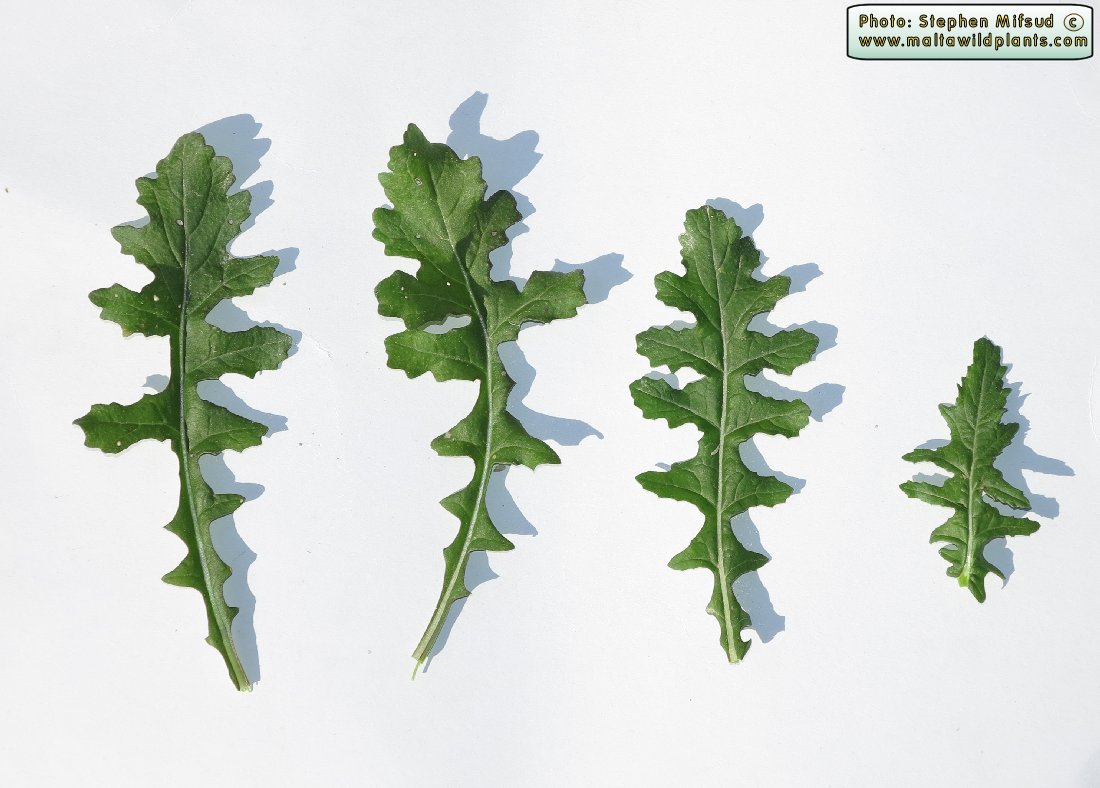
Compound arrangement of several lobes of various sizes and depths with the lowest being the smallest and most independent (deeply lobed), and the upper terminal lobe being the largest.

Crenate to shallow Dentate:

Shallow, smooth and rounded teeth.

General
Picture

Wild Plants of the Mediterranean Islands of Malta  - Copyright Stephen Mifsud / Maltawildplants.com / Malta (2002-2007) Wild Plants of the Mediterranean Islands of Malta  - Copyright Stephen Mifsud / Maltawildplants.com / Malta (2002-2007) Wild Plants of the Mediterranean Islands of Malta  - Copyright Stephen Mifsud / Maltawildplants.com / Malta (2002-2007)

FLOWERS:

Characteristic

Colour

Basic Flower Type

No. of Petals

No. of Sepals

Description

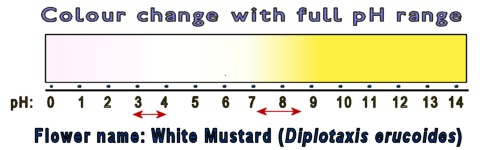
White

sometimes found tinged in lilac or pale violet.

Cruciform :

A flower with four petals at right angles to each other forming a shape of a cross.

4

4

General
Picture

  Wild Plants of the Mediterranean Islands of Malta  - Copyright Stephen Mifsud / Maltawildplants.com / Malta (2002-2007) Wild Plants of the Mediterranean Islands of Malta  - Copyright Stephen Mifsud / Maltawildplants.com / Malta (2002-2007) Wild Plants of the Mediterranean Islands of Malta  - Copyright Stephen Mifsud / Maltawildplants.com / Malta (2002-2007)
 

Characteristic

Inflorescence

Description

Ovary

Stamens

Description

Raceme :

Simple, elongated, indeterminate cluster with stalked flowers.

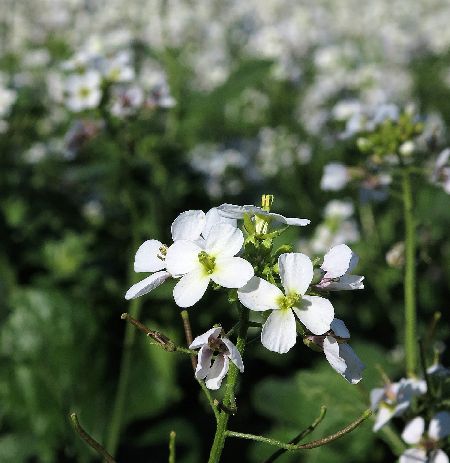
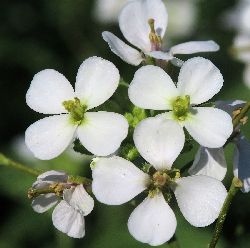
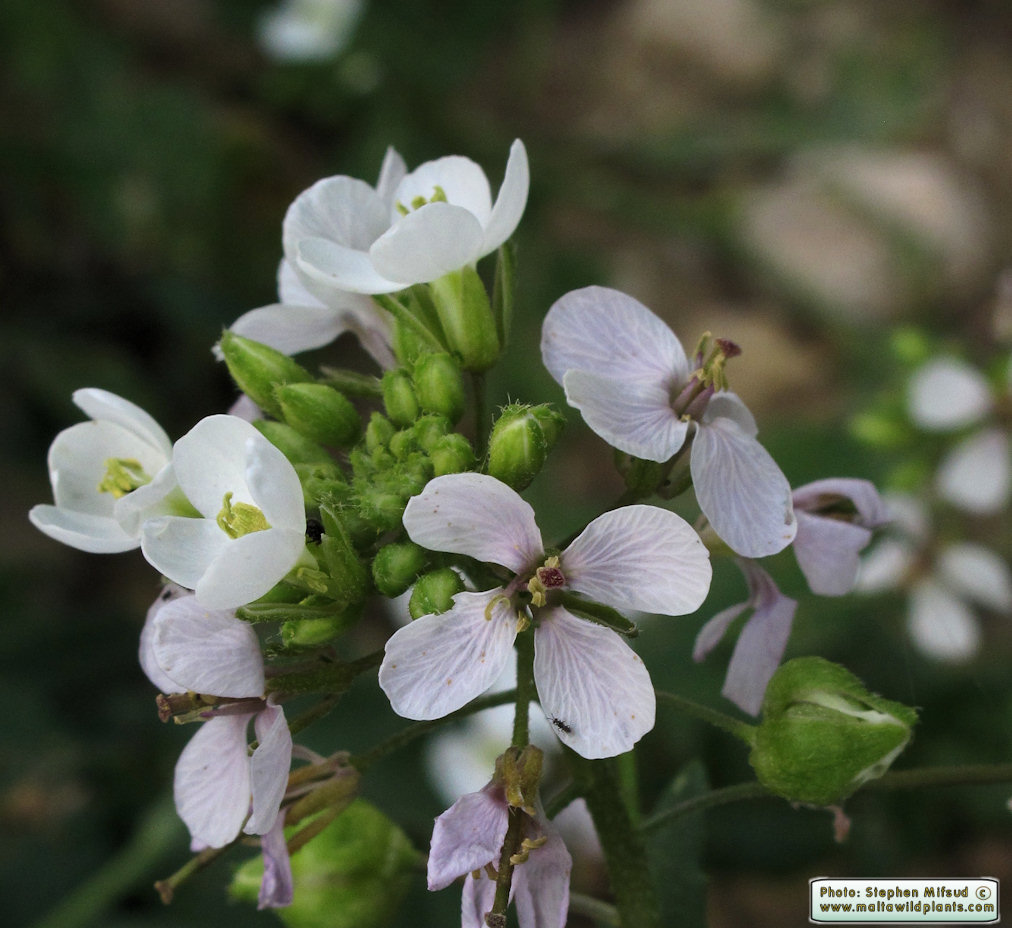
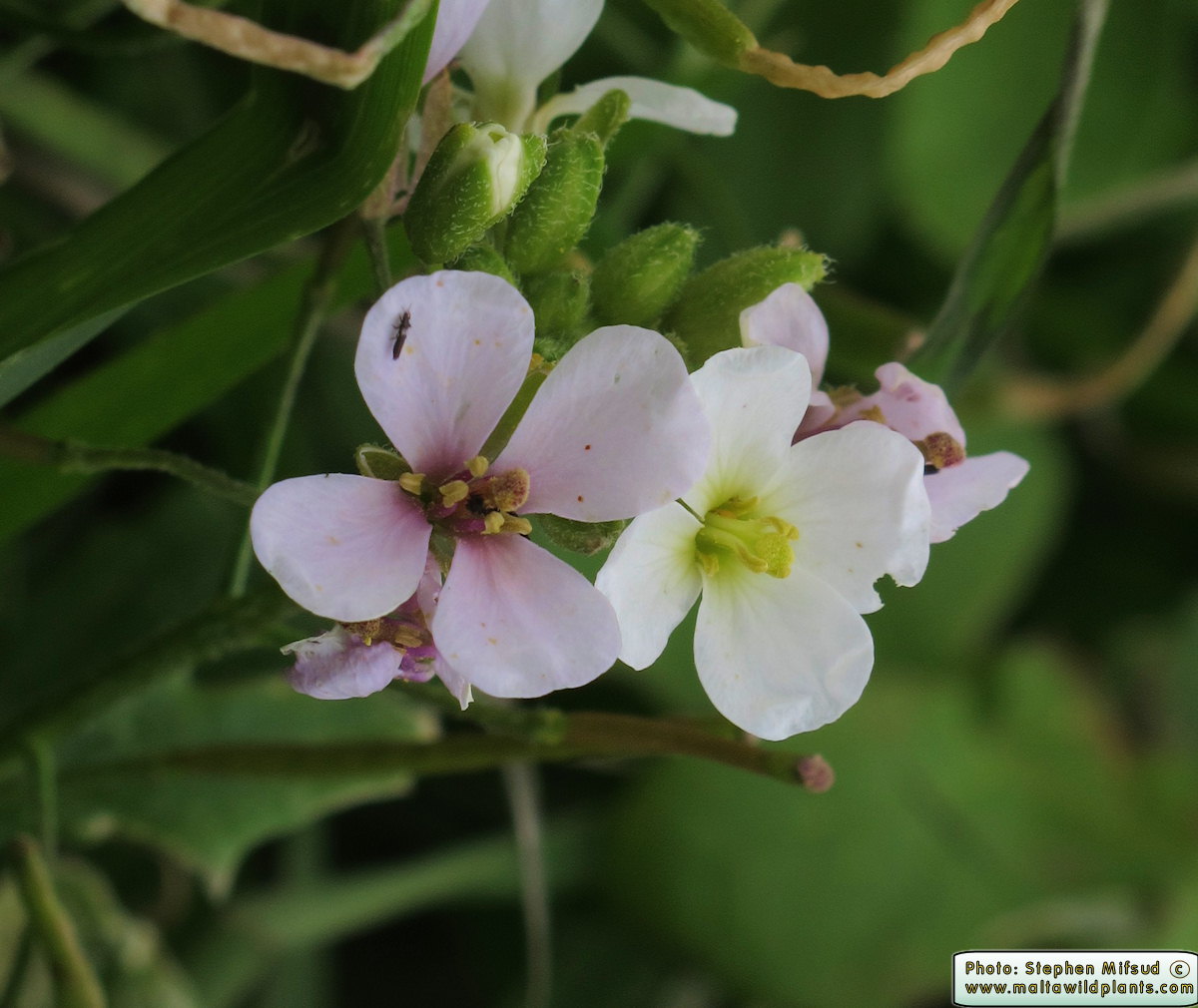
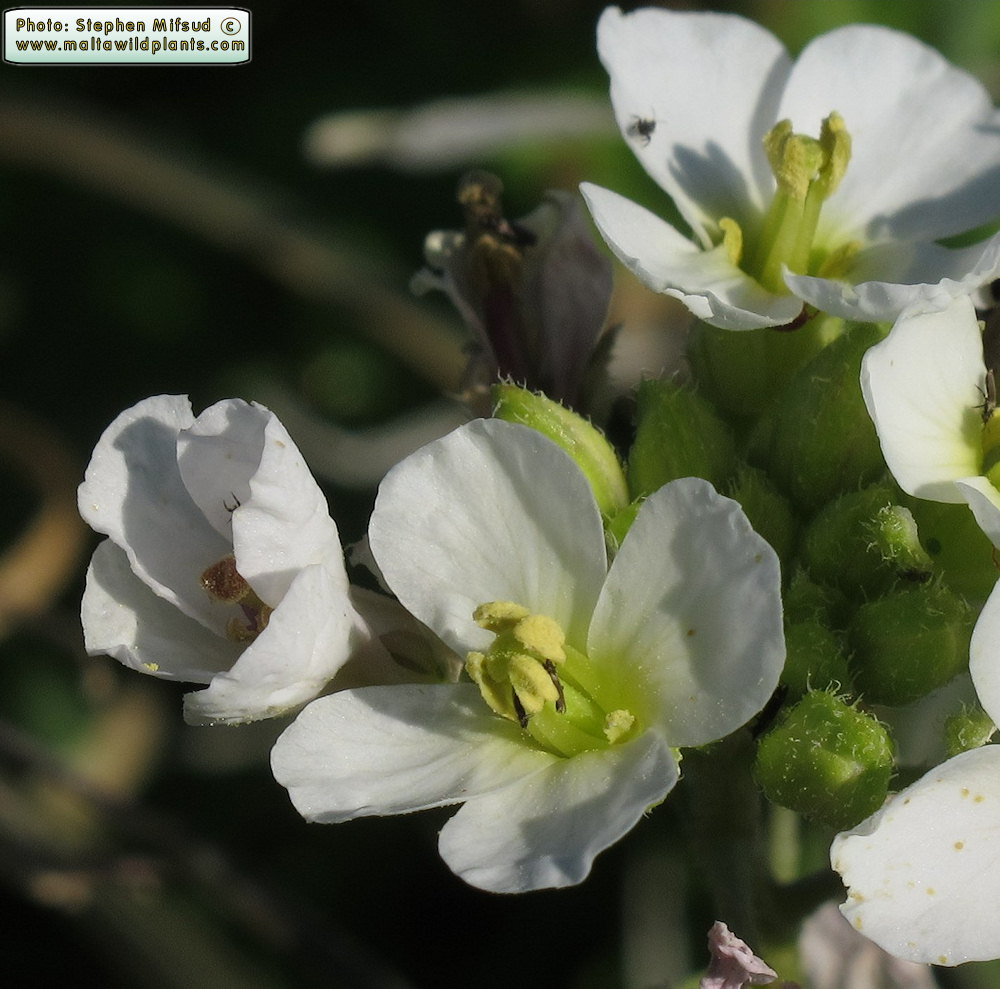
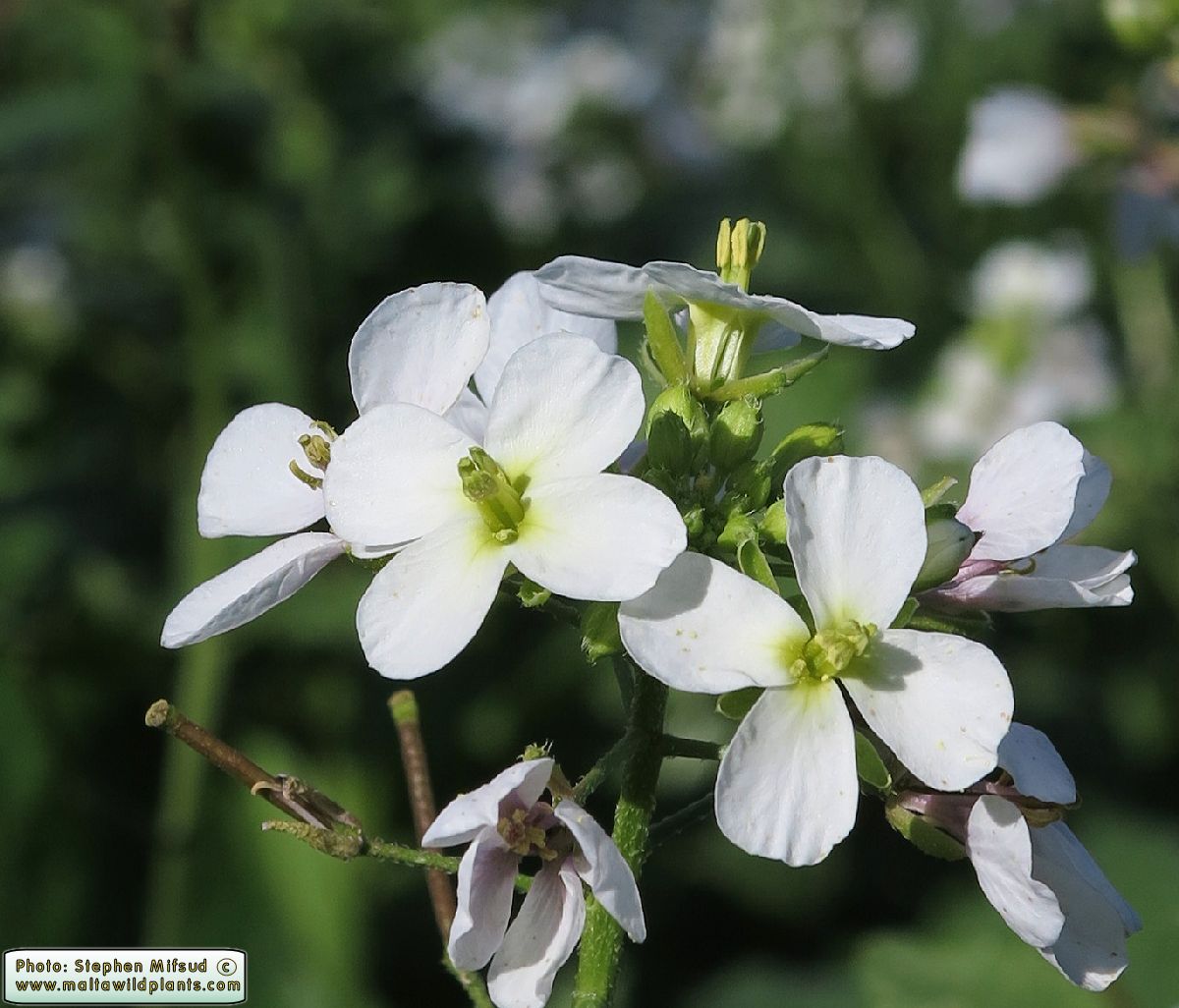
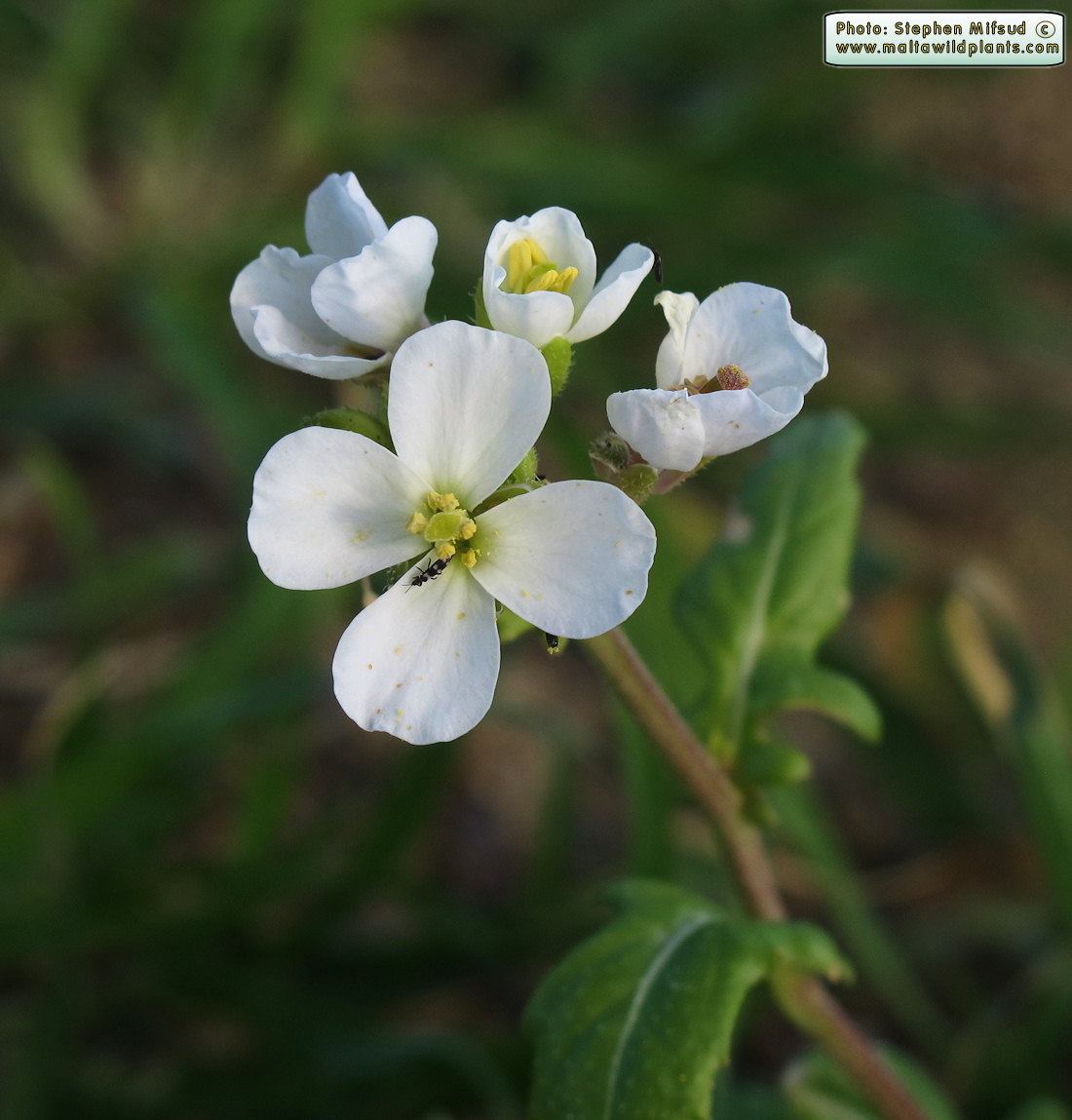
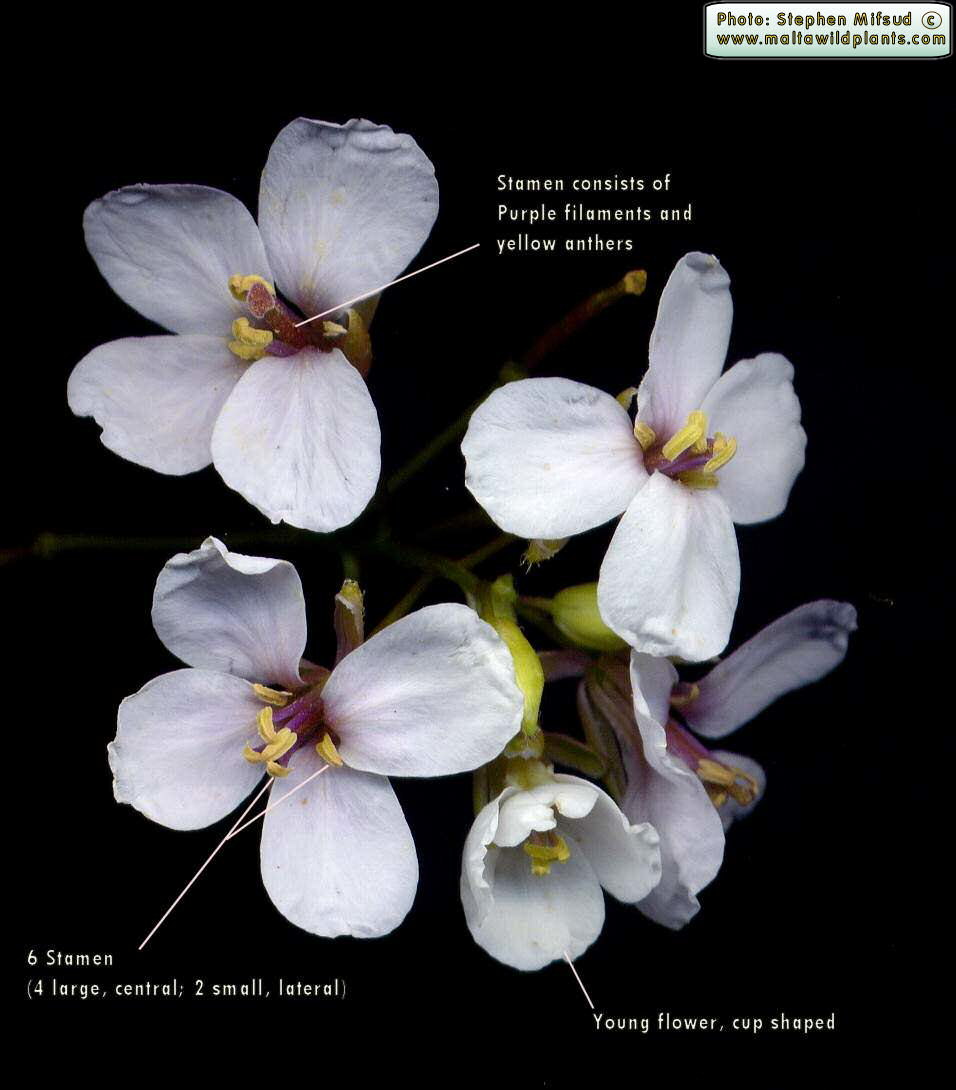
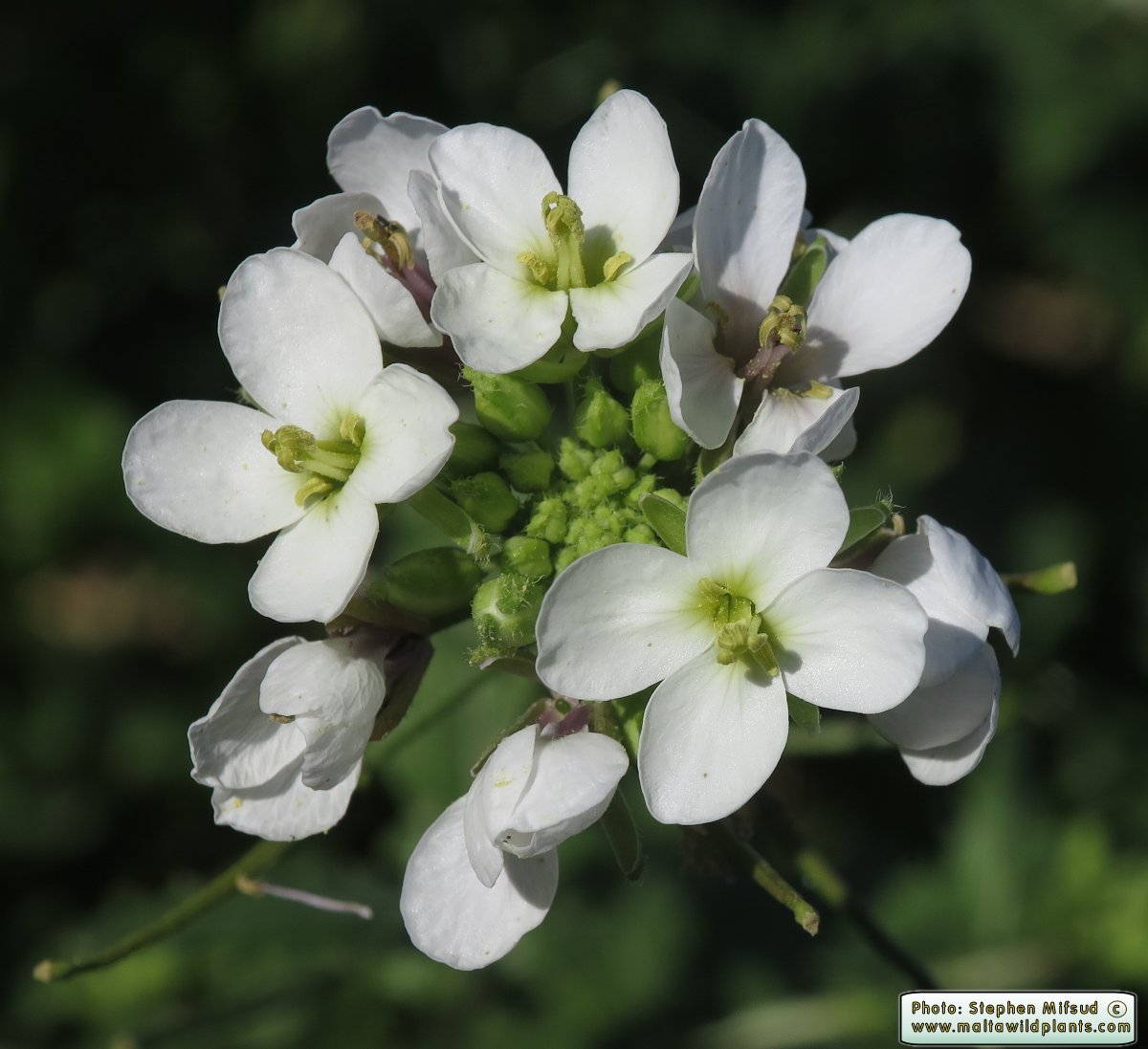
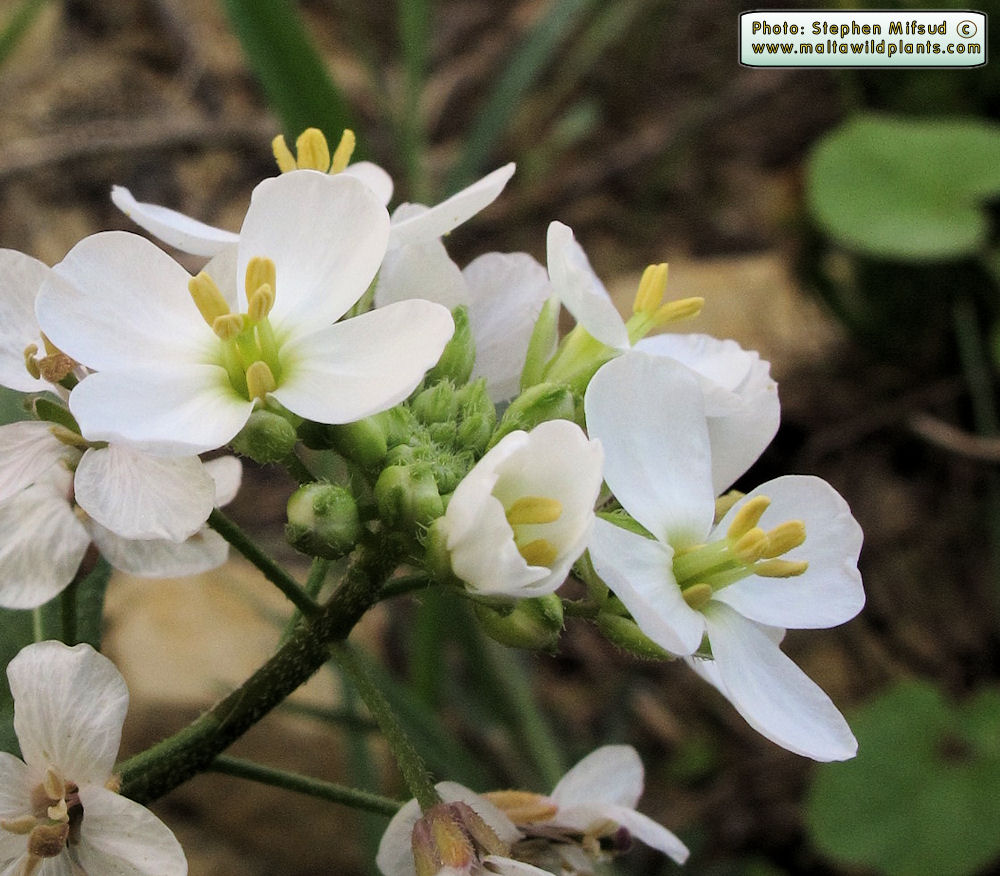
The plant forms racemes of white flowers with 4 to 8 flowers open at a given time. Every flower consists of 4 oval, slightly overlapping white petals arranged diagonally to each other, 6 stamens and a central pistil with swollen stigma. Young flowers are cup-shaped but adult ones are flattened and have the shape of a cross.

Superior :

Ovary situated above the flower parts (the calyx, corolla, and androecium). In other words, these are attached below the ovary.

6, Tetradynamous :

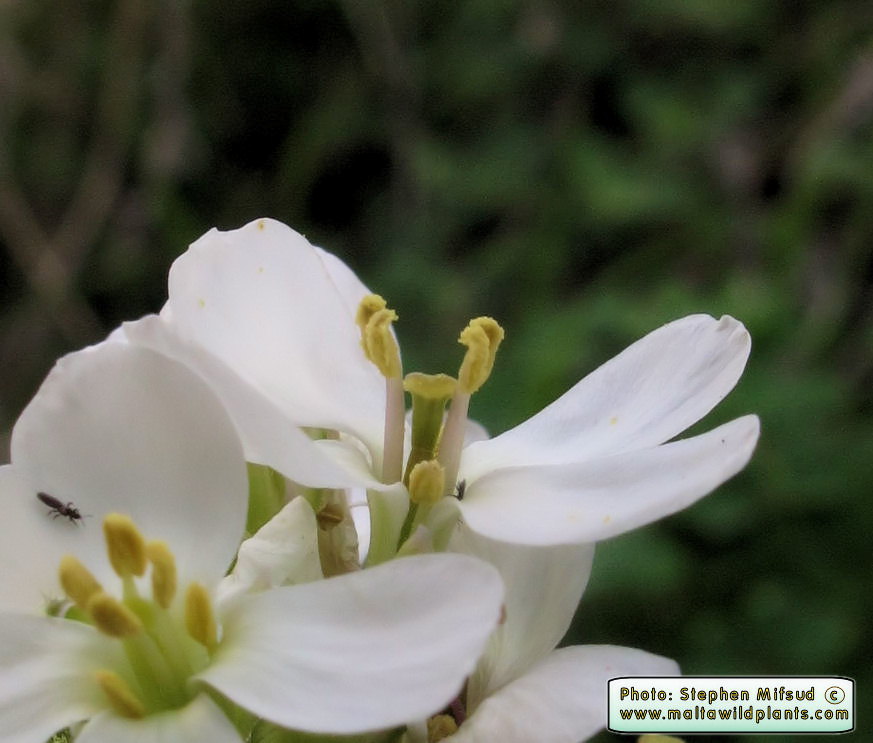
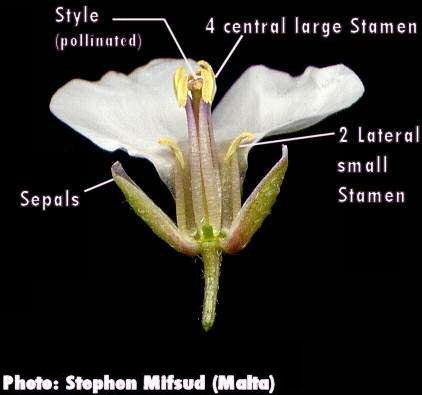
Having four long stamens (located centrally) and two shorter ones (located laterally).

General
Picture

Wild Plants of the Mediterranean Islands of Malta  - Copyright Stephen Mifsud / Maltawildplants.com / Malta (2002-2007) Wild Plants of the Mediterranean Islands of Malta  - Copyright Stephen Mifsud / Maltawildplants.com / Malta (2002-2007) Wild Plants of the Mediterranean Islands of Malta  - Copyright Stephen Mifsud / Maltawildplants.com / Malta (2002-2007) Wild Plants of the Mediterranean Islands of Malta  - Copyright Stephen Mifsud / Maltawildplants.com / Malta (2002-2007)
 

Characteristic

Scent

Average Flower Size

Pollen Colour

Other Notes

Description

YES

Slight sweet scent.

14mm

Yellow

-


SEEDS:

Characteristic

No. Per Fruit

Shape

Size

Colour

Description

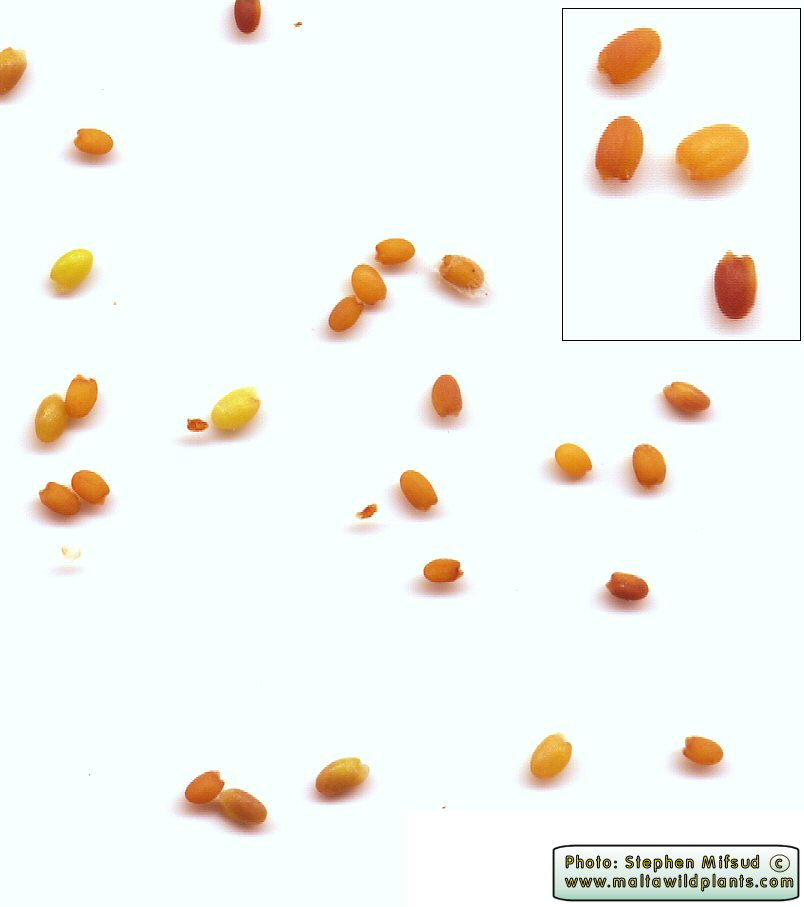
40-80

Ovoid

Egg shaped with a small indentation at one end.

1mm

Orange-Brown

General
Picture

Wild Plants of the Mediterranean Islands of Malta  - Copyright Stephen Mifsud / Maltawildplants.com / Malta (2002-2007) Wild Plants of the Mediterranean Islands of Malta  - Copyright Stephen Mifsud / Maltawildplants.com / Malta (2002-2007) Wild Plants of the Mediterranean Islands of Malta  - Copyright Stephen Mifsud / Maltawildplants.com / Malta (2002-2007) Wild Plants of the Mediterranean Islands of Malta  - Copyright Stephen Mifsud / Maltawildplants.com / Malta (2002-2007)

FRUIT AND OTHER BOTANICAL DATA:

Characteristic

Fruit Type

Colour of Fruit

Subterranean Parts

Other Notes

Description

Siliqua :

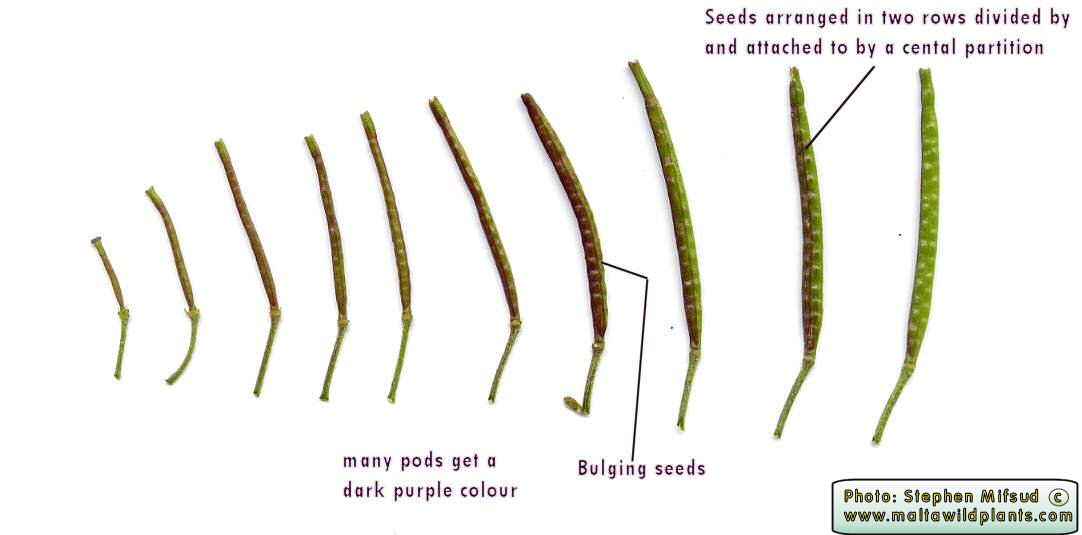
A dry dehiscent pod-like fruit which is longer, often many times than broad, so having the shape of an elongated pouch.

Green or maroon

turns light brown (straw coloured) when ripe.

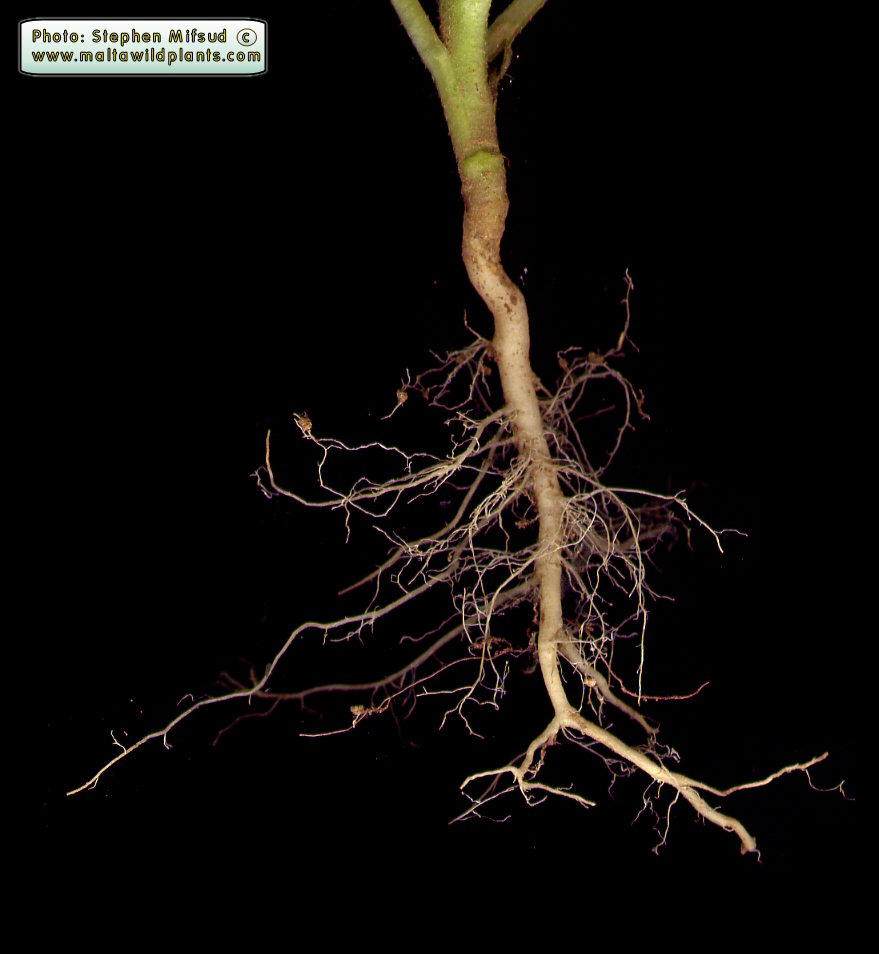
Taproot :

A rooting system where there is the main descending root of a plant having a single dominant large structure from which a network of smaller and long roots emerge.

-

General
Picture

Wild Plants of the Mediterranean Islands of Malta  - Copyright Stephen Mifsud / Maltawildplants.com / Malta (2002-2007) Wild Plants of the Mediterranean Islands of Malta  - Copyright Stephen Mifsud / Maltawildplants.com / Malta (2002-2007) Wild Plants of the Mediterranean Islands of Malta  - Copyright Stephen Mifsud / Maltawildplants.com / Malta (2002-2007) Wild Plants of the Mediterranean Islands of Malta  - Copyright Stephen Mifsud / Maltawildplants.com / Malta (2002-2007)

Plant Description

Life Cycle:

Annual

Habitat:

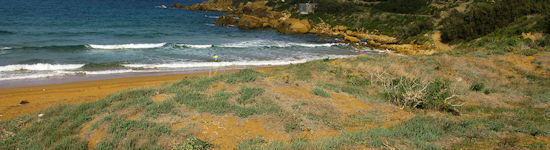
Fields, waysides, traffic islands, places with plenty of soil.

Frequency:

Very Common

Sources in Malta:

Very Common throughout the countryside of the Maltese Islands especially in uncropped fields. Often seen in traffic islands in October-November.

Plant Height:

20-60cm

Flowering Time:

Sep - Jun

Poison:

Not Poisonous

Herbaceous annual or biannual which is very common throughout the Maltese islands all year round especially in autumn, when many other wild plants are not in bloom. It consists of a green, erect stem with several, tiny white bristles, which forms many branches each giving rise to a terminal raceme of white flowers. The plant has a developepd taproot.

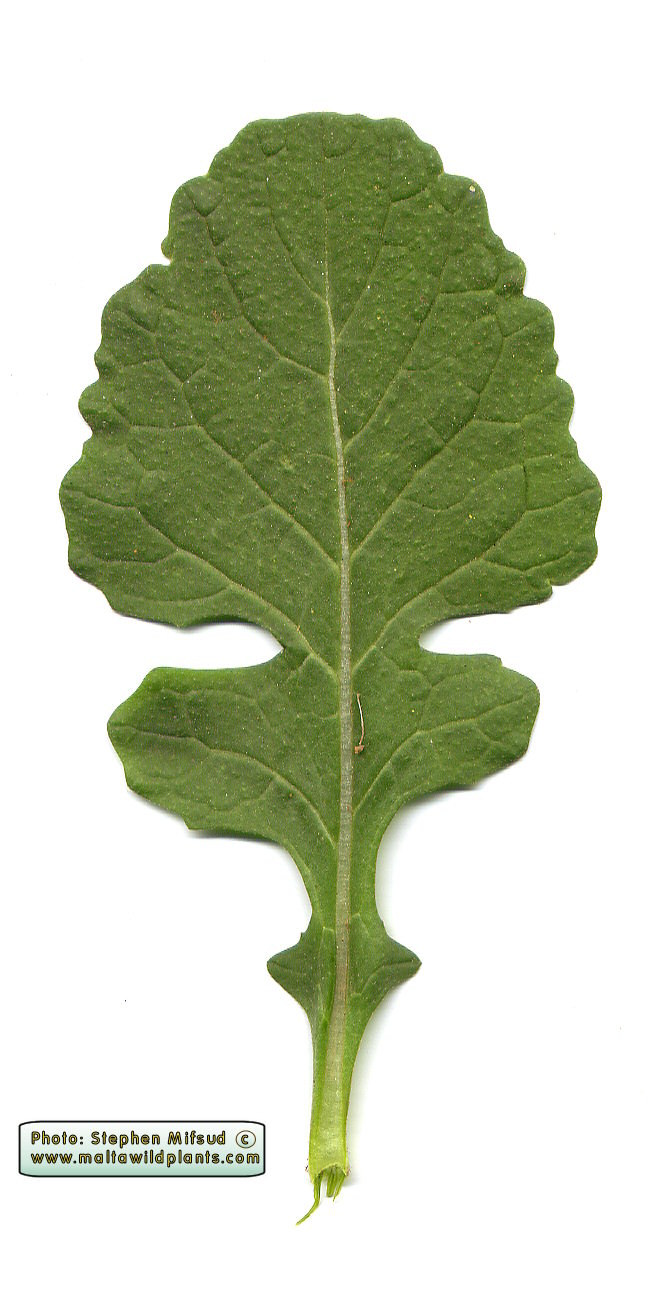
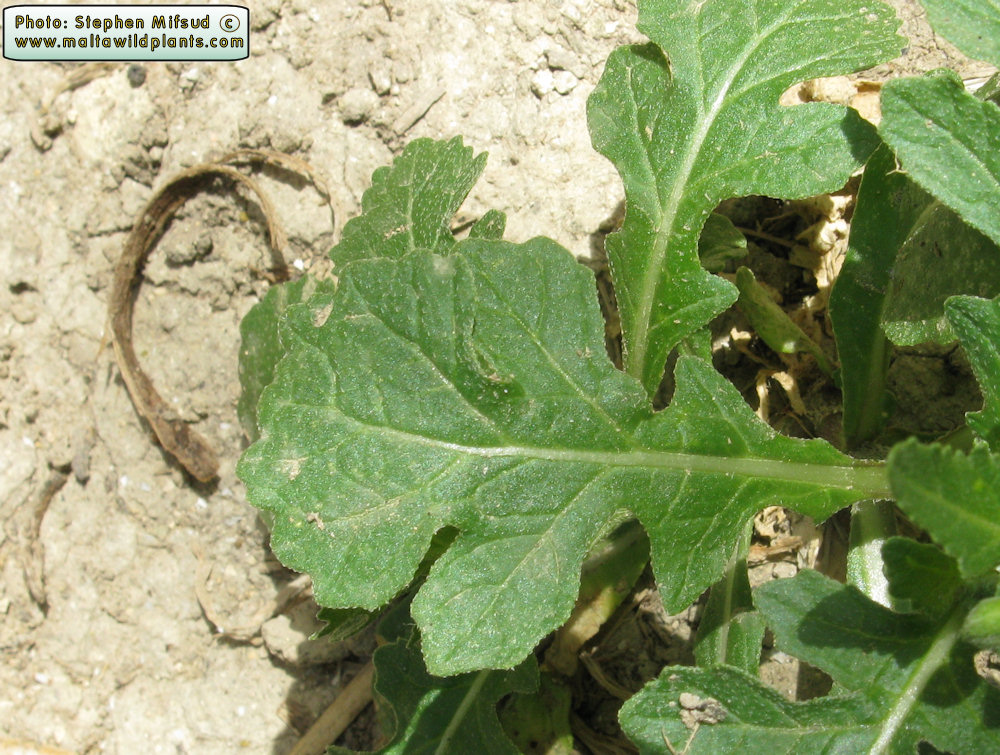
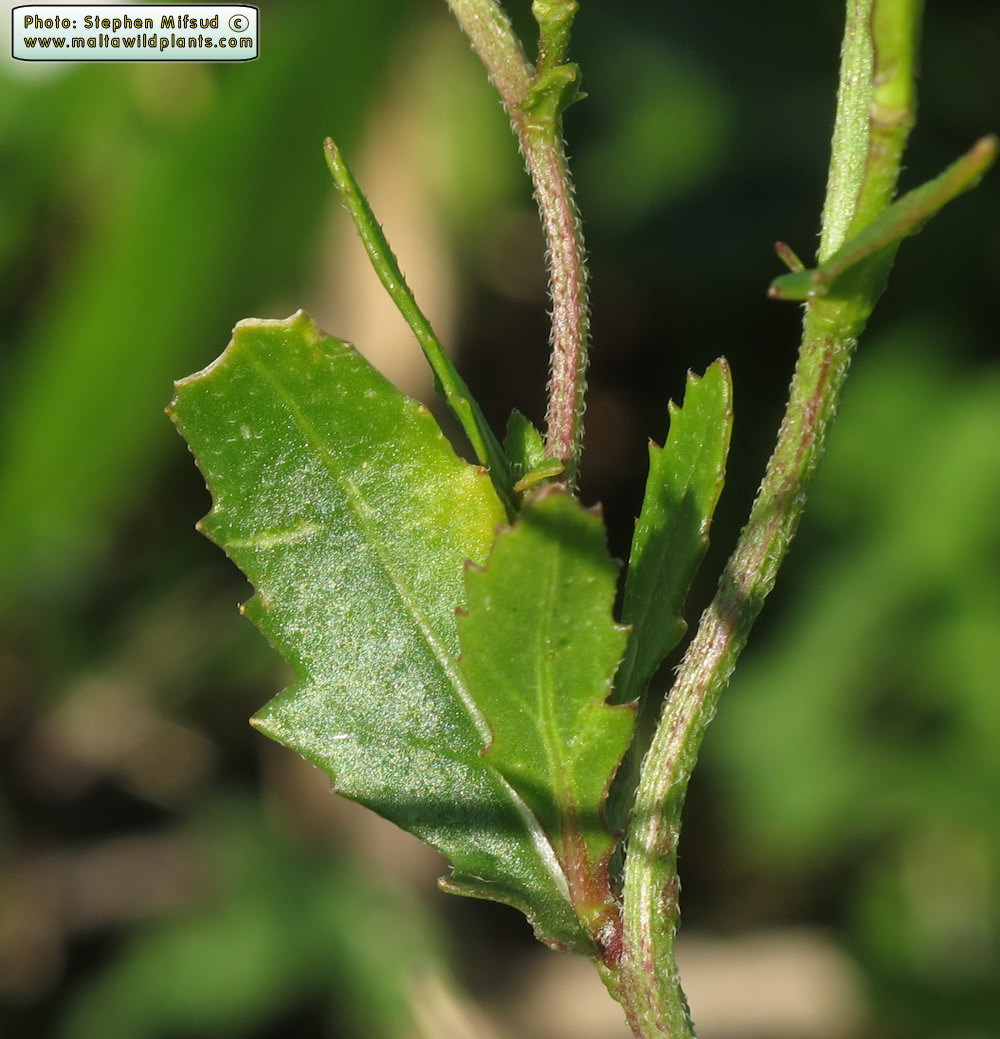
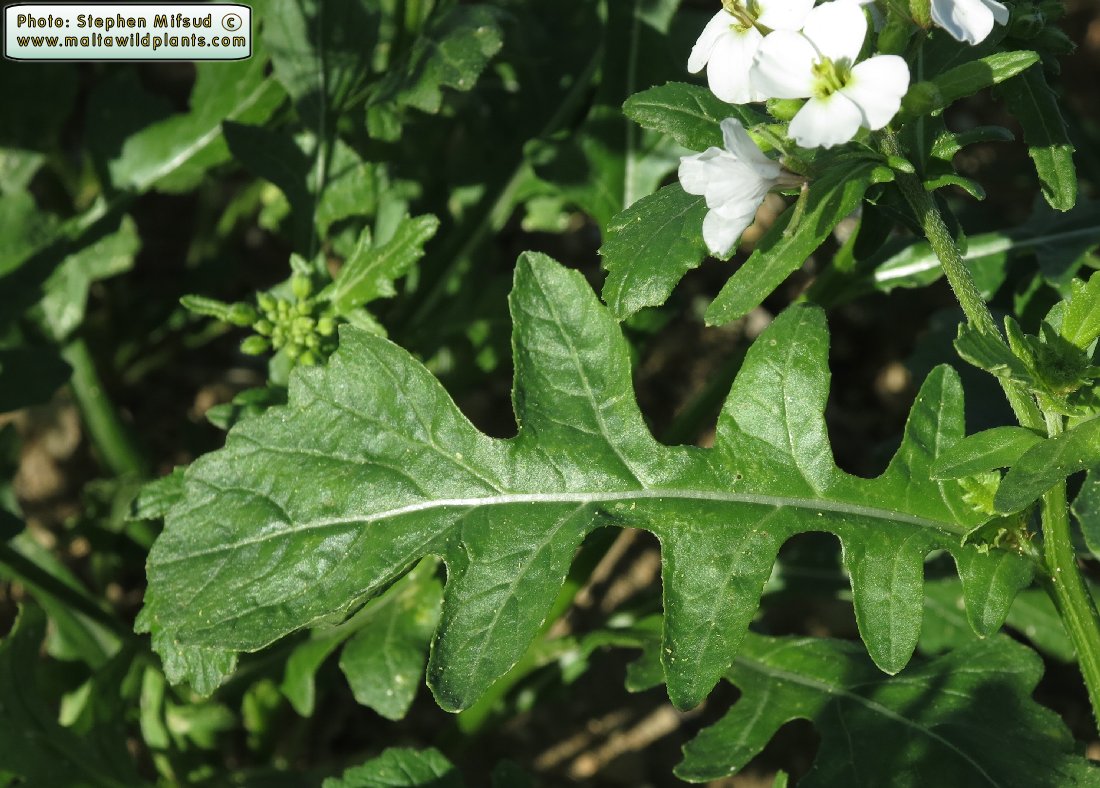
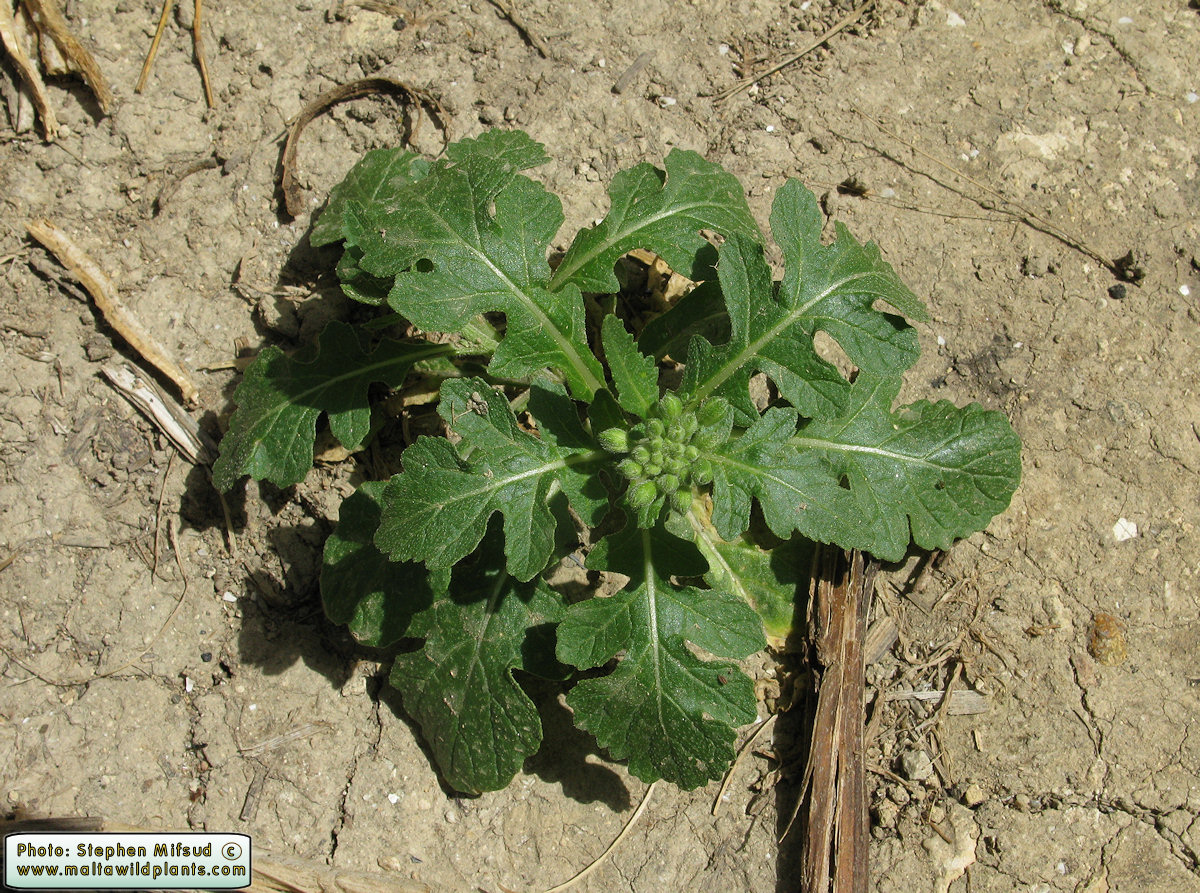
The basal and adult leaves are stalked and irregularly lobed. They have one or two pairs of basal deep leaf-lobes and a terminal and very large rounded leaf lobe. The shape of the young upper leaves is more or less maintained but they are usually sessile. Leaves have a crenated or shallow-dentate margin and prominent pinnate veins which normally have sparse tiny bristles.

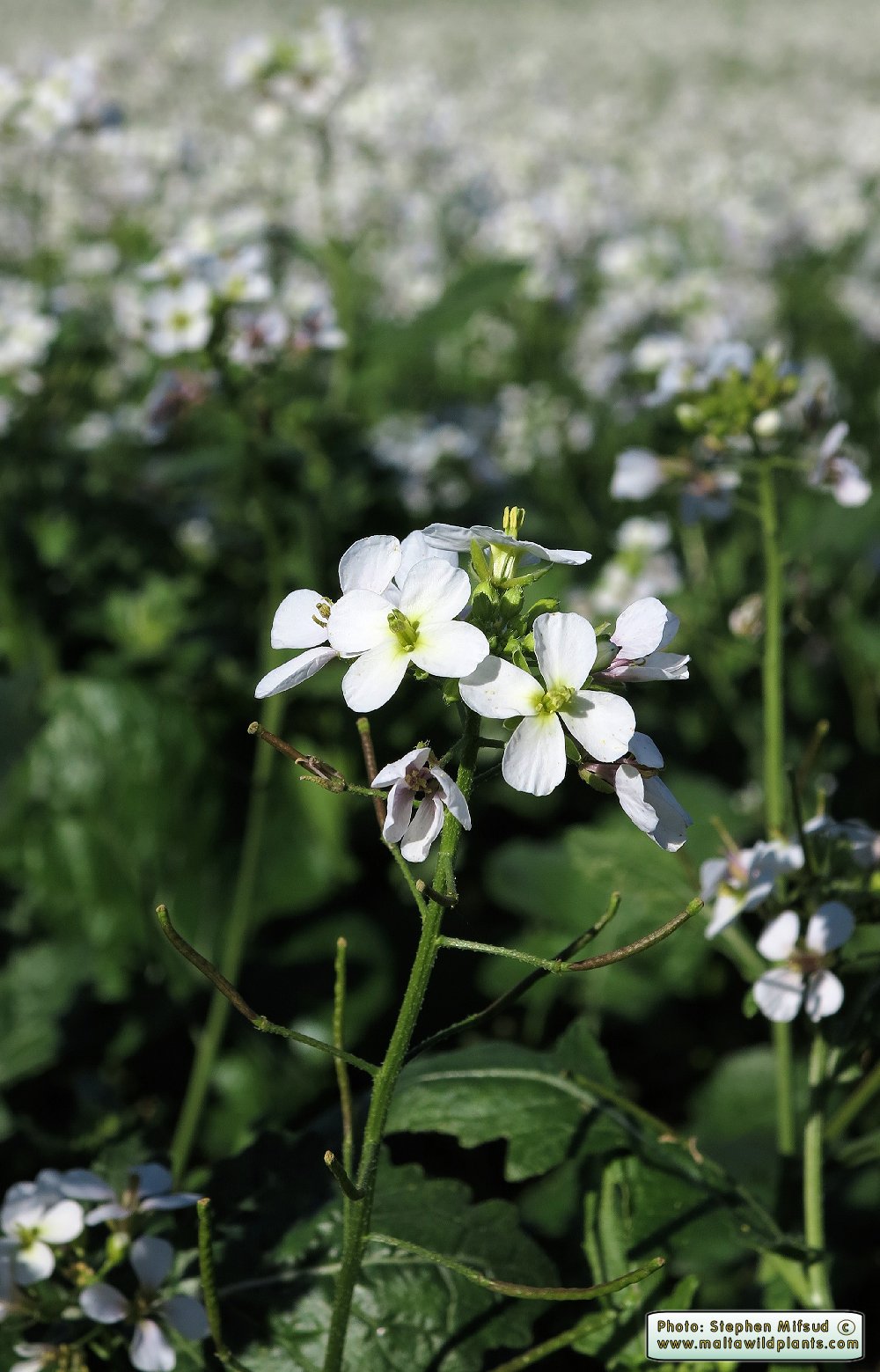
The infloresences are racemes of about 4 to 6 white blossoms. Flowers measure about 16-18mm across and consist of 4 sepals, 4 white petals that slightly overlap and are arranged diagonally to each other, 6 stamens of which 4 are long and central, and 2 are short and lateral, and a central pistil with a superior ovary and swollen green stigma. The stamens produce yellow pollen.
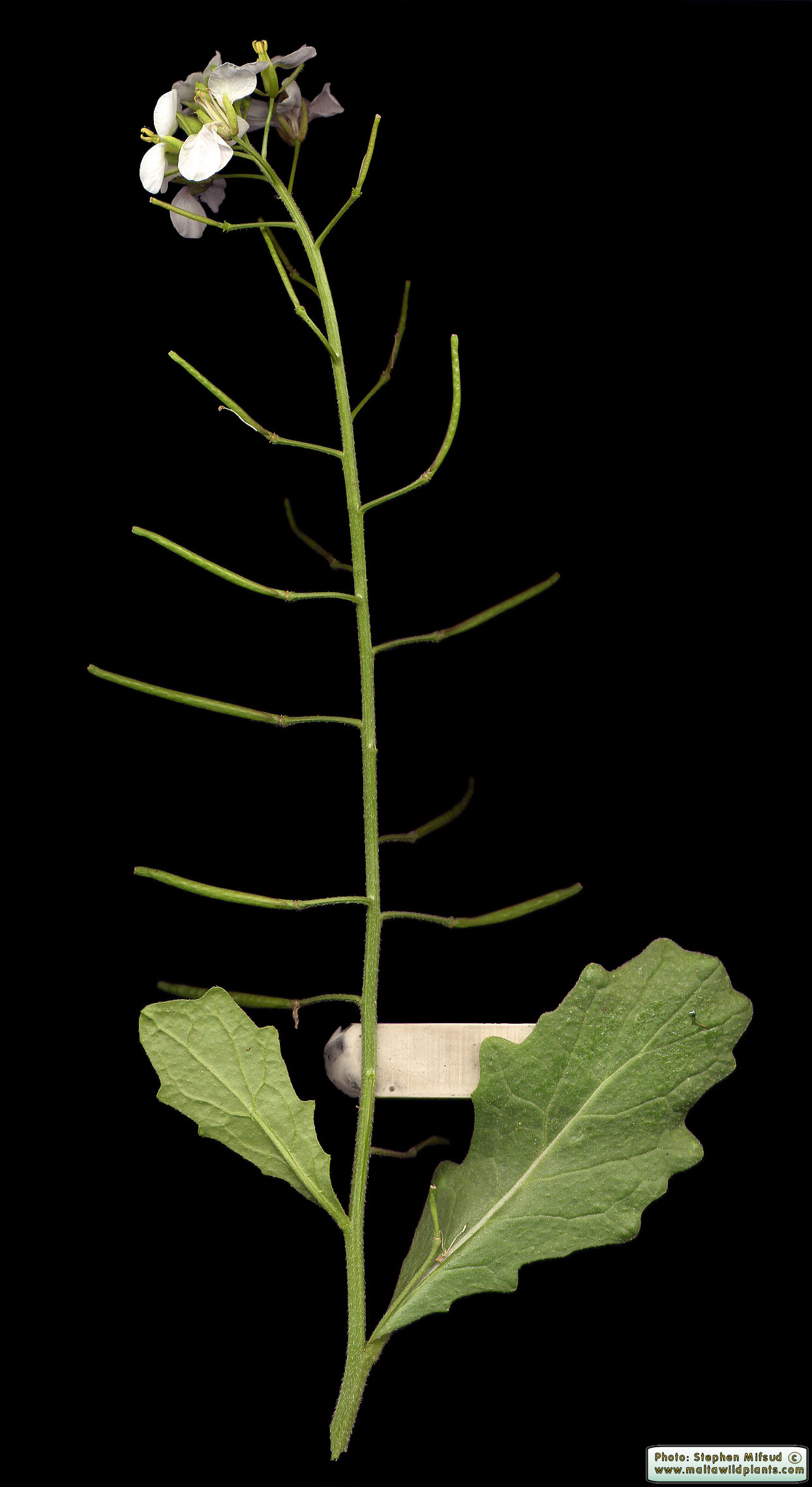
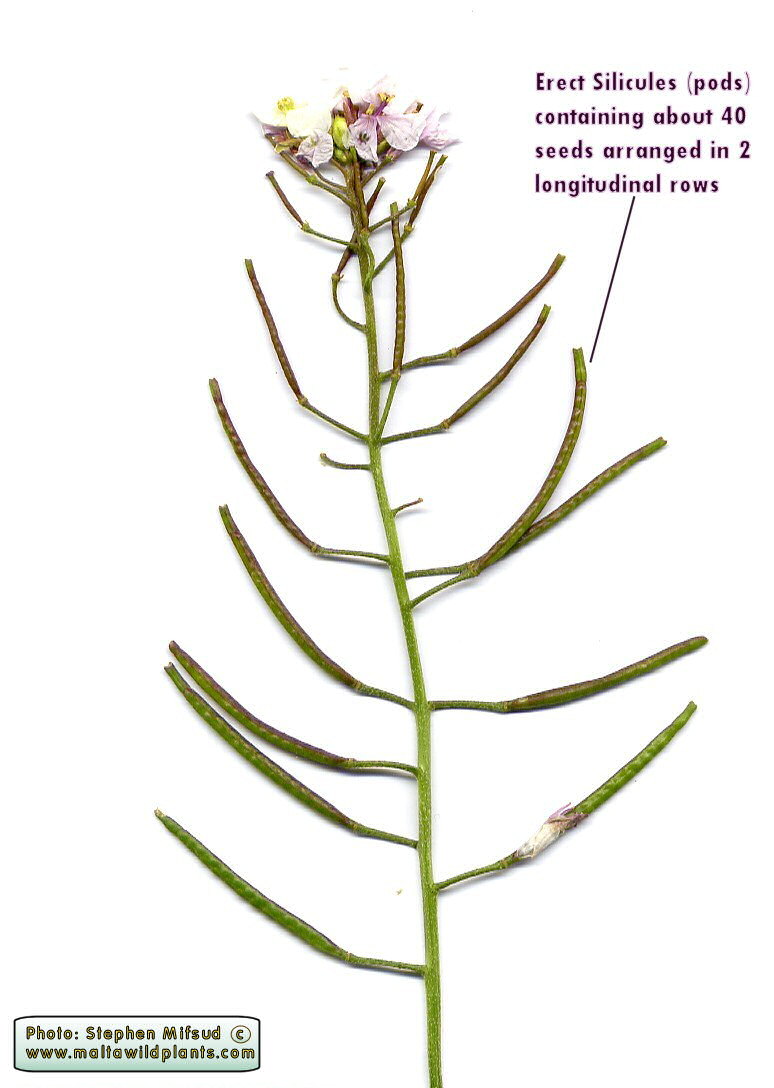
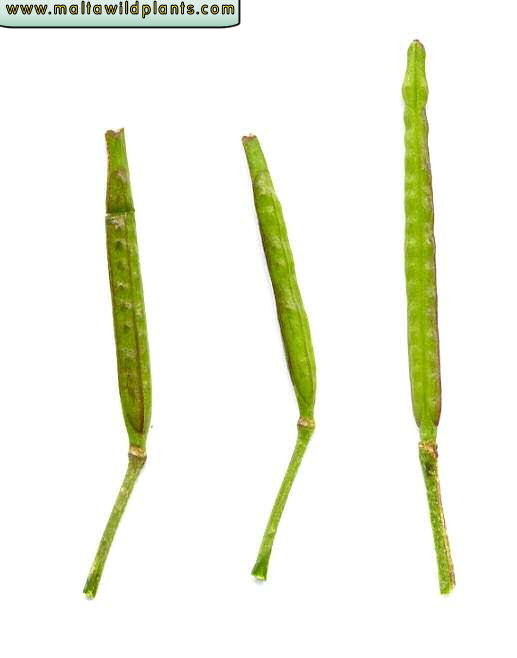
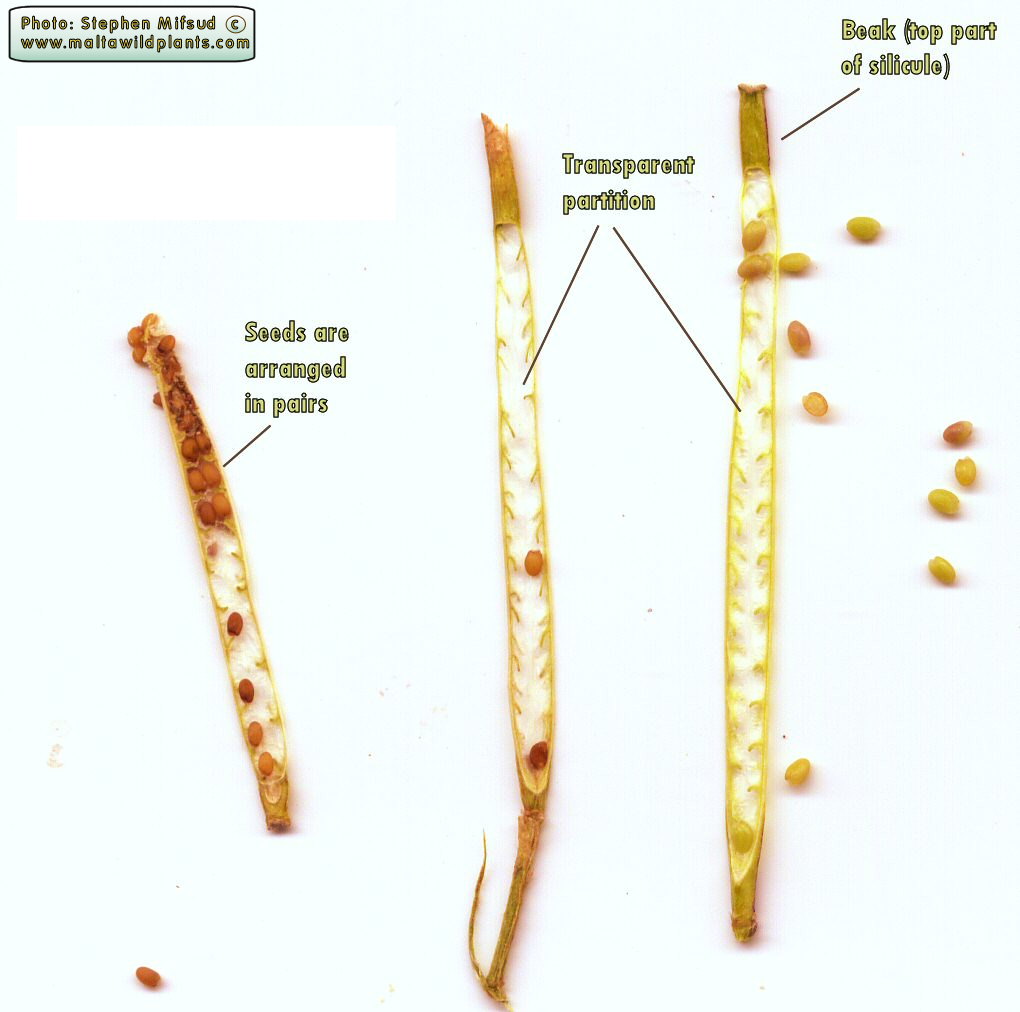
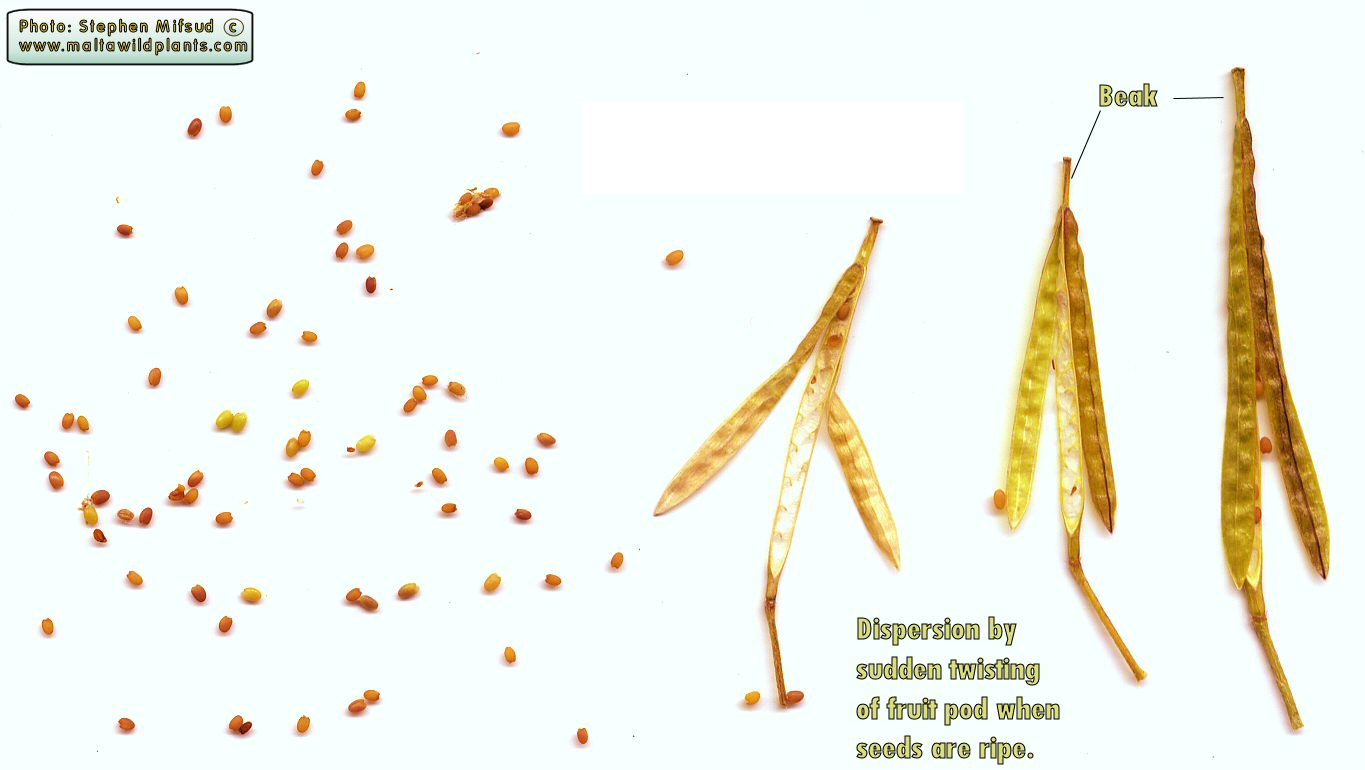
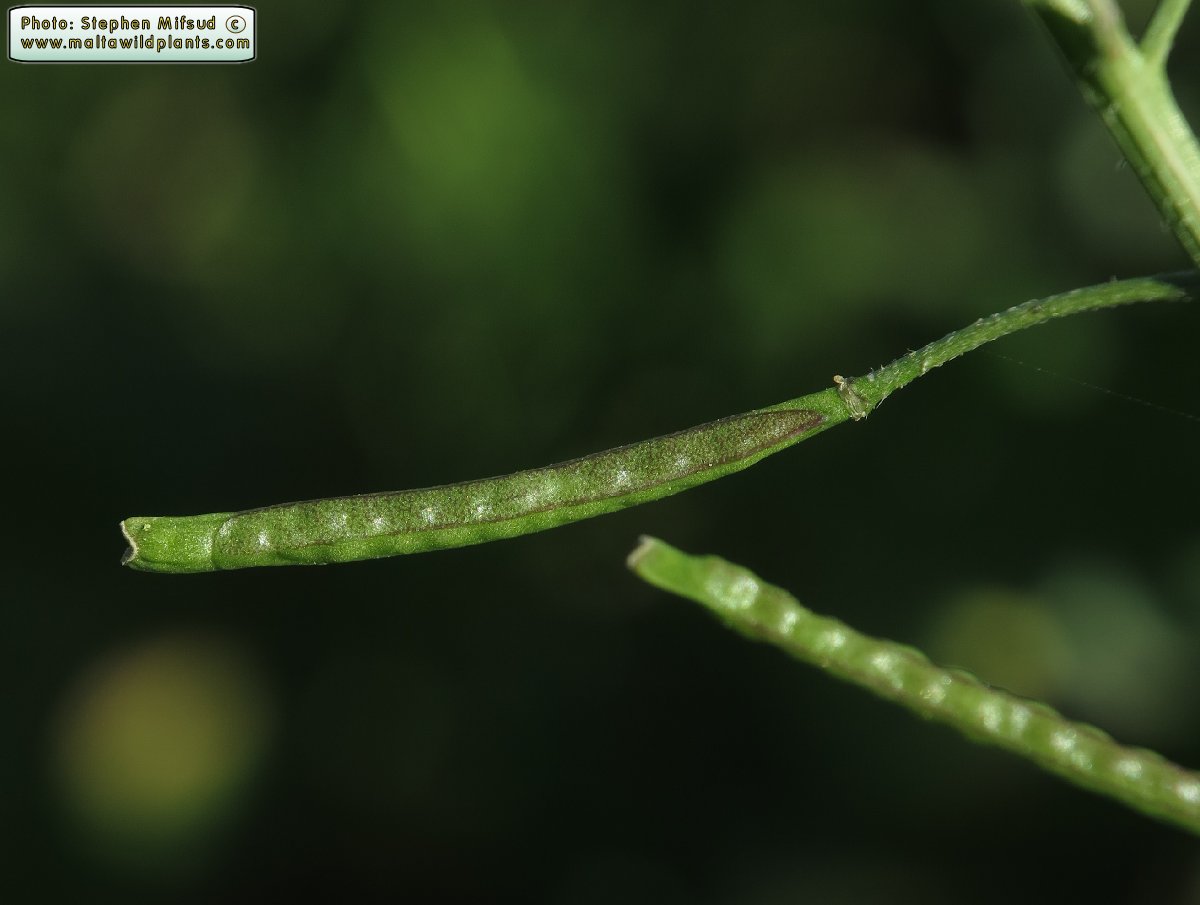
When the flower expires, it drops its sepals, corolla and stamens and the ovary elongates and forms a slender rod-shaped fruit called a siliqua. They are green (but can partially attain a purple brown face), have a body which is slightly bulging with the seeds inside, and an apical short beak. Mature pods measure between 25-38mm long and 2mm across and store around 40-80 seeds that are arranged in stacked pairs at each side of a central partition called replum. When mature, the fruit walls open with a sudden twist causing the seeds inside to scatter at a certain distance. The central translucent replum remains visible for some time. The seeds are ovoid (with a tiny indentation), yellow-brown, smooth, and about 1 mm long.


Additional Information


Allergy to Diplotaxis erucoides pollen:

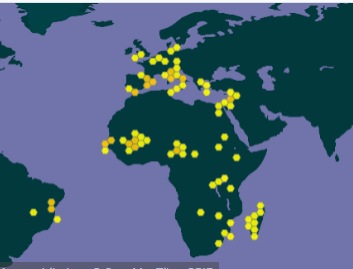
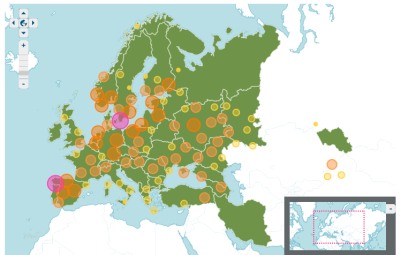
Abstract from research by P. Garcia Ortega et al [304] about Allergy to Diplotaxis erucoides pollen: occupational sensitization and cross-reactivity with other common pollens " Background: Diplotaxis erucoides is a common weed of the Brassicaceae family widespread in southern and central Europe.

Methods: A total of 410 consecutive patients referred for allergy study of rhinoconjunctivitis and/or asthma were skin tested with D. erucoides pollen, 14 proving positive. A purified D. erucoides pollen extract was prepared to perform quantitative skin tests, provocation tests, immuno-blotting, and EIA inhibition in the 14 sensitized patients.

Results: Three patients, directly involved in viniculture, had rhinoconjunctivitis related to D. erucoides pollen. No D. erucoides-related symptoms were observed in most patients, who were also sensitized to Artemisia pollen. RAST was positive in 12/14 patients and nasal provocation tests in 9/12. The molecular masses of the most prevalent IgE-binding proteins ranged from 26 to 27.5 and from 31 to 34 kDa. D. erucoides pollen inhibited the IgE-binding of other sensitizing pollens in the three viniculture workers, whereas both Artemisia and D. erucoides pollen produced similar heterologous inhibition in the pooled serum of the remaining, nonclinically affected, D. erucoides-sensitized patients.

Conclusions: D. erucoides pollen may be an important prevalent aeroallergen, particularly in rural areas. It may act as an occupational allergen in vineyard workers, in whom it seems to be the primary sensitizing agent, playing a secondary cross-reactive role in other sensitized patients. "

Go in the links section to read full text document about this research

General Notes

The seed is best sown in situ as soon as it is ripe, though it can also be sown in situ in the spring [KF]. The seed usually germinates in the autumn and survives as an over-wintering rosette [17]

Leaves can be eaten raw or cooked. They possess a mustard-like flavour, they can be added to salads [217].

No evidence of medicinal use was found [SM]

Personal observations

Dispersion
Dispersion of seeds is by sudden outwards twisting of the 2 outer walls (valves) forming the siliqua [SM]

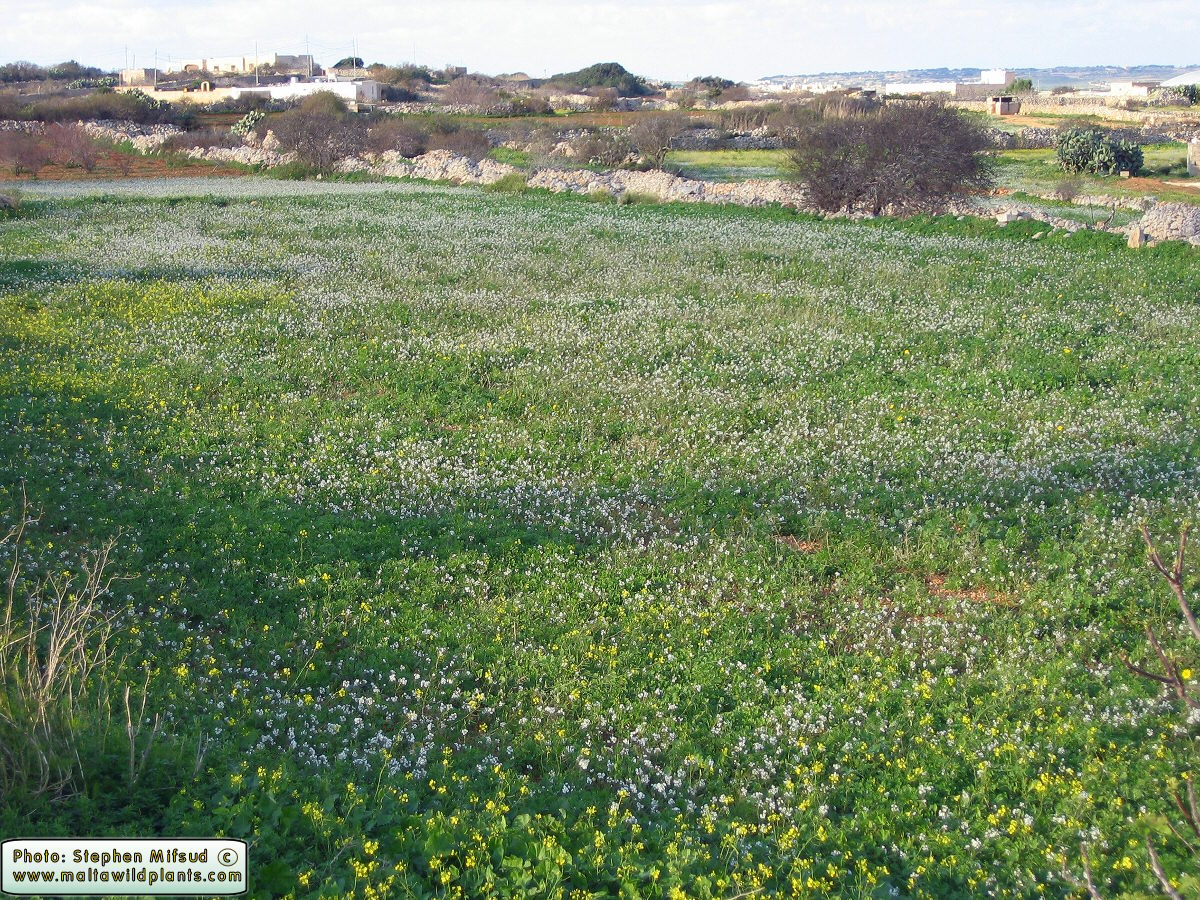
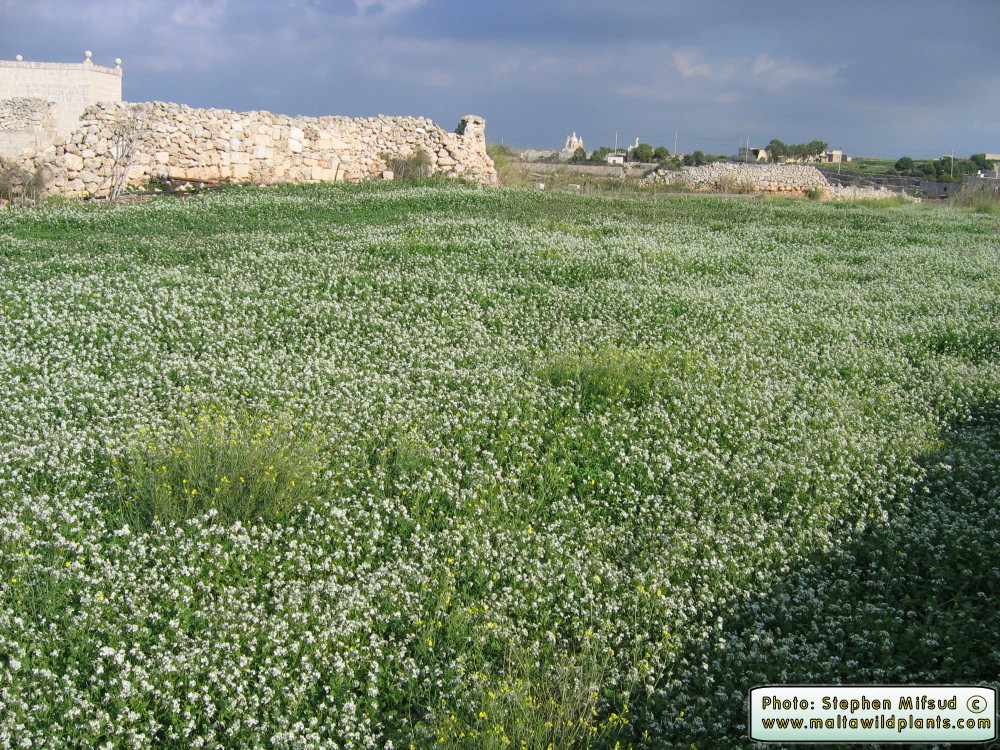
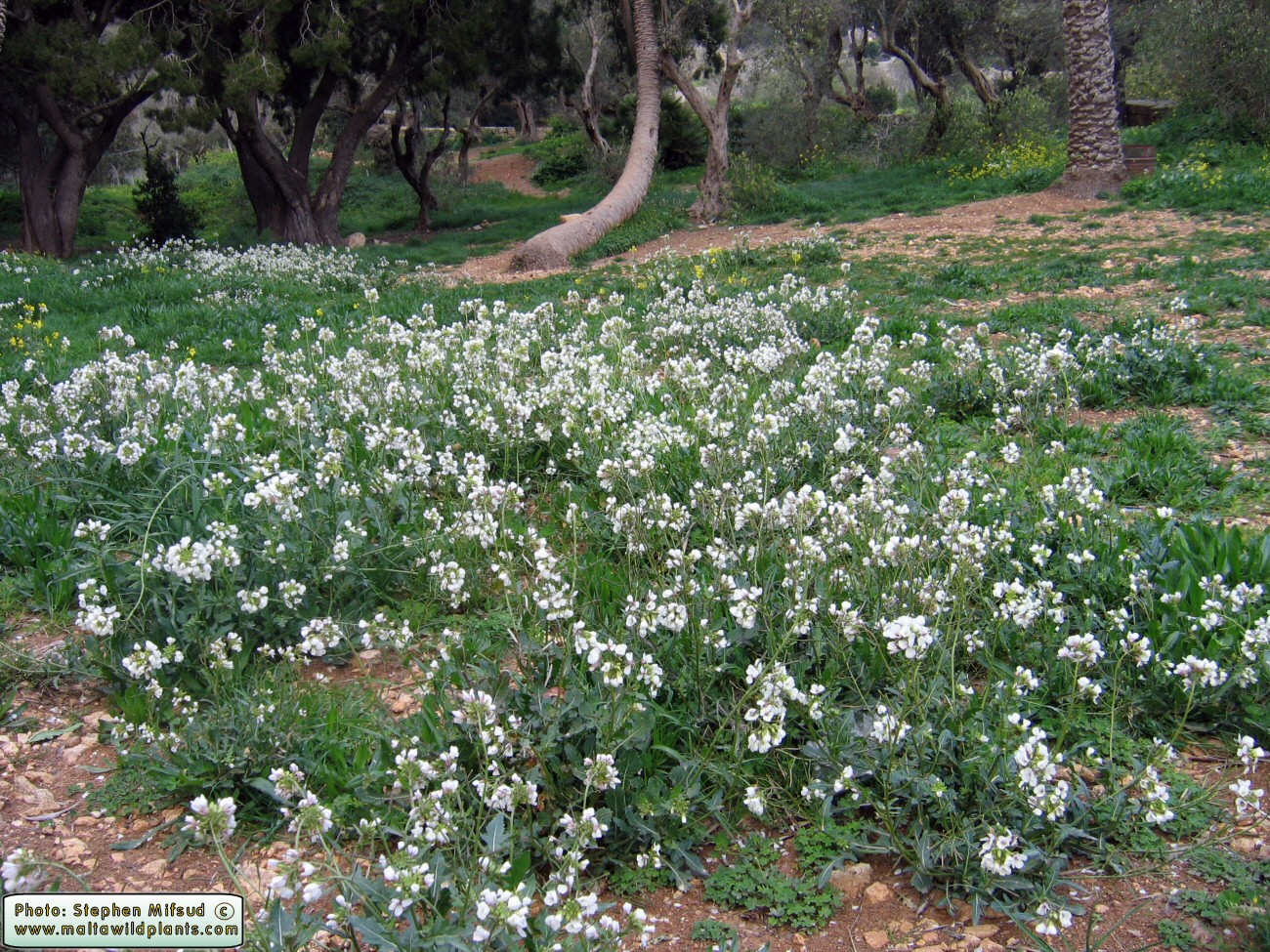
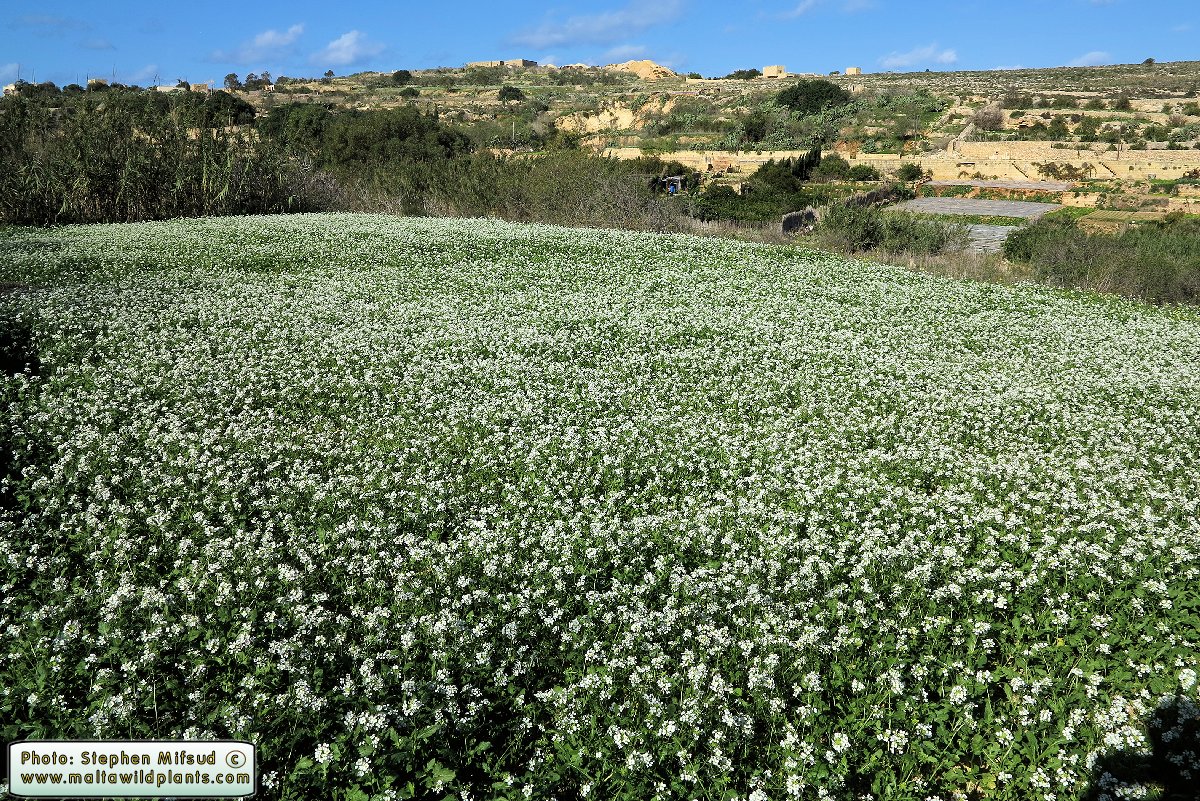
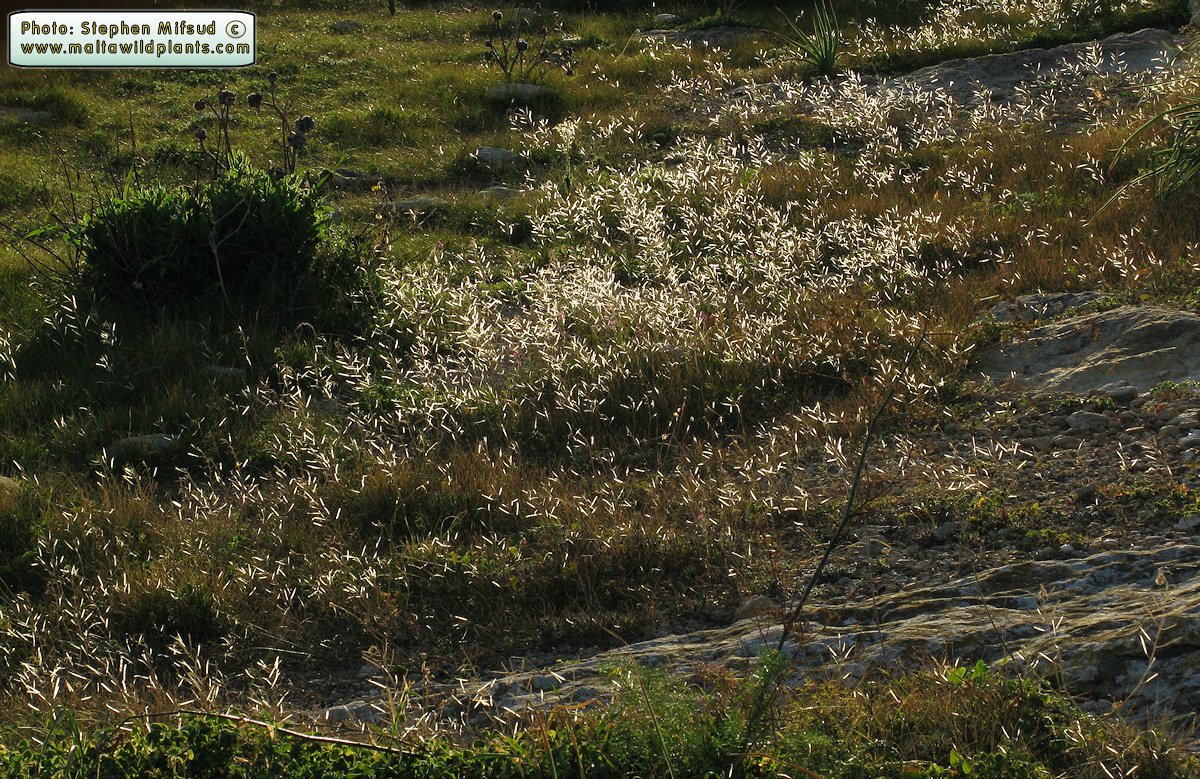
The plant is abundant in November and December in Malta, and is responsible for the formation of white carpets of flowers, usually over an uncropped field during the months of November and early December. During these months, there are not many flowers in bloom, and so this makes this species to predominate. [SM]


Not much information about this plant has been found, neither in books nor on the internet. If you can supply further information to be included in this profile, please, do not hesitate to email me. Full reference credits will be given.

Photo Gallery

Diplotaxis erucoides (White Wall Rocket) - CLICK TO ENLARGE PHOTO Diplotaxis erucoides (White Wall Rocket) - CLICK TO ENLARGE PHOTO Diplotaxis erucoides (White Wall Rocket) - CLICK TO ENLARGE PHOTO Diplotaxis erucoides (White Wall Rocket) - CLICK TO ENLARGE PHOTO
Photo of flowers in situ. This plant produces flower clusters in racemes.
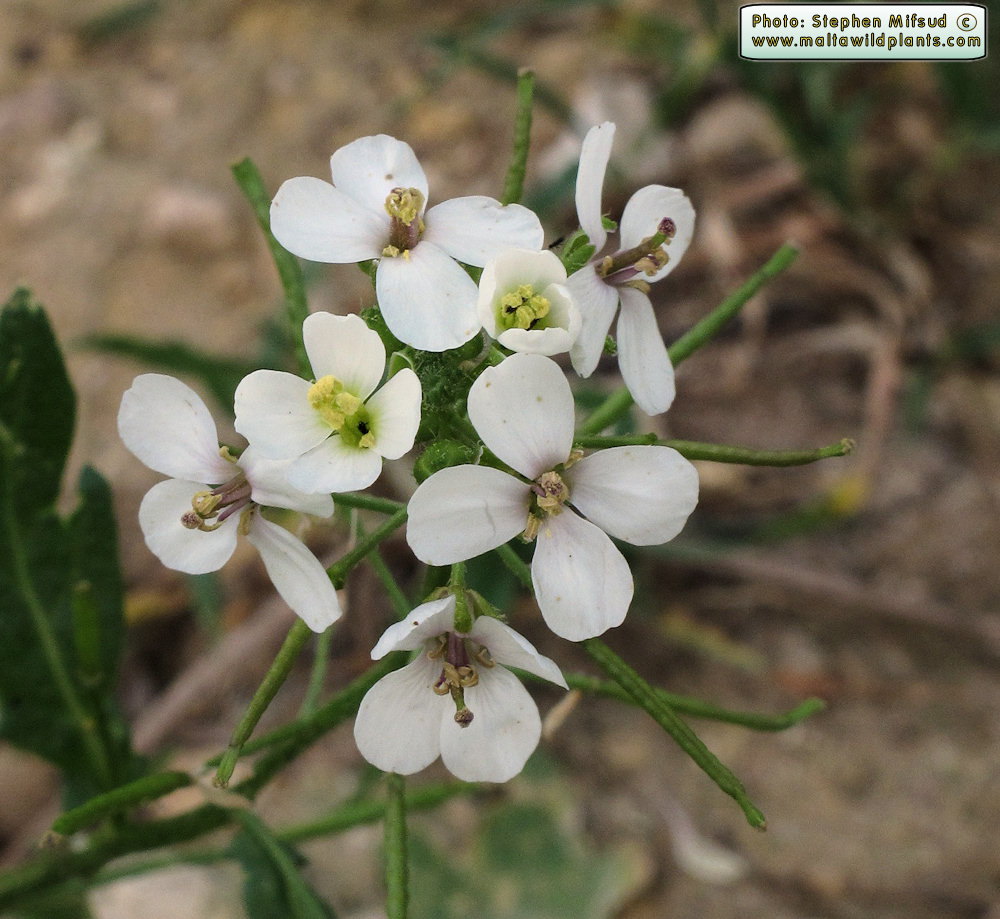
Close-up photo of an adult flower which consists of 4 white petals arranged as the shape of a cross, 6 stamens with yellow anthers and a central pistil.
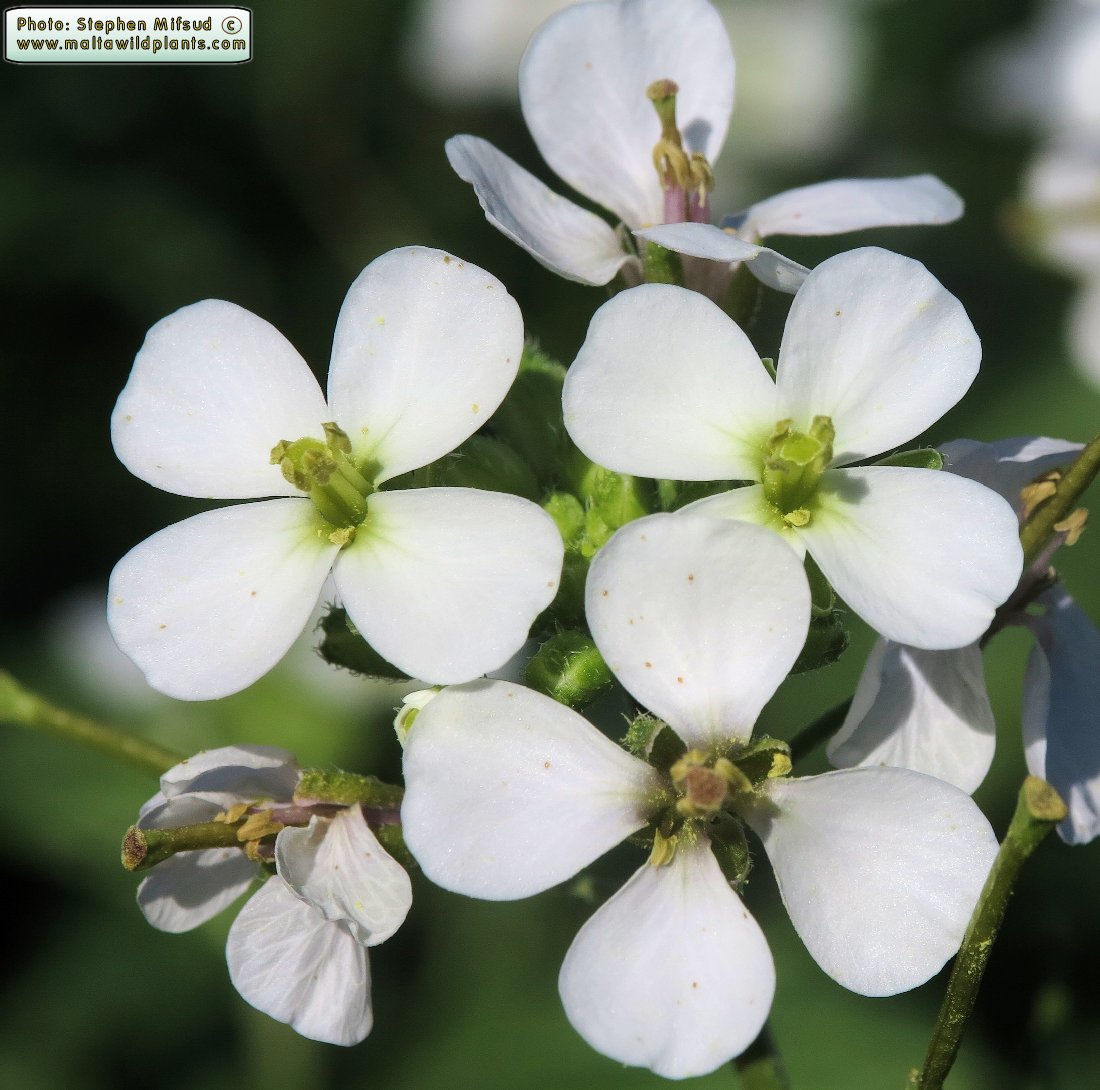
Close-up photo of 2 flowers. The one on the right is younger since it still has overlapping petals and is not fully flat as the other.
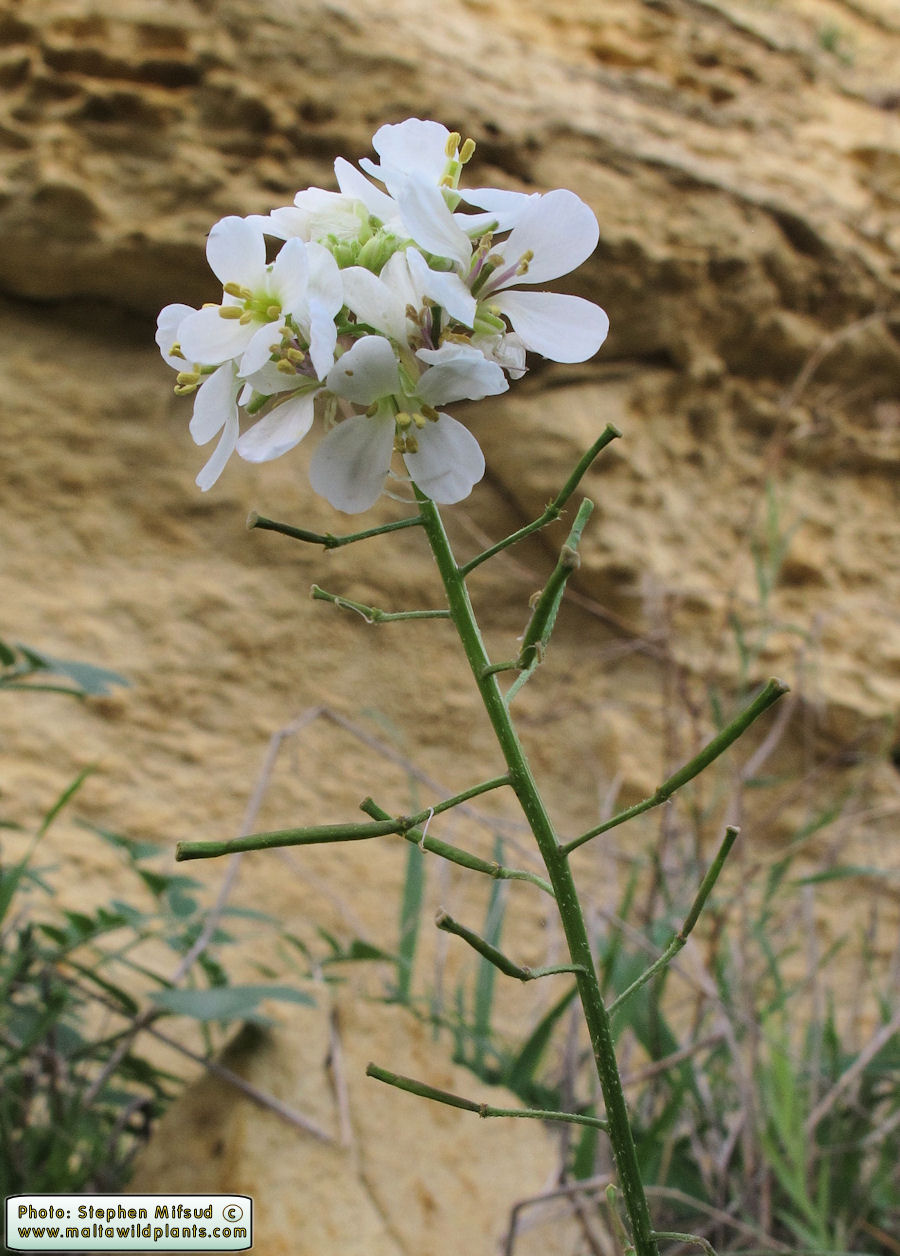
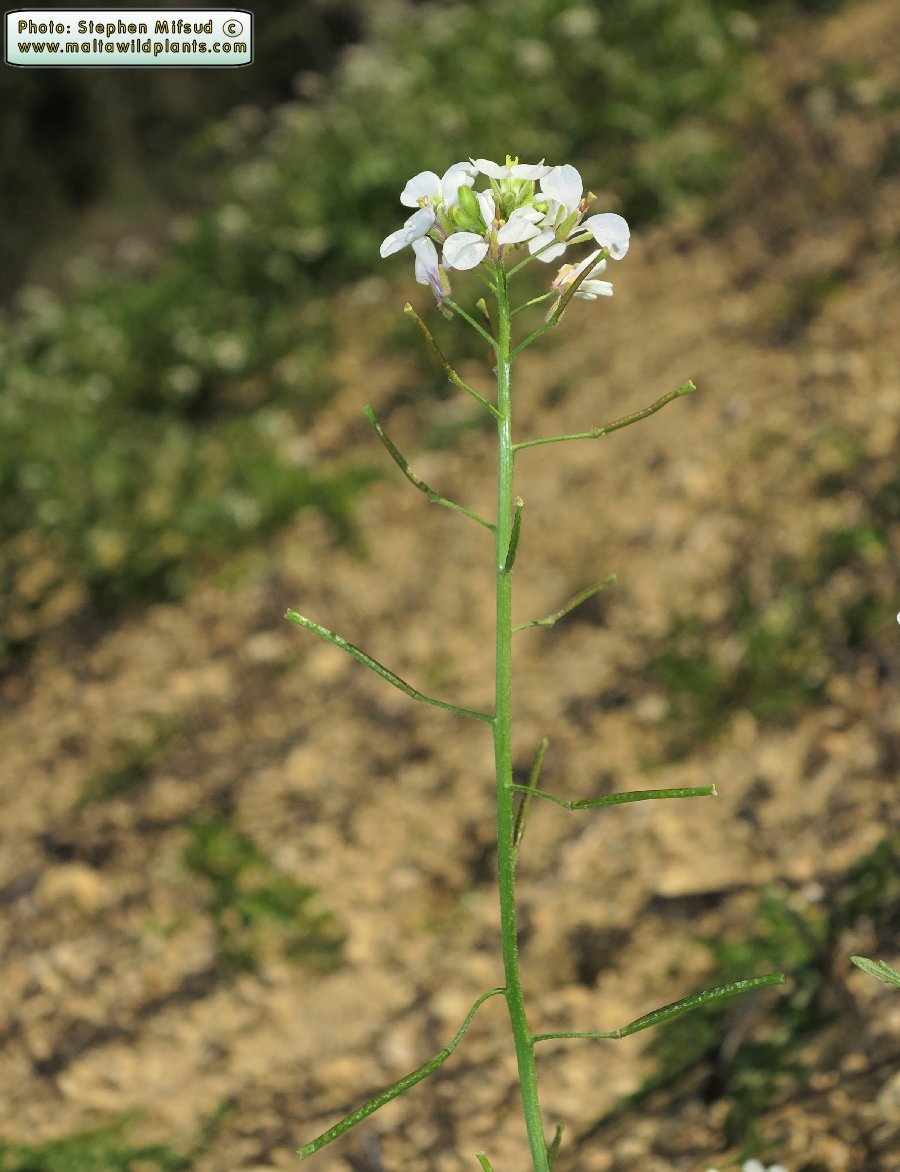
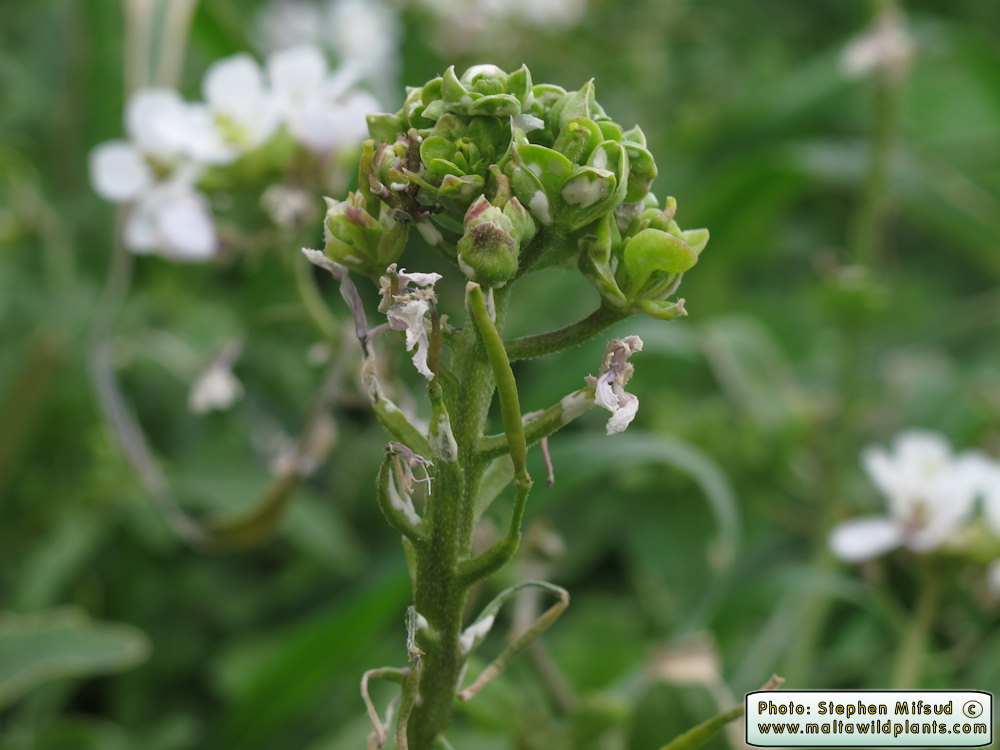
Photo of a cluster of flowers at the apex of the flowering stem.
Diplotaxis erucoides (White Wall Rocket) - CLICK TO ENLARGE PHOTO Diplotaxis erucoides (White Wall Rocket) - CLICK TO ENLARGE PHOTO Diplotaxis erucoides (White Wall Rocket) - CLICK TO ENLARGE PHOTO Diplotaxis erucoides (White Wall Rocket) - CLICK TO ENLARGE PHOTO
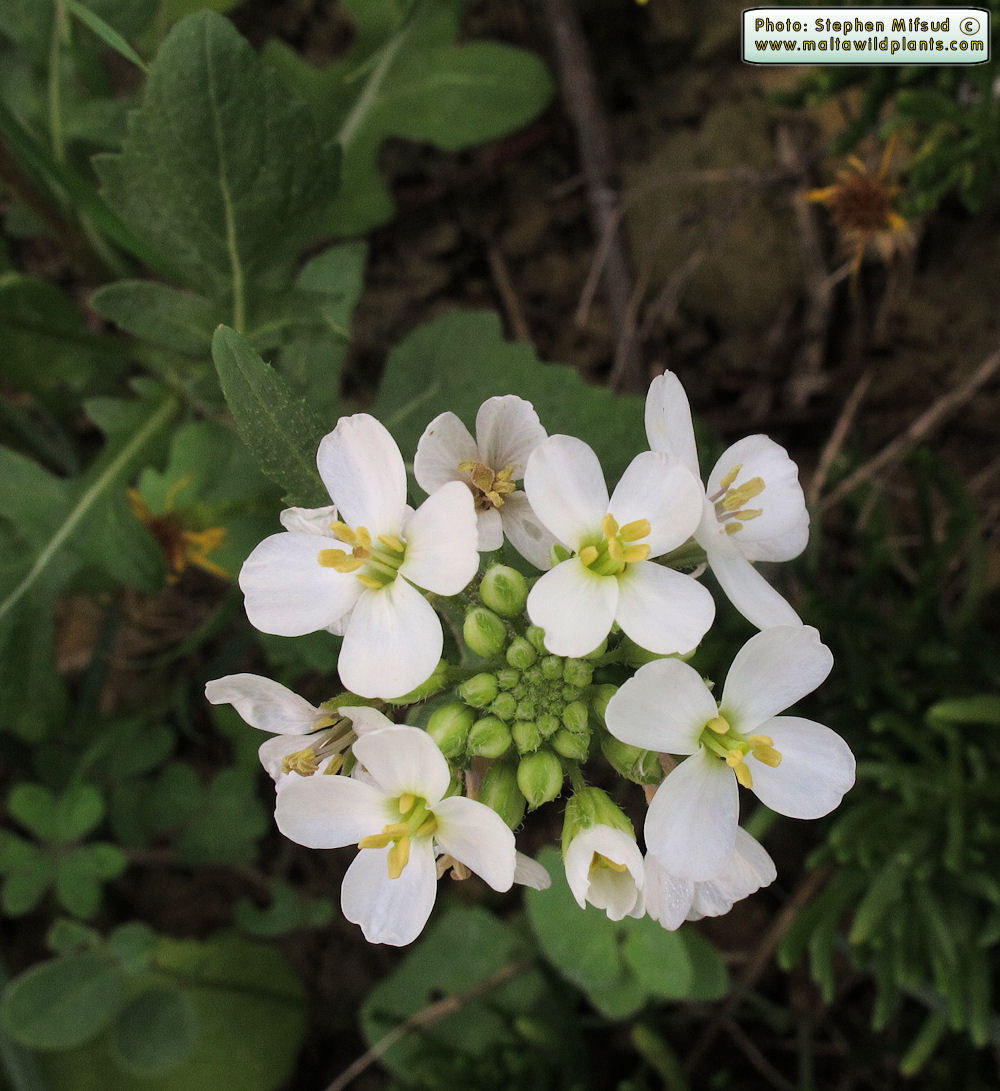
Photo of an inflorescence made up of racemes of 3 - 8 flowers with 4 white petals.
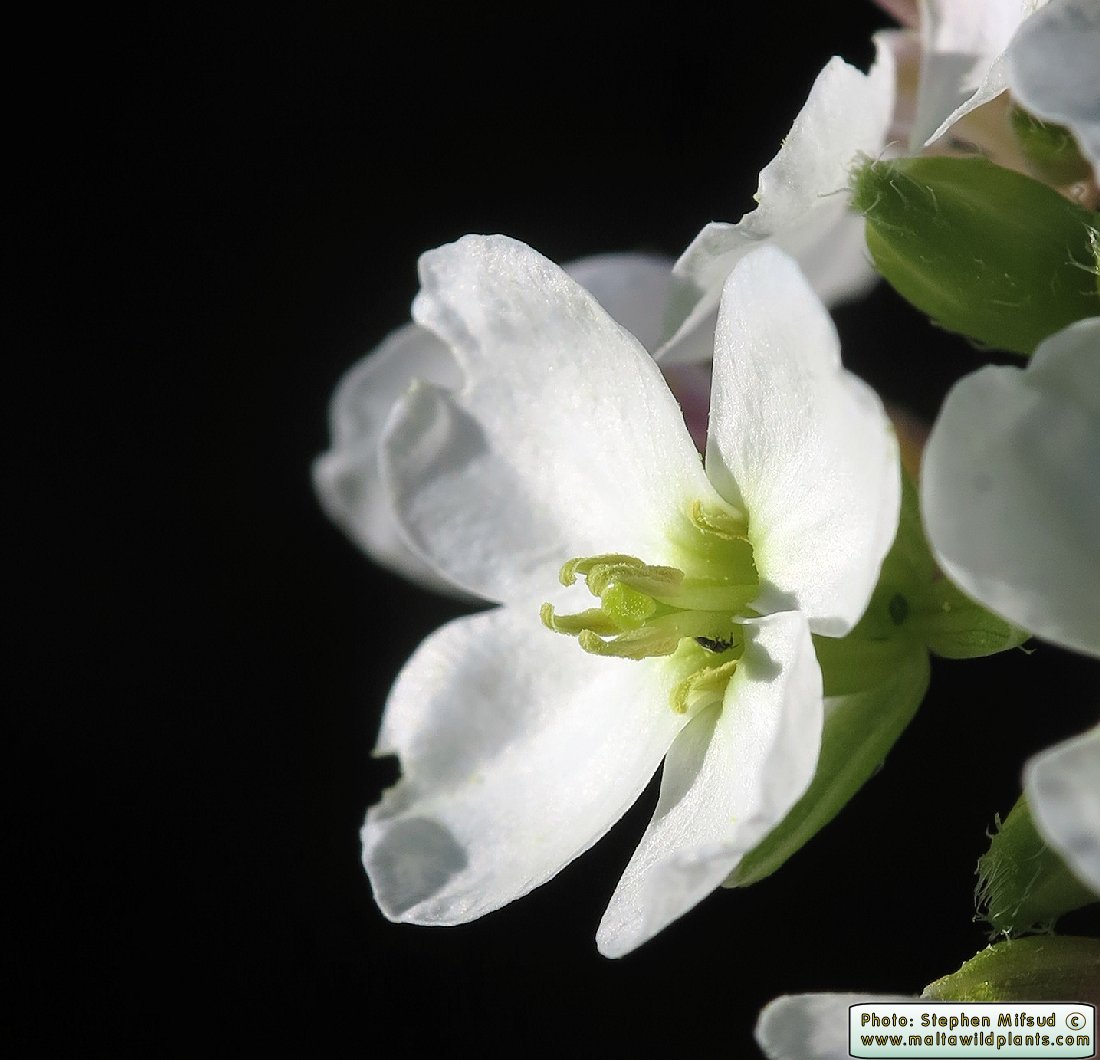
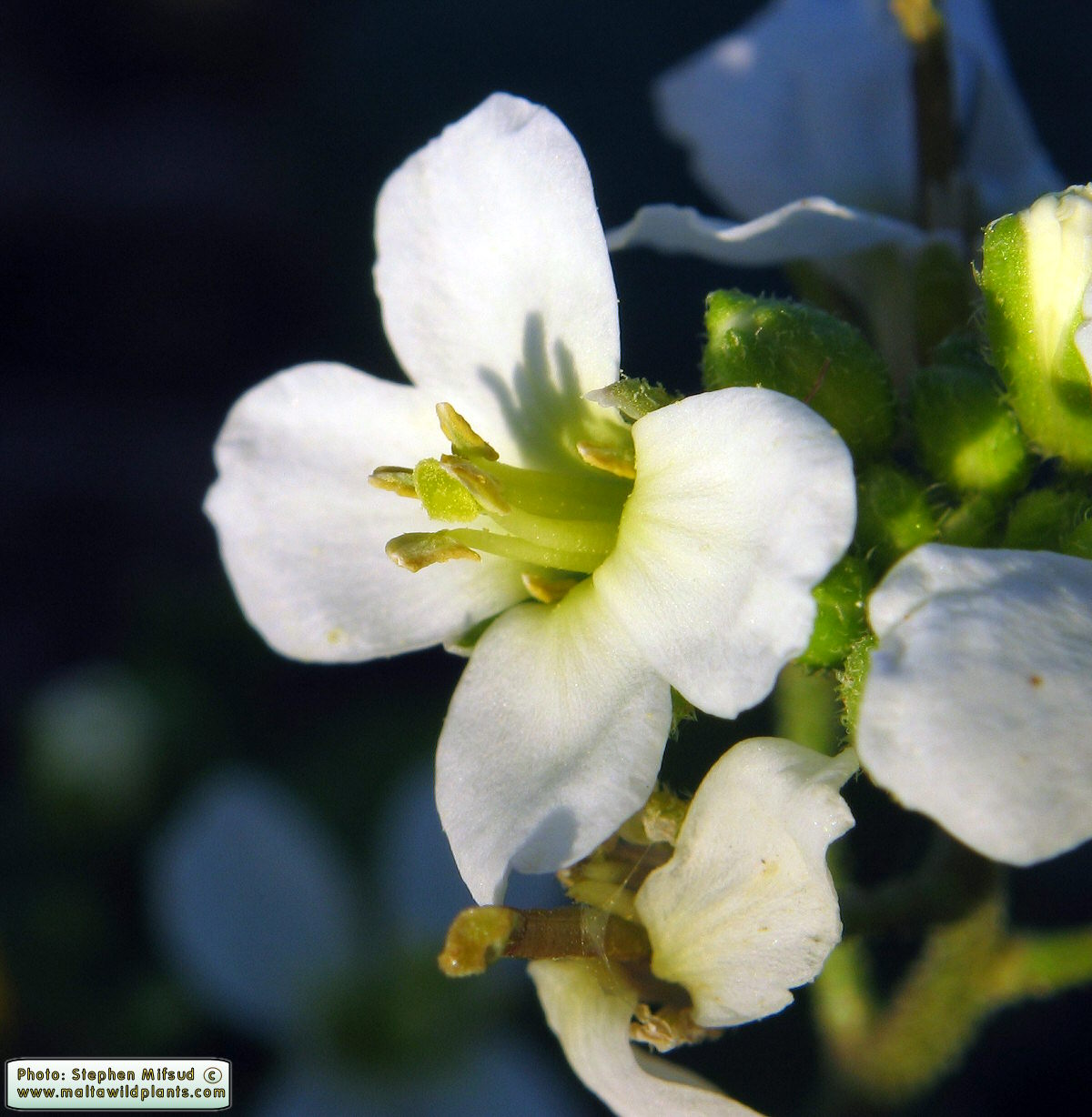
Close up photo of a flower (lateral view) showing the 6 stamens and a central pistil with a swollen stigma. The colour of the stamens' filaments is green. Many flowers have purple or pale purple filaments.
Photo of white flowers. Also visible is a snail which feeds on the leaves of the plant.
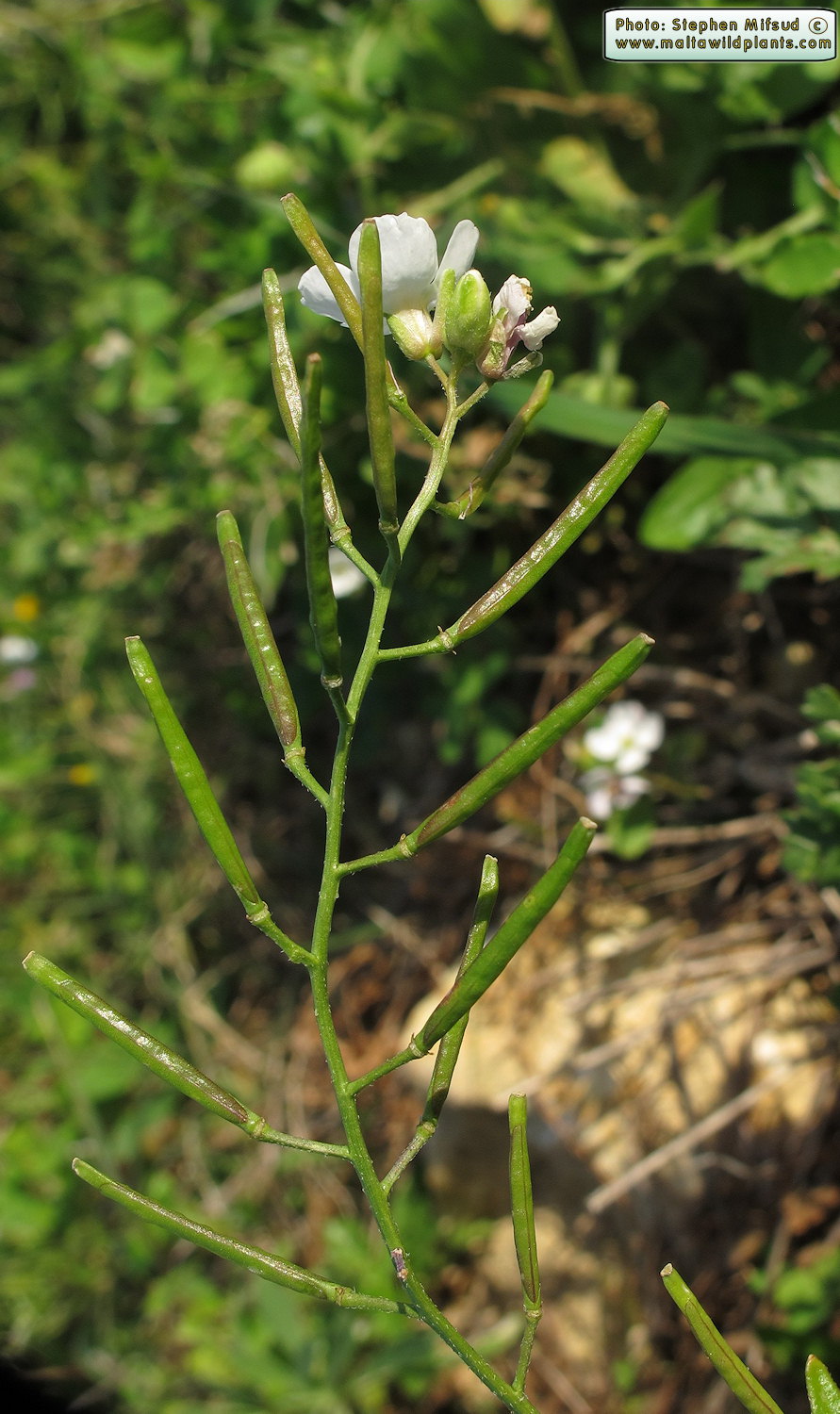
Photo of a flower raceme and the pod-shaped purple-brown fruit.
Diplotaxis erucoides (White Wall Rocket) - CLICK TO ENLARGE PHOTO Diplotaxis erucoides (White Wall Rocket) - CLICK TO ENLARGE PHOTO Diplotaxis erucoides (White Wall Rocket) - CLICK TO ENLARGE PHOTO Diplotaxis erucoides (White Wall Rocket) - CLICK TO ENLARGE PHOTO
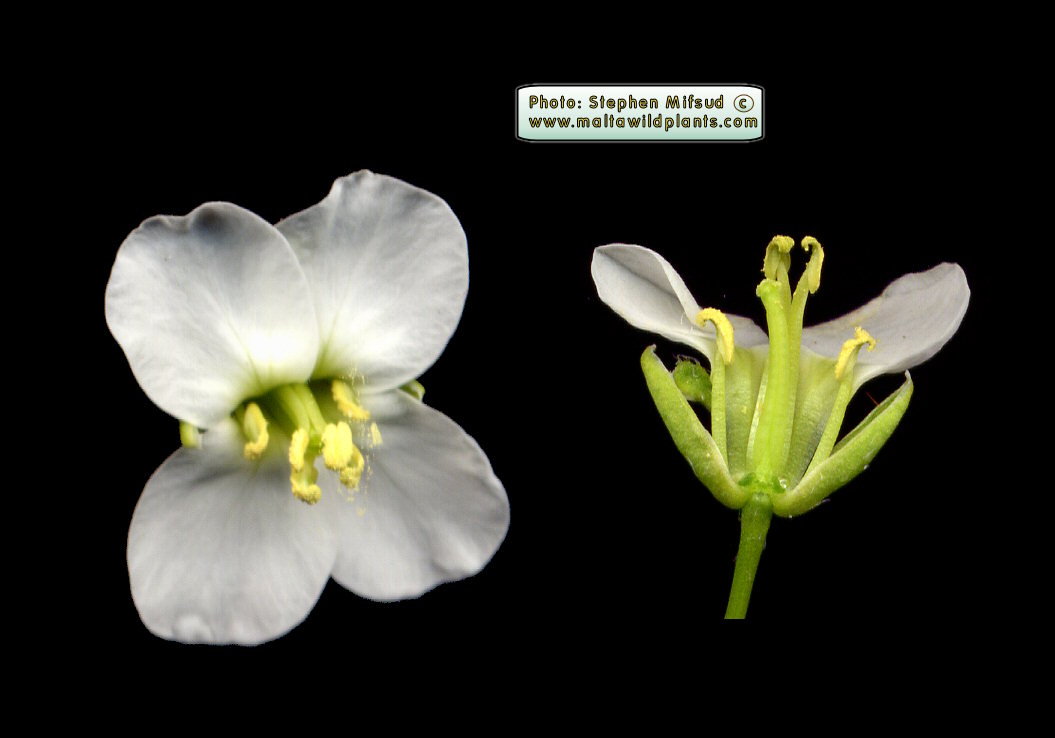
Scanned image of the flower against a dark background.
Scanned and annotated image of 4 flowers showing in detail various parts such as the 4 white petals and the 6 stamens made up of yellow anthers and purple filaments.
Scanned and annotated image of a longitudinally dissected flower (with some petals and sepals removed) showing the arrangement of the 6 stamens, that is 2 short and lateral and the other 4 are longer and central around the pistil.
Photo of a young plant with its white, cross-shaped flowers.
Diplotaxis erucoides (White Wall Rocket) - CLICK TO ENLARGE PHOTO Diplotaxis erucoides (White Wall Rocket) - CLICK TO ENLARGE PHOTO Diplotaxis erucoides (White Wall Rocket) - CLICK TO ENLARGE PHOTO Diplotaxis erucoides (White Wall Rocket) - CLICK TO ENLARGE PHOTO
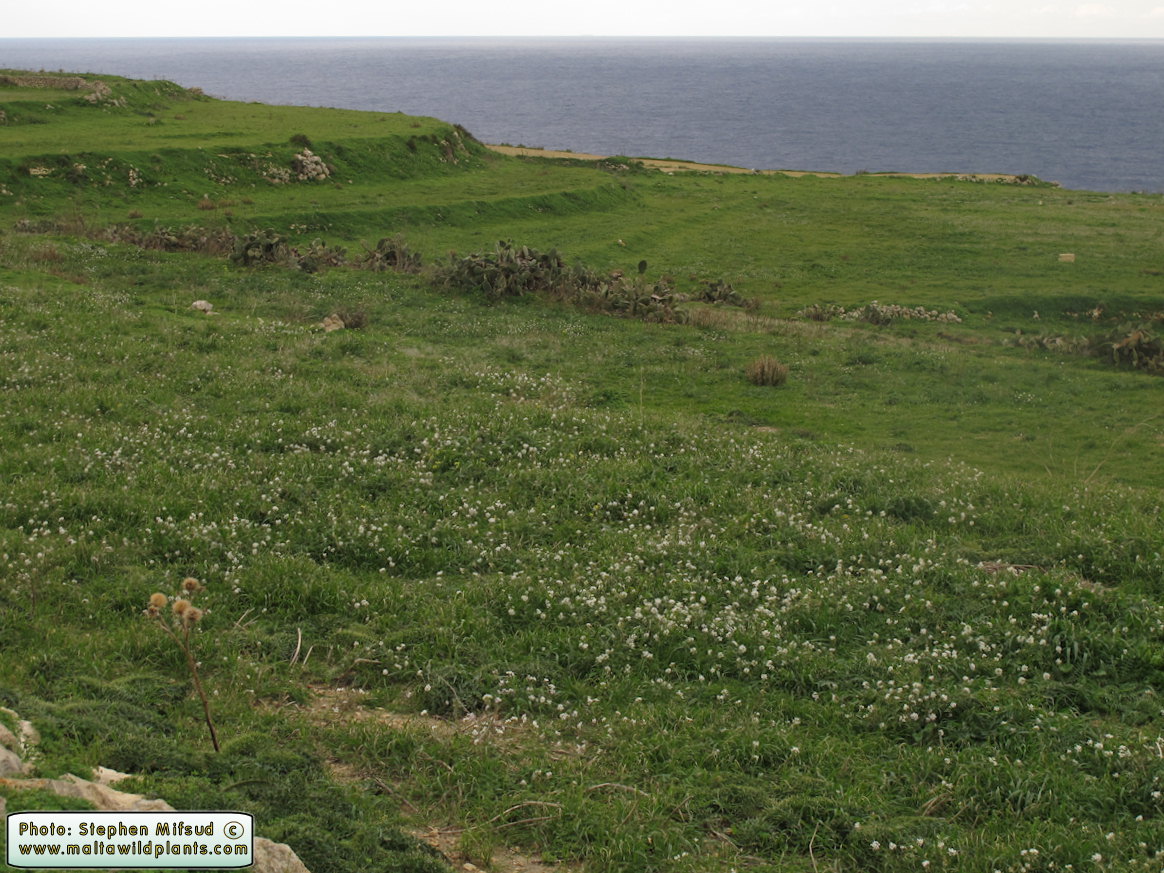
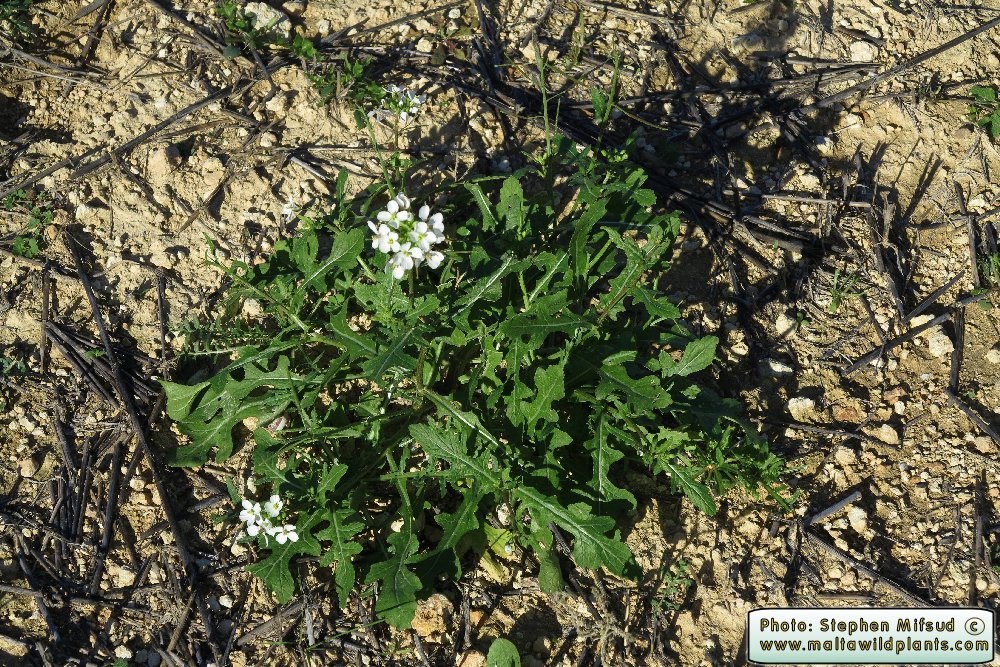
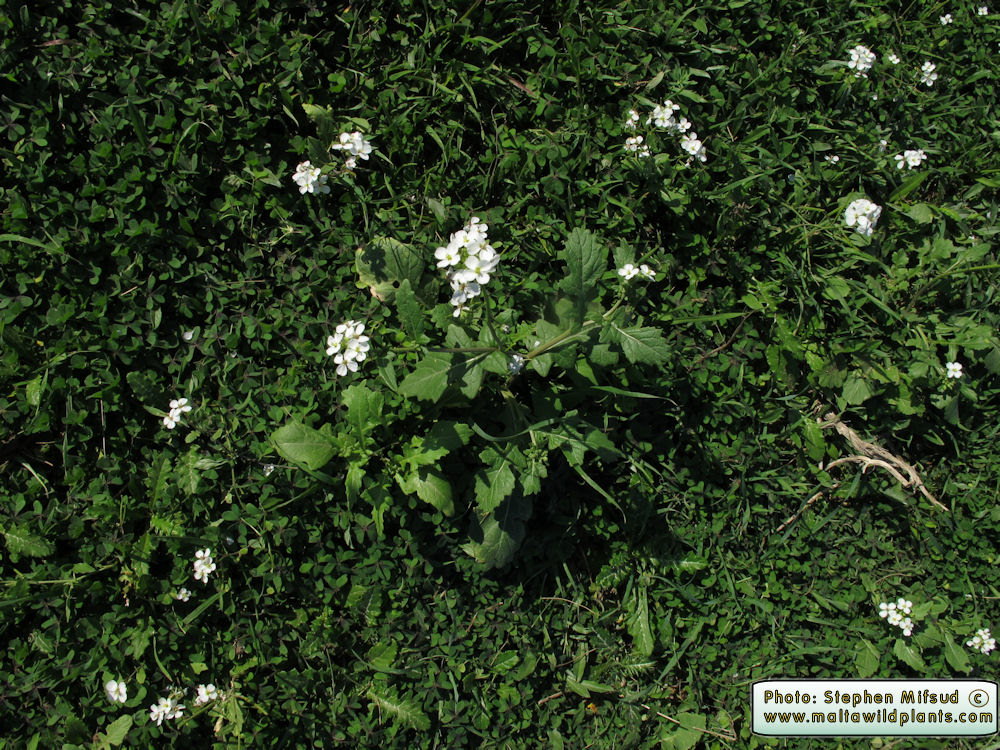
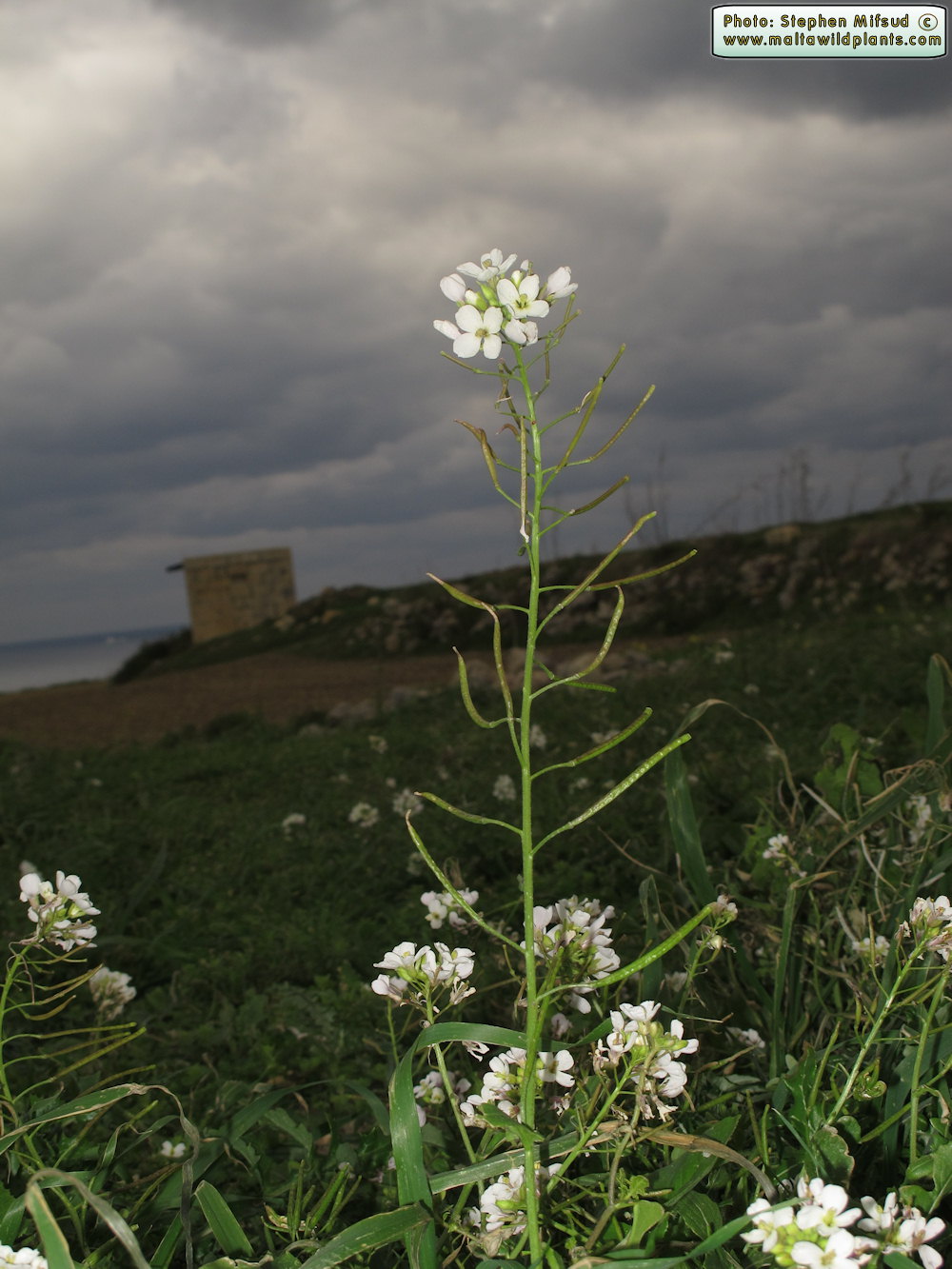
Photo of a several D. erucoides plants in their natural habitat, that is rich soils such as fields and traffic islands.
Photo of an uncropped field covered with white flowers of D. eurocoides (30/Oct/2005).
Scanned and annotated image of young and adult leaves. They are deeply lobed with the apex lobe being the largest.
Scanned image of an adult leaf. It has deep lobes at the base followed by an apical and terminal roundish large lobe. The margin is shallow dentate (or crenate) and has pinnate branching.
Diplotaxis erucoides (White Wall Rocket) - CLICK TO ENLARGE PHOTO Diplotaxis erucoides (White Wall Rocket) - CLICK TO ENLARGE PHOTO Diplotaxis erucoides (White Wall Rocket) - CLICK TO ENLARGE PHOTO Diplotaxis erucoides (White Wall Rocket) - CLICK TO ENLARGE PHOTO
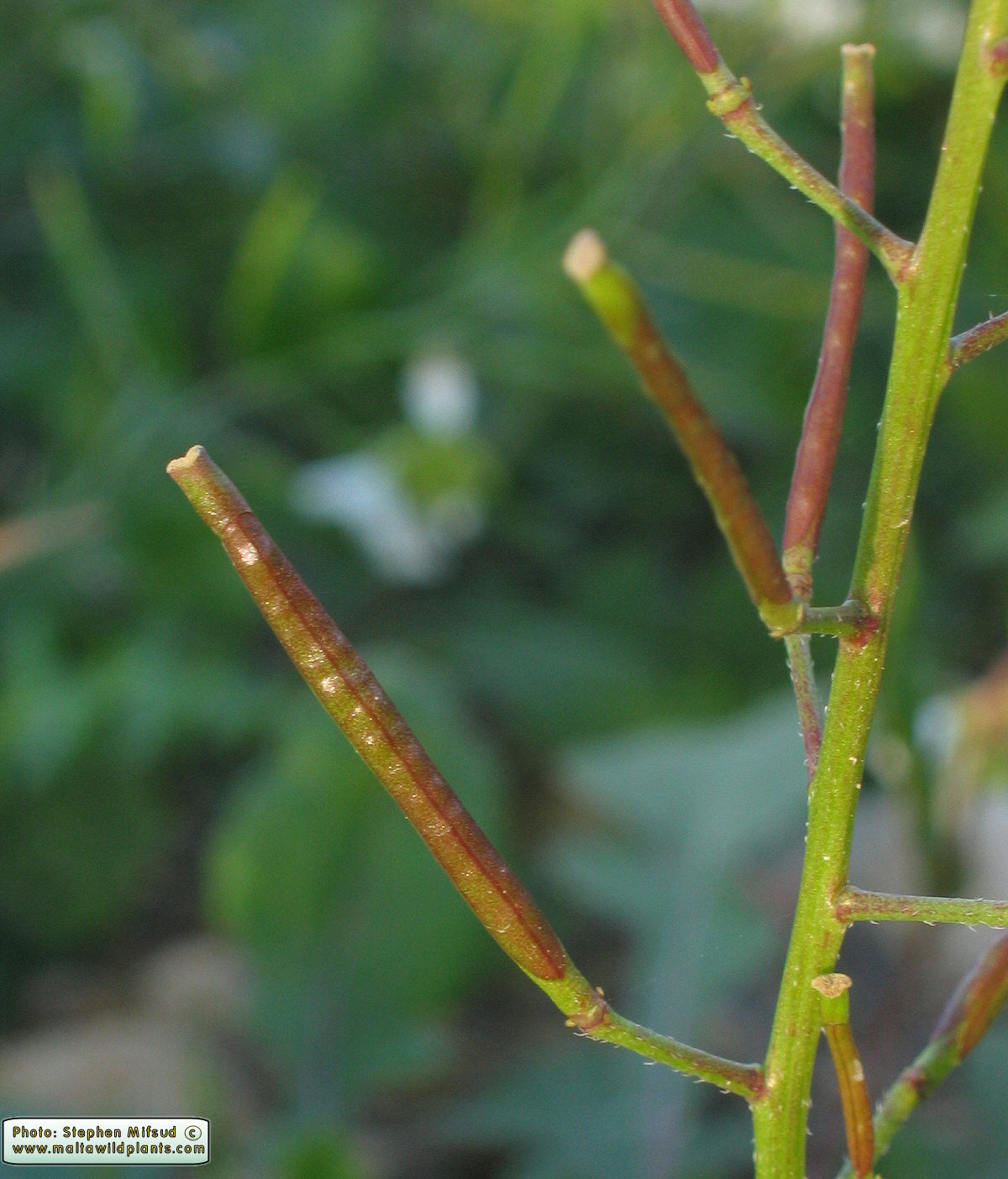
Scanned image of fruit-pods (Siliqua) at different maturity stages. The pods tend to be purple brown especially if they are exposed to the sun.
Magnified scanned image of 3 fruit-pods. They have a long pedicel, a short beak and slightly bulging bodies with the seeds inside.
Scanned image of subterranean parts which consist of a developed tap-root and numerous outgrowing roots.
Scanned image of ripe siliqua and their seeds. The walls break open at the base and twist rapidly to disperse seeds some distance away.
Diplotaxis erucoides (White Wall Rocket) - CLICK TO ENLARGE PHOTO Diplotaxis erucoides (White Wall Rocket) - CLICK TO ENLARGE PHOTO Diplotaxis erucoides (White Wall Rocket) - CLICK TO ENLARGE PHOTO Diplotaxis erucoides (White Wall Rocket) - CLICK TO ENLARGE PHOTO
Magnified scanned image of 3 open ripe pods. They have this characteristic translucent central partition to which seeds are attached to in pairs at each side. Each pod holds between 40 - 80 seeds each.
Scanned image of the seeds. They are roughly ovoid in shape with a small indentation, 1mm in length and light brown in colour.
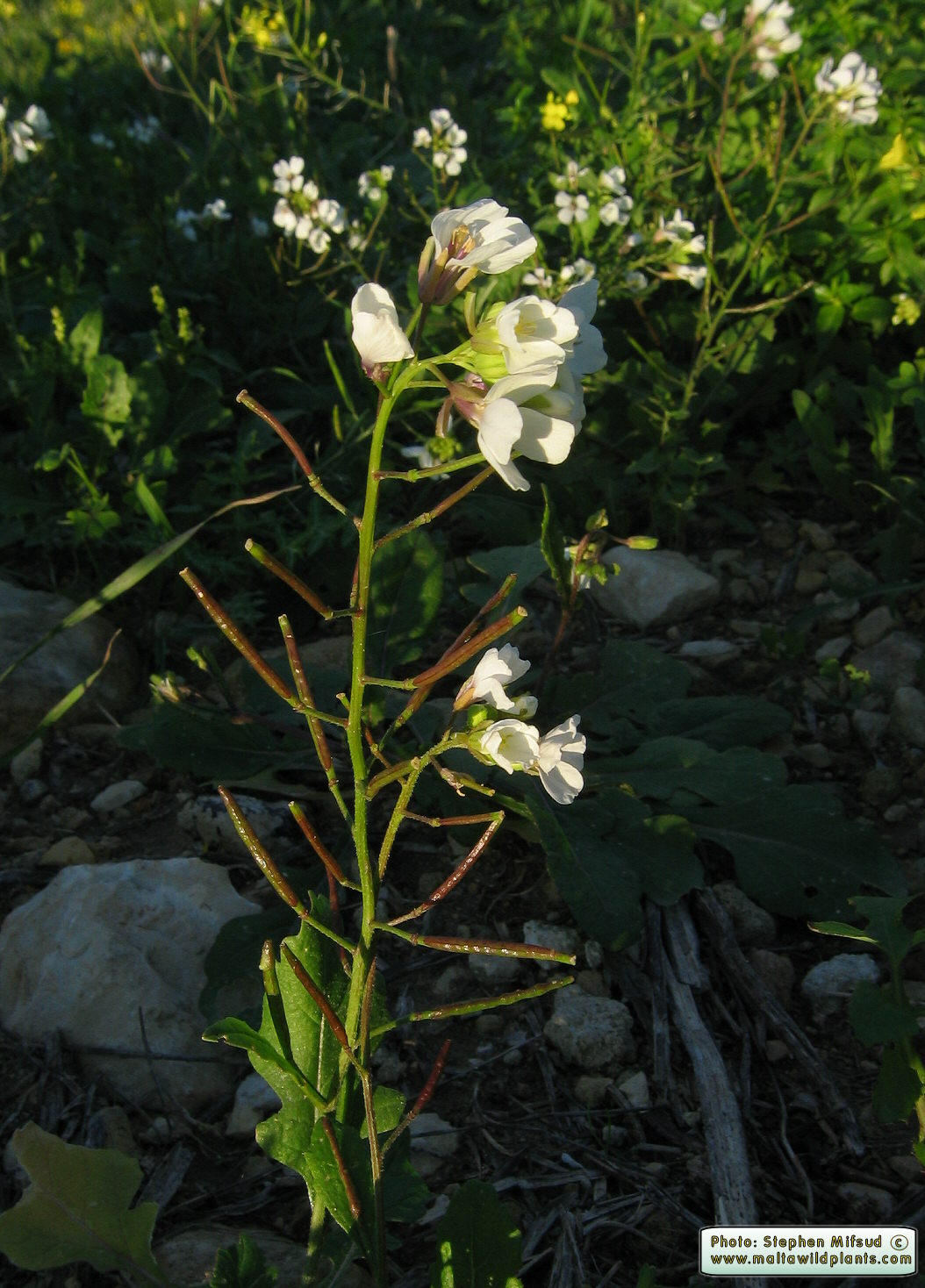
Scanned image of the upper part of the plant including a cauline leaf, several fruit pods and a raceme of white flowers at the apex.
Scanned and annotated image of the flowering stem showing racemes of flowers at the upper part followed by plenty of long, spread-out, seed-bearing siliqua.
Diplotaxis erucoides (White Wall Rocket) - CLICK TO ENLARGE PHOTO Diplotaxis erucoides (White Wall Rocket) - CLICK TO ENLARGE PHOTO Diplotaxis erucoides (White Wall Rocket) - CLICK TO ENLARGE PHOTO Diplotaxis erucoides (White Wall Rocket) - CLICK TO ENLARGE PHOTO
Photo of a seedling. Plant germinates some weeks after the first heavy rain, that is around the beginning of October.
Top view photo of a plant. It is a herbaceous, branched plant with several flowering stems bearing clusters of numerous white flowers.
Photo of the upper plant of the plant which consists of numerous, spreading-out siliqua and racemes of white flowers.
Close up photo of the siliqua (fruit pod) which is elongated and often reddish brown in colour. The beak (tip) is very short.
Diplotaxis erucoides (White Wall Rocket) - CLICK TO ENLARGE PHOTO Diplotaxis erucoides (White Wall Rocket) - CLICK TO ENLARGE PHOTO    
Photo of an uncropped field covered with white D. erucoides and yellow Brassica rapa spp silvestris.Photo taken in a field near Dingli Cliffs during November 2004.
Photo of an uncropped field covered with white D. erucoides and yellow Brassica rapa spp sylvestris.Photo taken in fields near Buskett in December 2002. It is quite common to find populations of these two species together.
-
-

Further Information and Links

Allergy cases by The white wall rocket Hortiplex database
Allergy to Diplotaxis erucoides pollen: occupational sensitization and cross-reactivity with other common pollens. by P. Ortega Garca et al [304] General info on 'Rocket' plants
Search for Diplotaxis erucoides on the FORUM of MaltaWildPlants.com
Detailed Medicinal Properties for Diplotaxis erucoides


Buy from and support MaltaWildPlants.com

Buy Seeds from Maltawildplants.com Buy samples of seeds of certain wild plants for your studies, trials, research, etc. Not all species' seeds can be exported (depending on Maltese regulations), and availability depends on season of species. So, before any payment, you are kindly asked to fill in the online quotation/order form by which I can contact you back for availability and charges. Buy Seeds from Maltawildplants.com   Online Quotation

Buy Seeds from Maltawildplants.com   Online Payment
Buy Documents from Maltawildplants.com Buy documents related to Maltese Wild Plants such as the list of references, full profile, or other docs you request. Buy Documents from Maltawildplants.com   Online Payment
Buy Images  from Maltawildplants.com Buy any of my own copyright images found in this large collection of Maltese flora. You should first select the image you want to buy and input its corresponding code (found beneath each individual photo) in the online ordering form. Buy Seeds from Maltawildplants.com   Online Payment
Buy Seeds from Maltawildplants.com Kindly donate any sum of money (from 2USD / 2Euro) to help us covering some expenses needed to maintain Maltawildplants.com. Please bear in mind how much hard work such a large and up-to-date website needs to arrive directly to you home, office or library. Your kind donations are both greatly appreciated and recorded for future reference. Donors asking help will have first que preference for assistance and special attention. Buy Seeds from Maltawildplants.com   Online Donation


Submit More Information

Use the form below to submit more information about this plant or a related species. If the data is taken from a book, journal, website, etc, please provide the corresponding reference / website address as indicated in the form. If it is your own observation, then your name will be cited. Your Email address will never be displayed online, it is just for internal communication.


For plant species that are marked as rare, you can also report other locations in Malta where you have seen this species.

Finally you can report any mistakes or errors found on the plant profile for necessary corrections. This will help to improve the website's acuracy.


To have more details about each particular field, just move your mouse on it and wait for the help message to pop up

* = required fields.
Plant Species:  *
Your name:   *
Your Email:   *
Fill any of the following 3 sections below (A, B or/and C) and send the form. - Thank you.
 
A:  Additional Information about this plant species
Own observations:
Info from published material (books, jounals, website):

Reference of published material:

 
B:   Where have you seen this plant on the Maltese Islands?
Locations in Malta or Gozo where you have encountered this plant.
Mostly applies for rare plants.


1:        2:   
3:       4:   
5:       6:   

Try to be as concise as possible. Examples: Dingli Cliffs (near chapel), Wied Incita (Zebbug side), Triq il-Kbira (Qormi), Barriera ta\' Abdul (Xlendi), Fields near Salib tal-gholja (Siggiewi). GPS bearings are also welcomed!
 
C:  Corrections for mistakes and errors in this plant profile.
Section of this plant Profile page where you found an error (select one)

What is the error/mistake
What should be its correction


All material and data on this webpage is under the copyright of the author of this site - Stephen Mifsud / www.MaltaWildPlants.com / Malta. (2002-2008)
This research project about the flora of Malta is sponsored by:
Middlesea Insurance p.l.c. A Fund established to help in the amelioration and enhancement of the environment in Malta and to take initiatives that enhance awareness on environmental issues amongst the public Empty space for sponsor Empty space for sponsor Benefit companies get by sponsoring this project