| |
|
 | |
| Online Flora of the Maltese Islands by Stephen Mifsud |
|
| |
|
|
 |  |  |  |
| External Links: |
|
Euphorbia paralias (Sea Spurge) |
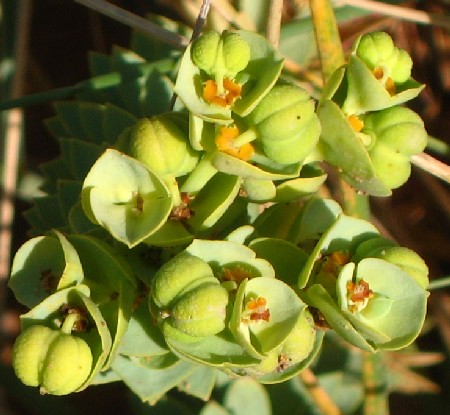
Euphorbia paralias (EUPHORBIACEAE.)
Images for this profile are taken from the Maltese Islands after year 2000.
Website launch: Oct-2002
Taxonomic update: Aug-2026
Code update: Jul-2026 |
|
| Nomenclature and General Information |
Species name : |
Euphorbia paraliasL.
Published in Sp. Pl. : 458 (1753) |
Synonyms :
(basionym or principal syn.) |
|
Plant Family : |
Euphorbiaceae Juss. (The Spurge Family)
30 species from the Euphorbiaceae family are recorded from the Maltese Islands. | English name(s) : | Sea Spurge |
Maltese name(s) : |
Tengħud tar-ramel |
Status for Malta : |
Indigenous. Present on the Maltese islands before man |
Frequency : |
Very Common Common Frequent Scarce Rare Very rare Extinct |
Growth form : |
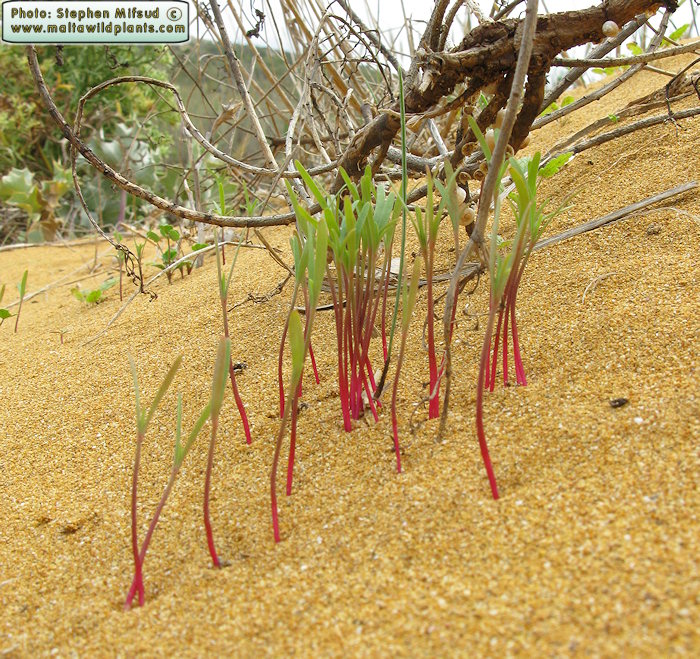
Germination type [info]: Dicotyledon
Raunkiaer lifeform [info]: Chameophyte ( small woody shrubs with vegetative buds well above the ground ) |
Legal Protection : |
Protected by law: Schedule III and VI of [S.L. 549.44] (strictly protected species) |
Red List (1989) : |
Threatened status for the Maltese Islands and has been listed in the Red Data Book (1st ed.) |
Flowering Time : |
May – August |
Colour of Flowers: |
Inconspicuous, Green or Yellow |
Toxicity: |
May cause allergic reactions or irritation in contact with the skin or mucous membranes |
Name Derivation : |
Euphorbia: Named for Euphorbus, a Greek physician to Juba II - King of Mauretania of Numibia (52-50 BC - 23 AD), who might have used a certain plant in allusion to his swollen belly, possibly the plant Euphorbia resinifera. (Further info: [link]). Euphorbus can have also been derived from 'Eu-' = good or true and '-phorbe' = pasture or fodder, thus giving the meaning well-fed or provides a fat-belly from consumption. (Greek origin)
paralias: from the Greek 'paralos' = maritime since of the coastal habitat of this species, but sometimes used with the sense of blue like the sea for its bluish-green leaves. (Greek origin)
|
Planting in rural areas : |
Can be planted in rural areas according to ERA Guidelines |
|
|
Description, Habitat and Distribution | |
Botanical Description |
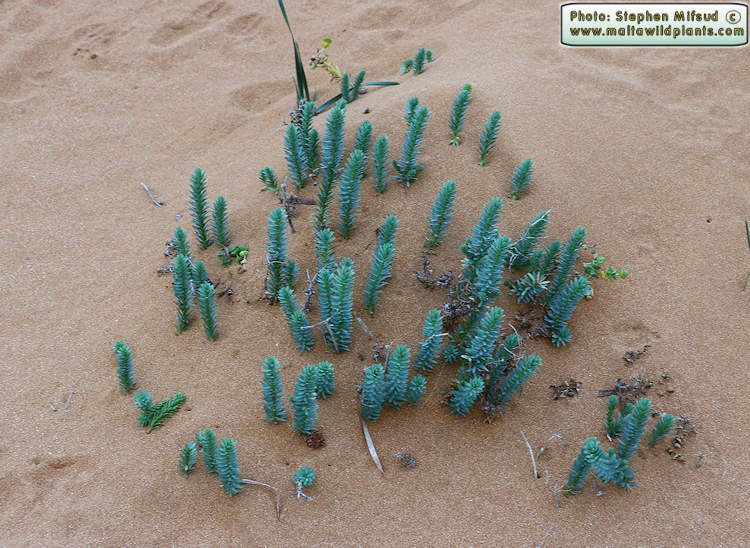
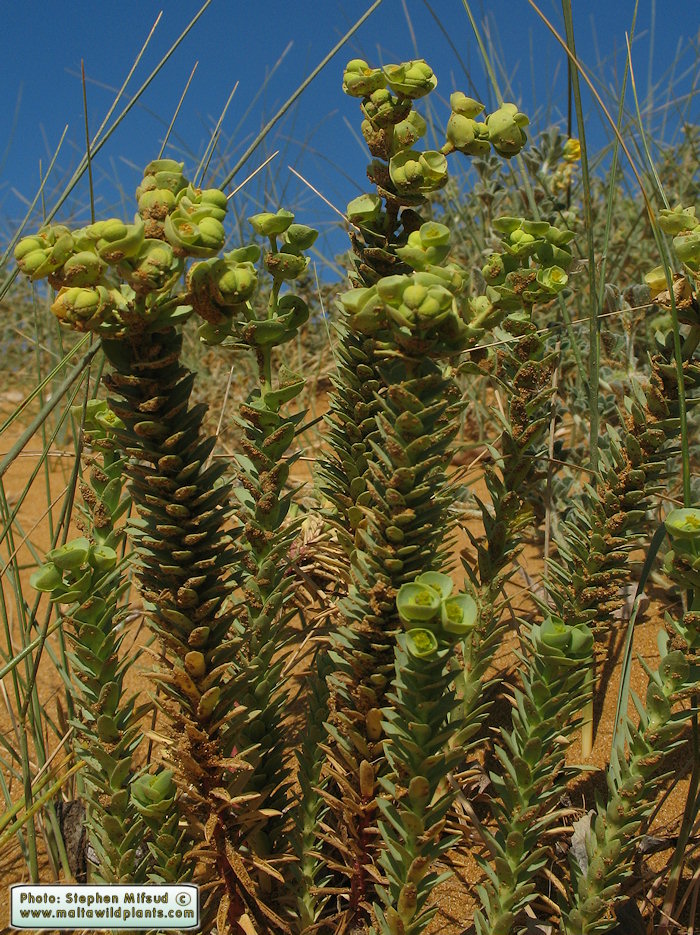
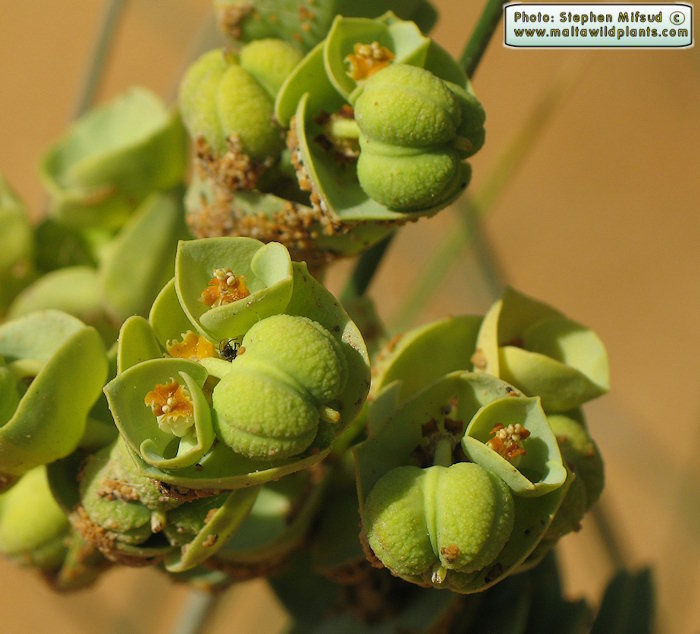
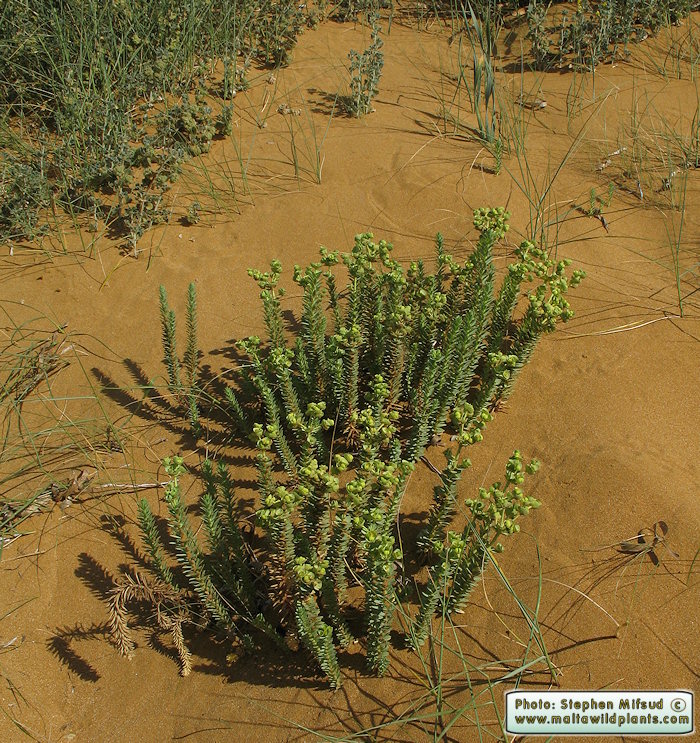
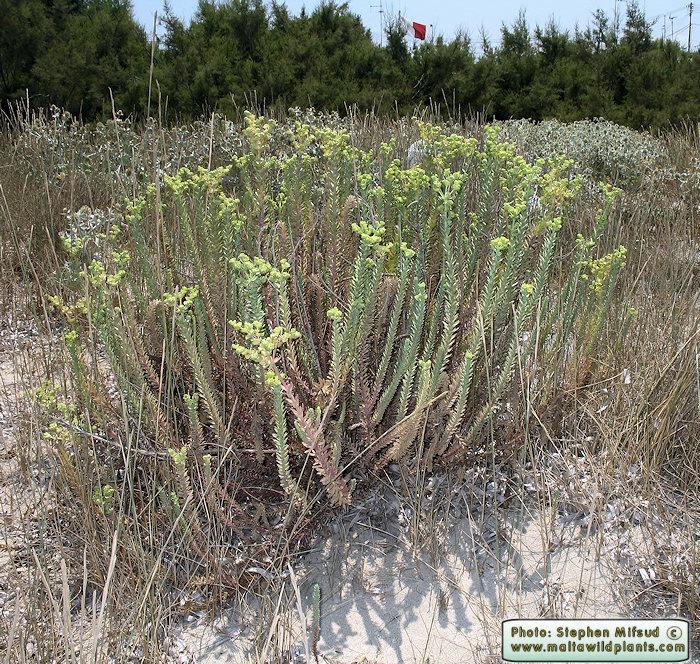
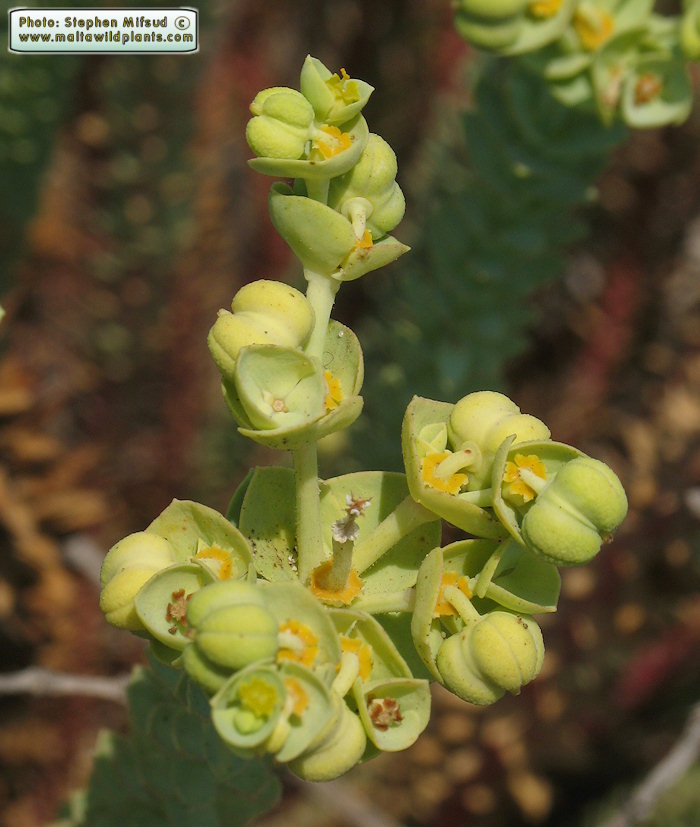
Glabrous, glaucous, somewhat fleshy, caespitose perennial up to 70 cm, branched from the base, and with 0-9 axillary rays. Leaves 3-30 x 2-15 mm, lowest ones obovate-oblong, middle ones elliptic-oblong and upper ones ovate; all entire, adaxially concave, imbricate. Ray-leaves like the upper cauline. Raylet-leaves suborbicular-rhombic to reniform, strongly adaxially concave. Rays 3-6, up to 3 times dichotomous. Glands emarginate. Capsule 3-5 x 4.5-6 mm, deeply sulcate, granulate on the keels. Seeds 2.5-3.5 mm, broadly ovoid, smooth, pale grey. | |
Habitat in Europe |
Sandy sea-shores.

| |
Preferred habitat in Malta |
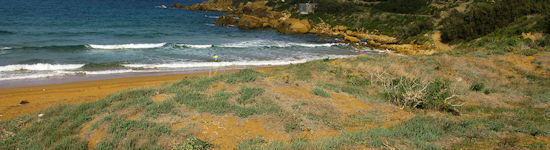
Confined to sandy seashores.
| |
Chromosome number(s) |
2n=16 | |
Distributional range |
Coasts of W. & S. Europe, from Ireland and the Netherlands to Romania.
|
Distributional maps from various sources |
|
Occurrences in Europe
(from Flora Europaea till 1993) |
Albania, Belgium, the Balaeric Islands, Britain (excl. Northern Ireland and Channel islands), Bulgaria, Corse, Crete, France (incl. Monaco and Channel Islands but excluding Corse), Greece, Ireland, the Netherlands, Spain (incl. Andorra but excl. the Balaerics), Italy (mainland, excl. Sicily and Sardinia), ex-Jugoslavia, Portugal, Romania, Sardinia, Sicily and/or Malta, Turkey (European part)
|
Occurrences in Europe
(from Euro+Med Checklist till 2024)
Country codes
|
AE(G) Ag Al Au Be Bl Br Bu Ca Co Cr Cy Cz Eg Ga Ge Gr Hb He Ho Hs IJ It Ju Li LS Lu Ma Md Rm Sa Si Sn Tcs Tn Tu(A E) Uk(K U)
|
|
| Links & Further literature
(0 papers) |

Google Web |

Google Images |

Google Scholar |

Research Gate |

Wikipedia |

JSTOR |

GBIF |

Med Checklist |
Cat. of Life |

EoL |

IPNI |

World Flora Online |
Plants of the World Online |

Vienna Virt. Herb. |
RBGE Herbarium |
KEW Herbarium |
MNHN |

Garden Database |

IUCN |

TROPICOS |
Kindly Email if there are papers and publications about local
studies or information about this species to be included in the list above.
|
|

Sales and Donations

|
 |
Sales of seeds of wild plant from Malta: Seeds of selected wild plant species may be available for academic studies, research purposes, or personal use. Please note that not all species can be supplied or exported. Availability is subject to seasonal seed production, stock levels, and applicable regulations, including Maltese legislation and CITES requirements where relevant. Protected and endemic species cannot be sold (at least without the relevant environmental permits).
How it works: First, submit a quotation request by completing the Online Quotation Form (link provided on the right side of this table). Once your request has been reviewed, you will receive confirmation regarding seed availability, export eligibility (where applicable), pricing, and any transport charges. Payments are accepted by Revolut, bank transfer (IBAN), or PayPal only; credit and debit card payments are not accepted.
Please note that local orders are currently not being accepted. Seek Maltese nurseries and NGOs for local orders.
|
Online Quotation (Seeds)
|
 |
Buy Images: Purchase photographs from this extensive online collection of Maltese flora by Stephen Mifsud. Images are available at reasonable prices, with rates varying according to image size and resolution. Your purchase helps support the maintenance and development of this website. When placing an order, please note the image code displayed beneath each photograph on the corresponding species page, as this is required when completing the online order form. Images are normally supplied under a license agreement, with copyright retained by the author; however, the sale of copyright for exceptional images may be considered on request.
|
Online Purchase (Images)
|
 |
Support this ad-free website Kindly consider to support this website by giving a small donation which will help to cover some expenses needed to pay the webserver and domains, maintain the website without any adverts, upgrading the code, including more wild plants and photos, and adding further data amongst other developments. You can use the links on the right for direct donations to this website by PayPal or Revolut. Even a 5 or 10 Eur donation is appreciated. Remember this website was ad*free since its launch back in 2002 and has served as an environmental educational tool for over 20 years.
|
💙 Donate by PayPal
💳 Donate by Revolut
|
|
| Contribute Information or Report Errors |
Use this form to submit additional information about this species or to report any inaccuracies on this webpage.
If the information you provide is sourced from a book, journal, website, or any other publication, rather then your own information or experience, then please include the relevant reference or web address whenever possible. Your email address will be used solely for internal communication and will not be shared. We greatly appreciate reports of: taxonomic updates; species misidentifications; incorrect or outdated information, broken links, technical website issues, or any additional information specific to the plant in this webpage.
Your contributions help to improve the accuracy and quality of this website. Thank you! Fill any of the three sections (A/B/C) below: .
|
|
|
|
| | |







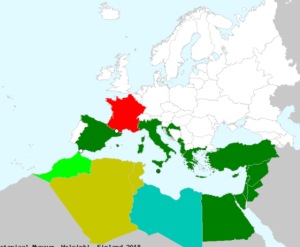 Atlas Flora Europaea
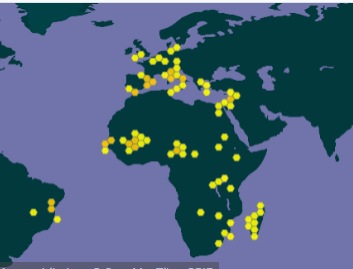 GBIF Distribution Map
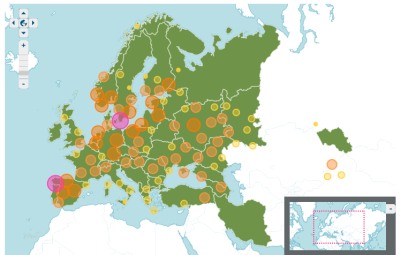 WFO Distribution map