| |
|
 | |
| MaltaWildPlants.com by Stephen Mifsud |

|
| |
|
|
 |  |  |  |
| External Links: |
|
Myrtus communis (Common Myrtle) |
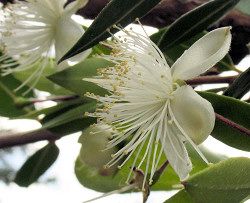
Myrtus communis (MYRTACEAE.)
Images for this profile are taken from the Maltese Islands after year 2000. |
|
| Nomenclature and Basic Information |
Species name : |
Myrtus communisL.
Published in Sp. Pl. : 471 (1753) |
Synonyms :
(basionym or principal syn.) |
|
Plant Family : |
Myrtaceae
Juss. (The Myrtle Family)
6 species from the Myrtaceae family are recorded from the Maltese Islands. | English name(s) : | Common Myrtle, Roman Myrtle |
Maltese name(s) : |
Riħan |
Status for Malta : |
Indigenous. Present on the Maltese islands before man |
Frequency : |
Very Common Common Frequent Scarce Rare Very rare Extinct |
Growth form : |
Raunkiaer lifeform [info]: Macro-Phanerophyte ( high trees usually over 10 m high )
Germination [info]: Dicotyledon |
Legal Protection : |
Protected by law: Schedule II of [S.L. 549.123] (Trees protected in selected areas) |
Red List (1989) : |
Not listed in the Red Data Book of the Maltese Islands |
Flowering Time : |
May – June |
Colour of Flowers: |
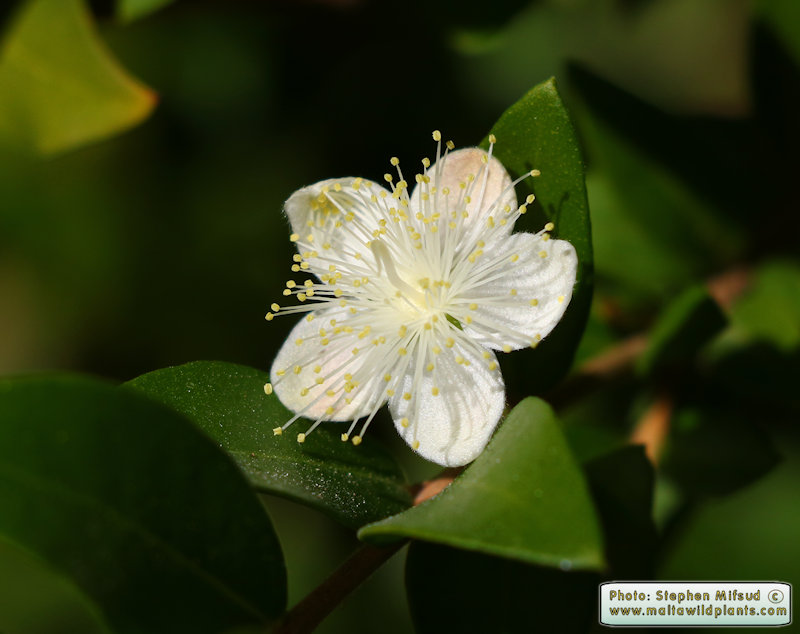
White |
Toxicity: |
Not particularly toxic |
Name Derivation : |
Myrtus: The Greek name for the Myrtle which in Greek mythology this plant was held sacred to Aphrodite. In Christian religion, it has been associated with the Virgin probably due to its fragrance and white flowers. (Greek origin ); 2 = Further Info: [1].
communis: common indicating that the species was widespread and common when described, at least in the area or region it was known from. (Latin origin );
|
Planting in rural areas : |
Encouraged to be planted in the wild that is in rural areas including ODZ. |
|
|
Description, Habitat and Distribution | |
Habitat in Europe: |
Scrub; usually calcifuge. | |
Preferred habitat in Malta: |
 Data will be available in the next update of this website.
 | |
Botanical Description: |
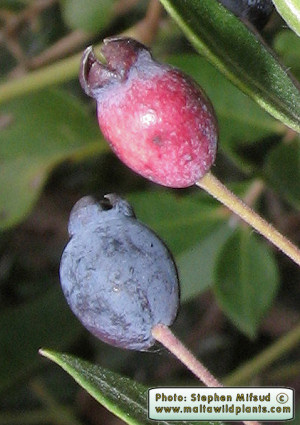
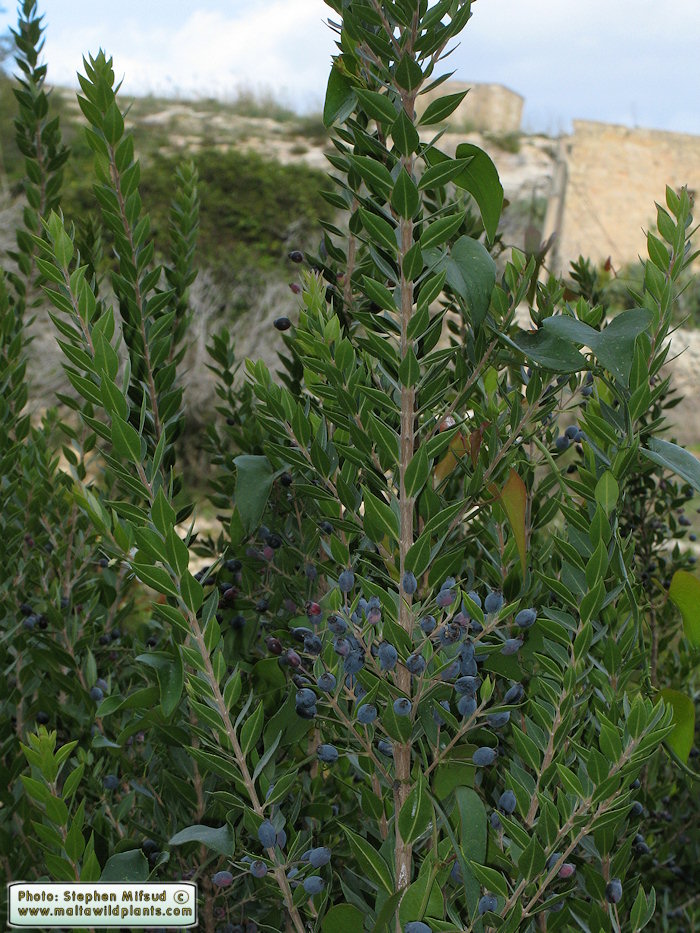
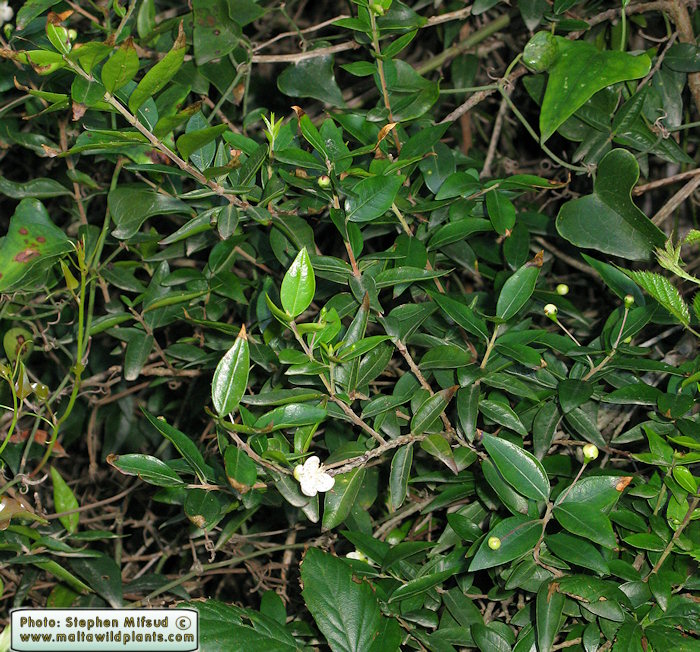
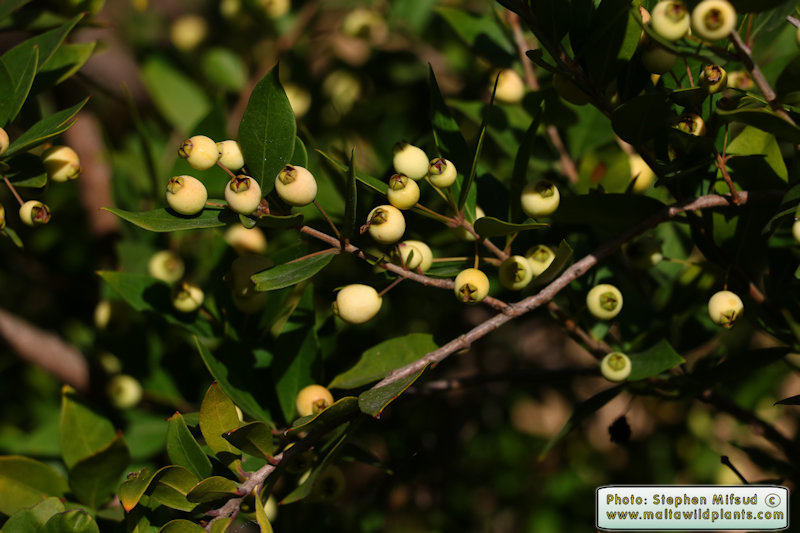
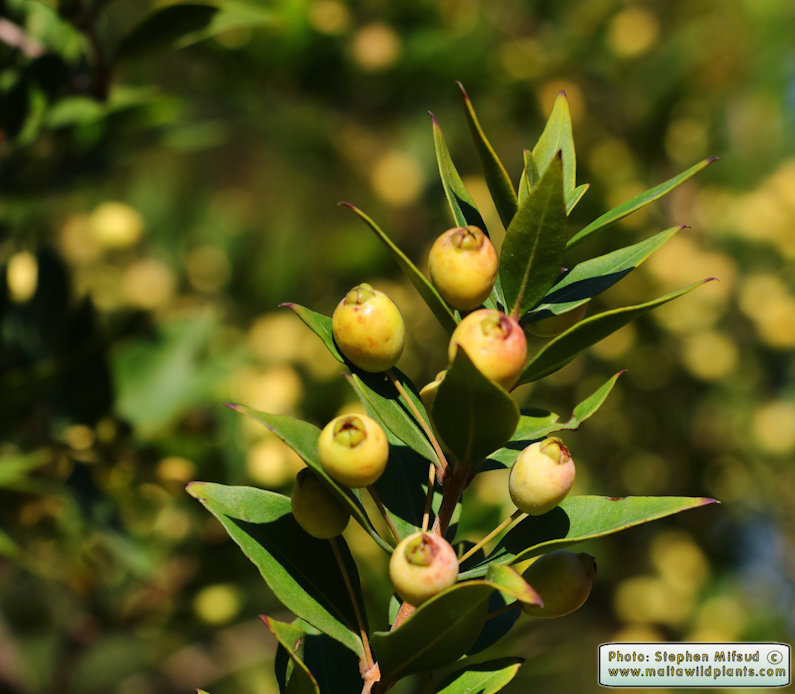
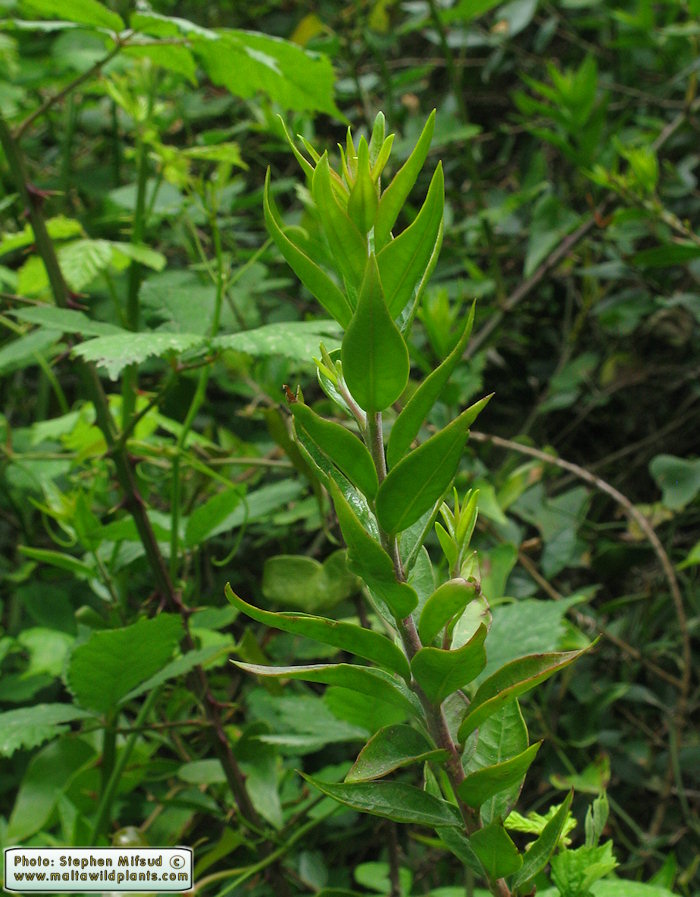
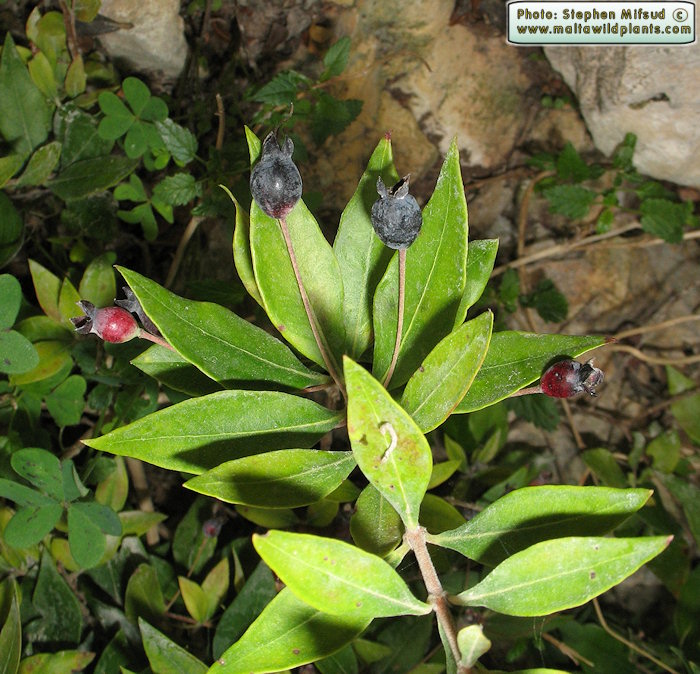
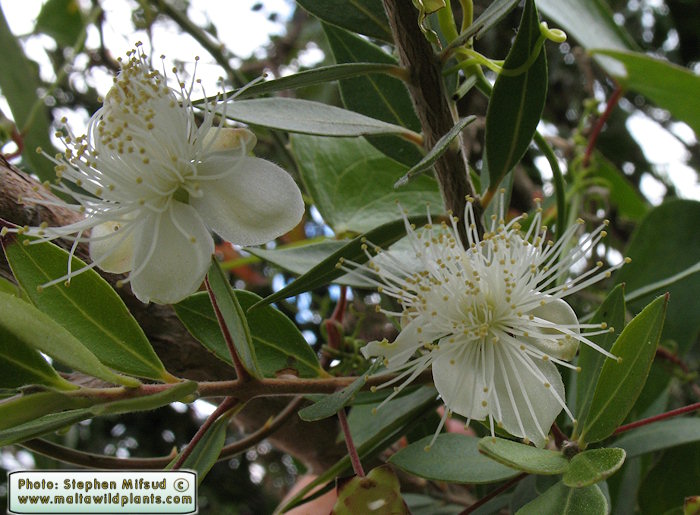
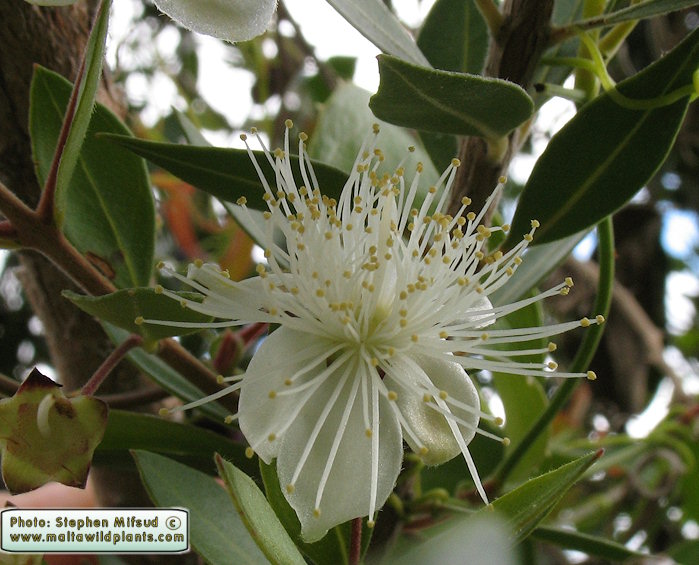
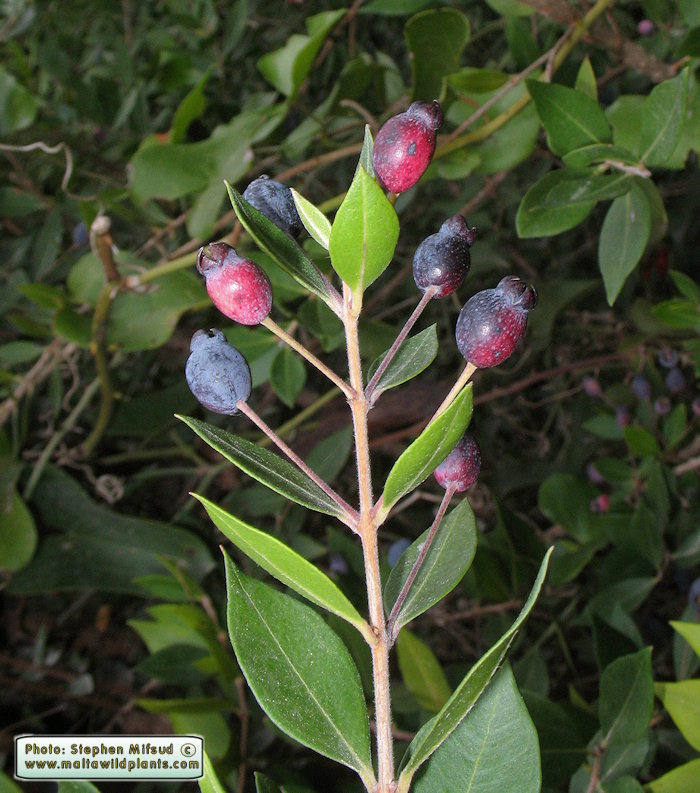
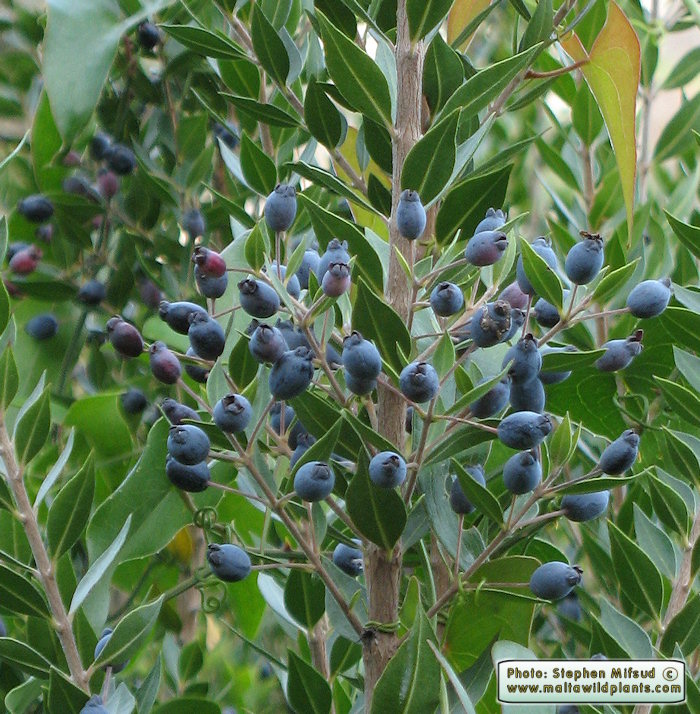
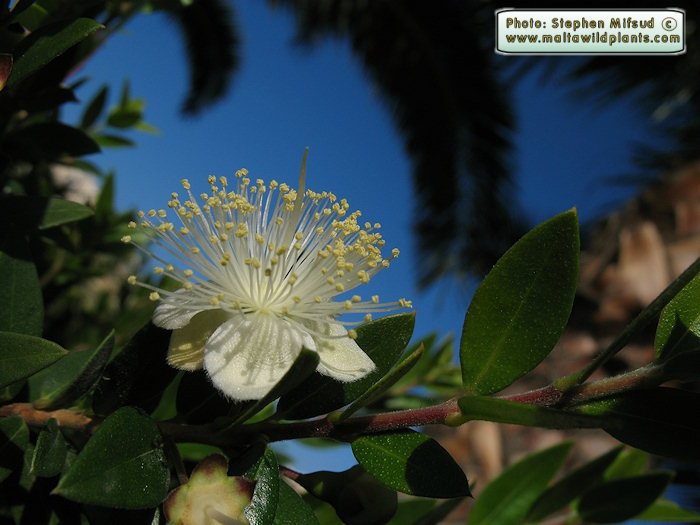
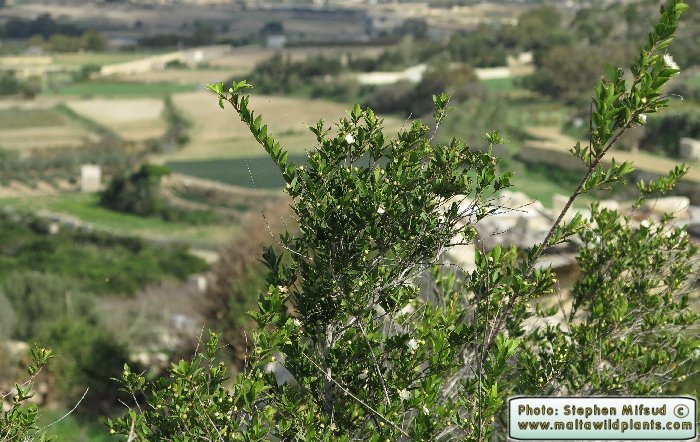
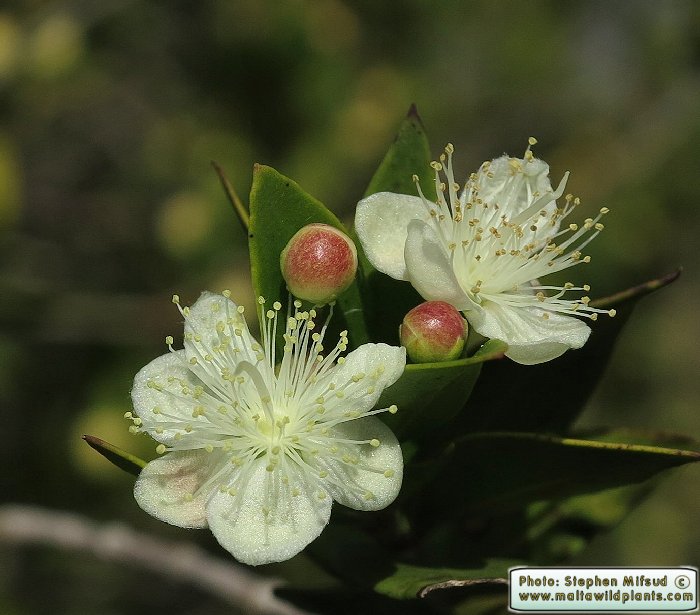
Erect, much-branched shrub, up to 5 m. Twigs glandular-hairy when young. Leaves up to 5 cm, ovate-lanceolate, acute, entire, coriaceous, punctate, very aromatic when crushed. Flowers up to 3 cm in diameter, sweet-scented. Pedicels long, slender, with 2 small, caducous bracteoles. Petals suborbicular, white. Berry 7-10 x 6-8 mm, broadly ellipsoid to subglobose, usually blue-black when ripe, but some varieties produce whitish-lilac berries. | |
Distributional range: |
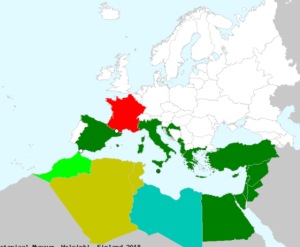
Mediterranean region and S. W. Europe. |
Distributional map in Europe
and the Mediterranean region (2018): |
|
Occurrences in Europe.
(from Flora Europaea pre year 1993): |
Albania, the Azores, the Balaeric Islands, Corse, Crete, France (incl. Monaco and Channel Islands but excluding Corse), Greece, Spain (incl. Andorra but excl. the Balaerics), Italy (excl. Sicily and Sardignia), ex-Jugoslavia, Portugal, Sardinia, Sicily and/or Malta |
Occurrences in Europe and the Mediterranean region.
(from Euro+Med Checklist, 2019)
Country codes
|
AE(G) Ag Al Az Bl Ca Co Cr Cy Ga Gr Hs IJ It Ju Li LS Lu Ma Md Sa Si Tn Tu(A) |
|
| | |
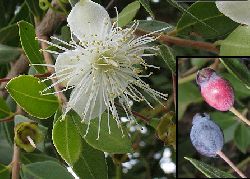







 Atlas Flora Europaea
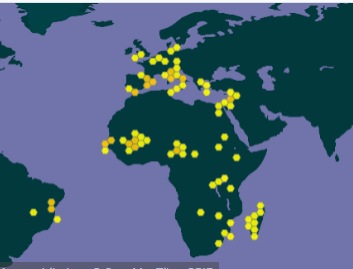 GBIF Distribution map