Upright, vertically straight up well clear off the ground.
Basal Branching :
Branches are mostly present at the basal part of the stem.
Setose :
Having thick or prominent bristles.
General Picture
LEAVES:
Characteristic
Arrangement
Attachment
Venation
Description
Alternate :
Growing at different positions along the stem axis.
Sessile :
Growing directly from the stem; without a stalk.
Single :
One central main vein (midrib) along leaf axis.
General Picture
Characteristic
Leaf Shape
Leaf Margin
Remarks
Description
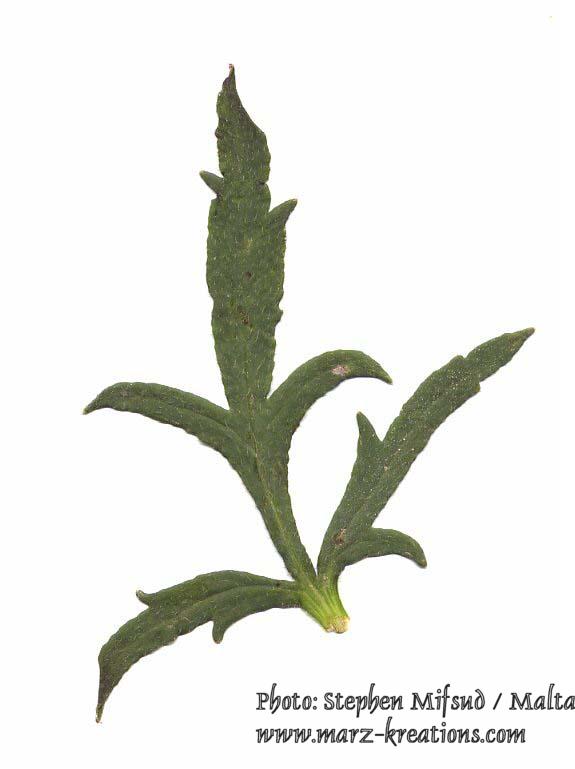
Multi Pinnate / Pinnatifid :
Compound arrangement of many small, narrow branching and sub-branching leaflets or leaf-lobes which however are not separated into distinct leaflets.
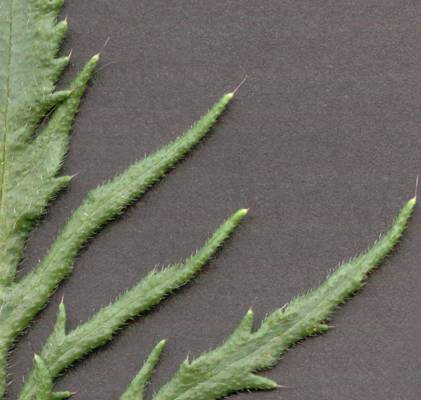
Coarsely Serrate :
Margin deeply dented outside.
General Picture
FLOWERS:
Characteristic
Colour
Basic Flower Type
No. of Petals
No. of Sepals
Description
Scarlet Red
Bowl or Cup Shape :
A flower which is roughly hemispherical, with straight sides and a very slight flare at the tips.
4
2
General Picture
Characteristic
Inflorescence
Description
Ovary
Stamens
Description
Single and Terminal :
Single, solitary flower at the apex of the stem or flower branch.
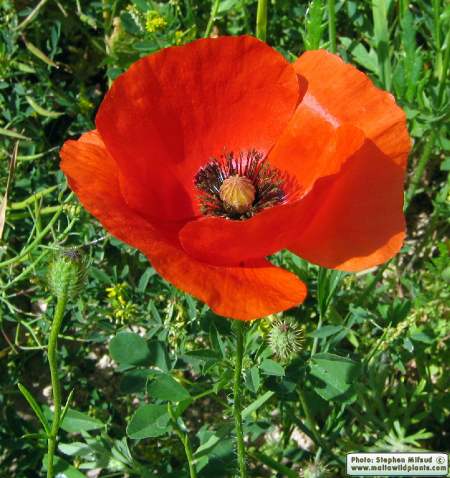
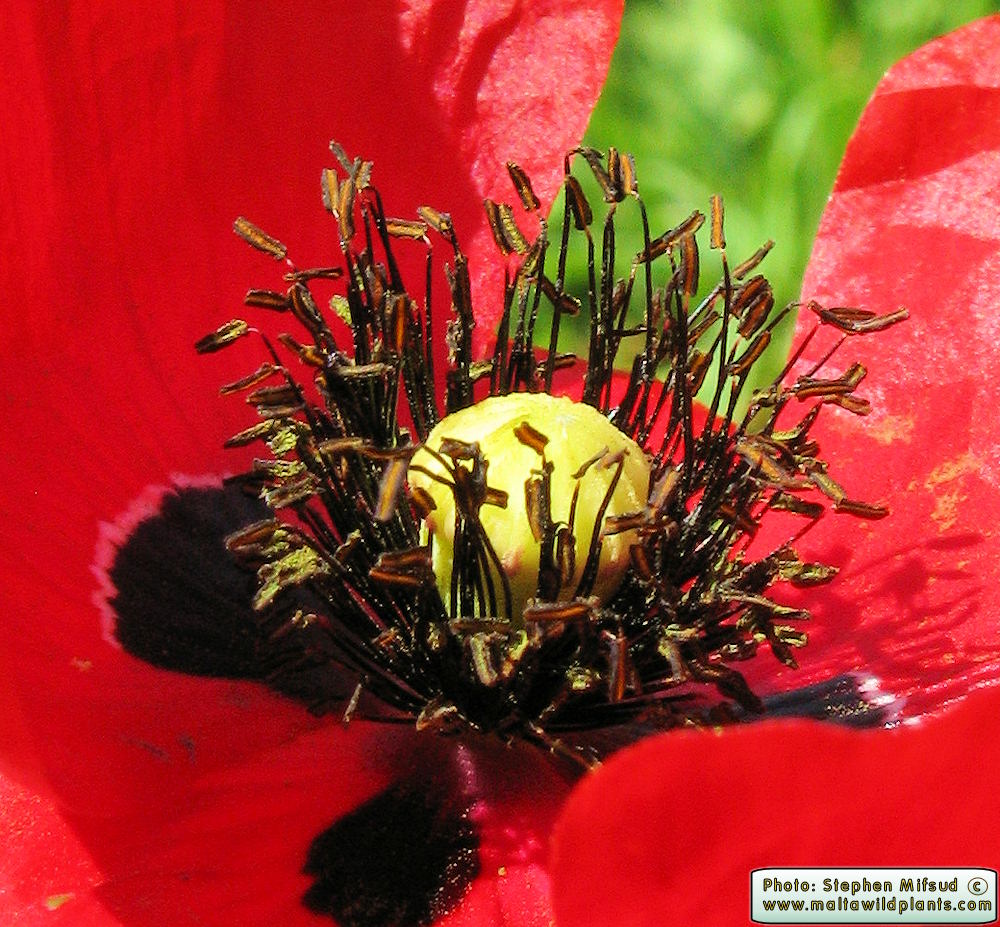
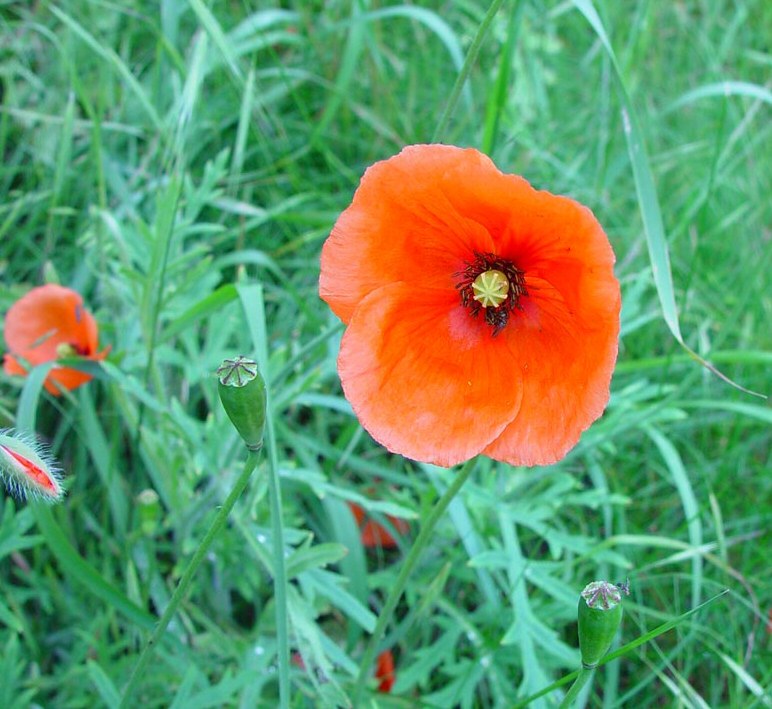
Flower is made up of 2 hairy sepals and 4 large, flimsy, red petals which usually have a black spot of various size at their base. The pot-shaped ovary is located at the centre of the flower and is surrounded by a cluster of black stamens.
Superior :
Ovary situated above the flower parts (the calyx, corolla, and androecium). In other words, these are attached below the ovary.
50-100+, Annular Cluster :
A cluster of stamens in the form of a ring, often encircling the gynoecium.
General Picture
Characteristic
Scent
Average Flower Size
Pollen Colour
Other Notes
Description
None or a faint one
Slight unpleasant scent, sometimes missed in the open air.
30-50mm
Grey or pale yellow
-
SEEDS:
Characteristic
No. Per Fruit
Shape
Size
Colour
Description
>200
Numerous tiny seeds which ther quantity varies according to the fruit size.
Reniform
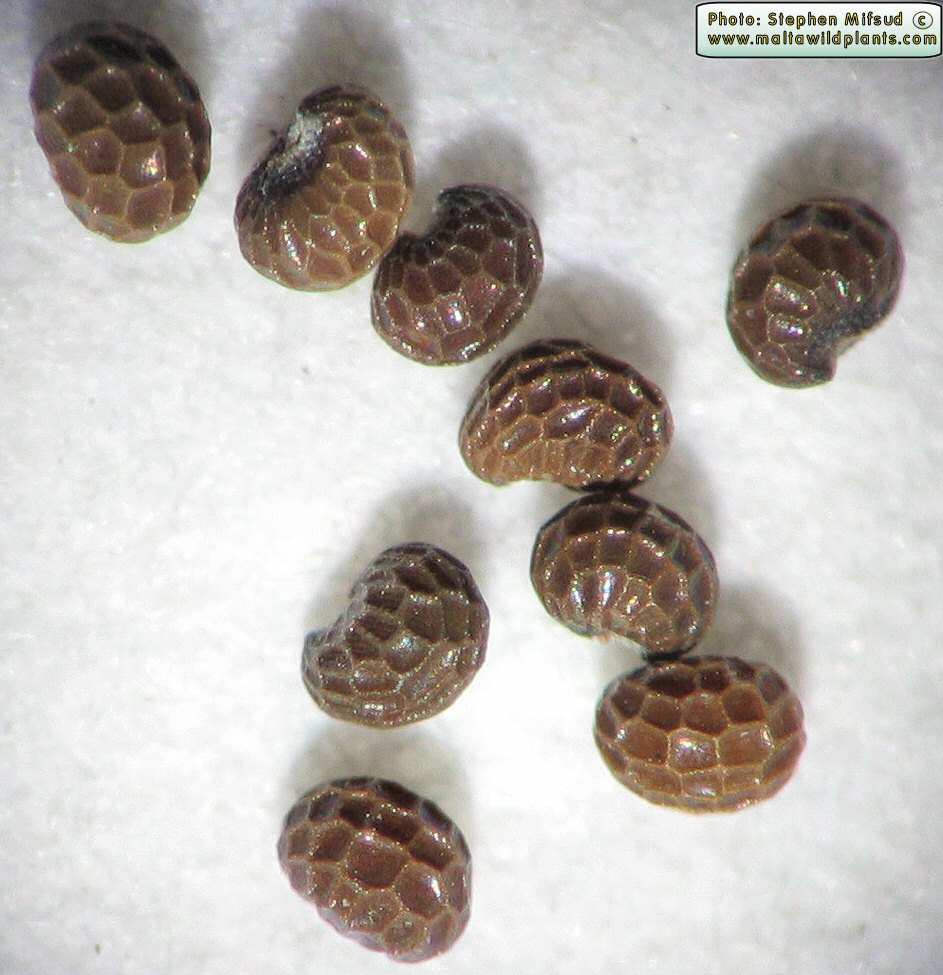
Small, kidney-shaped seeds; rather swollen.
Not more from 1mm
Dark greyish brown
General Picture
FRUIT AND OTHER BOTANICAL DATA:
Characteristic
Fruit Type
Colour of Fruit
Subterranean Parts
Other Notes
Description
Indehiscent Operculate Poricidal Capsule :
A fruit having the shape of a pot with a lid (operculum). It stores large number of seeds that escapes from small pores or slits in the lid (at the upper part of the fruit).
Light Green
(turns pale brown when completely dry).
Taproot :
A rooting system where there is the main descending root of a plant having a single dominant large structure from which a network of smaller and long roots emerge.
-
General Picture
Specifications & Description
Life Cycle:
Annual.
Habitat:
Fields, waysides, weedy waste-ground. Likes loamy soil rich in nutrients.
Frequency:
Very Common
Localities in Malta:
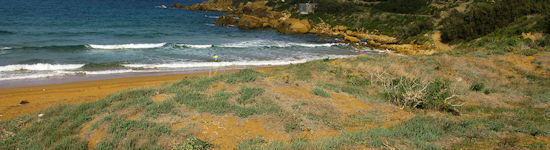
Common in many arable places throughout Malta and Gozo. Examples include waysides and lanes in Mistra, arable areas in Qormi, Siggiewi, Ghajn Tuffieha, Marsascala, Zabbar etc.
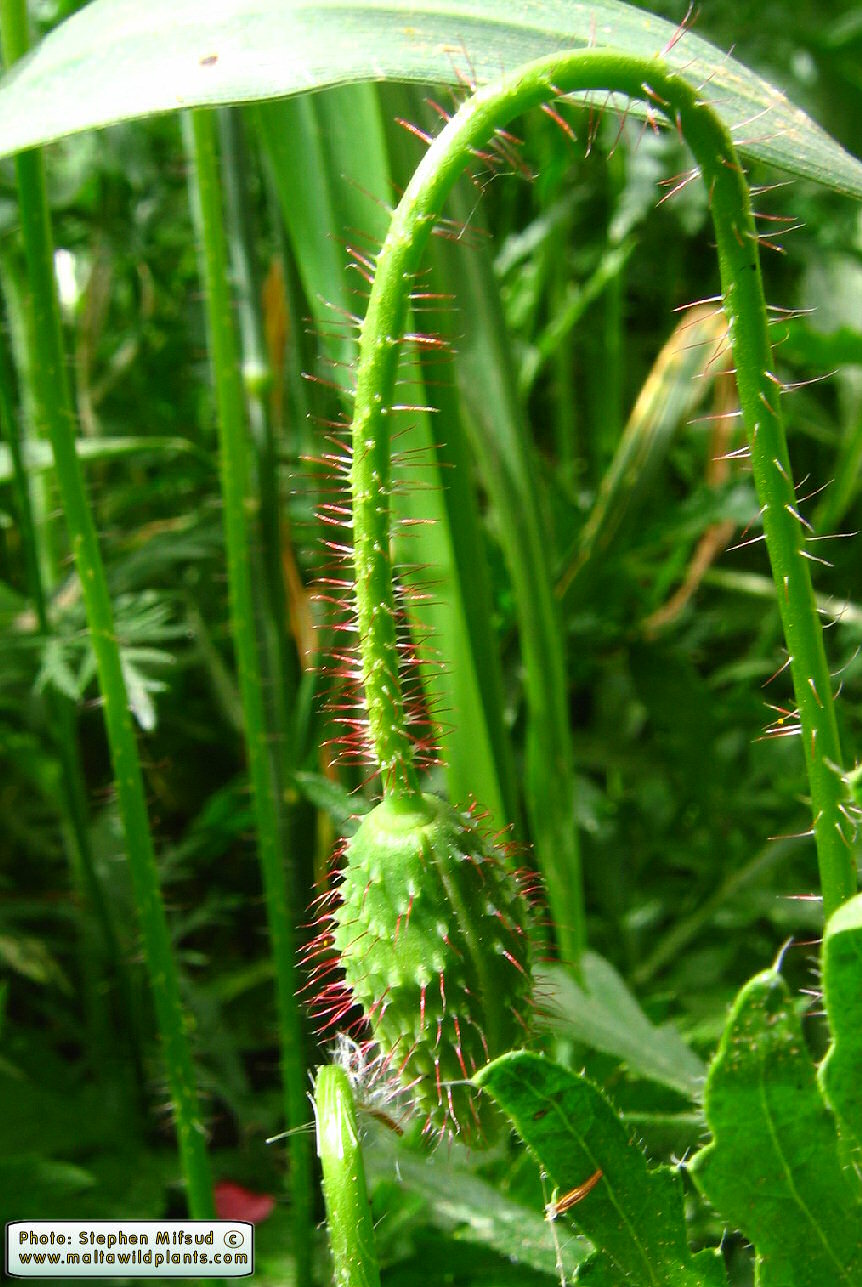
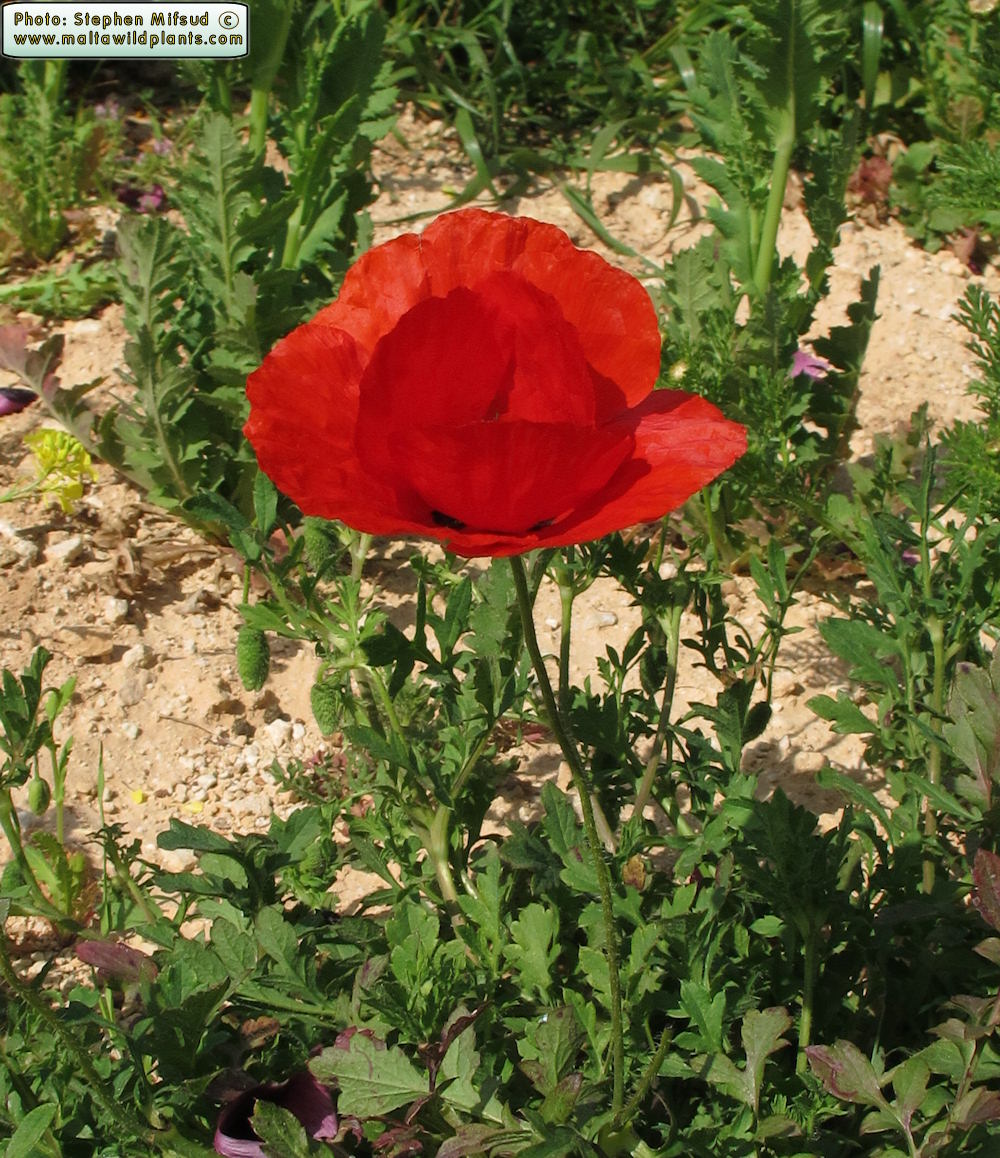
This is probably one of the most popular wild flowers in Europe, both for its beauty, and its WorldWar I memorial. The plant is an annual herb which readily germinates from seeds. The branching stems have fine white or purple-red hair all along, especially at the flowering part. The flower stems are quite slender, and holds the solitary and terminal flowers. The bud is hanged upside down and then assumes a normal position just before blossoming. The stems have a white milky sap.
Most of the leaves are more or less found at the middle or lower part of the stem, leaving the flowers more conspicuous. They are stalked, oppositely arranged on the stems, and are so deeply pinnately divided, that each pinna (leaf lobe) is independent. They also have a coarsely serrated outline. The leaf pinnae and serrated outline varies from plant to plant.
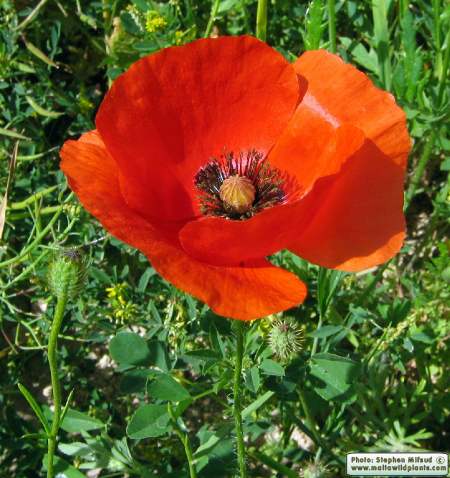
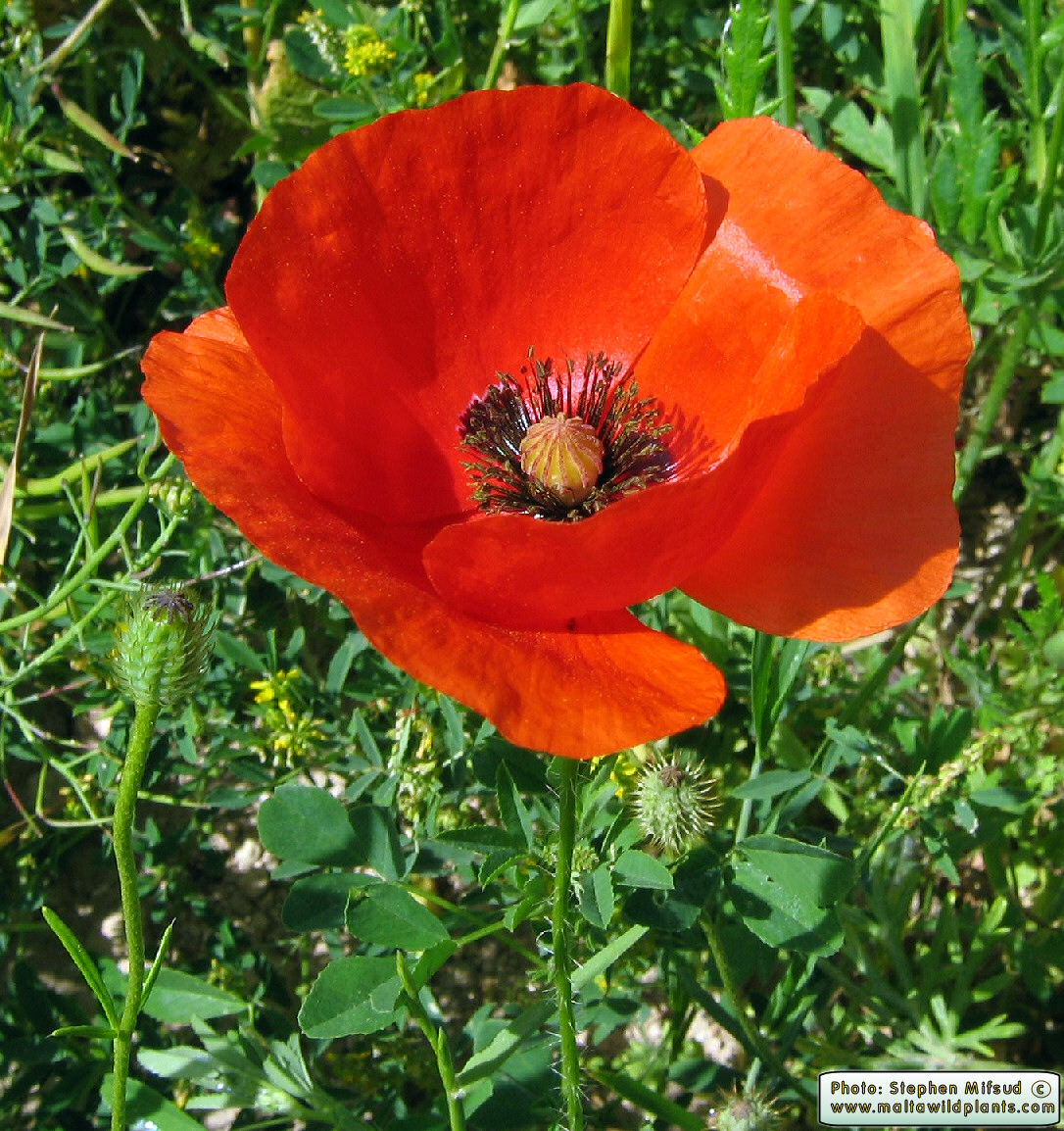
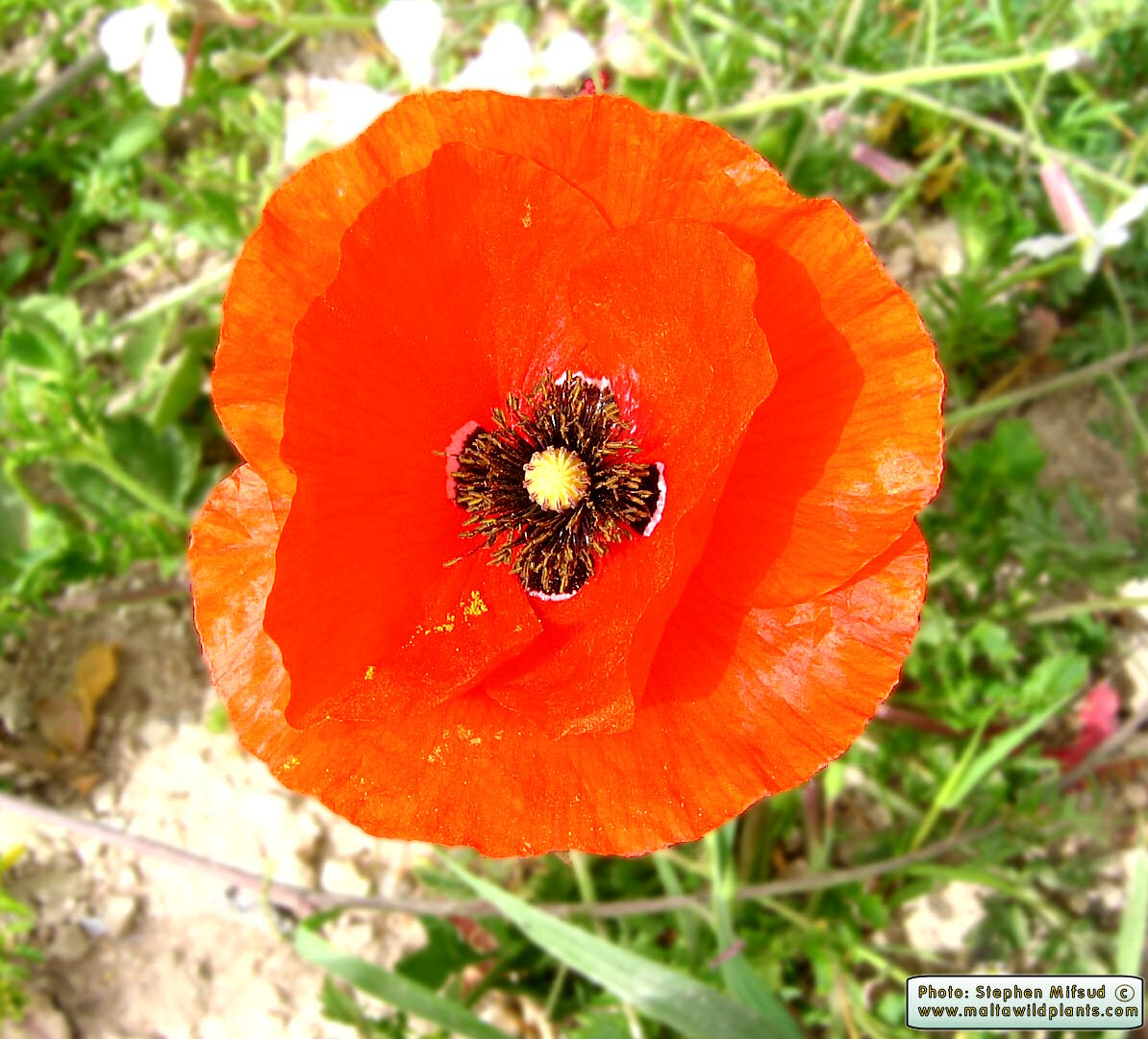
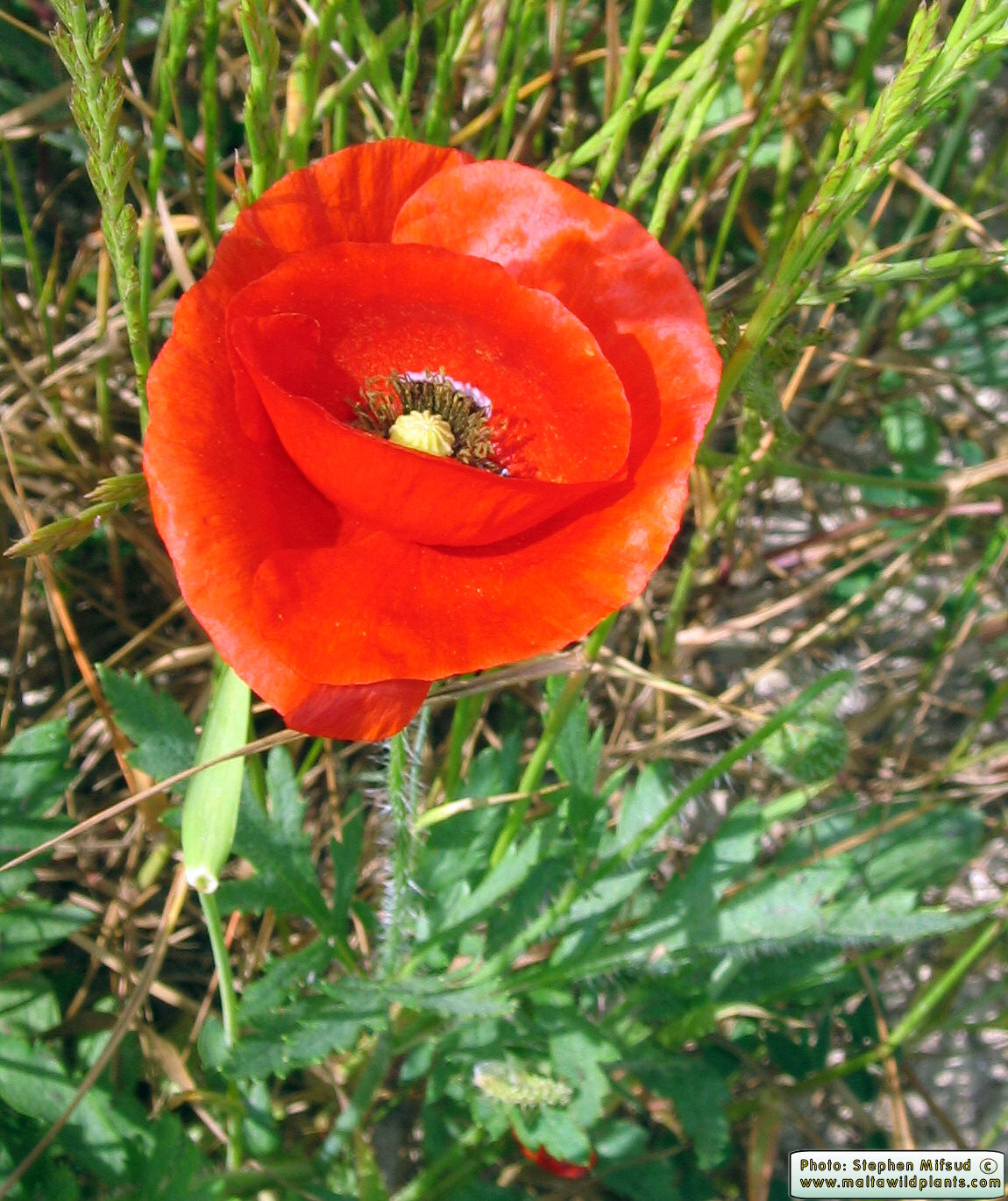
The flower consists of 2 hairy sepals and 4 bright red to red-crimson petals, often having a dark blob at the base. The blob also varies from plant to plant and some may even lack it. The petals are fragile (detaches easily from the flower) and their size vary considerably, but can form flowers of about 50mm in diameter. At the center there is a globular or pot-shaped gynoecium that is pale green in colour and has radiating darker stripes at the top. The stigma are found upon these stripes. Encircling the base of the gynoecium is a cluster of many black stamens with anthers that may be covered with pale yellow or grey pollen.
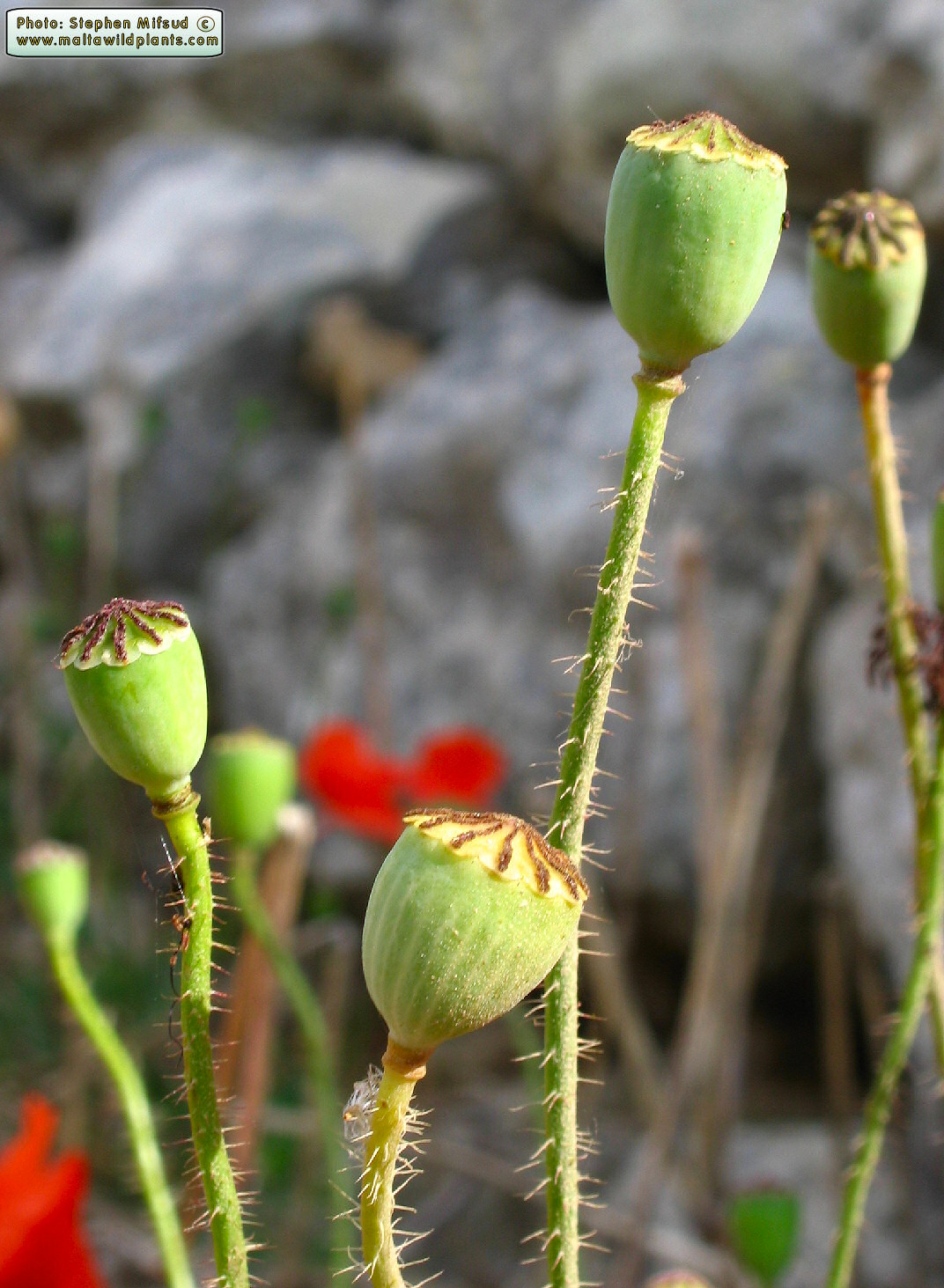
The fruit is a seed capsule which is pale green and turns yellowish or light brown when the seeds matures. The glabrous seed-capsule is pot-shaped with a flattened top (lid) that has a slightly serrated circumference. The dehiscent poricidal capsule is operculate (possess a lid structure). It does not split open, but instead, the tiny (1mm), brown, kidney shaped seeds escape from pores at the lid part of the capsule when wind causes it to sway.
Information and Details
Nativity:
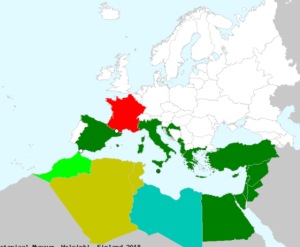
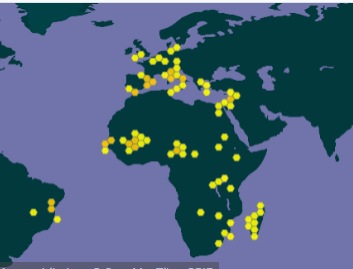
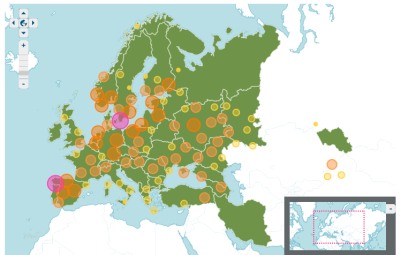
According to reference [WWW-26] this plant is native to the following regions and countries :
Prefers a well-drained sandy loam in a sunny position [1, 200]. Does not do well on wet clay soils but succeeds in most other soils [115]. Plants usualy self-sow freely when growing in suitable conditions so long as the soil surface is disturbed [238]. There are several named varieties selected for their ornamental value [200]. A polymorphic species, varying in leaf shape and flower colour [17]. When growing in cereal fields, poppies decrease the yields of nearby cereal plants [18, 20]. Members of this genus are rarely if ever troubled by browsing deer or rabbits [233].
Constituents
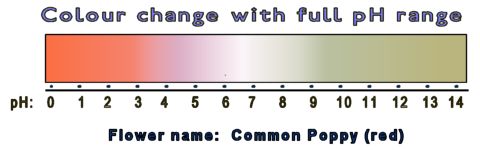
Papaver Rhoeas is very slightly narcotic. The chief constituent of the fresh petals is the red colouring matter, which consists of Rhoeadic and Papaveric acids. This colour is much darkened by alkalis. [WWW-03]
All parts of the plant contain the crystalline non-poisonous alkaloid Rhoeadine. The amount of active ingredients is very small and rather uncertain in quantity. There is great controversy as to the presence of Morphine. Also it has not been determined whether Meconic Acid, which is present in opium, is a constituent. [WWW-03]
substances resembling cream that have a soothing and moisturising effect when applied to the skin. [WWW-32]
Hypnotic
used to promote sleep where the effect is intermediate between that of a sedative (tranquilizer) and narcotic. [271]
Sedative
used for making drowsy or sooth a patient, but not strong enough to induce sleep [271]
The flowers of corn poppy have a long history of medicinal usage, especially for ailments in the elderly and children [244, 254]. Chiefly employed as a mild pain reliever and as a treatment for irritable coughs, it also helps to reduce nervous over-activity [254]. Unlike the related opium poppy (P. somniferum) it is non-addictive [244]. However, the plant does contain alkaloids, which are still under investigation, and so should only be used under the supervision of a qualified herbalist [244].
The flowers and petals are anodyne, emollient, emmenagogue, expectorant, hypnotic, slightly narcotic and sedative [4, 7, 9, 13, 46, 53]. An infusion is taken internally in the treatment of bronchial complaints and coughs, insomnia, poor digestion, nervous digestive disorders and minor painful conditions [9, 238]. The flowers are also used in the treatment of jaundice [218]. The petals are harvested as the flowers open and are dried for later use [238]. They should be collected on a dry day and can be dried or made into a syrup [4].
The latex in the seed-pods is narcotic and slightly sedative [240]. It can be used in very small quantities, and under expert supervision, as a sleep-inducing drug [7].
The leaves and seeds are tonic [240]. They are useful in the treatment of low fevers [240].
Artemis Herbs Ltd makes a Tincture of Field Poppy flower which gives the following info and uses:
This tincture is made from flowers gathered in Lebanon where the field poppy grows abundantly. It produces a beautiful bright red tincture which is an ideal remedy for nervous over-activity and insomnia. It has soothing, anti-catarrhal properties, good in irritable coughs, croup, bronchitis and pleurisy. Suitable for children. Do not exceed recommended dosage. [WWW-10]
Edible Uses:
Seeds - raw or cooked. Much used as a flavouring in cakes, bread, fruit salads etc. [4, 5, 21, 183], it imparts a very nice nutty flavour [KF]. The seeds are rather small, but they are contained in fairly large seed pods and so are easy to harvest. The seeds are perfectly safe to eat, containing none of the alkaloids associated with other parts of the plant [238]. An edible oil is obtained from the seeds [2, 4]. This is said to be an excellent substitute for olive oil [4, 183], it can be used in salad dressings or for cooking. [2]
Leaves - raw or cooked [7, 52]. Used like spinach or as a flavouring in soups and salads [132, 183]. The leaves should not be used after the flower buds have formed [7]. Some caution is advised, see the notes above on toxicity.
Flower - A syrup can be prepared from the scarlet flower petals, it is used in soups, gruels etc. [4, 183]. In the past it was also used as a substitute for tea. A red dye from the petals is used as a food flavouring, especially in wine [183].
Other Uses
A red dye is obtained from the flowers [7, 46, 61], though it is very fugitive [4]. A syrup made from the petals has been used as a colouring matter for old inks [4, 13, 89].
The red petals are used to add colour to pot-pourri [238].
Misc:
Origin of the Poppy is probably Asia and Far East. [277]
Flour made from corn that is badly cleaned from poppy (esp if high content of poppy seeds is present) will have a yellowish colour and deteriorates quickly.[277]
Because of improved methods of cleaning grains and crops from weeds, the field poppy is slowly disappearing from the fields, despite that one plant can produce 50,000 seeds. [277]
There are several varieties, differing in the size of the lobes of the leaves and in the character of the fruit, which may be nearly cylindrical or globular, smooth or furnished with stiff hairs. The intensity of the scarlet colouring of the petals also varies [WWW-03]
The poppy was established as a memorial flower of the First World War by a Georgia woman named Moina Michael, and was accepted by the American Legion as its official memorial flower in 1921. It has been used by the American Legion and similar organizations around the world in honor and remembrance of veterans and active miltary service personnel from every war up to the present. [AJ]
Personal Observations:
There seems to be genetical variety in the blobs present in the base of the petals. The following 4 different flowers have been observed:
The most common are (1) and (4) from the above list. There is a tendency that the flowers with blobs are on average larger and contains numerous and more pronounced stamens from those without blobs. [SM].
Another variations is the colour of the stalk and bud bristles. In some species the bristles are just white, while in others they are purple-red[SM].
Photo Gallery
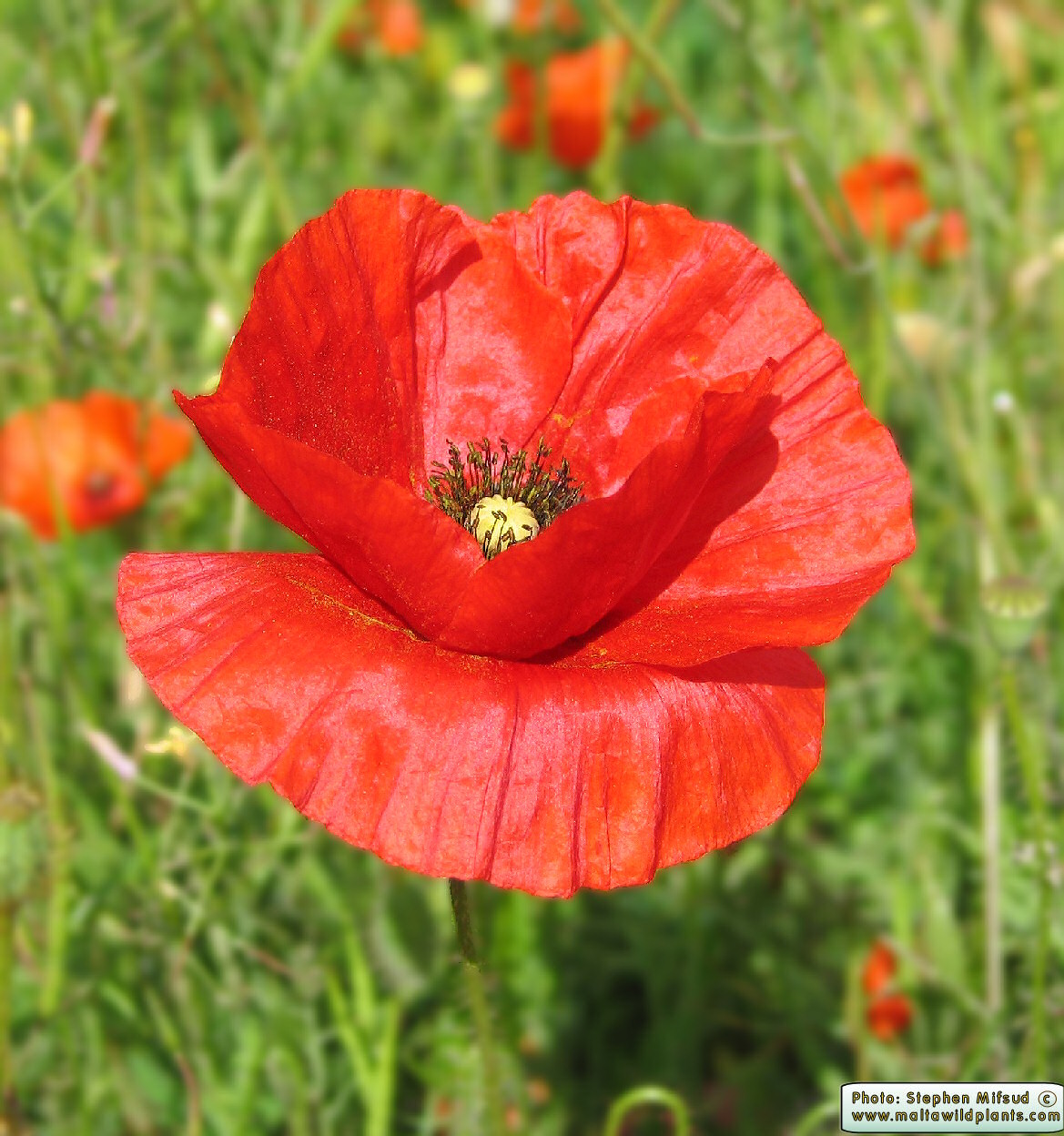
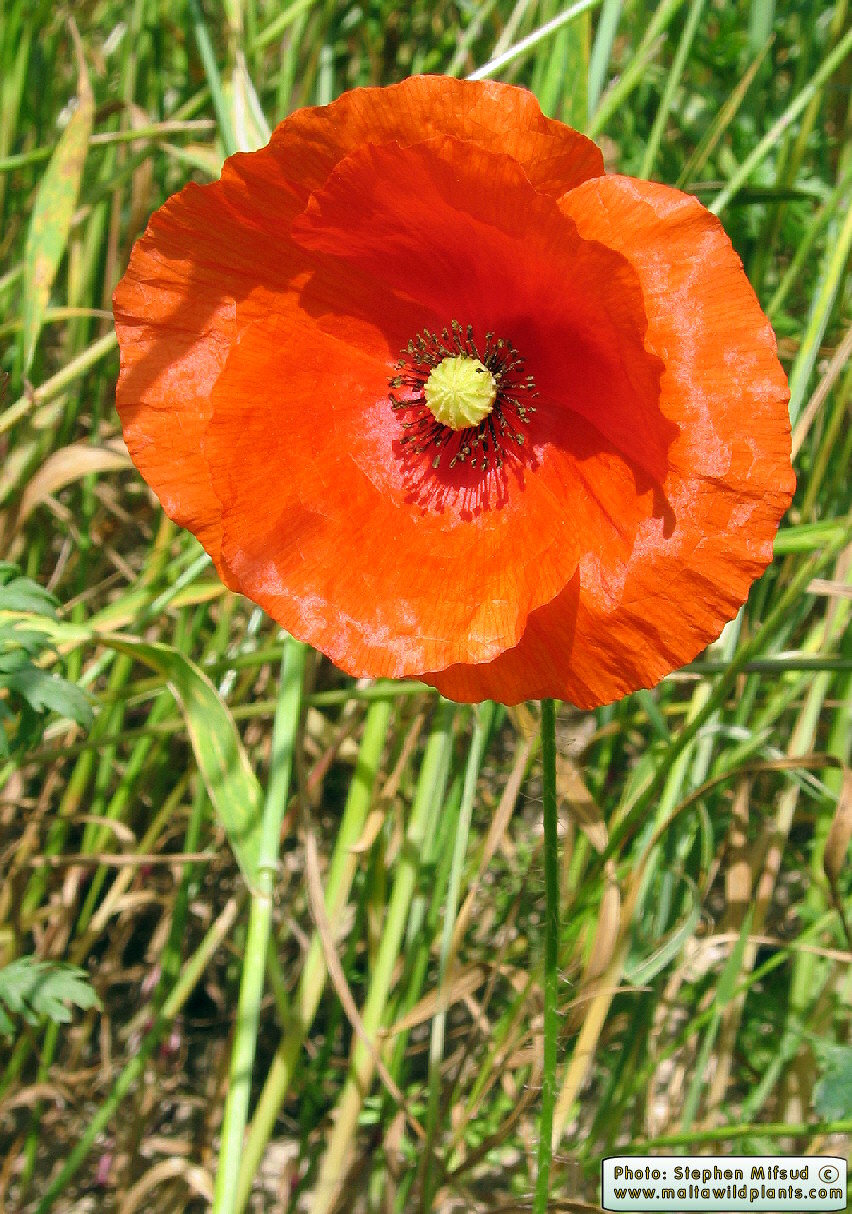
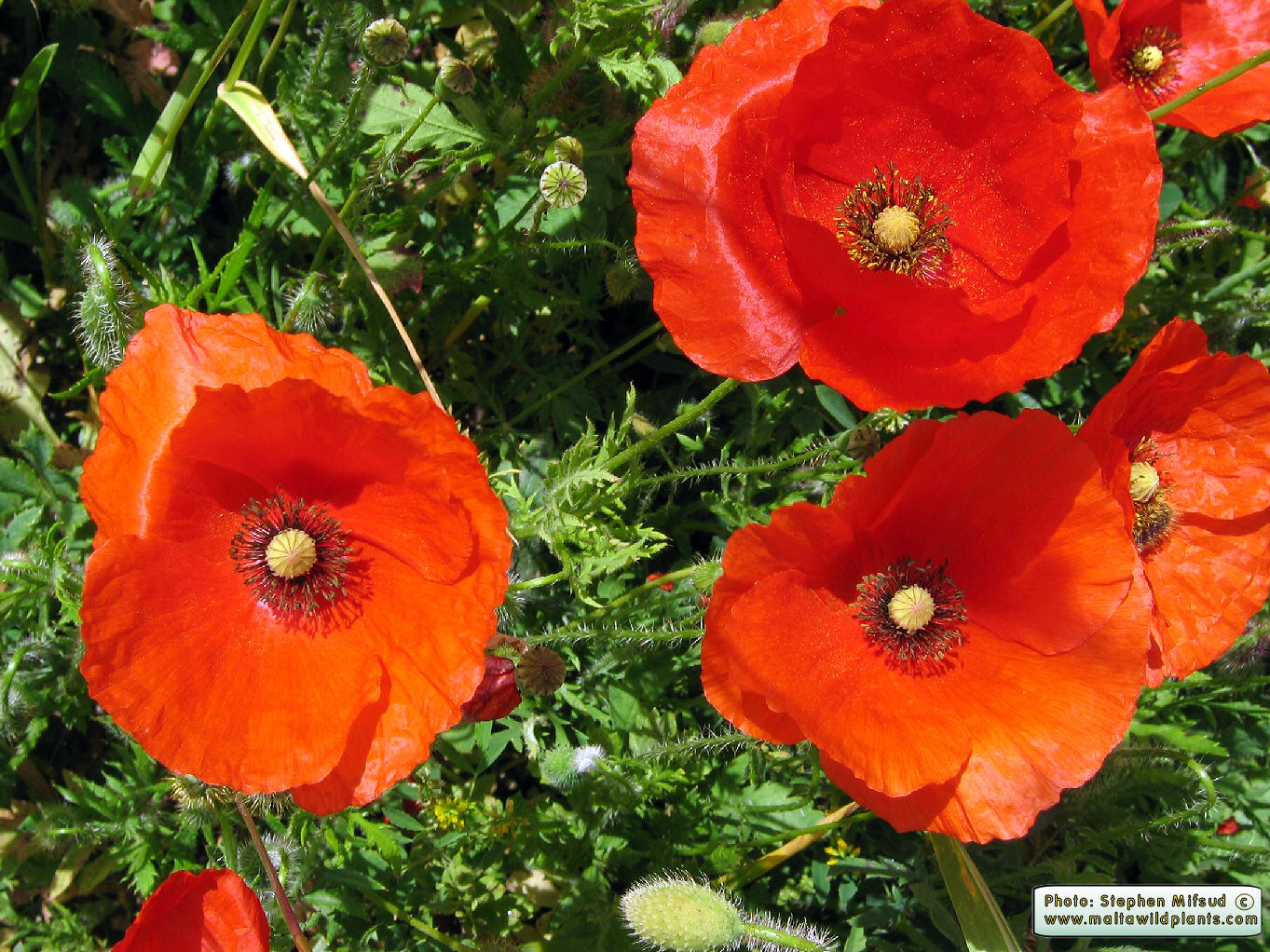
IMAGE: PPVRH-01 Photo of the flower which is made up by 4 large petals.
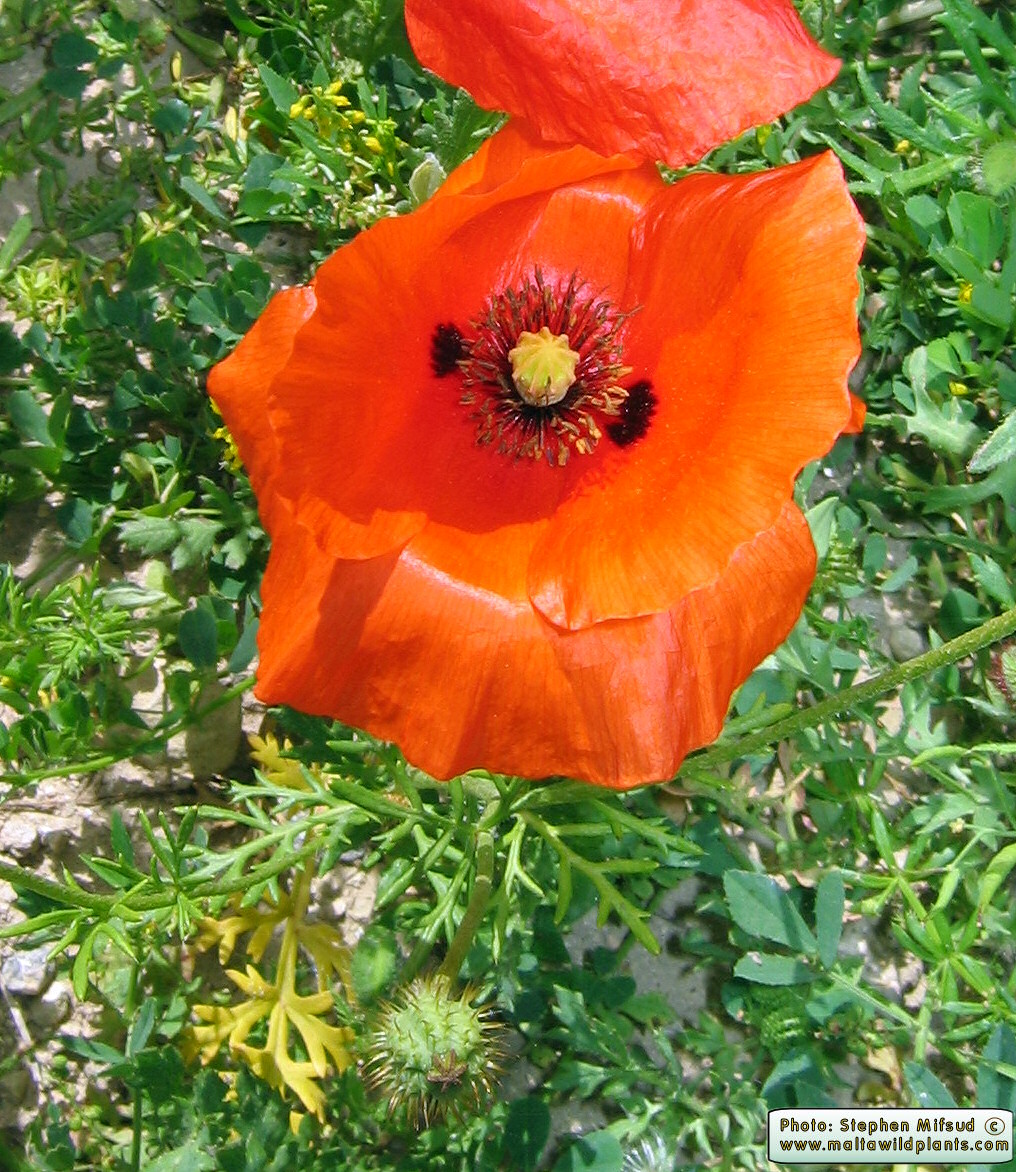
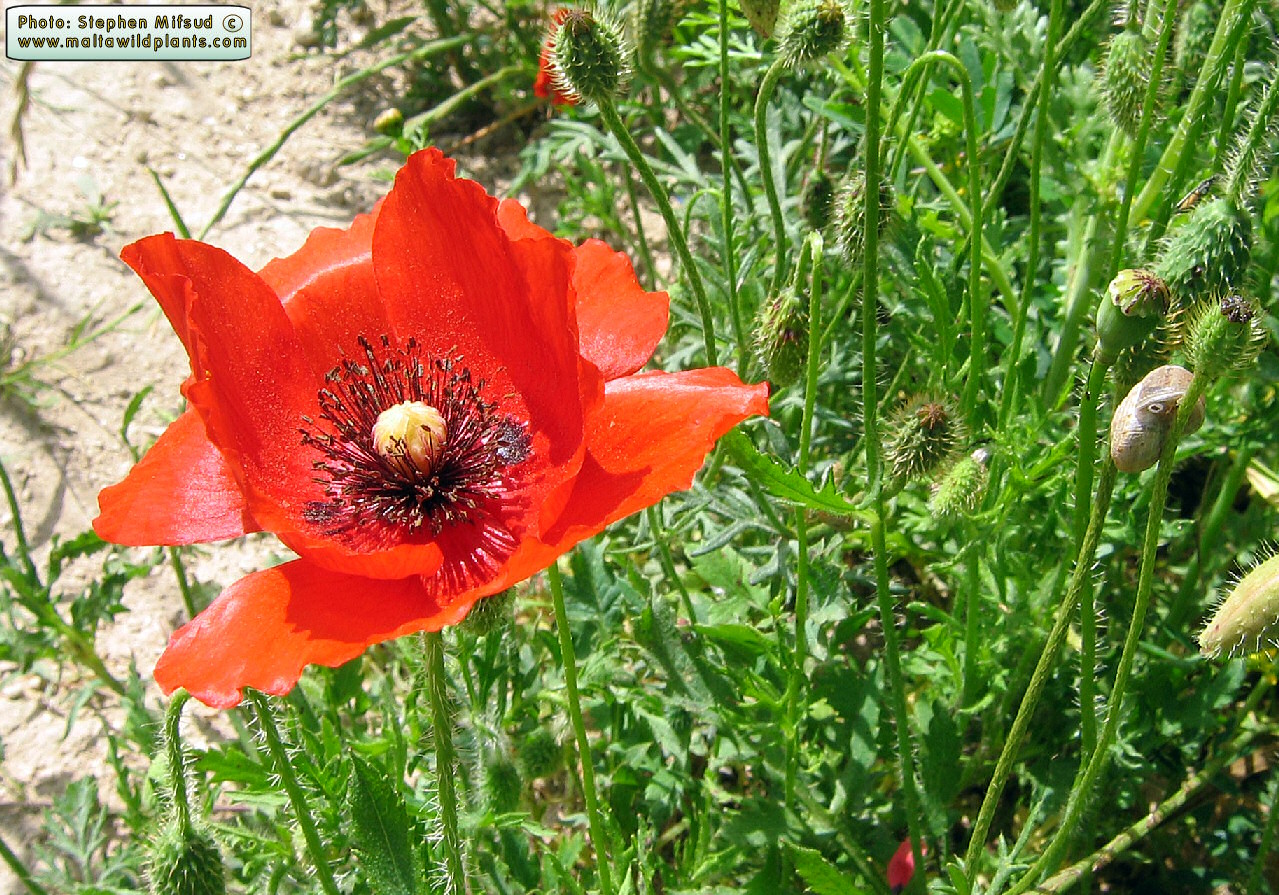
IMAGE: PPVRH-02 Photo of flower with its conspicuous cluster of stamens around a pot-shaped ovary.
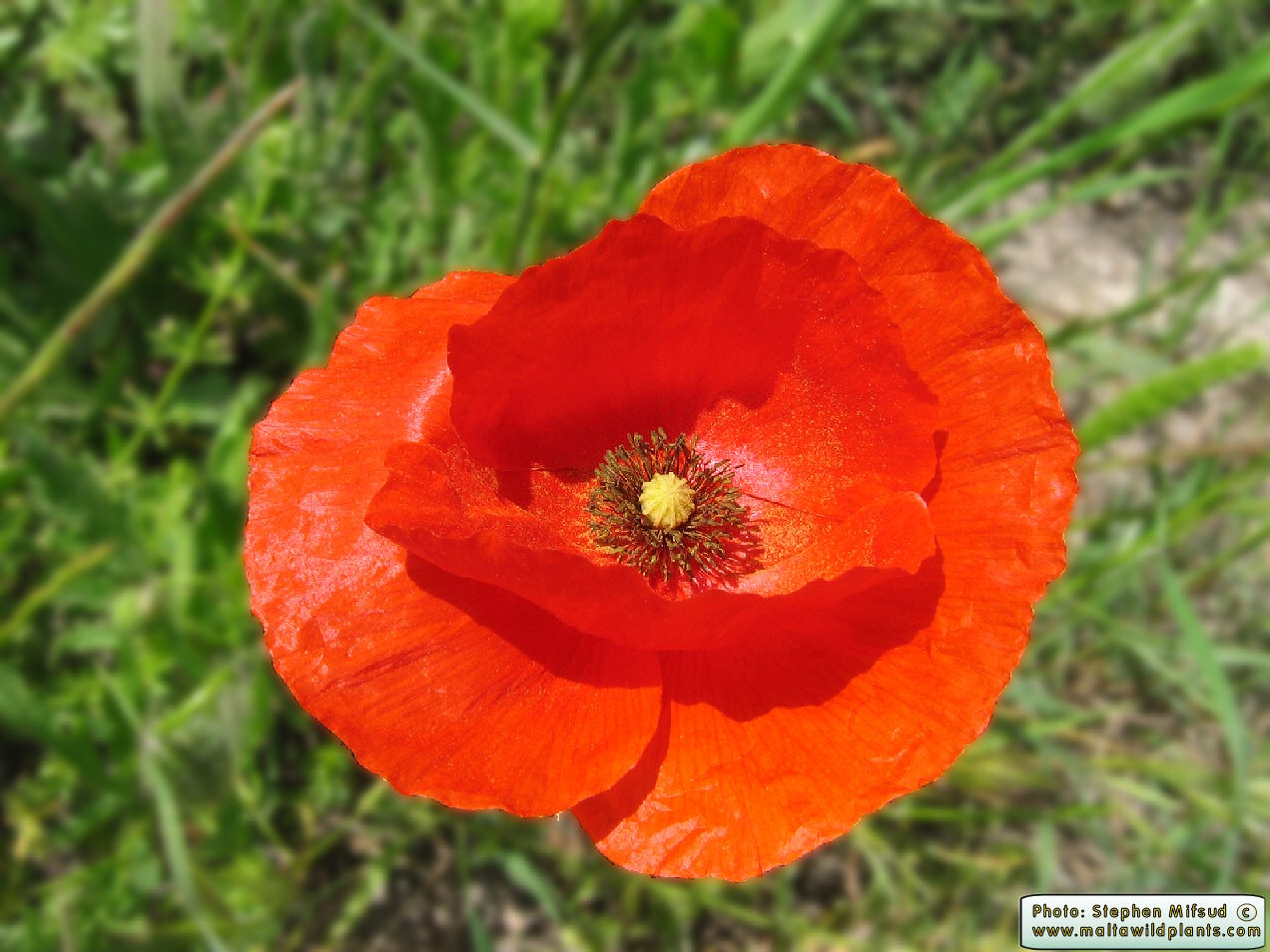
IMAGE: PPVRH-03 Photo of the cup-shaped flower and plenty of stamens with pale yellow pollen.
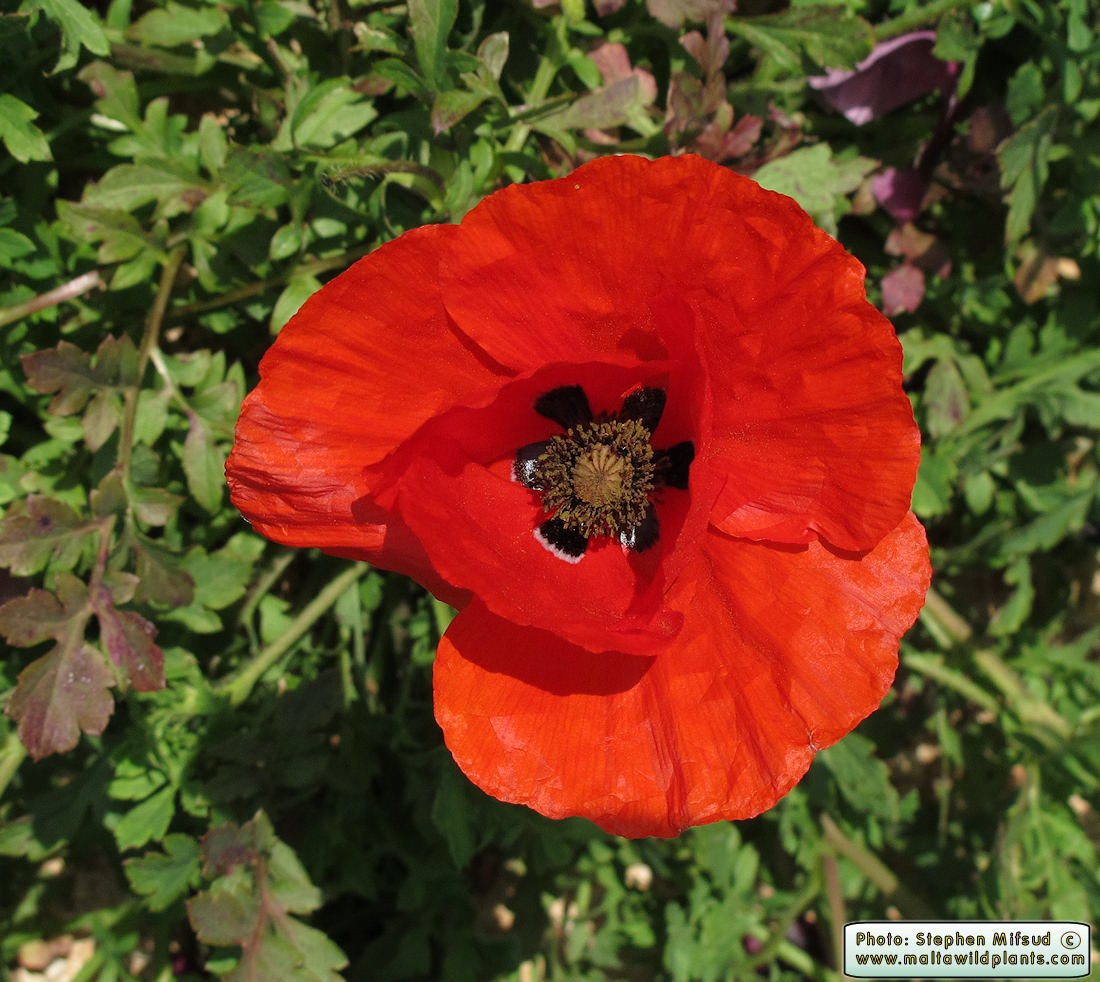
IMAGE: PPVRH-04 Photo of a typical flower with a black large blob at the base of each petal. There is variety in this black spot between different plants of the same species. This one have 4 prominent black blobs with a white outer edge.
IMAGE: PPVRH-05 Photo of flower, this one lacking completely the black blobs.
IMAGE: PPVRH-06 Photo of flower which do not have any blobs. Such flowers seem to have less conspicuous stamens and a smaller ovary, perhaps by optical illusion due to the lack of the black blobs.
IMAGE: PPVRH-07 Photo of flower which has four blobs that lack the white outer border.
IMAGE: PPVRH-08 Flower which interestingly have only two small blobs instead of four. Two petals lack the blob.
IMAGE: PPVRH-09 When the petals are firm and erect, the flower takes a shape of a red cup.
IMAGE: PPVRH-10 Photo of flower that has 2 spots and conspicuous cluster of black stamens.
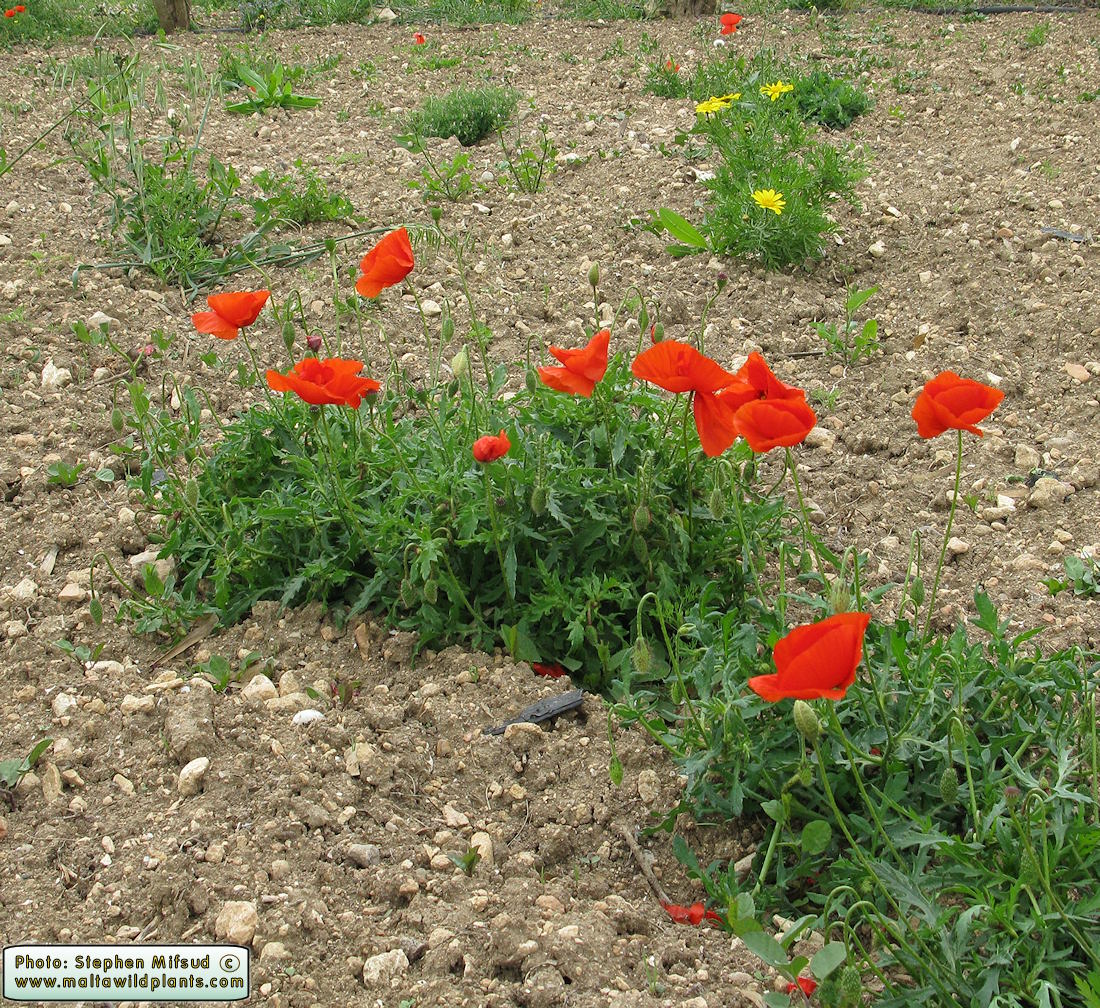
IMAGE: PPVRH-11 Photo of 3 flowers growing beside a field of wheat.
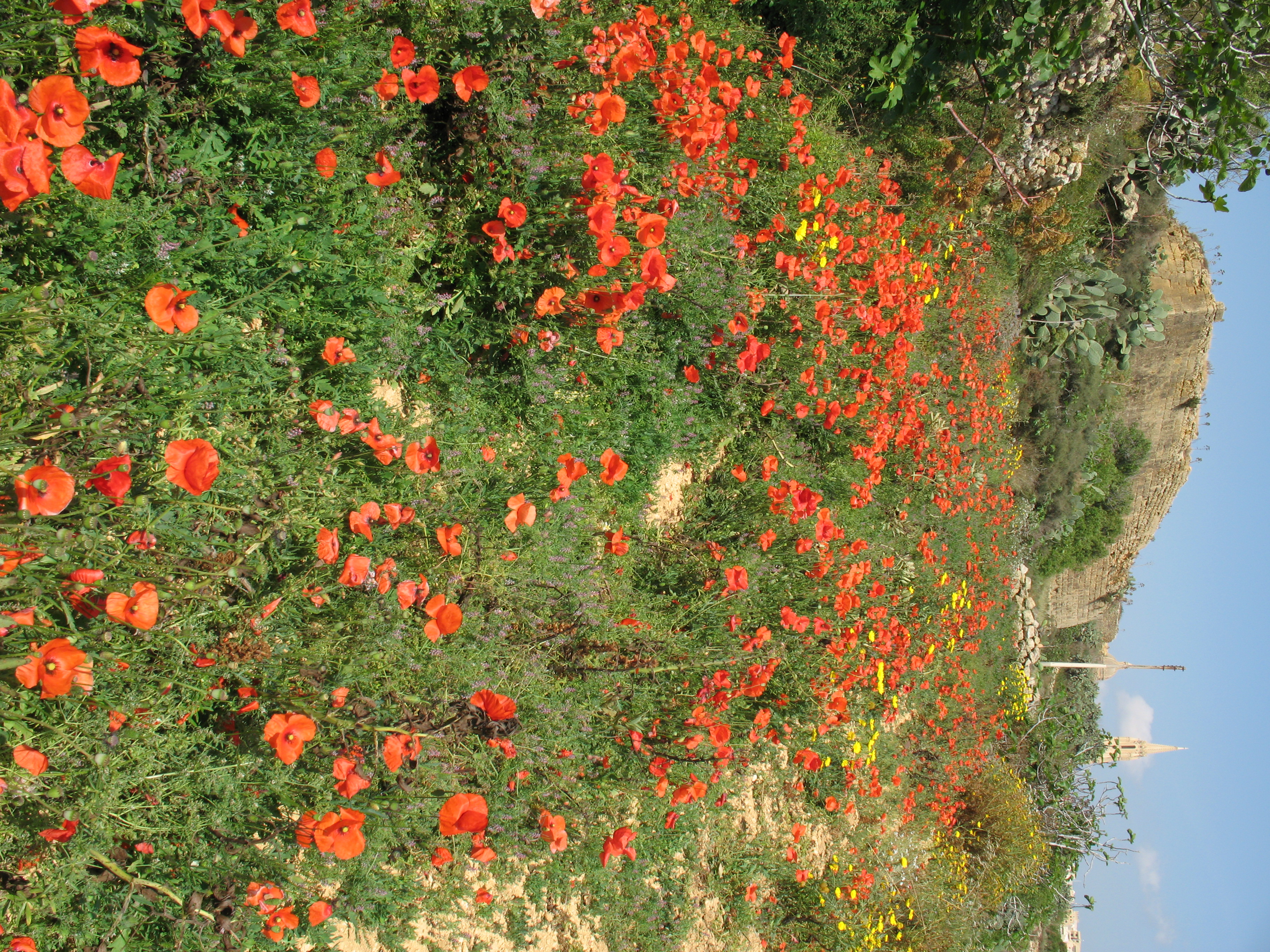
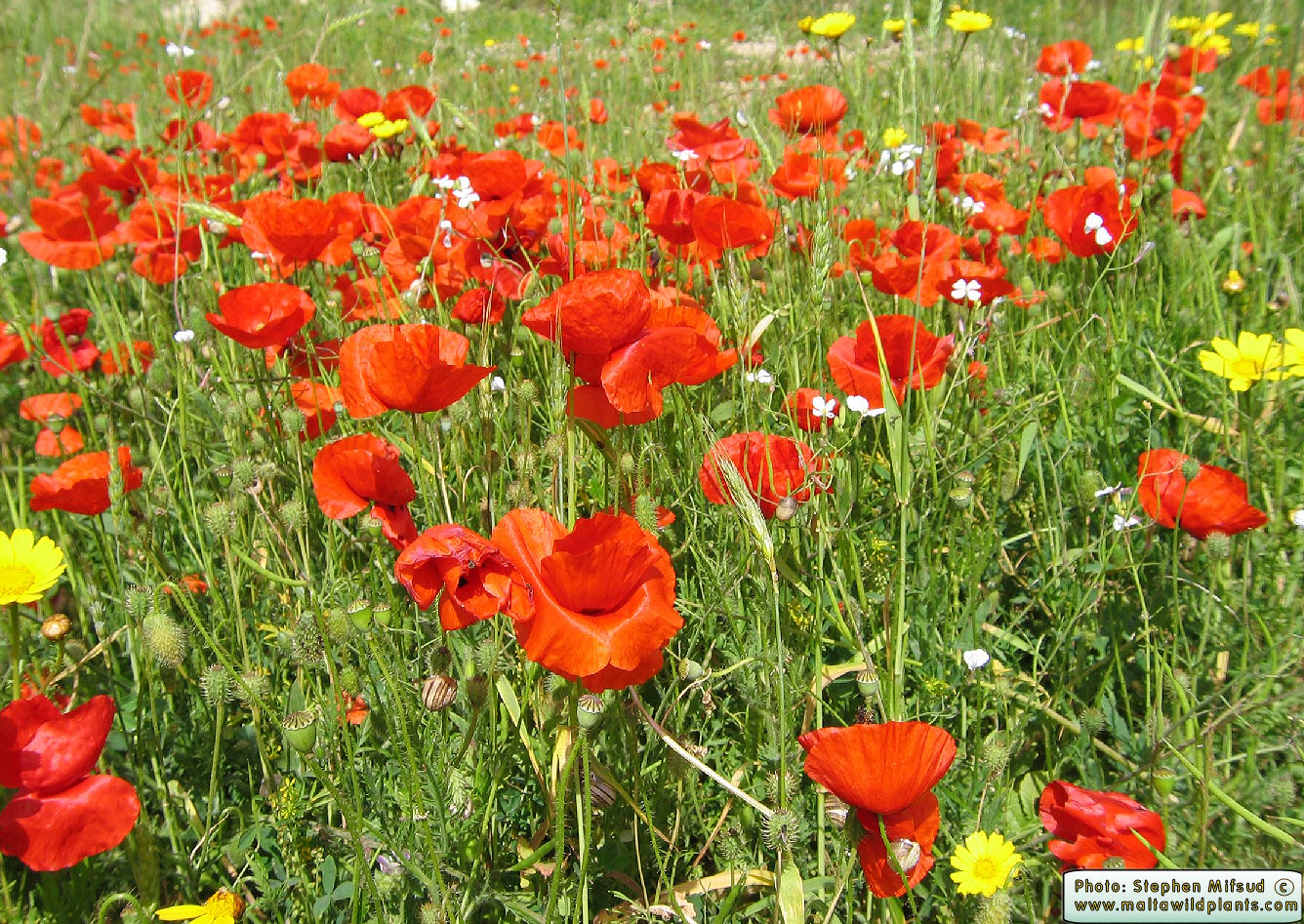
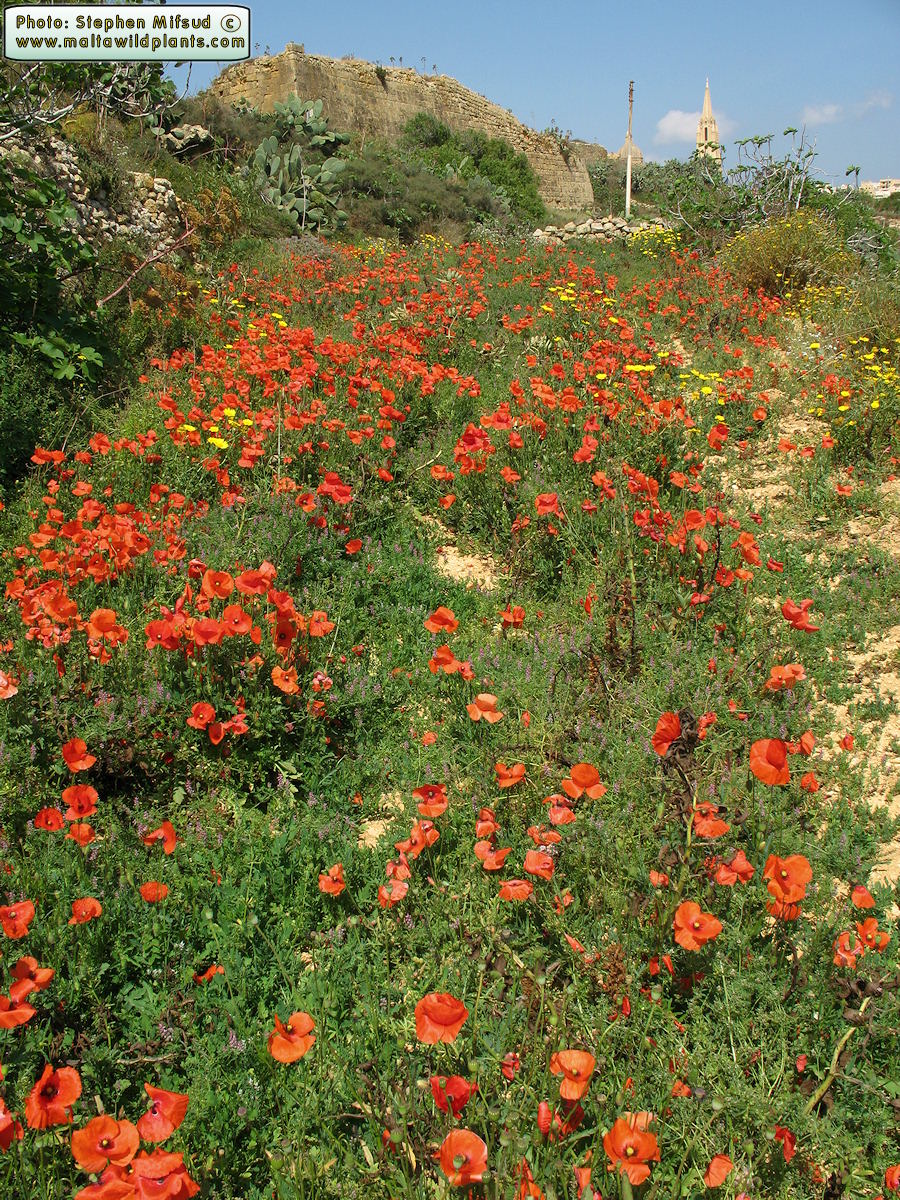
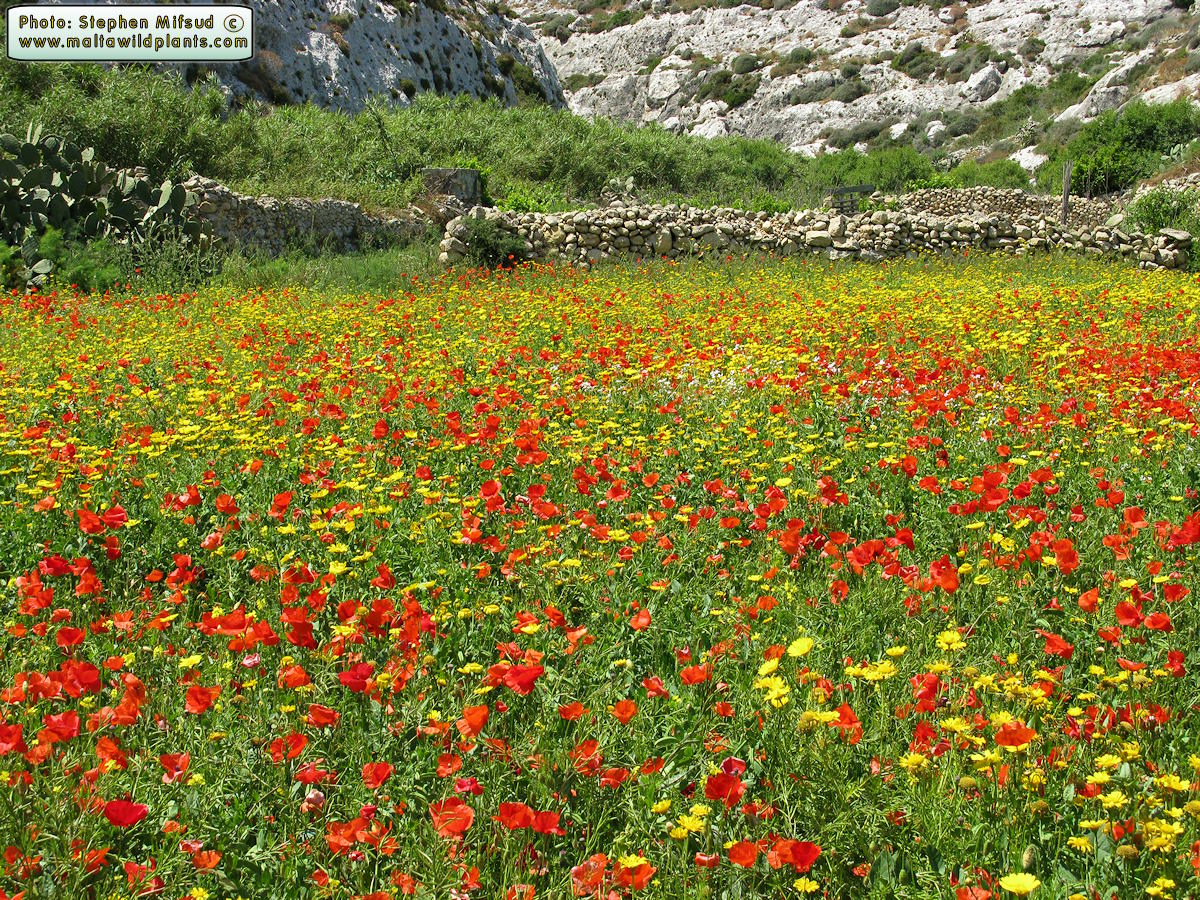
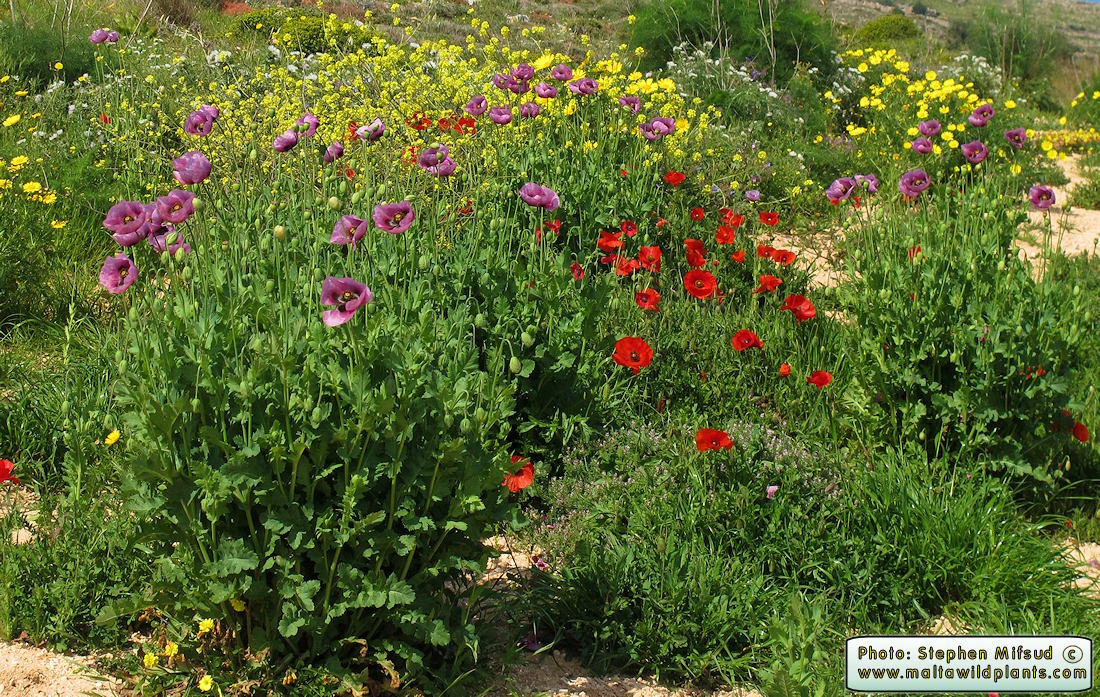
IMAGE: PPVRH-12 Photo of numerous poppy flowers taken during the peak season of blooming, hence in early April.
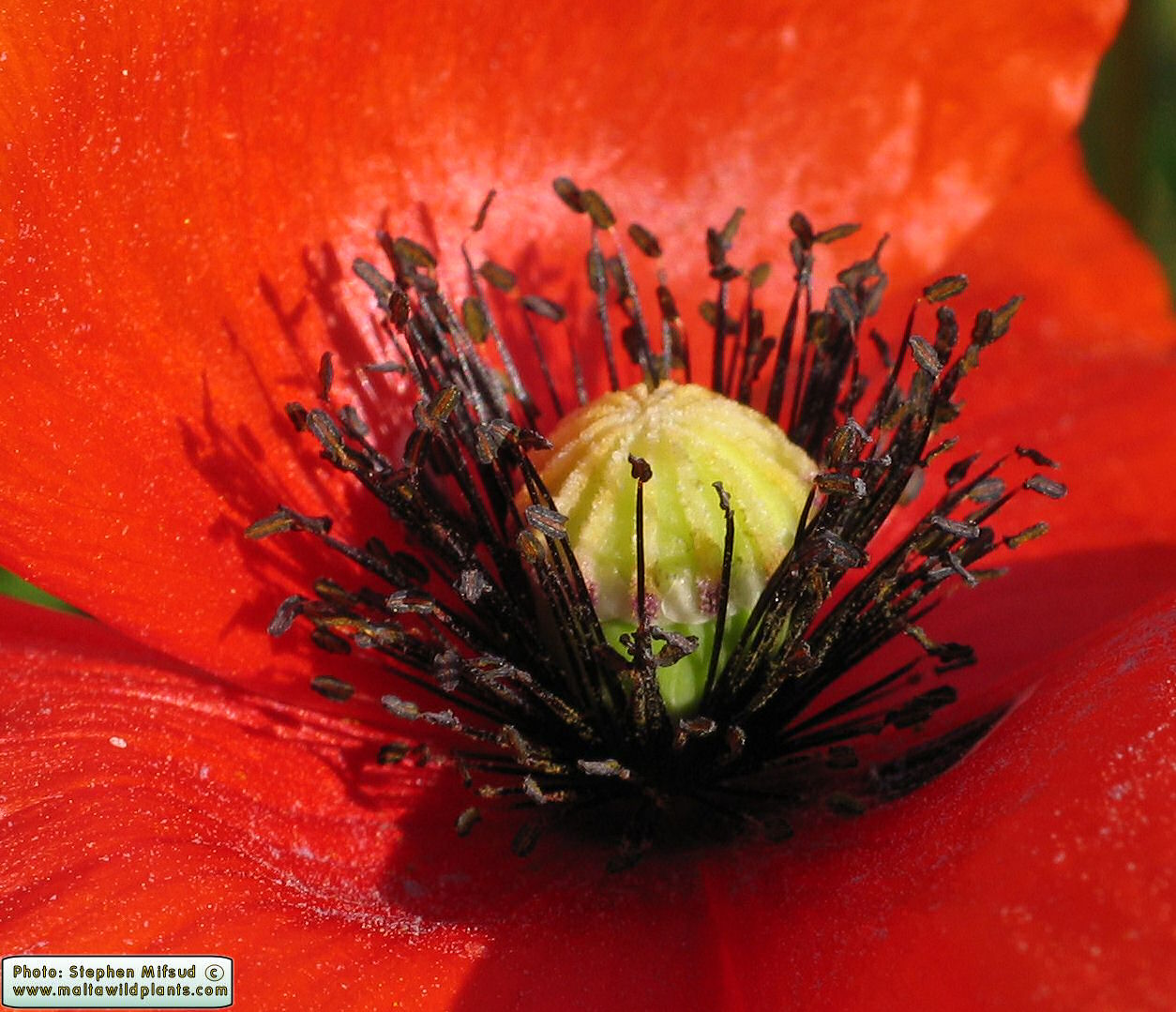
IMAGE: PPVRH-13 Close up photo of the pot-shaped ovary and the radially emerging cluster of stamens consisting of black, erect, thin filaments and light brown or grey anthers.
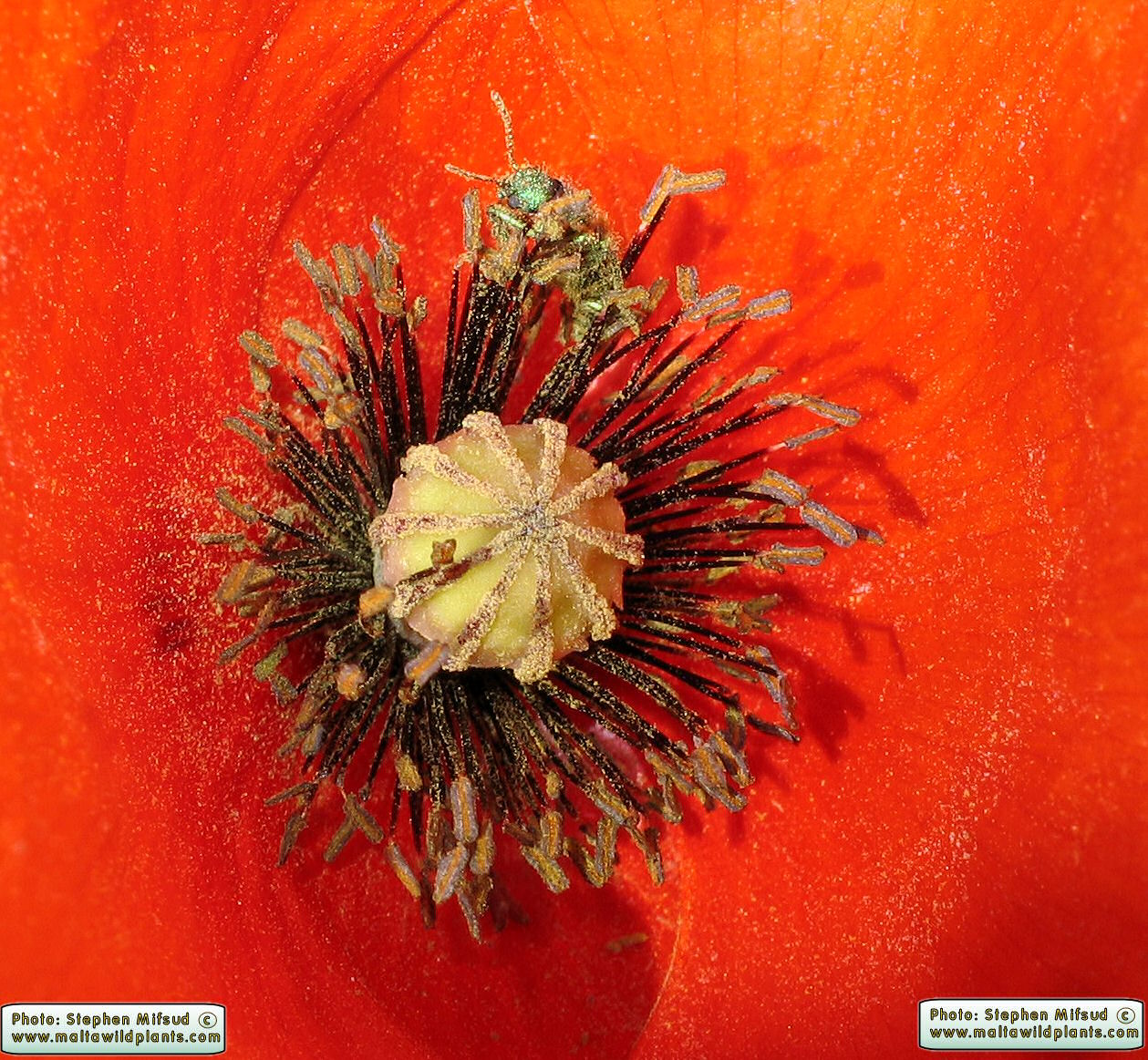
IMAGE: PPVRH-14 Close up photo of ovary and the cluster of stamens. The anthers are more black and not much pollen is present, indicating that the flower is young and the anthers are not yet ripe.
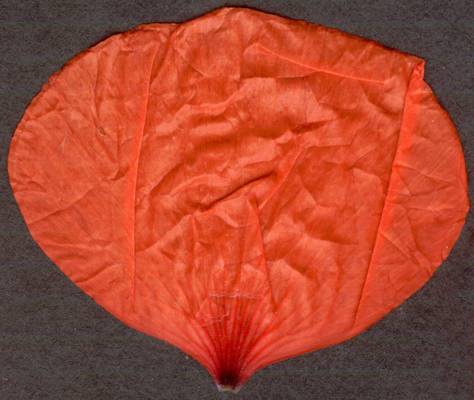
IMAGE: PPVRH-15 Scanned image of petal. Roundish or egg-shaped, crenated outline and often have frayed velvety texture.
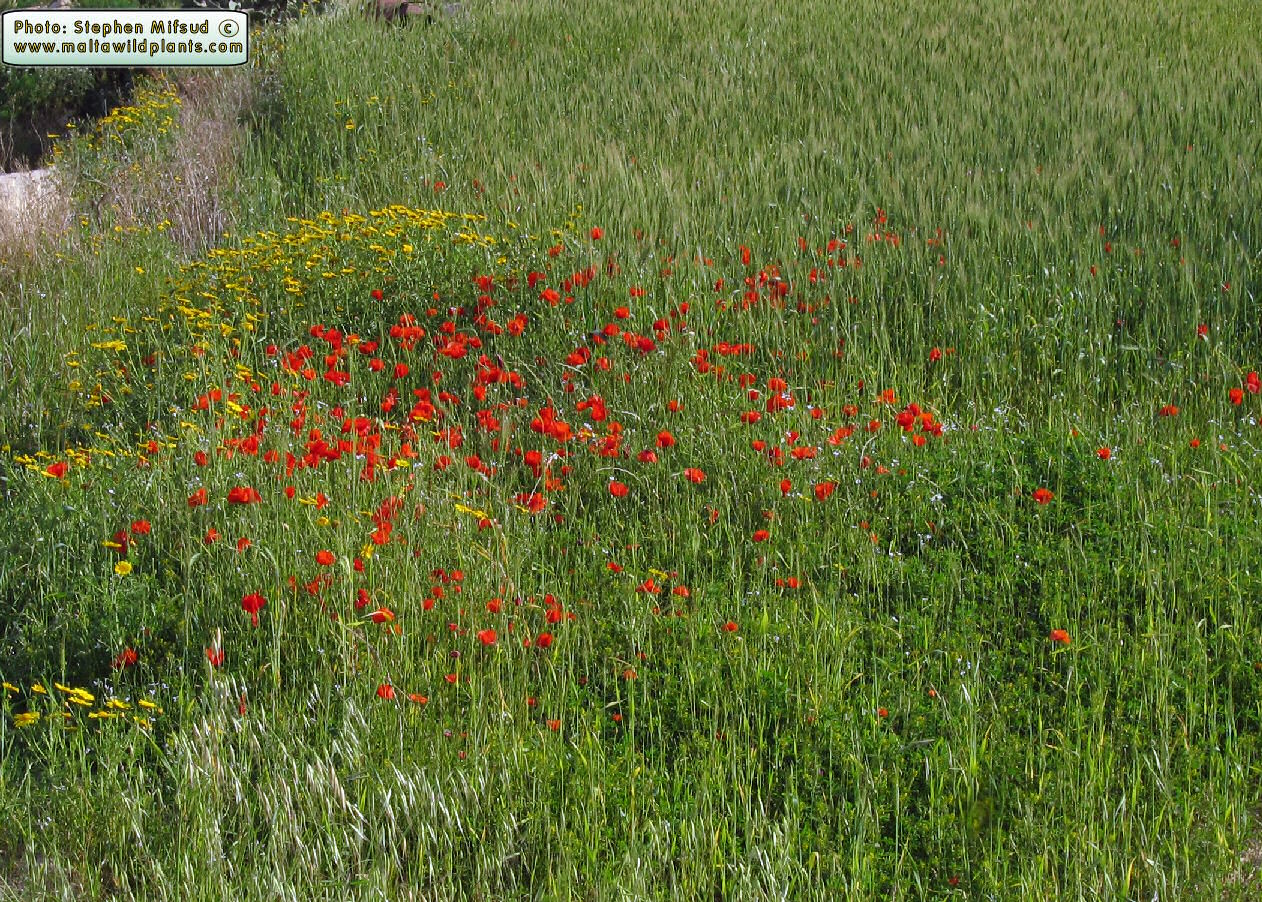
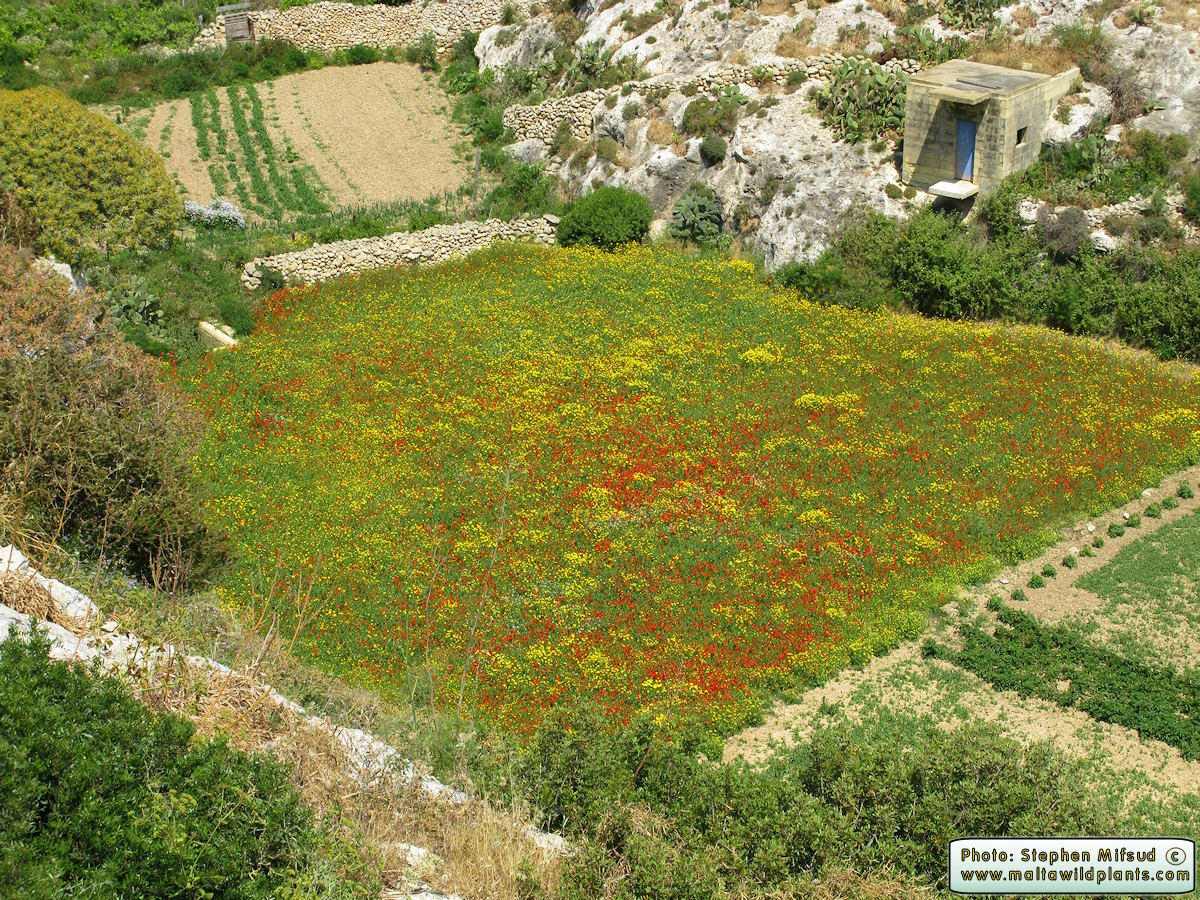
IMAGE: PPVRH-16 Photo of an area of poppies growing in a wheat field.
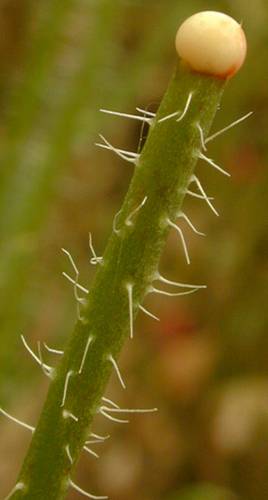
IMAGE: PPVRH-17 Close up photo of bud, covered with numerous bristles. It is found upside down and gets upright just before blooming. Some species have bristles which are red, like in this photo, while in others they are white.
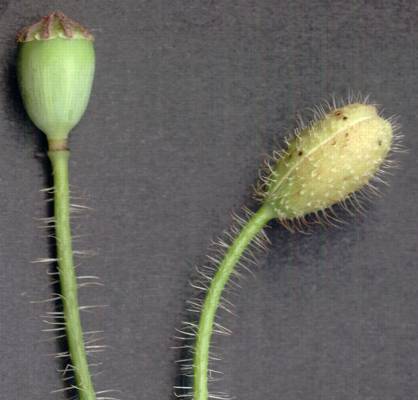
IMAGE: PPVRH-18 Scanned image of Bud (right side) and fruit capsule. The former have bristles while the latter is glabrous.
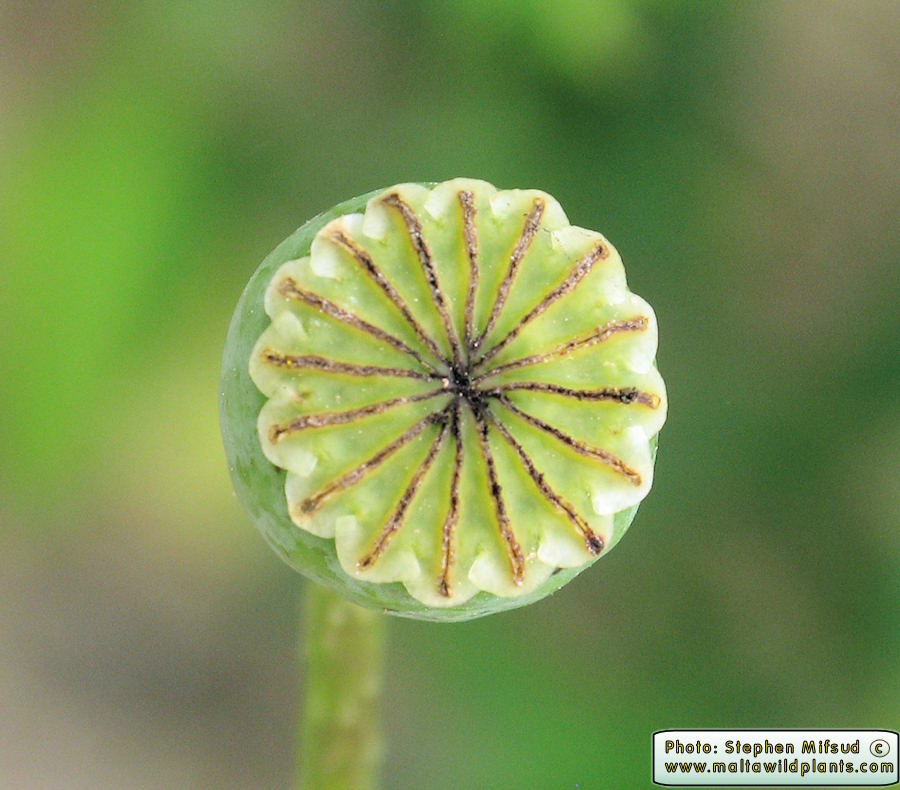
IMAGE: PPVRH-19 Close up of the operculated fruit capsule. When the tiny seeds are ripe, they escape from small slits at the top part of the capsule.
IMAGE: PPVRH-20 Scanned image of leaf. Pinnately lobed and sub-lobed.
IMAGE: PPVRH-21 Magnified image of leaf lobes.
IMAGE: PPVRH-22 Oozing cream-like sap from a freshly dissected stalk.

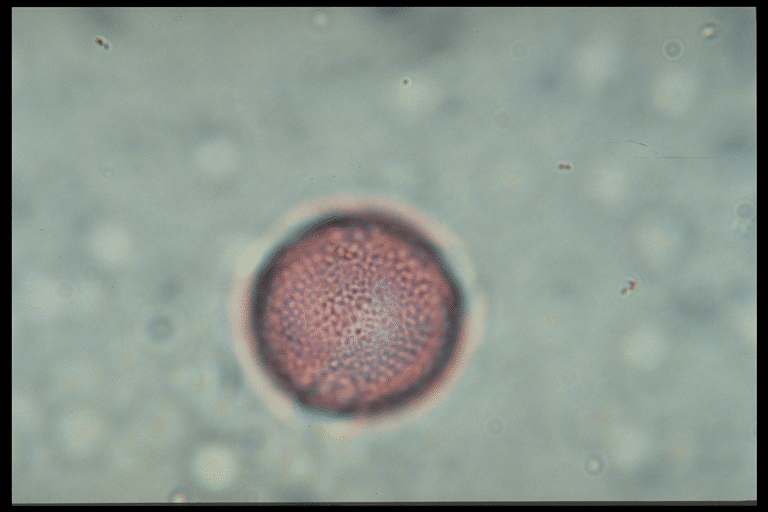
IMAGE: PPVRH-23 Magnified image under microscope of pollen.
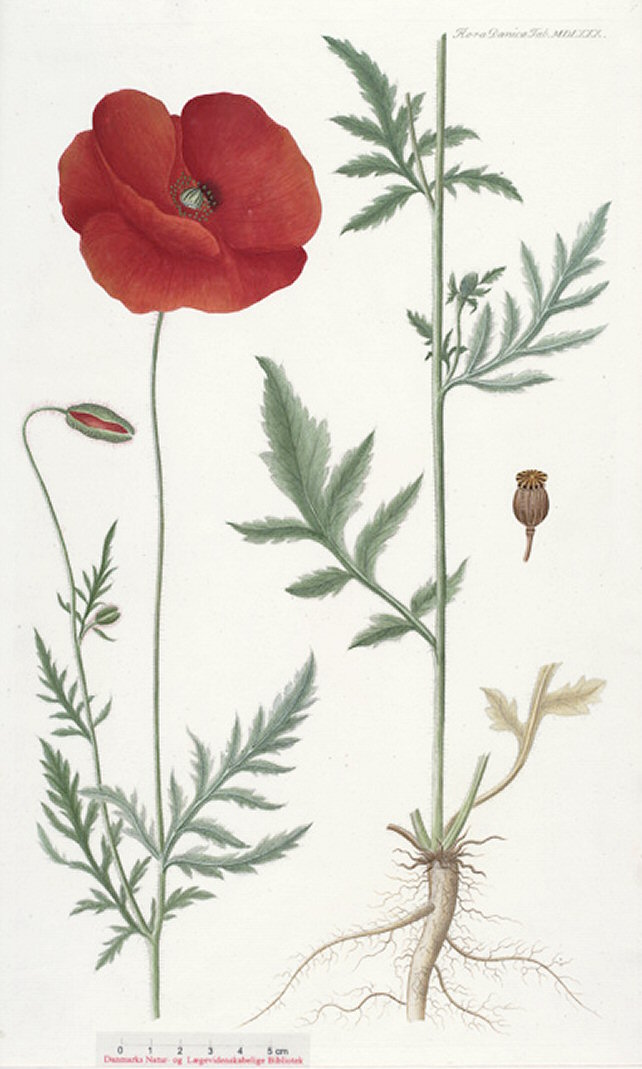
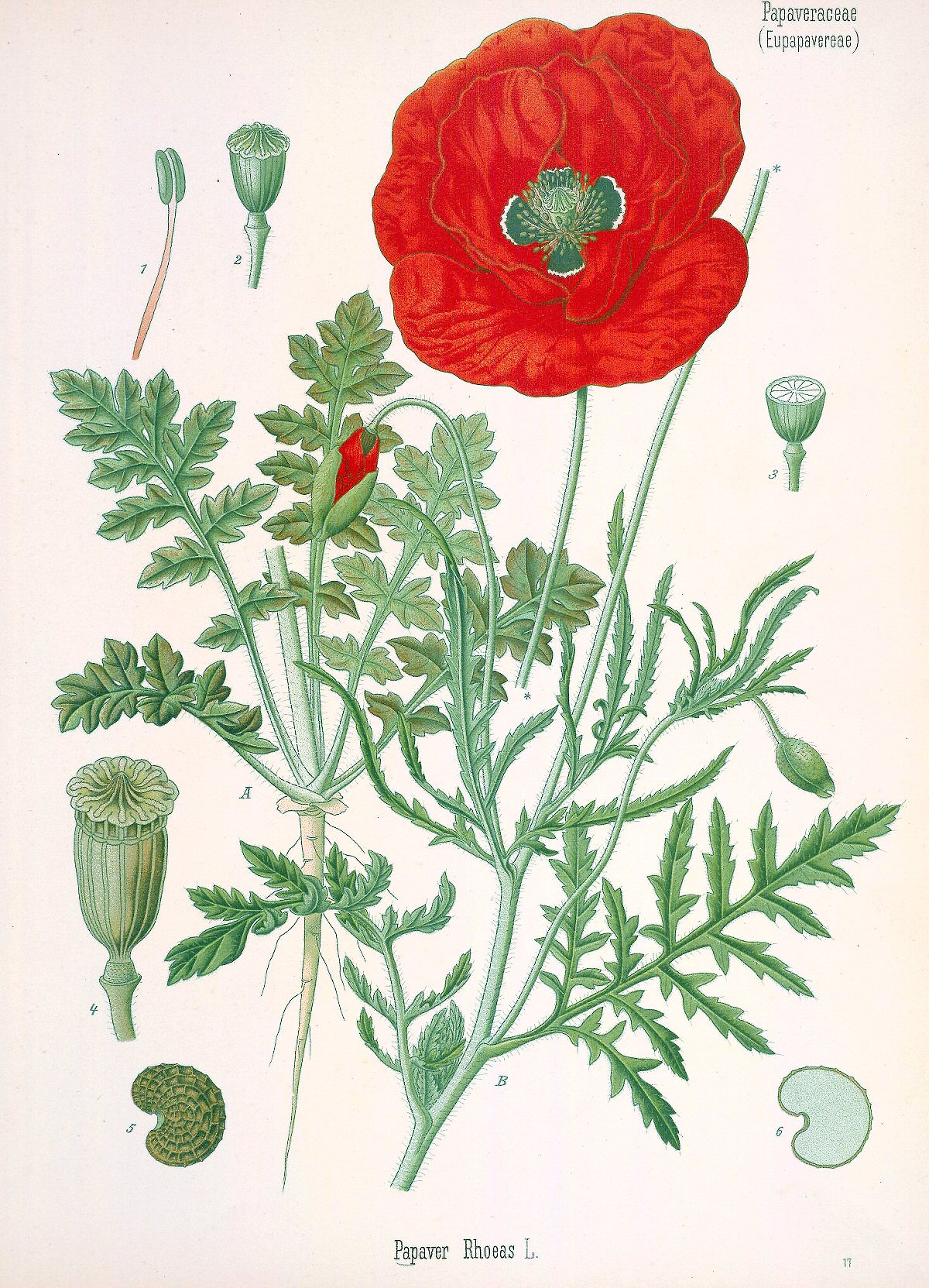
IMAGE: PPVRH-24 Colour illustration of the plant and its parts taken from Flora Danica Online.
IMAGE: PPVRH-27 Scanned image of tiny, kidney-shaped, dark-brown seeds.
Warning: Missing argument 2 for tmtxt(), called in /home/marzmif4/public_html/WildPlants/PAPV/Papaver_rhoeas.php on line 879 and defined in /home/marzmif4/public_html/WildPlants/!incl/mwp_functions.php on line 320

IMAGE: PPVRH-28 Magnified scanned image of seeds showing the rough texture of seed coat.
Buy samples of seeds of certain wild plants for your studies, trials, research, etc. Not all species' seeds can be exported (depending on Maltese regulations), and availability depends on season of species. So, before any payment, you are kindly asked to fill in the online quotation/order form by which I can contact you back for availability and charges.
Buy any of my own copyright images found in this large collection of Maltese flora. You should first select the image you want to buy and input its corresponding code (found beneath each individual photo) in the online ordering form.
Kindly donate any sum of money (from 2USD / 2Euro) to help us covering some expenses needed to maintain Maltawildplants.com. Please bear in mind how much hard work such a large and up-to-date website needs to arrive directly to you home, office or library. Your kind donations are both greatly appreciated and recorded for future reference. Donors asking help will have first que preference for assistance and special attention.
Use the form below to submit more information about this plant or a related species. If the data is taken from a book, journal, website, etc, please provide the corresponding reference / website address as indicated in the form. If it is your own observation, then your name will be cited.
Your Email address will never be displayed online, it is just for internal communication.
For plant species that are marked as rare, you can also report other locations in Malta where you have seen this species.
Finally you can report any mistakes or errors found on the plant profile for necessary corrections. This will help to improve the website's acuracy.
To have more details about each particular field, just move your mouse on it and wait for the help message to pop up