| Information and Details |
Nativity and distribution
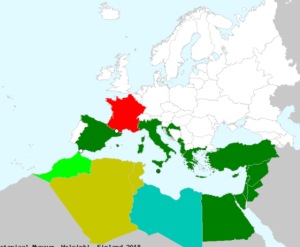
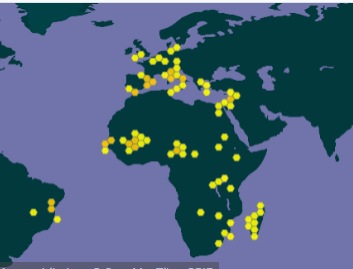
The distributional range of this plant is shown in the list below: [WWW-26]
Northern Africa: Algeria; Libya; Morocco
Africa: Ethiopia; Kenya; Tanzania; Uganda; Zaire; Malawi; Zambia
Asia: Israel; Jordan; Lebanon; Syria; Turkey; Bhutan; India; Nepal; Sri Lanka
Europe: Albania; Greece (incl. Crete);Cyprus; Italy (incl. Sardinia, Sicily); Yugoslavia, France (incl. Corsica); Portugal; Spain (incl. Baleares); Portugal; Madeira Islands; Canary Islands.
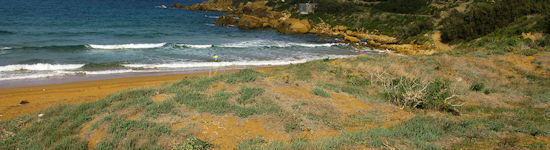
Native to dry, shady, wooded areas of the Mediterranean Basin, eastwards to India [WWW-127]
The Genus Smilax.
Mabberley (1987) regards this family as comprising 225 species in 10 genera, whilst Brummitt (1992) includes only 2 genera (Smilax L. and Heterosmilax Kunth), the remainder being placed in the Petermanniaceae, Philesiaceae, and Rhipogonaceae. Members of this family have in the past been considered to belong to the Liliaceae. They are found in tropical and warm temperate regions and are mostly climbing shrubs or lianes. [WWW-27]
Nomenclature
The name sarsaparilla comes from the Spanish zarza (a bramble), parra (a vine) and illa (small). A small brambly vine. The ancient Latin name was Smilax, and is mentioned as such by Pliny. Linnaeus described this group of plants under the genus Smilax, which is still recognized today by most botanists from the northern hemisphere, being placed in the Lily family, Liliaceae. Some recent taxonomic literature from South America places the plants under a segregate family, the Smilacaceae. [WWW-129]
General Names for Smilax aspera
There are several general or common names used for this plant, some of which are the following:
Common Smilax, Prickly Ivy, Salsapariglia, Sarsparilla, Smilace, Stracciabrache, Thorny Smilax, Zarzaparrilla, Rough bindweed [WWW-127] , Italian Sarsaparilla [KF]
Sauce grill, Morisca bramble, Grape of dog, Salsaparilla [WWW-96]
Chemical Constituents
[WWW-66] lists the following constituents for Smilax spp. (Sarsaparilla)
ALUMINUM Root (745 ppm);
ASH Root (63,000 ppm);
BETA-SITOSTEROL Root:
CALCIUM Root (2,980 ppm);
CETYL-ALCOHOL Root:
CHROMIUM Root (17 ppm);
COBALT Root (152 ppm);
EO Root (300 ppm);
EPSILON-SITOSTEROL Root:
GLUCOSE Root:
IRON Root (905 ppm);
MAGNESIUM Root (1,670 ppm);
MANGANESE Root (57 ppm);
PARIGENIN Root:
PARILLIN Root:
PHOSPHORUS Root (1,770 ppm);
POLLINASTANOL Root:
POTASSIUM Root (9,530 ppm);
RESIN Root (25,000 ppm);
SAPONIN Root (5,000 - 20,000 ppm)
SARASAPONIN Root:
SARSAPARILLOSIDE Root:
SARSAPONIN Root:
SARSASAPOGENIN Root:
SELENIUM Root:
SILICON Root (88 ppm);
SITOSTEROL-D-GLUCOSIDE Root:
SMILAGENIN Root:
SMILASAPONIN Root:
SODIUM Root (21 ppm);
STARCH Root (520,000 ppm);
STIGMASTEROL Root:
TIN Root (18 ppm);
WATER Root (787,000 ppm);
ZINC Root (26 ppm);
The plant has several important Saponins (namely beta-sitosterol, stigmasterol and their glucosides) based on the aglycones sarsapogenin and smilagenin; the major one being parillin (=sarsaponin), with smilasaponin(=smilacin) and sarsaparilloside. [WWW-118]
Chemistry of Sarsaparilla
The main active fraction of the various species has usually been considered to consist of saponin glycosides. since they are steroid-like compounds, and because of its reputation as a male rejuvenating tonic, many have made claims that sarsaparilla contains active steroid hormones. [WWW-129]
Paltta first isolated parillin, probably a mixture of saponin glycosides (it foamed upon shaking with water) in 1824. This mixture has also been called smilacin, salseparin, sarsaparillin and parallinic acid. Fluckiger determined that there was about 0.19% in an unidentified Smilax species. [WWW-129]
The major saponin glycosides with steroid like nuclei (from the new world species) are now recognized as sarsaponin, smilacin, sitosterol-d-glucoside, and pollinastanin. they occur in the plants along with their genins and other steroids as sarsapogenin, smilgenin, sitosterol, stigmasterol and pollinastanol. One modern figure indicated the usual level of steroid saponins in unidentified Smilax species, indicated to be sarsaparilla, as 1.8-2.4%. [WWW-129]
Other constituents include paroaparic acid, sarsapic acid, resin, volatile oil, starch, a mixture of fatty acids (palmitic, stearic, behenic, oleic and linoleic), oxalic acid and a polysaccharide. [WWW-129]
The mineral ions were quantified in the dry root of Honduran sarsaparilla and determined to be 1.25% SiO, 0.42% Al, 0.41% Ca, 0.30% Mg, 1.25% K and 0.46% Cl. The vitamin C content of Mexican sarsaparilla, S. aristolochiaefolia (dry root) was determined to be 19.4 mg%. [WWW-129]
More recent work has been done on Smilax aspera, the European species, than on the new world species. The constituents identified include sarsapogenin, tigogenin (var. mauritanica), asperoside, 31-norcycloartanol, and from the essential oil, methylvanillin and piperonol. Diosgenin, a common phytosterol, has been isolated from Smilax china.
Medical History
A group of medicinal plants from the genus Smilax, collectively called sarsaparilla, was introduced from the New World into European medicine in the early 1600's by Spanish traders. Sarsaparilla soon found a ready market throughout Europe for treatment of syphilis and a variety of complaints that were considered to yield to the action of "blood purification." Since that time, and undoubtedly centuries before, plants from genus Smilax have been used world wide to alleviate many human ills. Because of a combination of factors, to be reviewed in the following paper, sarsaparilla has seen drastic swings in popularity - from the height of success and acclaim as an important medicinal drug plant, selling hundreds of thousands of pounds per year, to its dismissal as a worthless nostrum. The following paper reviews the literature on the botany, history of use, chemistry, pharmacology, clinical use and adulteration of sarsaparilla. [WWW-129]
The Spaniards verified on their arrival to America, that the native ones already used the plant to cure diverse the evils, and they baptized it with the name of zarzaparrilla by similarity with which it grew in Spain (the one "of Europe"), to which also they adjudged the properties of that one, without knowledge that their active principles are not such. They even thought that it served to cure syphilis. [WWW-96]
Medicinal Uses
The plant has the following medicinal properties according to reference: [WWW-66] .
| Alterative |
medicine or treatment which gradually induces a change in order to cure or restore to health [WWW-32] |
| Antirheumatic |
Suppresses manifestations of rheumatic disease (usually causing pain in the joints) [WWW-57] |
| Anti-cancer |
Used in the treatment of cancer; "anticancer drug"; "an antineoplastic effect". [WWW-32] |
| Demulcent |
A medication (in the form of an oil or salve etc.) that soothes inflamed or injured skin. [WWW-32] |
| Depurative |
An agent which is able of Purifying the blood or the humors (body fluids) [WWW-32] |
| Diaphoretic |
A medicine or agent which promotes perspiration. [WWW-32] |
| Diuretic |
Tending to increase the secretion and discharge of urine. [WWW-32] |
| Pectoral |
A medicine for diseases of the chest organs, especially the lungs [WWW-57] |
| Stimulant |
Produces a temporary increase of vital activity in the organism, or in any of its parts; [WWW-32] |
| Sudorific |
An agent used to induce perspiration (sweat) [WWW-32] |
| Tonic |
A medicine that strengthens and invigorates hence restores normal tone to tissues or to stimulate the appetite. [WWW-32] |
Smilax aspera (habitat, South of France, Italy, etc.) yields the Italian Sarsaparilla which has the same properties as the American ones. [WWW-03]
The root and rhizome is the medicinal part. [WWW-96. 7] This is one of the best depurative medicines and is used as a springtime tonic and general body cleanser, usually with woody nightshade (Solanum dulcamara) [7] .
The root has all the medicinal virtues of the widely used tropical herb sarsaparilla, though to a lesser degree [7] . It is often used as an adulterant to that plant [7] .
Used to treat Psoriasis [WWW-118] (read more...)
Sarsaparilla is a widely applicable alterative. It may be used to aid proper functioning of the body as a whole and in the correction of such diffuse systemic problems as skin and rheumatic conditions. It is particularly useful in scaling skin conditions such as psoriasis, especially where there is much irritation. As part of a wider treatment for chronic rheumatism it should be considered and is especially useful for rheumatoid arthritis. It has been shown that Sarsaparilla contains constituents with properties that aid testosterone activity in the body. [WWW-118]
Sarsaparilla has been used for the following patholgies: scrophula, secondary syphillis, cutaneous disease, rheumatic and gouty conditions; and to treat the following diseases: Syphilis, herpes, rheumatic affections, dropsy, gonorrhoeal rheumatism, syphilitic sorethroats, chronic hepatic disorders. [WWW-118]
[WWW-03] states the following Medicinal Actions and uses: -Alterative, pectoral, diaphoretic, sudorific. Used as a substitute for Smilax Sarsaparilla is useful in pulmonary diseases and externally as a wash for indolent ulcers and shingles. It is said to be used by the Crees under the name of Rabbit Root for syphilis and as an application to recent wounds. It contains resin, oil, tannin, albumen, an acid, mucilage and cellulose.
Sarsaparilla has been commonly adulterated on the commercial market throughout its history of use. The most common adulterant, still in use today, is "Hemidesmus indicus" (=Periploca indica), the Indian sarsaparilla. The author has seen commercial products labeled "Mexican sarsaparilla" that actually contained "Hemidesmus". The two are easy to distinguish. Hemidesmus is dark brown, has a slight bitter taste and a strong smell of vanilla. Species of Smilax will have a bland taste, no smell and a light colour. [WWW-129]
[WWW-96] gives the following medicinal uses. Sarsaparilla was used against Bronchitis, enfisema, asthma, states in which an increase of the diuresis is required: genitourinarias affections (cystitis, ureteritis, uretritis, oliguria, urolitiasis), hiperazotemia, hiperuricemia, drop, arterial hypertension, edemas, overweight accompanied by retention of liquids.
Also one has been used like purifying in dermatological problems: acne, eczemas, ictiosis, psoriasis; in reumatismos you will articulate or to "rebajar sangre", from where it derives its popular name of "mermasangre". [WWW-96]
Sarsaparilla of commerce is derived from the dried roots of Smilax species (see above). According to Pereira (1842), sarsaparilla is given with good effect in papular, vesicular, pustular, and tubercular skin diseases, of a chronic kind, when they occur in enfeebled and emaciated constitutions. Pereira (1842) also describes its use in the treatment of syphilis, but notes also that many practitioners consider sarsaparilla to possess no remedial properties. Trease & Evans (1966) believe that, because of its content of steroidal saponins, sarsaparilla may act by stimulating the absorption of other drugs [WWW-27]
Clinical Uses
Much has been written about the clinical uses of sarsaparilla, from the mid-1600's until the mid-1900's, three hundred years. As mentioned, some physicians felt that sarsaparilla was inert and had no clinical value, while many others used it. [WWW-118]
Determining whether or not a particular drug plant has activity should be based, in part, on the folk record of traditional use. In Jamaica, Cuba and Mexico, several species of Smilax are used in indigenous medicine. These include Smilax mexicana, S. papyracea, S. regelii, S. havanensis and S. domonhensis. Morton documents the traditional uses of these species for blood purification, syphilis, as a stimulant and tonic, for gout, rheumatism, skin conditions, and as an "aphrodisiacal potion, to promote man's nature or courage (with other plants)." [WWW-118]
The question must be asked whether these uses were in practice before the Spaniards invaded the new world. In North America, the Amerindians used several Smilax species, including Smilax bona-nox, S. glauca, S. herbacea, S. laurifolia, S. pseudo-china, S. rotundifolia and S. tamnoides for various complaints. These include its use as a general tonic, "to make one young", for urinary disturbances, rheumatism, stomach troubles, kidney troubles, and as a gynecological aid. At least seven different tribes used these plants, suggesting that some of the uses might have been established without the influence from Spanish or other European settlers. If so, the uses are remarkably coherent with those of the uses reported from European medicine. [WWW-118]
Pharmacology of Sarsaparilla
After all the interest in sarsaparilla from both the medical profession, public and patent medicine manufacturers over the years, it is somewhat surprising that so little clinical and laboratory testing has been done on it. There is no sound evidence in the scientific literature to support the many fantastic claims that have been made for sarsaparilla, especially as a male rejuvenator or energy tonic. Nonetheless, one cannot completely rule out the possibility that those plants have pharmacological activity. Perhaps, as the famous American physician, and co-author of the US Dispensatory, George Wood, suggests:
"It seems to me impossible to resist the conclusion ... that a remedy cannot be quite inert, which has so often risen into notice after neglect, and which, though considered useless by many, has the voice of the greater number, and those probably the most experienced, in its favor."
There are a few interesting studies on the pharmacology of sarsaparilla that bear mention, which are summarized in table 1. It must be noted that all of the clinical studies cited in the literature are from the period 1933-1951. None of the studies are performed blind, some of them being reports of subjective improvement among subjects.
"Renotrat", a sarsaparilla preparation, increased urinary excretion of Uric Acid resulting in a 30% drop in blood levels.
Sarsaparilla aqueous extract had a beneficial effect in cases of eczema and psoriasis.
Sarsaparilla root "showed diuretic action in the rat and increased the elimination of chloride and uric acid" "An extract of Smilax ornata corresponding to 15g of root given twice a day for several months gave better results in lepers than did sulfones."
One recent question being hotly discussed in the herb industry is the nature of sarsaparilla's action on the sexual hormones, if any. Sarsaparilla has been widely touted as a male sexual rejuvenator, some even contending that it contains actual human testosterone. This report, however, is from non-technical advocacy literature. Commercial products abound that either openly declare sarsaparilla to be a good source of anabolic steroids or infer it. The major market seems to be centered around the recent "body building" craze. It is known that many athletes, both professional and amateur use steroid drugs which could be harmful to health. Officials have banned such use, and initiated testing to safeguard against many who ignore the regulations. This coupled with several highly publicized deaths from steroid use may be the reasons for the present search for safe and legal substitutes. Neither scientific study, nor folklore evidence supports the use of Smilax for increasing muscle mass.
Chemical analysis to date has found no testosterone-like compounds in sarsaparilla. One report indicated that the drug contains progesterone and cortin (hormone from the suprarenal cortex), but with no reference to actual scientific research. According to the recent article by Singer, Russel Marker and Ewald Rohrman "first found testosterone, the male sex hormone, in sarsaparilla." Marker is well known for his work in the area of steroidal saponins, but a review of his research, mostly published in the Journal of the American Chemical Society in the 1930's reveals only that he was able to synthetically produce testosterone from sarsapogenin (a component of some Smilax species) and diosgenin.
An interesting New York Times article entitled "Sarsaparilla Root has Vitality Drug" and a book on aphrodisiacs by Walton both cite work by a Hungarian-born researcher, living in Mexico, by the name of Emerick Solmo. In Walton's book, it is claimed that Solmo:
"removed the bark from the root, pulverized it, and extracted by various processes some odorless white crystals. These were then mixed with a saline solution similar to the fluids of the body, and used as a solution for injection, or, conversely, made up in the form of tablets. Many thousands of clinical tests were made with this substance on both animals and human beings, and it was conclusively proved that "sarsaparilla testosterone" possessed the identical properties of animal and cholesterol testosterone."
A literature search does not turn up any papers on Solmo's work, but they may be published in a Mexican journal that is not listed in the major indexes.
Testosterone, estradoil, cortisone and several of their derivatives could not be detected in Smilax officinalis (=S. regelii) using thin layer chromatography. A report of the recent tests, stated that "none of the reference hormones could be ascertained in a concentration of more than 0.008%. In reviewing this report, it must be kept in mind that the tests were only performed using one commercial sample, supplied and not a vouchered sample. This leaves the question open as to its true identity.
Species is everything. Also age of sample, when gathered, where gathered and how processed / stored. Further the extraction method is of prime importance.
Testosterone has not been reported to occur in any plant and other human hormones are rare in plants, being found only in very small quantities in some pollens and seeds. While it is still possible that sarsaparilla may have hormonal effects, the many claims being made for this plant are made without the backing of substantive scientific research. Further testing should be done, using vouchered samples of at least the three most commonly traded species, S. aristolochiaefolia, S. officinalis and S. ornata. These samples should be as freshly dried as possible, to avoid degradation of active constituents. Most of the past work with sarsaparilla must be called into question, because of lack of documented starting material (both for freshness and identity). Lastly, the plants should be tested for their possible active metabolites through changes in blood serum levels and urinary excretion of active hormones. [WWW-129]
Medical Contraindications and Precautions
Not to prescribe oral forms of metering with alcoholic content to smaller children of two years nor to consultantes in process of etílica deshabituación. [WWW-96]
To elevated doses, it can cause gastroenteritis. [WWW-96]
Due to the presence of saponisides with hemolític action (although it has been only verified experimentally in vitro and in animals after its parenteral administration), it is recommended to prescribe in discontinuous form. [WWW-96]
To consider the alcoholic content of the fluid extract and the dye. [WWW-96]
Its use like diuretic in the presence of hypertension, cardiopathies or moderate renal insufficiency or burdens, administration must only become by prescription and under medical checkup, before the danger that can suppose the uncontrolled contribution of liquids, the possibility that a tensional descompensation takes place. [WWW-96]
Harmful effects of sarsaparilla as reported by Environmental Working Group
Despite the wide use in traditional medicinal, Sarsaparilla is banned due its harmful effects as reported by reference [WWW-128] . It first states that Smilax aspera (Sarsaparillaextract) is an ingredient used in Anti-aging, Styling Gel/Lotion, Toothpaste, Body Firming Lotion products and labelled on them as SARSAPARILLA EXTRACT. Then it gives a list of hazardous effects or bans of Sarsaparilla as shown below:
- Cancer hazard toxicity
- Reproductive/developmental
- Unsafe for use in cosmetics
- Illegal ingredient (US)
- Illegal ingredient (EU)
- Unsafe in infant products
- Potential for harmful impurities
- Ingredient(s) not disclosed on label
- Sunburn/skin cancer risk
- Estrogenic chemicals and other endocrine isruptors
- Irritants - eye, skin, or lungs
- Fragrance
- Persistent/bioaccumulative
- Immune system toxicants (allergies, sensitization)
- Penetration enhancers
- Safety limits on use/purity/manufacturing
- Classified as toxic
- Potential for infectious disease risk
- Wildlife/environmental toxicity
- Illegal for use in drugs
- Illegal for use in food
One must however know the concentration of sarsaparilla to be declared as toxic. Often, at low concentrations, drugs have beneficial effects while at higher concentrations they end up having toxic effects [SM]
Greek Mythology about Smilax
There are different versions about Smilax in greek mythology, but all indicate a relationship with Krokos.
Empowering a nymph with the love of a mortal is perhaps the highest honor and the biggest burden that can be simultaneously bestowed, attests the Greek legend of Crocus and Smilax, to which Ovid’s above quotation makes reference. According to legend, in the heat of the moment, a most fair and supple young nymph by the name of Smilax coyly and quietly seduces the handsome mortal youth, Crocus, as he makes his way through the forest one day. Crocus, soon in the crux of nymph obsession, immediately neglects all friends and family, frequently fleeing to the forest to beckon the nymph’s beautiful body. Crocus’s adoration for Smilax, once a welcomed novelty, quickly becomes a pestering and persistent nuisance to her carefree spirit. Thus, she turns him into “a small purple flower with a fiery heart.” [WWW-130]
The story starts with a young mortal, Krokos, and the beautiful
nymph Smilax, who fell in love with each other. Unfortunately,
as with many Greek myths, tragedy had to be woven in, and
one day, young Krokos witnessed the death of his beloved
Smilax. The gods, seeing his unbearable grief, felt pity for
Krokos and turned him into a beautiful purple flower - the
saffron crocus - and transformed Smilax into a greenbriar
sarsparilla vine to grow nearby, so that they could be together
for eternity. [WWW-131]
According to another myth, Crocus was a young man who transformed into a flower because of his unfulfilled love for a nymph called Smilax. At the same time, Smilax transformed into a vine-plant (Smilax aspera-Sarsparilla). [WWW-132]
[WWW-133] has its version of the myth of Krokos and nymph Smilax. Krokos was the lover or the rejected suitor of the nymph Smilax, whose name is that of a vining sarsparilla herb, though her name was also associated with the vining scammony that produced a resin prized by sorcerers. Krokos & Smilax are shown at the right in a Rennaisance engraving for The Metamorphosis.
Krokos was said to have failed to notice the advances of Smilax, so involved was he in his obsession for the hunt. As a Spartan, it was typical for such a youth to prefer the company of the camp over that of any woman, so to that extent this legend would serve as prelude to the older tale of his having been a lover of Hermes. Smilax, like Echo who could not get the attention of Narcissus, wasted away. When Aphrodite found her, the Goddess transformed the tragic nymph into the greenbiar, its flowers having the scent of carrion & its berries are black as night, to this day encountered vining amidst ruins on Aphrodite's first home, Cypros. Aphrodite furthermore petitioned Artemis to track down the cruelly indifferent hunter, who in consequence was transformed. [WWW-133]
Edible Uses
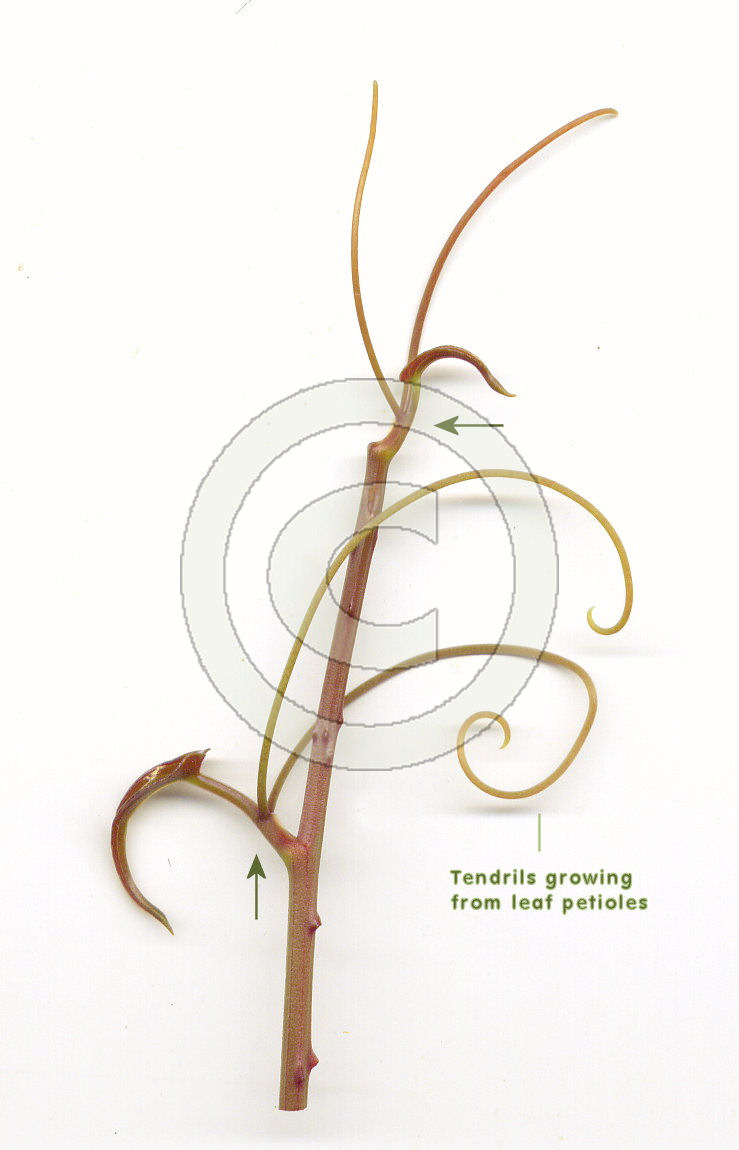
Young shoots are used raw or cooked as a vegetable [89, 100, 148, 183] . They can be cooked and used as an asparagus substitute. The tendrils are also eaten [148] . The plant is an ingredient of soft drinks [7, 14] . (this probably refers to the root) [KF]
In America, and especially in Mexico, a refrescante drink from root of zarzaparrilla was elaborated that gave origin to modern drinks of tail. [WWW-96]
Other Uses
A red dye is obtained from the ripe tendrils [148] .
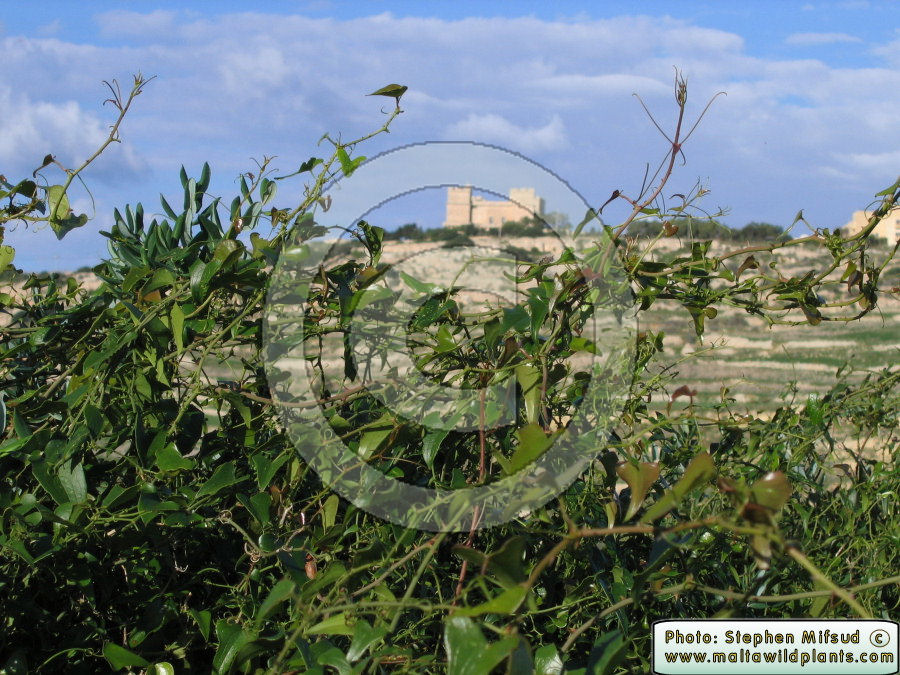
The plant is often grown as an impenetrable hedge in warmer countries than Britain [7] .
Used to make honey in Tunisia [WWW-126]
Smilax aspera L. are occasionally found in cultivation as ornamentals. [WWW-27]
Besides providing an important fruit for animals (especially birds) during the winter, the greenbrier plant also provides shelter for many other animals. The thorny thickets can effectively protect small animals from other larger animals who cannot enter the greenbrier. Deer will eat the foliage. [WWW-125]
Cultivation
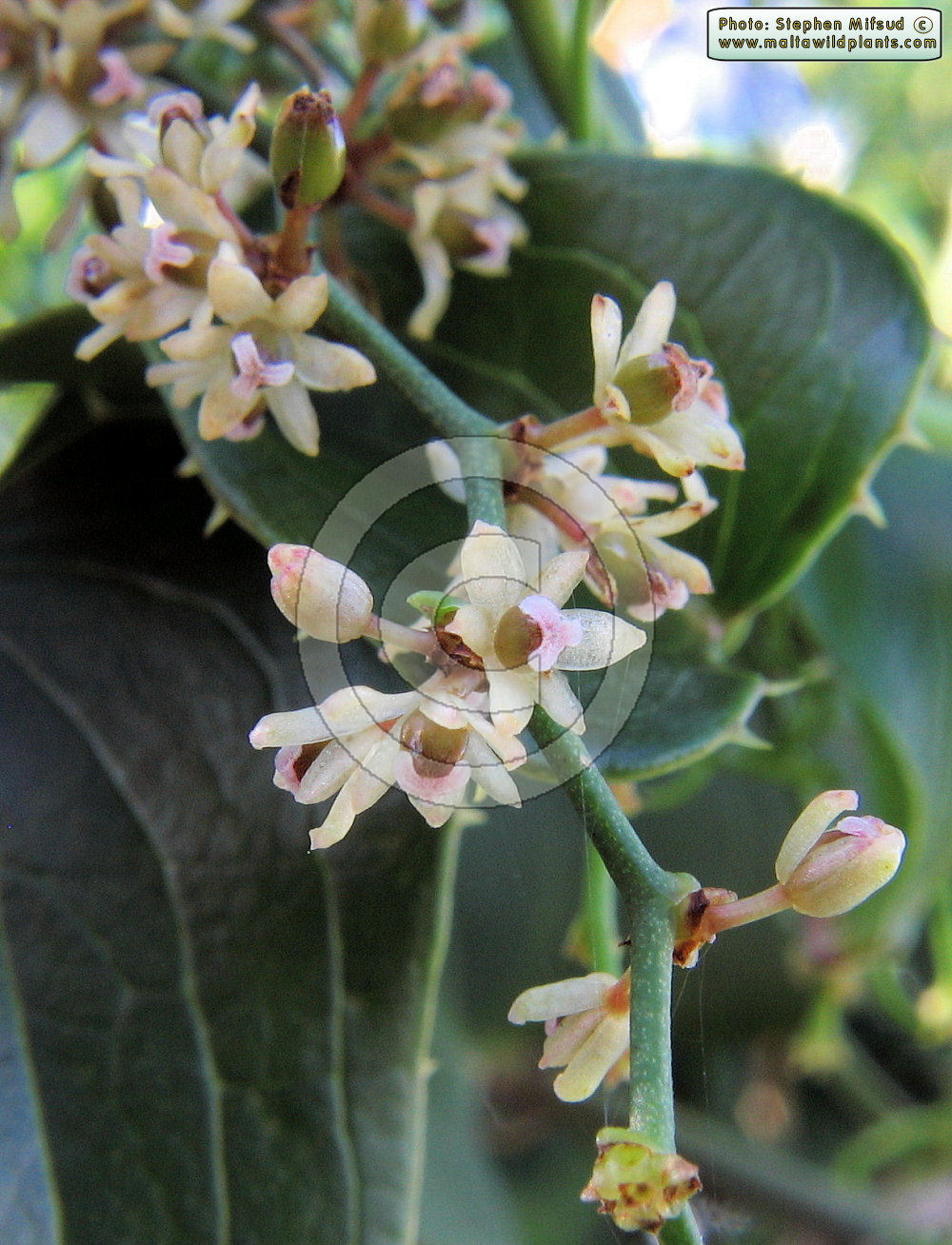
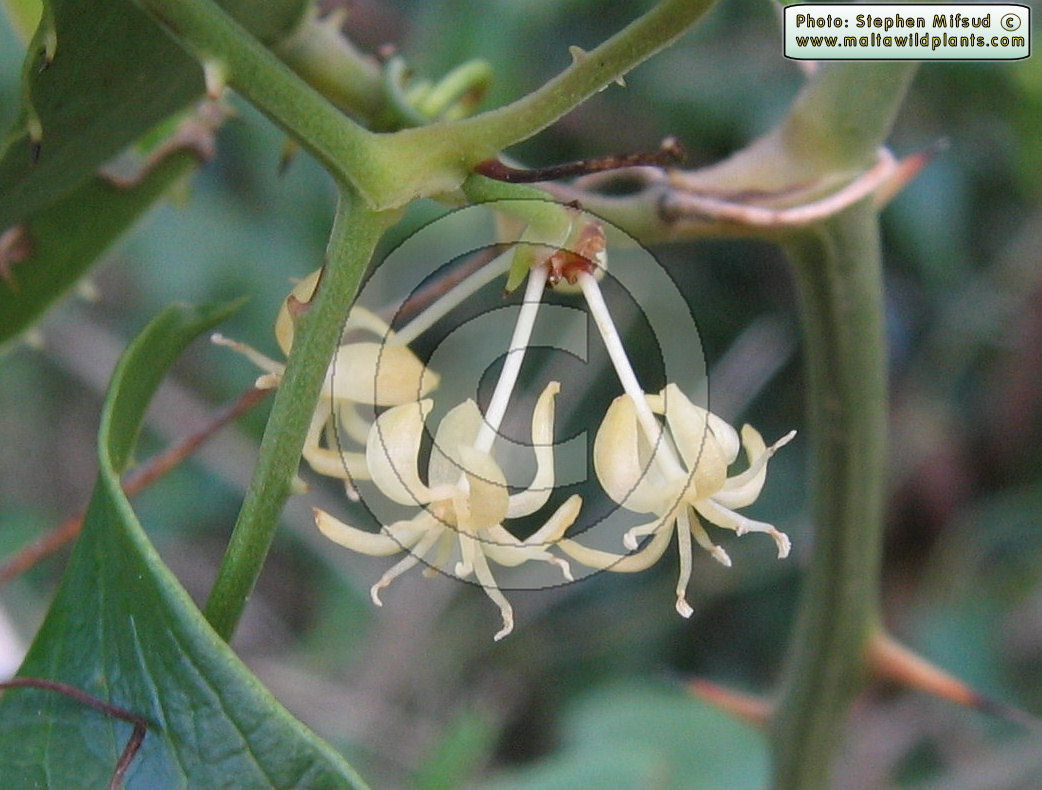
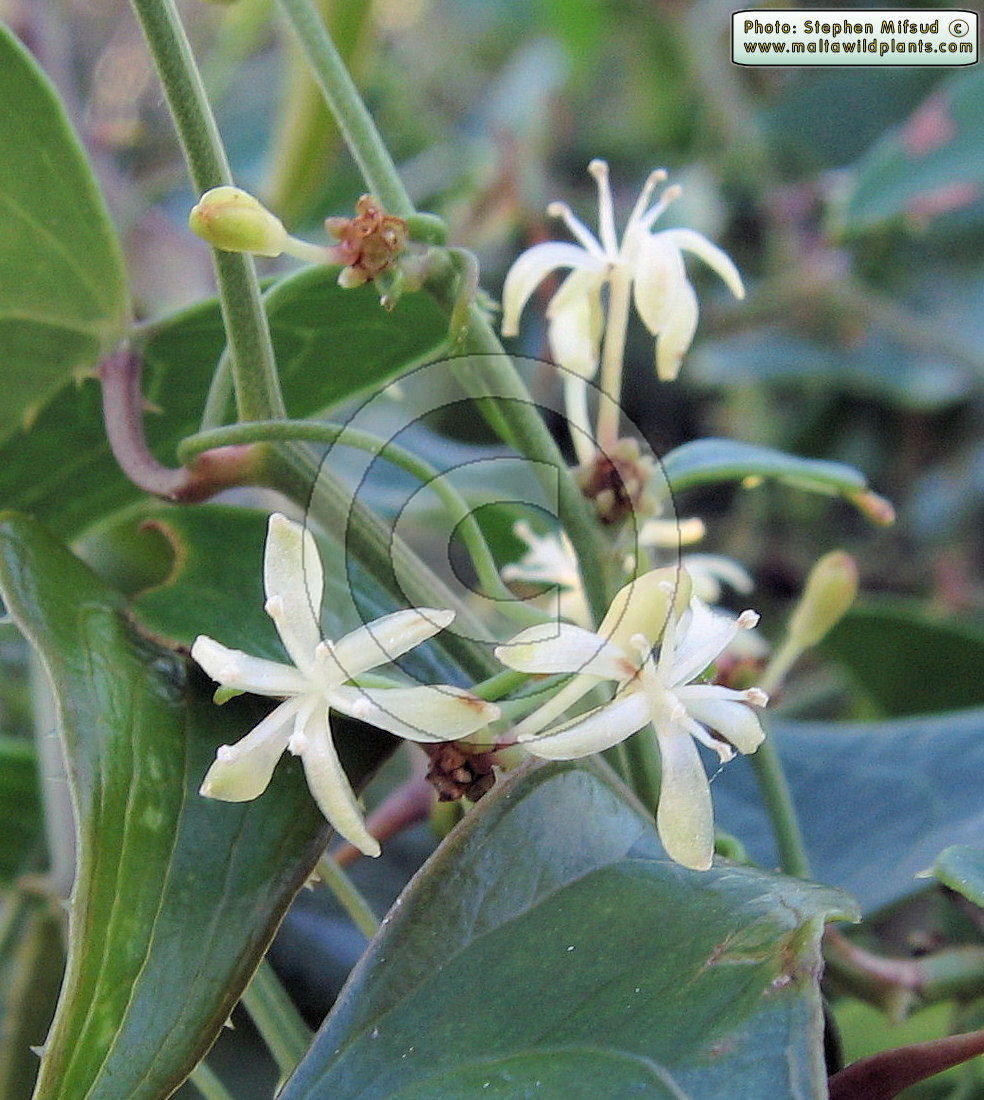
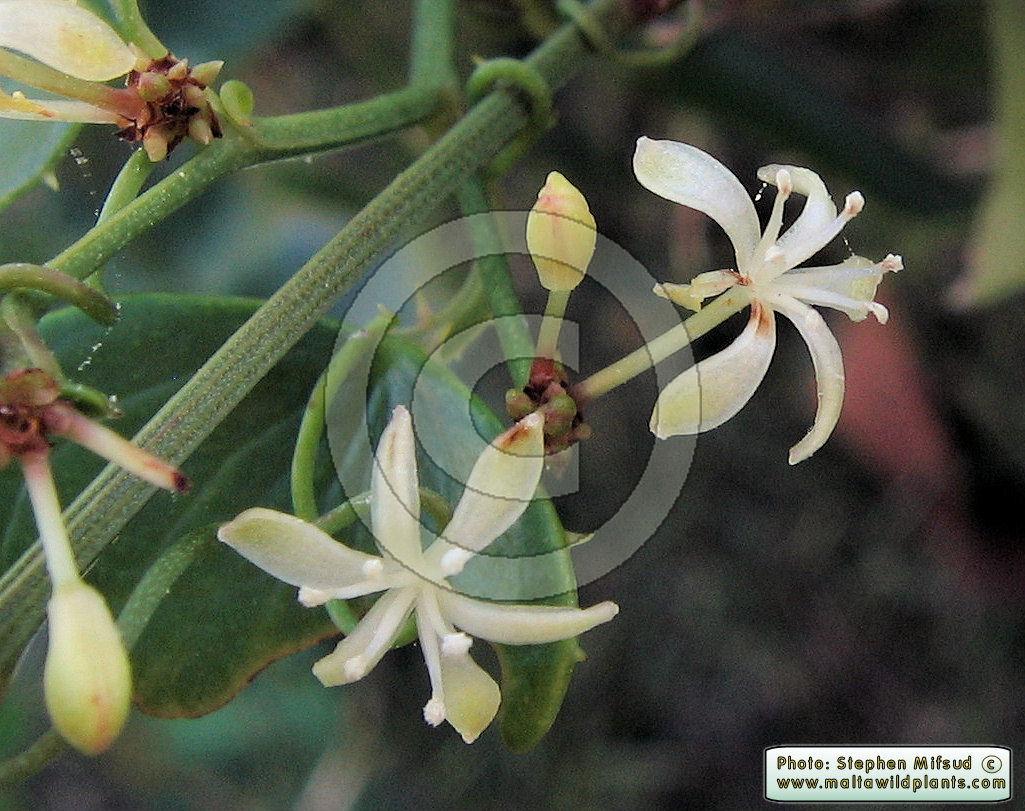
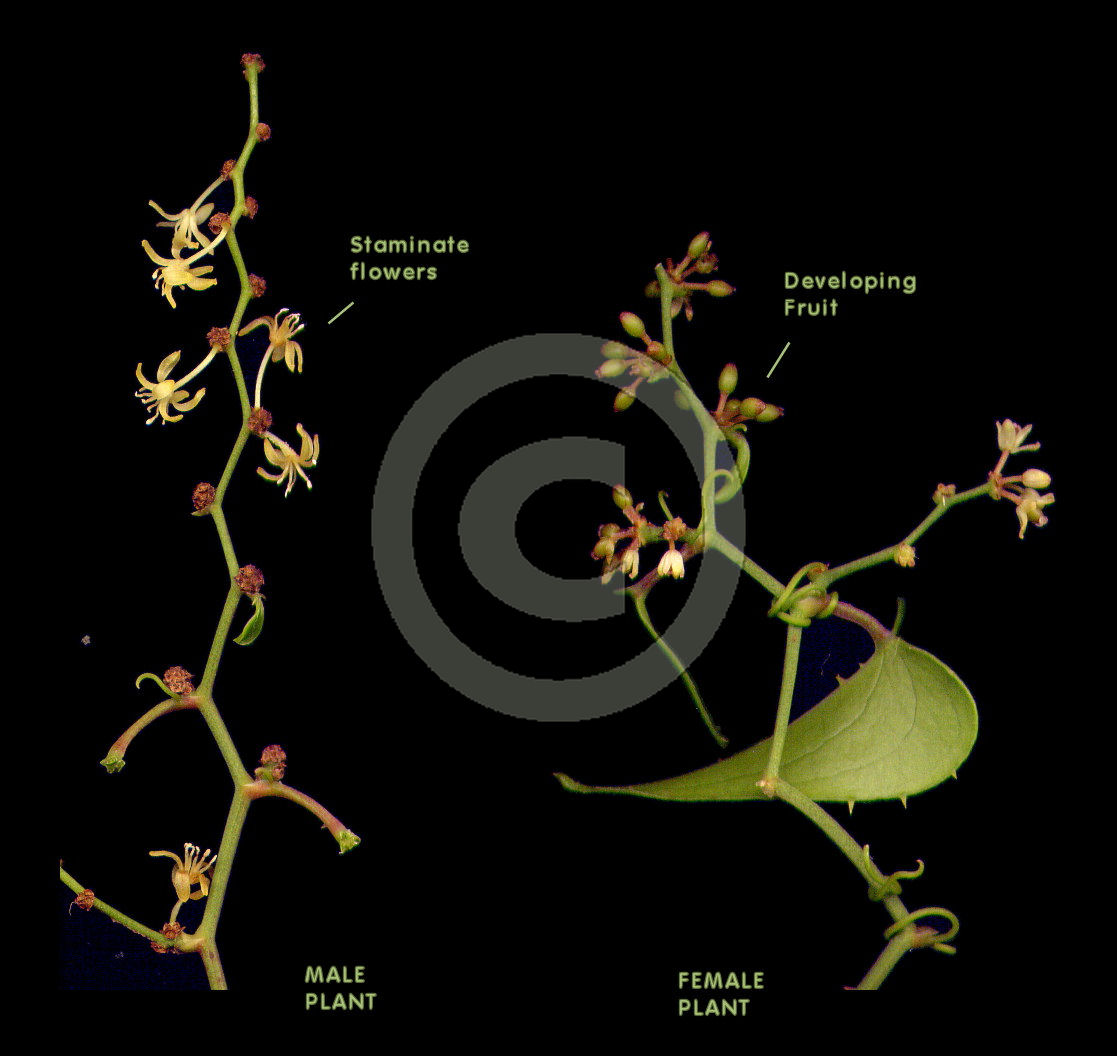
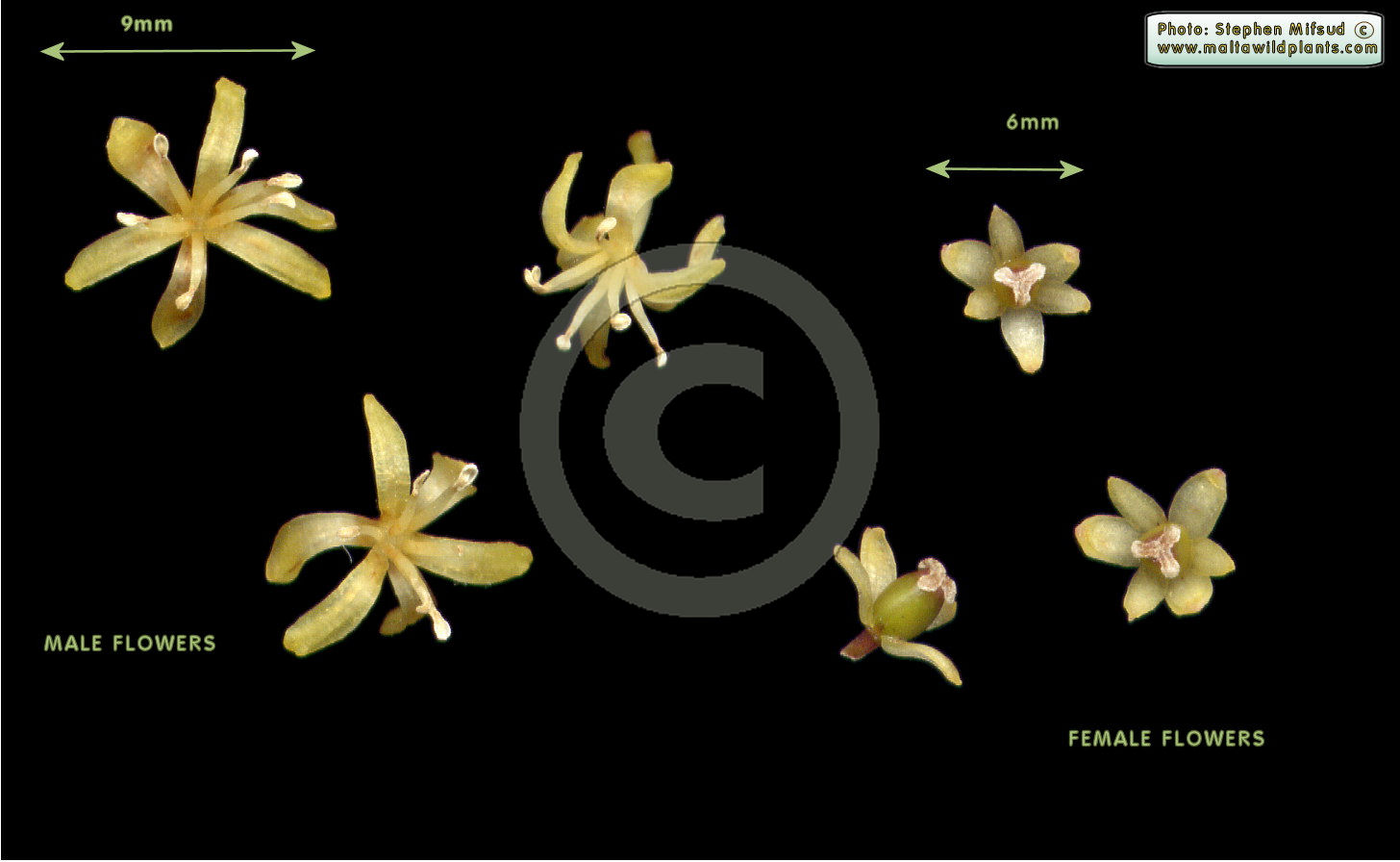
Succeeds in most soils in sun or semi-shade [200] . A very ornamental plant [1] , it is only hardy in the mildest areas of Britain [11, 166] , tolerating temperatures down to about -10°c [184] . The flowers have a heavy sweet perfume [245] . Dioecious. Male and female plants must be grown if seed is required. [KF] Smilax is a very damage-tolerant plant capable of growing back from its rhizomes after being cut down or burned down by fire. This, coupled with the fact that birds and other small animals spread the seeds over large areas, makes the plants very hard to get rid of. [WWW-125]
At any time of the year. It is not necessary to take the whole plant; rizoma is enough with gathering a part of the length and leaving the rest, sufficient so that the plant does not die. [WWW-96]
Propagation
From Seed: - Sow during March in a warm greenhouse [1] . This note probably refers to the tropical members of the genus, seeds of plants from cooler areas seem to require a period of cold stratification, some species taking 2 or more years to germinate [KF] . We sow the seed of temperate species in a cold frame as soon as we receive it, and would sow the seed as soon as it is ripe if we could obtain it then [KF] . When the seedlings eventually germinate, prick them out into individual pots when they are large enough to handle and grow them on in the greenhouse for at least their first year, though we normally grow them on in pots for 2 years. Plant them out into their permanent positions in early summer. It grows best in moist woodlands with a soil pH between 5 and 6. The seeds have the highest percent chance of germinating after being exposed to a freeze. [WWW-125]
Division in early spring as new growth begins [238] . Larger divisions can be planted out direct into their permanent positions. We have found it best to pot up the smaller divisions and grow them on in a lightly shaded position in a cold frame, planting them out once they are well established in the summer.
Cuttings of half-ripe shoots, July in a frame [238] .
Personal Observations
Smilax aspera and its numerous old synonyms.
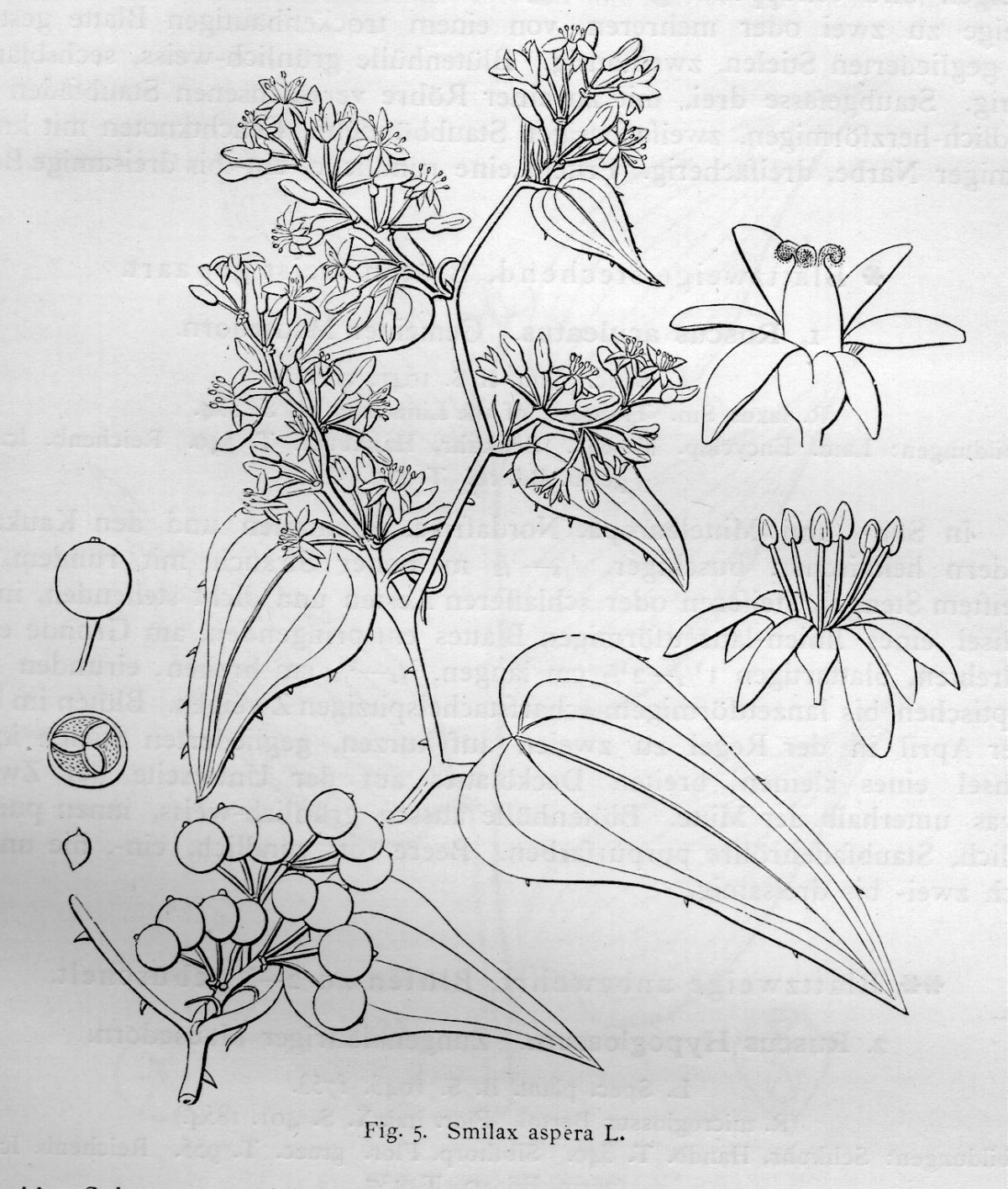
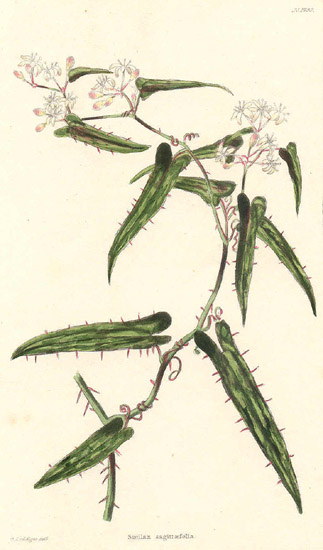
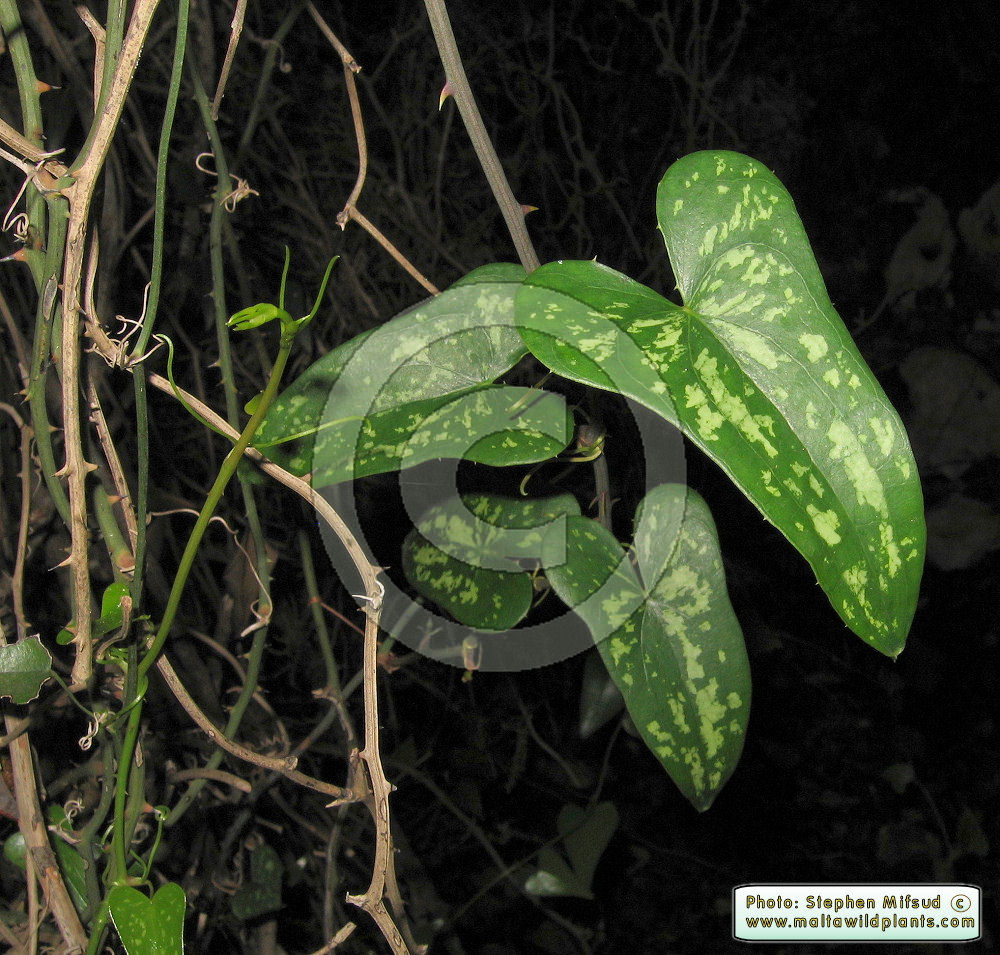
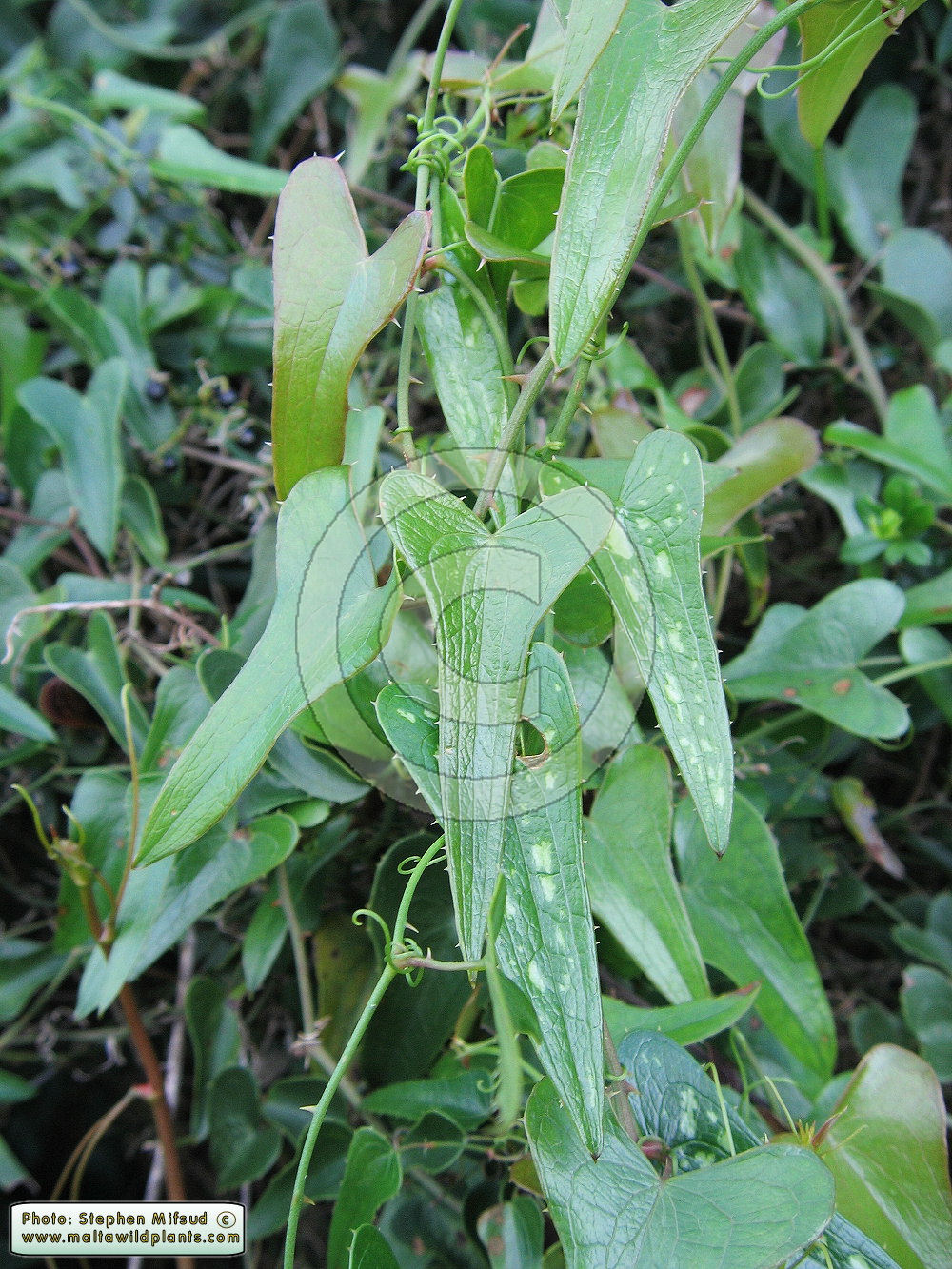
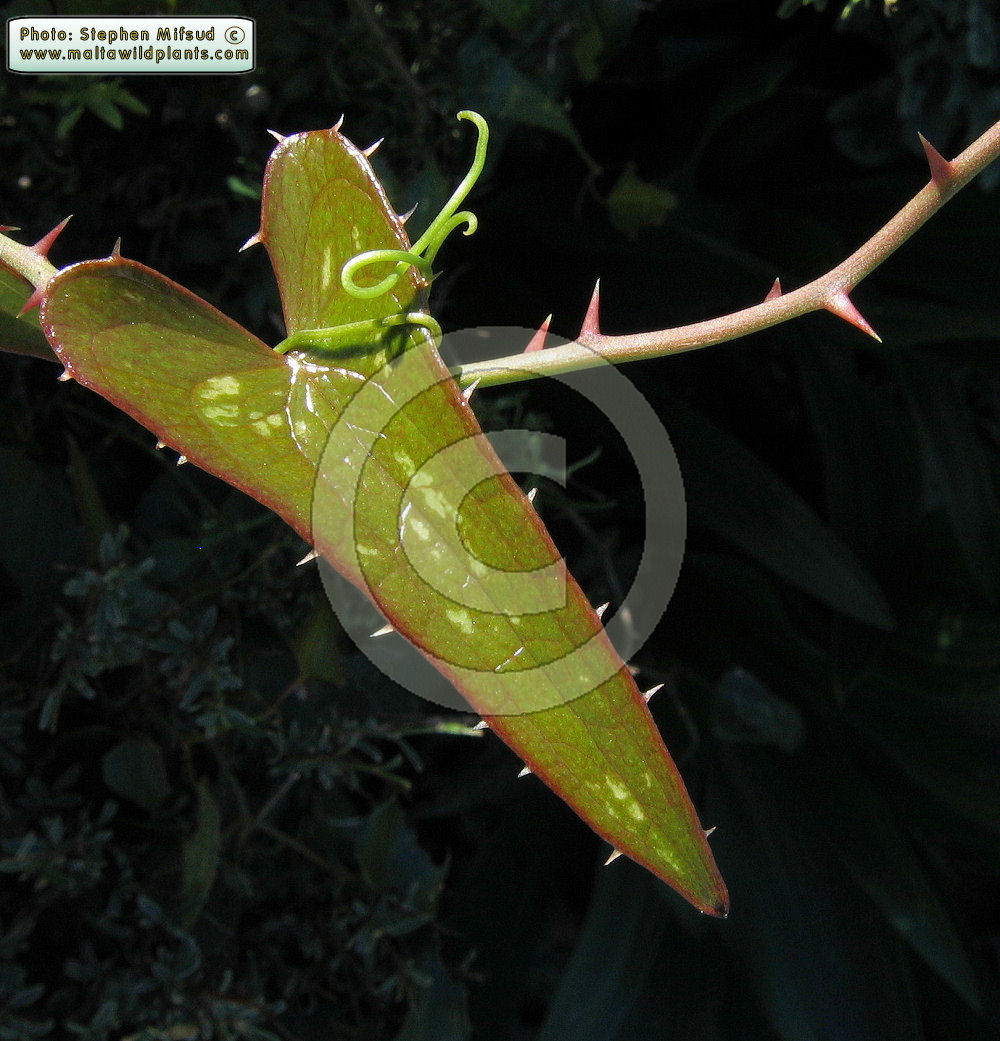
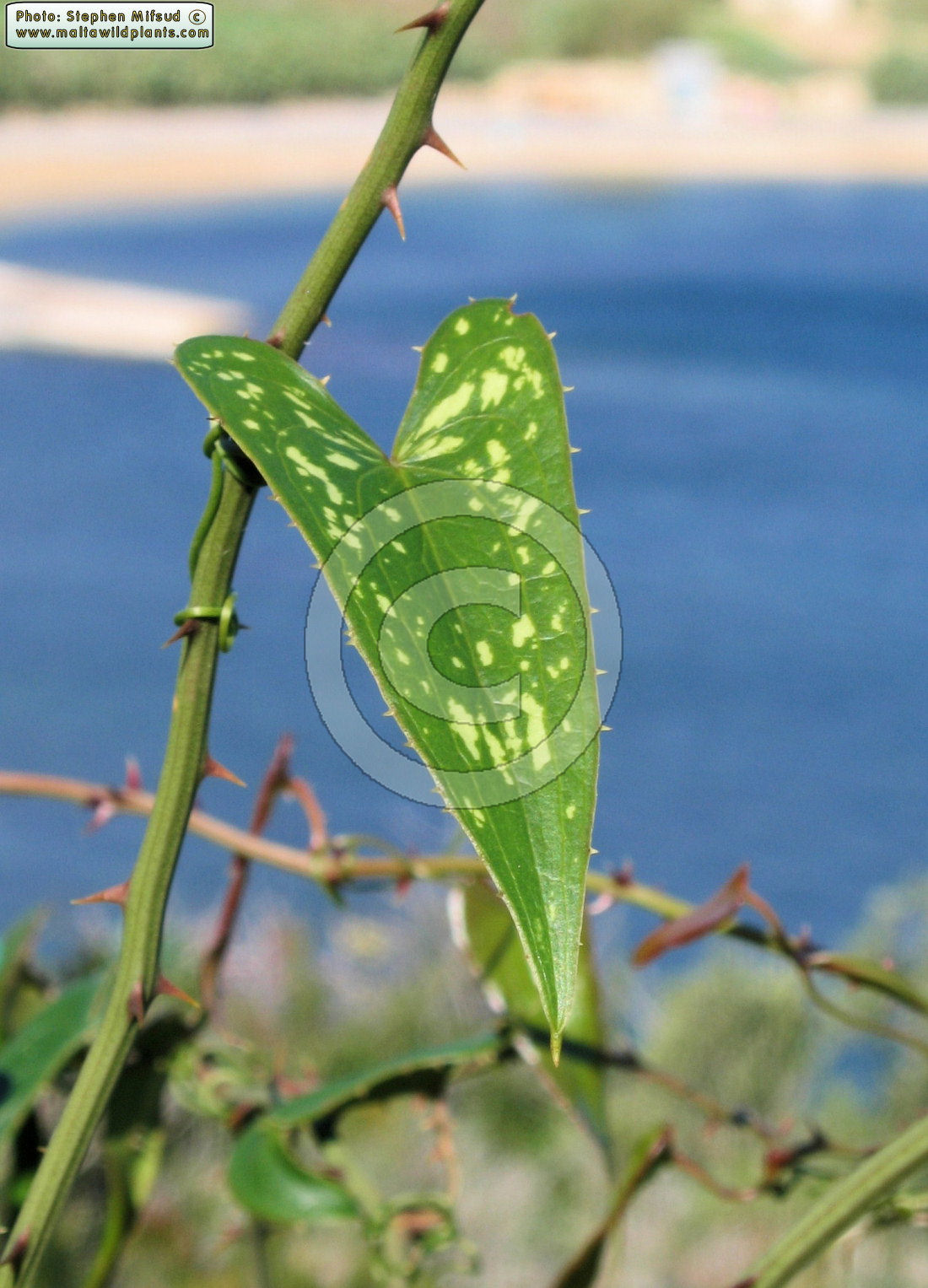
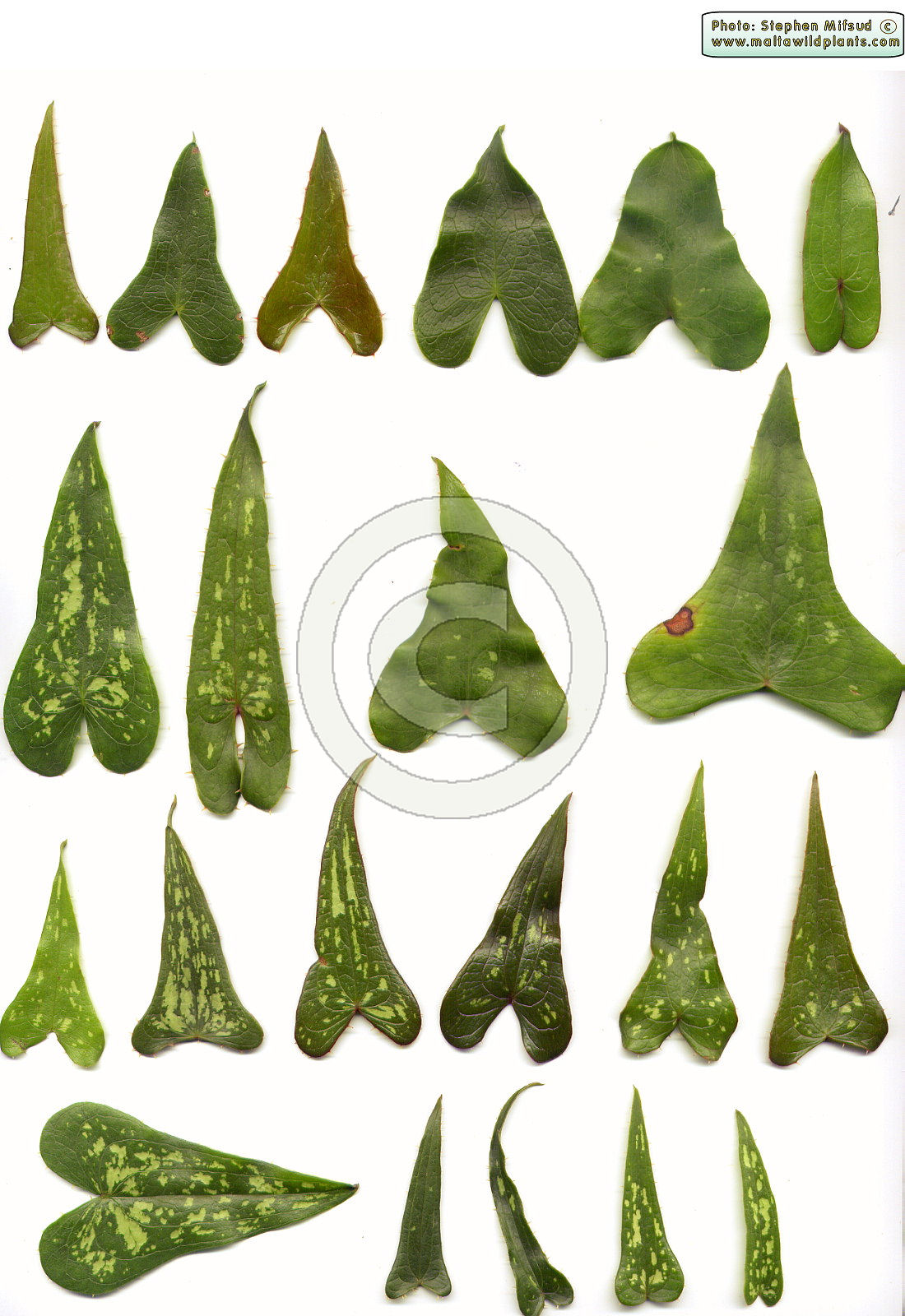
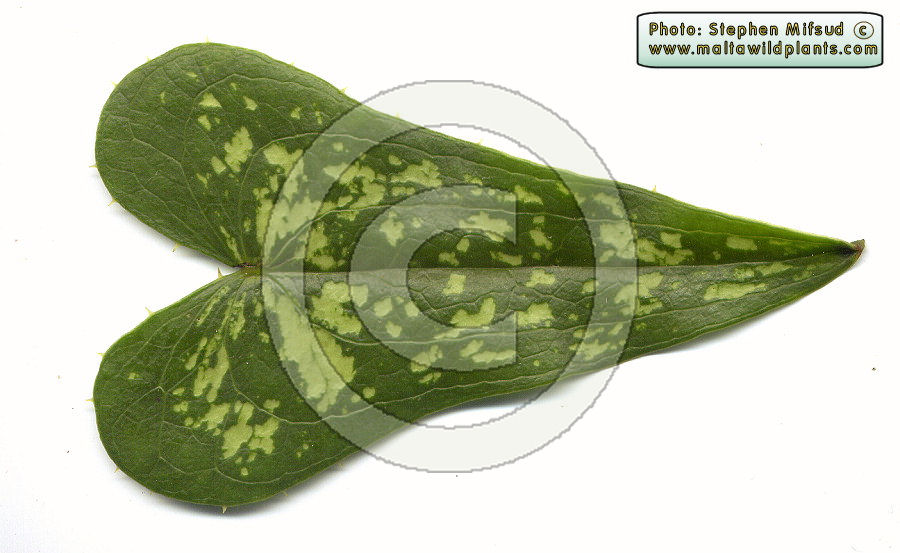
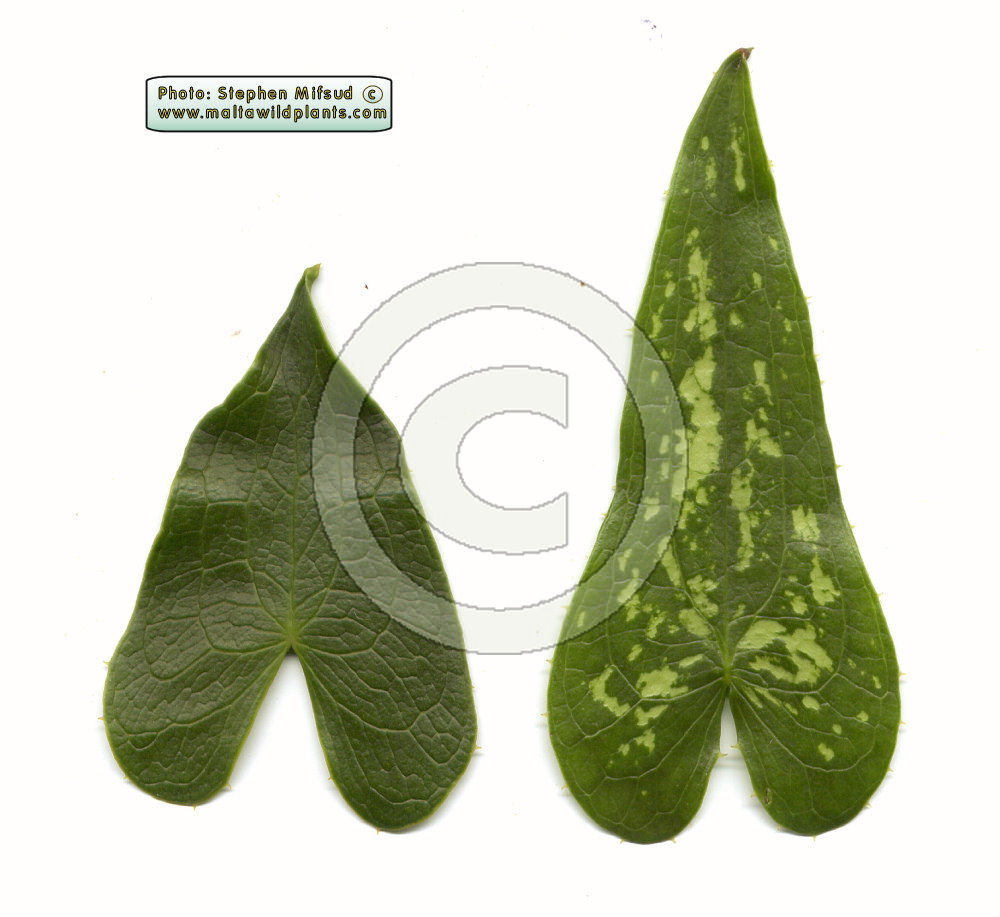
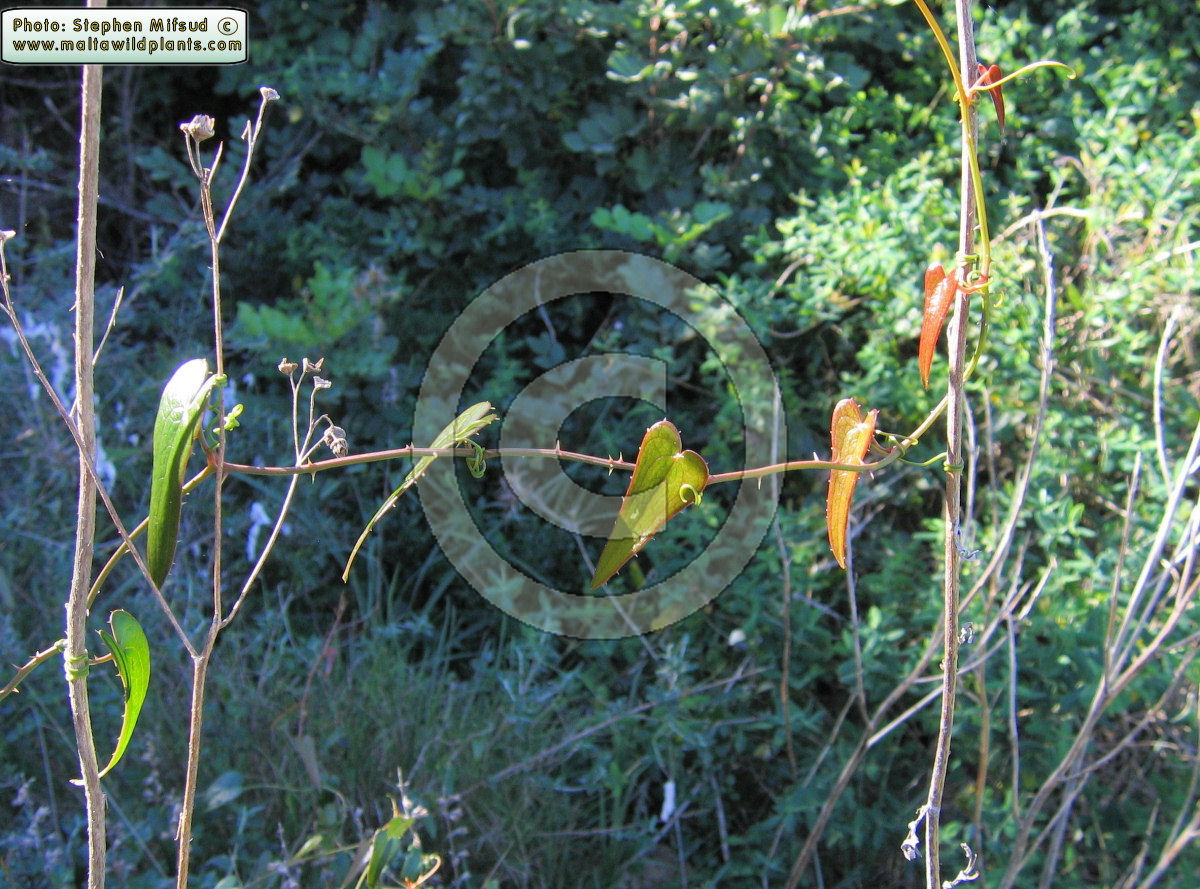
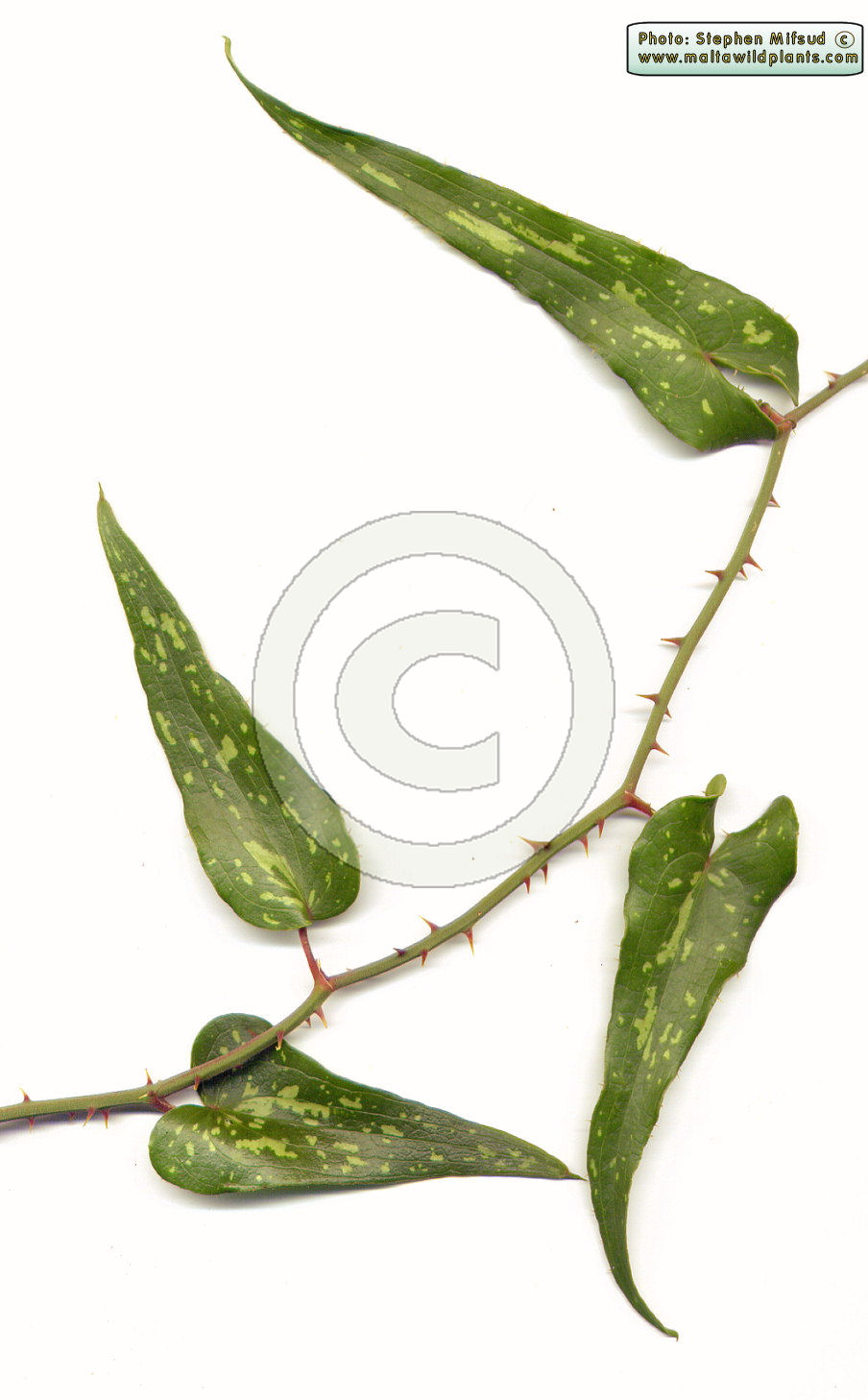
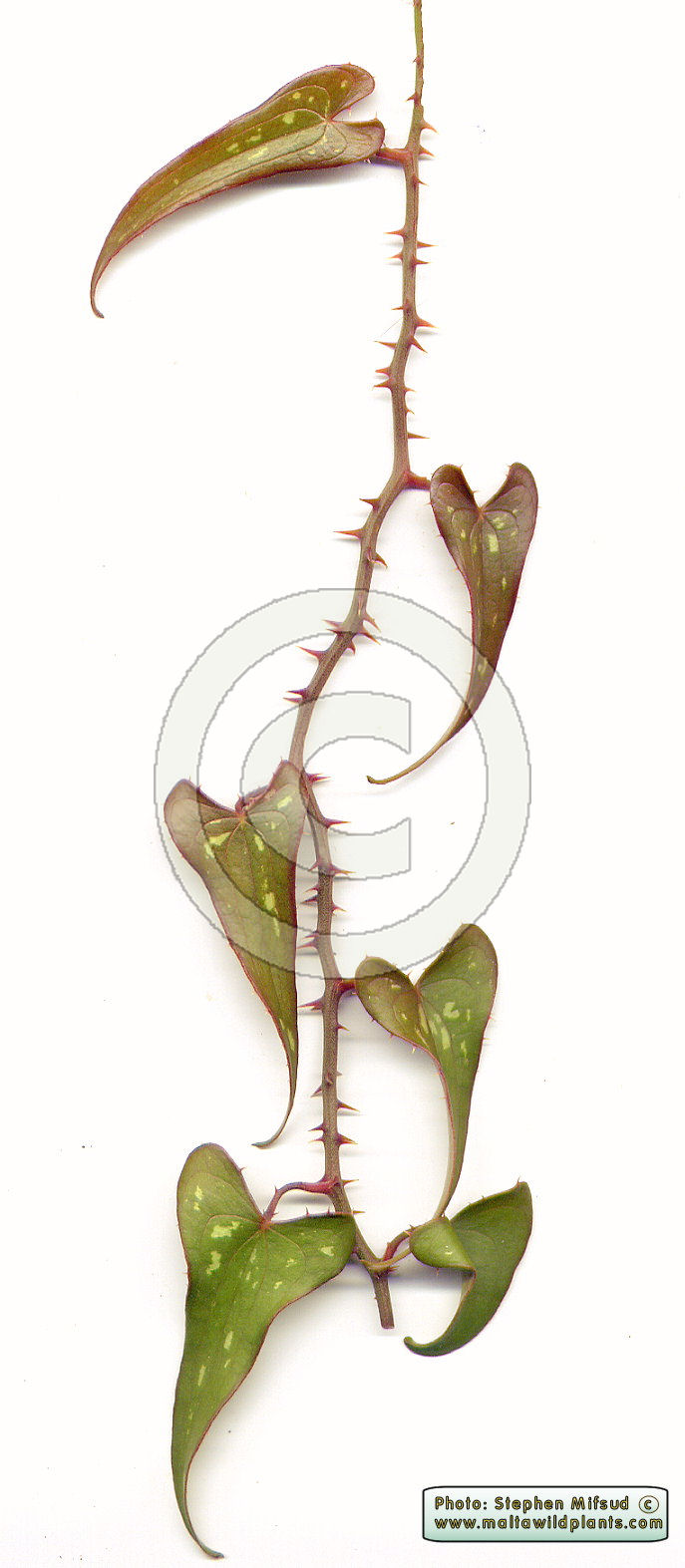
There have been several varieties and even species names used in the past which referred to the same Smilax aspera plant. Some of these names are still currently used in few countries. All these different names are a result of the morphological variation of the plant, with special reference to the leaves, habit and growth. These morphological differences might have confused taxonomist in the past and attributed different names according to the plant's different morphological features or location where they first observed it. For example A. maculata (maculata = stained or patched) would have been put as a different Smilax species due to its pale patches on its leaves while A. sagittifolia (sagitiifolia=arrow-leaved) due to its leaves being arrow-like in shape (narrow) rather than cordiform. catalonica and mauritanica refer to places. [SM] Smilax aspera var maurititanica was included in the book of Maltese flora by Haslam et. al (1973) [WWW-332]
The following list - taken from [WWW-124] - states which Smilax spp., subsp. or var. should nowadays be referred to as Smilax aspera. [SM]
Genus:
Smilax L. (Smilacaceae)
Species:
Smilax aspera L. (1753) 2n = 32 Co, Ga 1, 2, 3, 4, 5, 6
Synonyms:
S.aspera subsp. mauritanica (Poiret) Arcangeli (1882) = S. aspera
S.aspera subsp. nigra (Willd.) Nyman (1882) = S. aspera
S.aspera var. mauritanica (Poiret) Gren. in Gren. & Godron (1855) = S. aspera
Smilax catalonica Poiret in Lam. (1805) = S. aspera
Smilax longipes Gandoger (1883) = S. aspera
Smilax maculata Roxb. in Carey (1820) = S. aspera
Smilax mauritanica Poiret (1789) = S. aspera
Smilax nigra Willd. (1806) = S. aspera
Smilax sagittifolia Lodd. (1832) = S. aspera
Smilax saxicola Gandoger (1883) = S. aspera
Passalora smilacis found on Maltese Smilax aspera
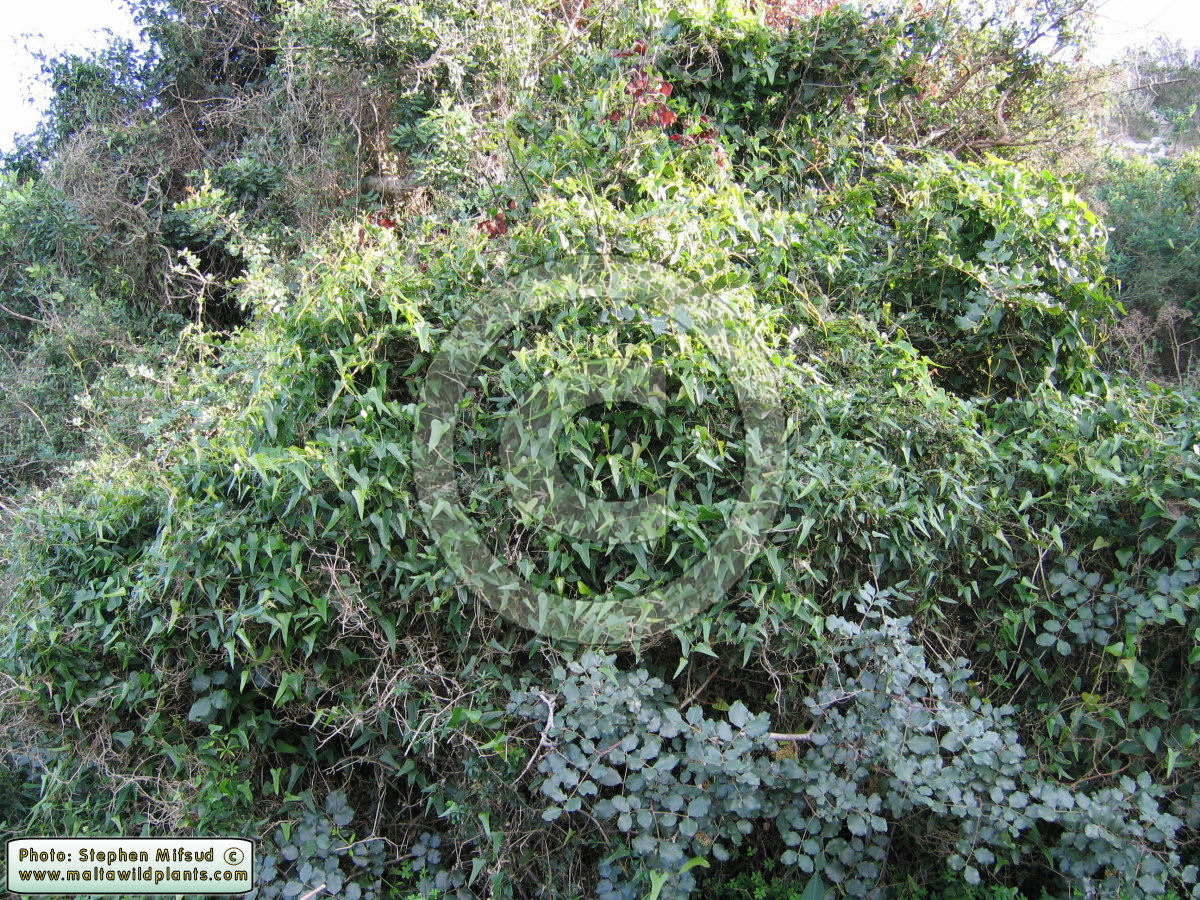
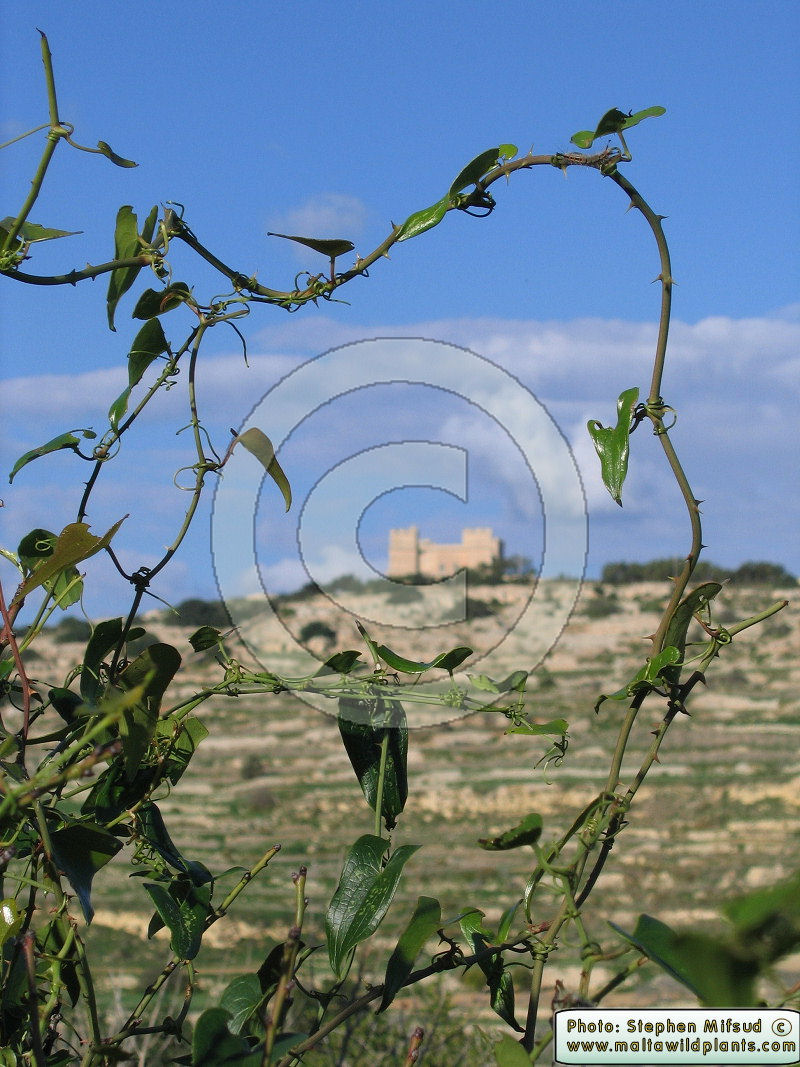
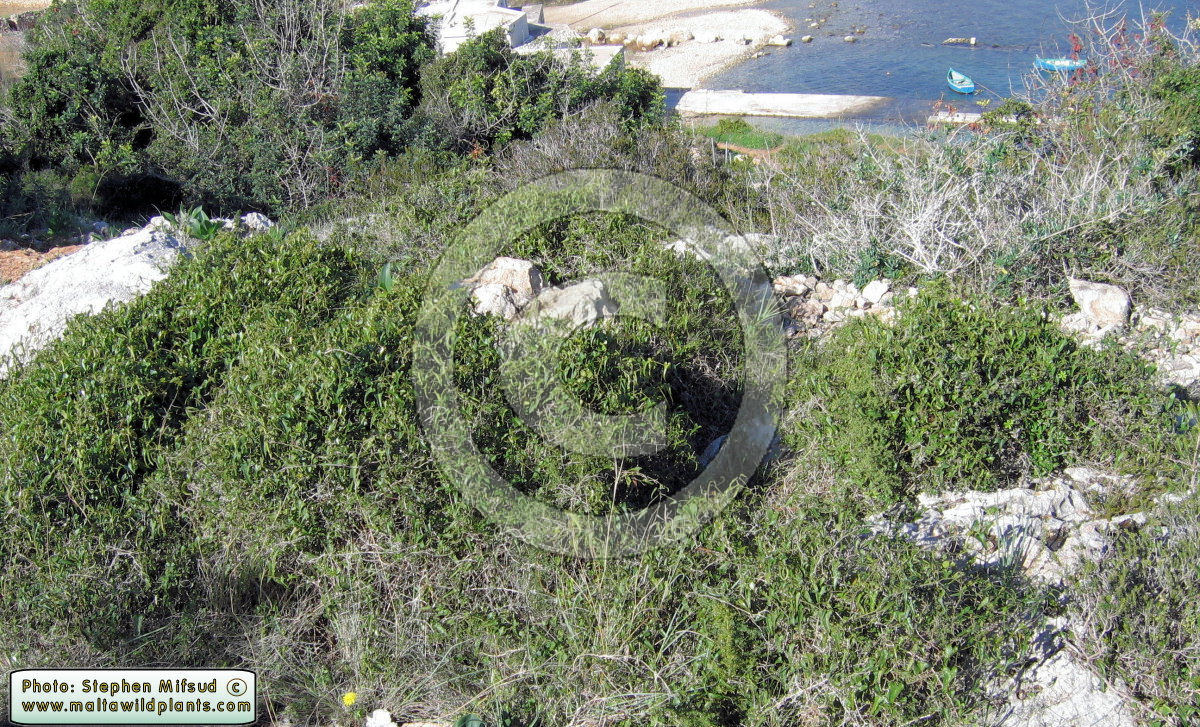
There is a large community of Smilax aspera at the valley bank of Mistra, near the Xemxija Civil Protection Department. It was an ideal zone to research, study and photograph the plants since of their abundance. Some leaves caught my attention because they had black spots with pale centres and I immediately thought that it could be some fungal attack. Samples were taken to the plant health department for observation and identification. Dr. Angelo Porta-puglia, currently managing the mycology lab of the plant health department, has informed me that fungal species of Passalora smilacis (Thüm.) U. Braun (previously known as Cercospora smilacis Thüm) were identified on the black spots. These fungi were previously reported by Wheeler as a pathogen in 1957 on S. aspera also in Mistra valley. [SM] . P. smilacis has been isolated in Turkey, also from Smilax aspera [read more...]
The berries as food - why not?
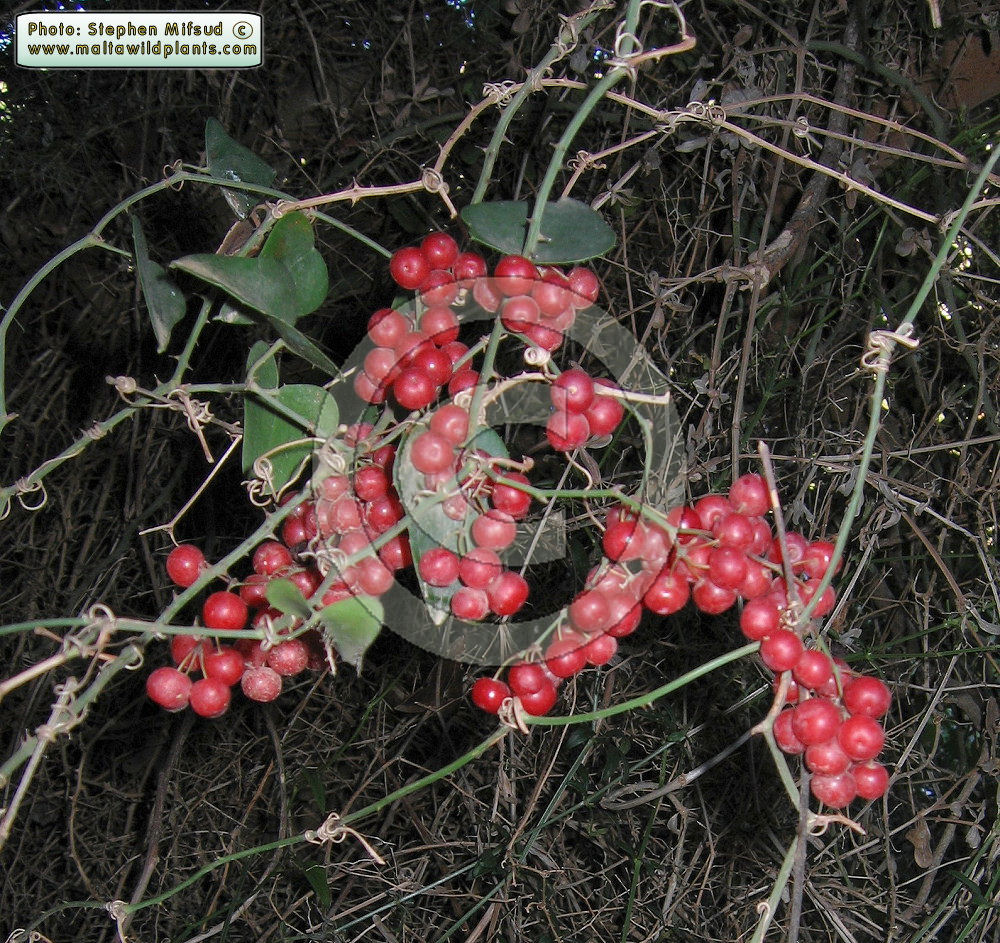
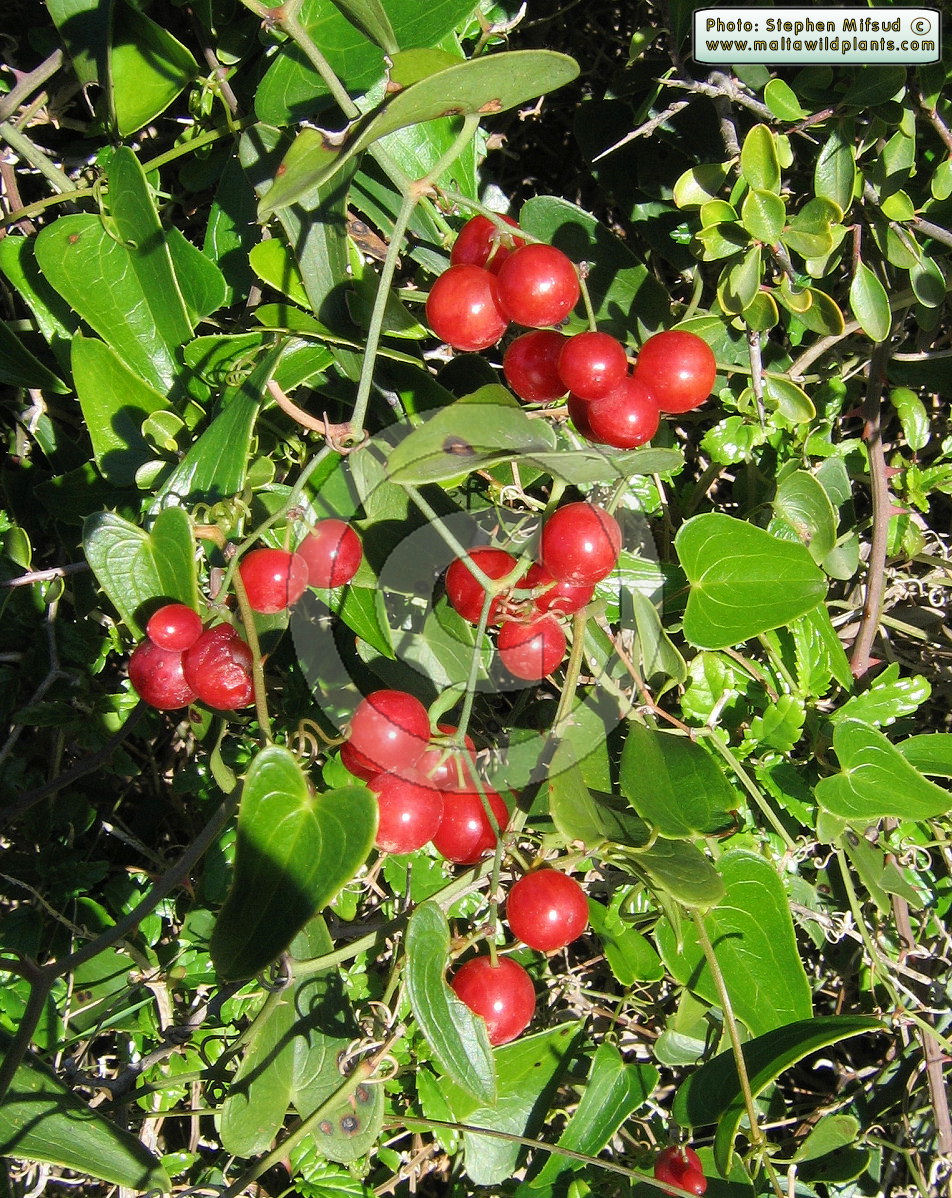
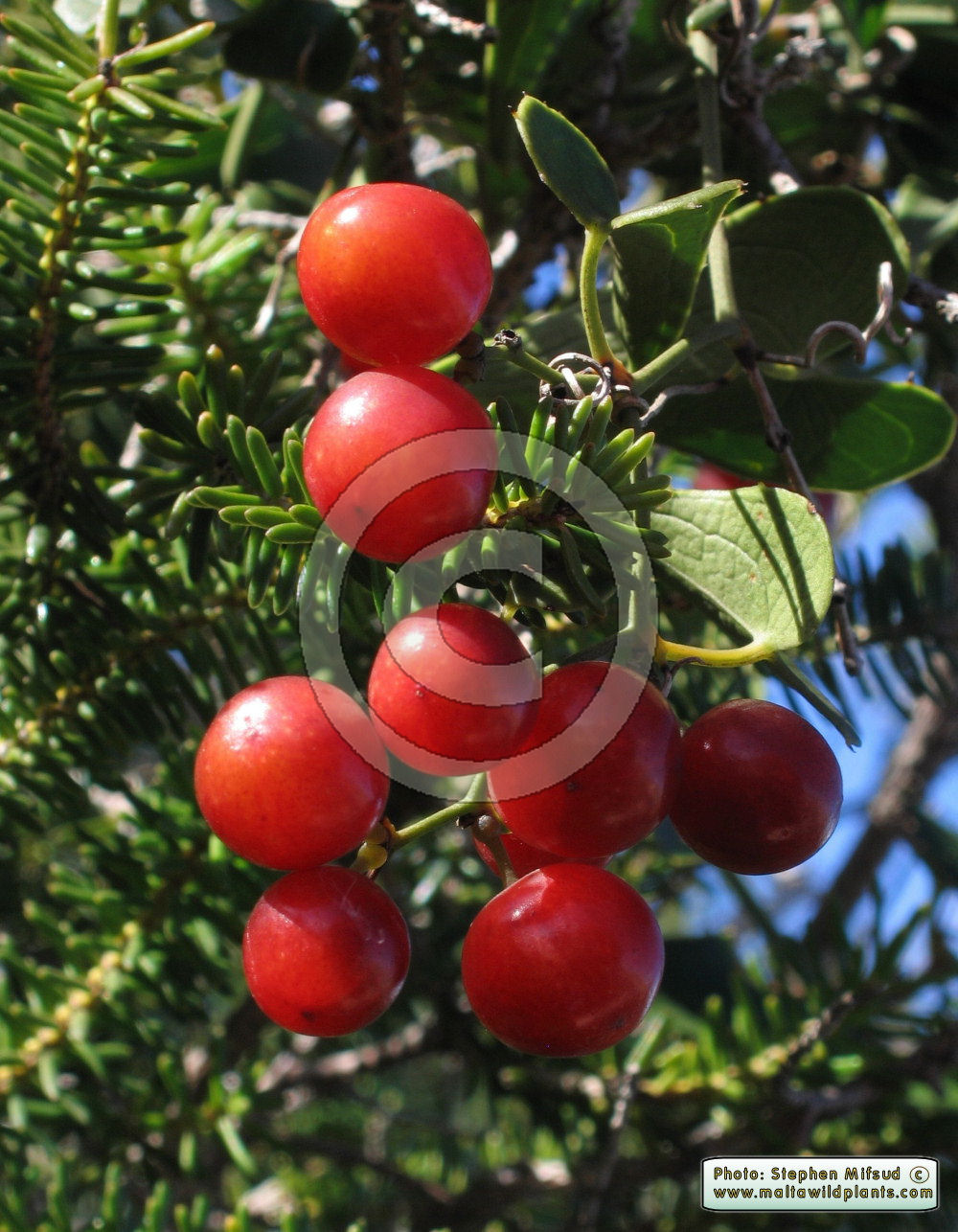
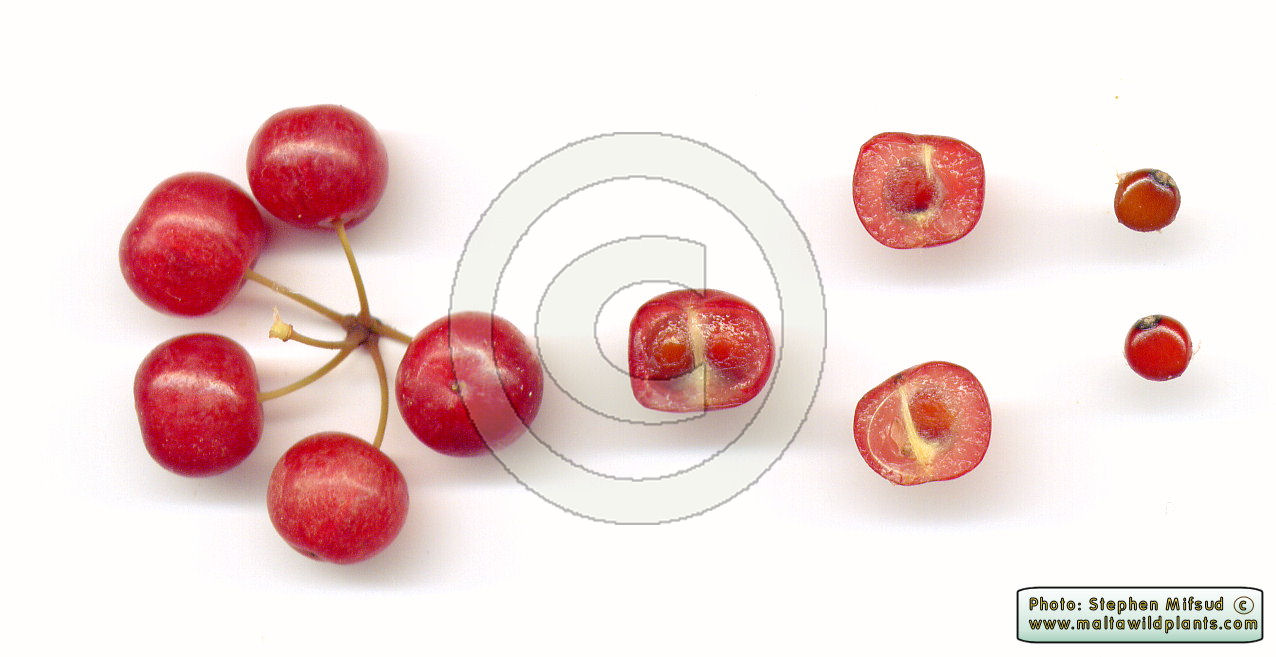
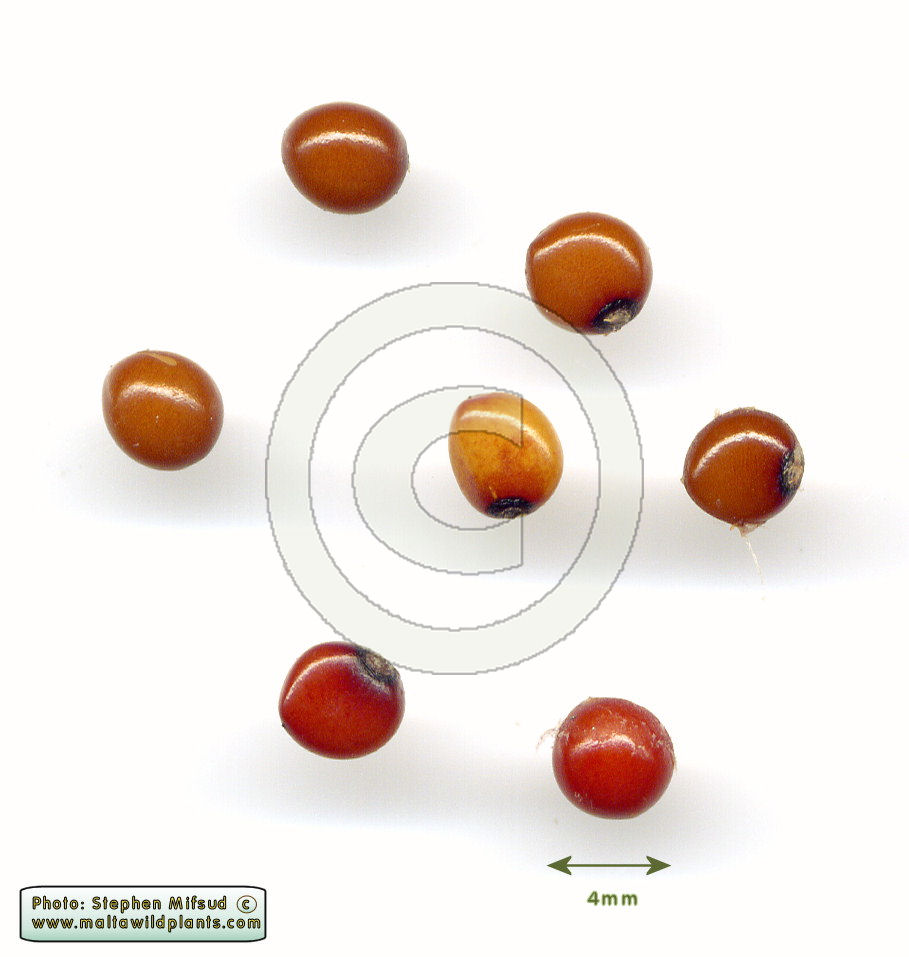
There was no report found indicating that the berries are poisonous or have harmful effects on consumption. The slightly poisonous part of the plant is the underground rhizomes and roots, also used to make the drug sarsaparilla, as mentioned above. Strangely enough, despite the attractive and numerous berries that the plant produces, not much documents where found which state the edible use of the berries. One reference - [WWW-125] - specifically states that the berries can be eaten raw or cooked. Nevertheless the taste of the berries is not very good, and more than half of the fruit is occupied by hard seeds. They are mostly intended to serve as food for birds. They stay intact through winter, when birds and other animals eat them to survive. The seeds are passed unharmed in the animal's droppings and so dispersed away from the mother plant. [SM]
|
|